

Hunted, p.1
Hunted, page 1


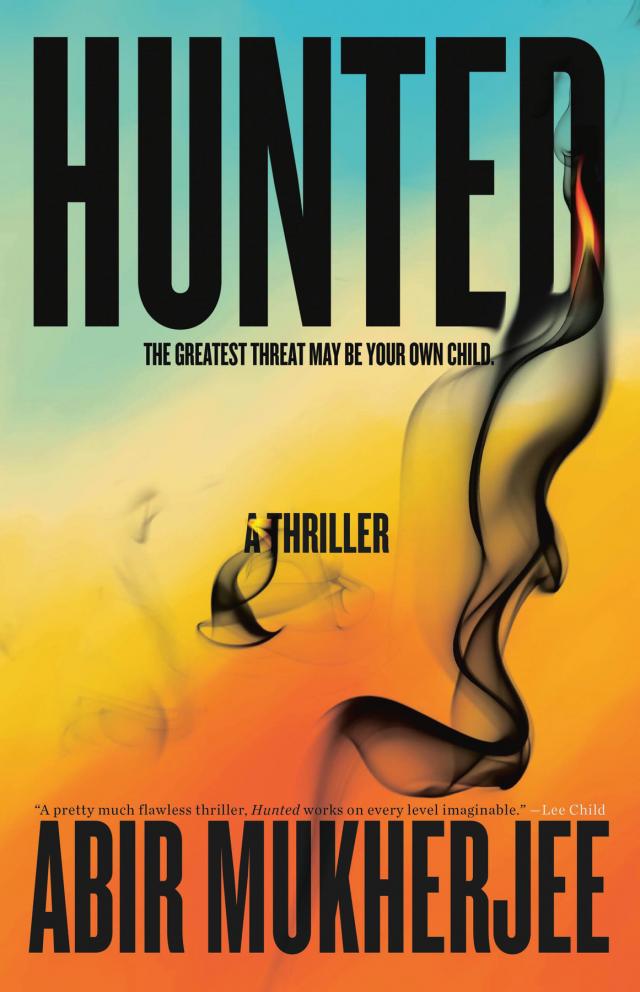
The characters and events in this book are fictitious. Any similarity to real persons, living or dead, is coincidental and not intended by the author.
Copyright © 2024 by Abir Mukherjee
Cover design by Gregg Kulick
Cover art by Getty Images
Cover copyright © 2024 by Hachette Book Group, Inc.
Hachette Book Group supports the right to free expression and the value of copyright. The purpose of copyright is to encourage writers and artists to produce the creative works that enrich our culture.
The scanning, uploading, and distribution of this book without permission is a theft of the author’s intellectual property. If you would like permission to use material from the book (other than for review purposes), please contact permissions@hbgusa.com. Thank you for your support of the author’s rights.
Mulholland Books / Little, Brown and Company
Hachette Book Group
1290 Avenue of the Americas, New York, NY 10104
mulhollandbooks.com
X.com/mulhollandbooks
Facebook.com/mulhollandbooks
First North American ebook edition: May 2024
Published in the United Kingdom by Harvill Secker, May 2024
Mulholland Books is an imprint of Little, Brown and Company, a division of Hachette Book Group, Inc. The Mulholland Books name and logo are trademarks of Hachette Book Group, Inc.
The publisher is not responsible for websites (or their content) that are not owned by the publisher.
The Hachette Speakers Bureau provides a wide range of authors for speaking events. To find out more, go to hachettespeakersbureau.com or email hachettespeakers@hbgusa.com.
Little, Brown and Company books may be purchased in bulk for business, educational, or promotional use. For information, please contact your local bookseller or the Hachette Book Group Special Markets Department at special.markets@hbgusa.com.
ISBN 9780316260664
E3-20240402-JV-NF-ORI
Contents
Cover
Title Page
Copyright
Dedication
Epigraph
DAY 1: MONDAY Chapter 1: Yasmin
Chapter 2: Shreya
DAY 2: TUESDAY Chapter 3: Shreya
DAY 3: WEDNESDAY Chapter 4: Greg
Chapter 5: Shreya
Chapter 6: Sajid
Chapter 7: Shreya
Chapter 8: Shreya
Chapter 9: Sajid
Chapter 10: Greg
Chapter 11: Sajid
Chapter 12: Shreya
Chapter 13: Greg
DAY 4: THURSDAY Chapter 14: Sajid
Chapter 15: Sajid
Chapter 16: Greg
Chapter 17: Sajid
Chapter 18: Sajid
Chapter 19: Shreya
Chapter 20: Shreya
Chapter 21: Sajid
Chapter 22: Shreya
Chapter 23: Greg
Chapter 24: Sajid
DAY 5: FRIDAY Chapter 25: Sajid
Chapter 26: Greg
Chapter 27: Shreya
Chapter 28: Greg
Chapter 29: Sajid
Chapter 30: Shreya
Chapter 31: Shreya
Chapter 32: Shreya
Chapter 33: Greg
Chapter 34: Shreya
Chapter 35: Sajid
Chapter 36: Shreya
Chapter 37: Sajid
Chapter 38: Greg
Chapter 39: Greg
Chapter 40: Shreya
Chapter 41: Sajid
Chapter 42: Shreya
Chapter 43: Shreya
DAY 6: SATURDAY Chapter 44: Greg
Chapter 45: Greg
Chapter 46: Sajid
Chapter 47: Shreya
Chapter 48: Rehana
Chapter 49: Sajid
Chapter 50: Shreya
Chapter 51: Sajid
Chapter 52: Shreya
Chapter 53: Greg
DAY 7: SUNDAY Chapter 54: Greg
Chapter 55: Sajid
Chapter 56: Sajid
Chapter 57: Shreya
Chapter 58: Shreya
Chapter 59: Greg
Chapter 60: Greg
Chapter 61: Shreya
Chapter 62: Greg
DAY 8: MONDAY Chapter 63: Shreya
Chapter 64: Shreya
Chapter 65: Sajid
Chapter 66: Shreya
Chapter 67: Shreya
Chapter 68: Shreya
Chapter 69: Greg
Chapter 70: Greg
Chapter 71
Acknowledgments
Discover More
About the Author
Also by Abir Mukherjee
For Sonal, Milan and Aran
“Chirokaal”
Explore book giveaways, sneak peeks, deals, and more.
Tap here to learn more.
“Our most basic instinct is not for survival but for family.”
—Paul Pearsall
DAY 1
MONDAY
CHAPTER 1
Yasmin
Nothing good comes without pain.
The chiffon scarf dances around her in the breeze. Yasmin shifts it casually to her shoulders while the world beyond the windshield melts: the carboniferous ghosts of trees yielding to the sprawl of settlements and, in the distance, the contours of the city, its dark lines and needlepoints etched out in the smoke-blue haze of the horizon.
Los Angeles.
The sight of it prickles the soft hairs on the back of her neck as the fear rises within her once more.
She tries to bolster her courage, drawing on a lifetime’s worth of anger. That’s why she’s here, after all: to make a stand for those who can’t.
Beside her, Jack takes a sip of soda—that’s what they call it here—and in her head she plays with the novelty of the word. He places the can in the hollow of the armrest between them and she reaches out, touching his bronzed fingers with hers, tracing the faint blue outline of the rough tattoos. Jack glances over; her all-American white boy, his eyes hidden behind Oakleys and his hair under a Patriots cap, but he says nothing. How she wishes he would. A sentence, a word, anything, just to reassure her or… to show her that he too might be scared. His glance though sends a shiver through her. An act that feels illicit. She breathes in the tang of his cologne and turns once more to look out at the vista.
The landscape changes. The dead gradually giving way to the living. Taller buildings now, drawing closer to the freeway; packed in tight like matches in a box.
Billboards and yard signs sprout like weeds: Vote Costa and Take Back America; or Greenwood for President and A Better Tomorrow. Make your mark. Take your choice.
Jack signals, and she feels the car lurch across four lanes of traffic, pitching onto an off-ramp before she’s even had a chance to read the destination on the overhead sign. The soda rocks in its holster, a splash escaping, falling onto cheap black plastic.
“Slow down,” she says. “What’s the hurry?”
Jack looks over and she feels that frisson again. The power of his stare. He brakes for a red, takes a left when it shifts to green and then just cruises, between golden-stemmed palms along a sun-blessed boulevard that stretches on to forever. If this were a movie, she’d have lit a cigarette. Instead she lets the window all the way down and rests an arm on the door sill, fights her rising fear and tries to lose herself in other thoughts.
Everything will change today.
A young mother in faded T-shirt and frayed dungarees propels a buggy along the shaded sidewalk and for a moment Yasmin dreams.
Maybe a kid one day. Maybe even a house.
She shakes the thought from her head. In a few hours’ time, the world will be different and she and Jack will never see each other again. It has to be this way. Miriam has told them so.
They have hardly spoken this morning. Not since leaving the safe house. She, dumbstruck by fear and the incomprehensible magnitude of what lies ahead, and he? Maybe he is being stoic. Or maybe he is just as terrified as her. Two hundred miles and barely a word between them, but now, from nowhere, the impulse wells up inside her, the urge to ask him: What the fuck are we doing?
But it is too late now. They have made their decision; decided it together and reaffirmed it in bed last night. Miriam would freak if she knew.
Jack is already pulling into the covered parking lot, taking a ticket at the barrier, pulling off his shades, driving up the ramp.
Too late.
Eighteen years old and already it’s too late.
Jack drives the car nose first into a space and kills the engine. He looks at her and this time she doesn’t flinch. This time it is his turn to place his hand on hers.
“You okay?” The words like balm upon her skin.
“No,” she wants to tell him. “I’m really not.” But that too is impossible. Where she is from, you learn to keep your demons hidden. Instead she nods and consoles herself with the currency of his smile. She is, she realizes, doing this for him. She might have started on this journey out of conviction for the cause, but she is completing it because she’s falling in love with him.
Jack slides off his seat belt. He reaches for the door handle and Yasmin follows suit. She gets out and ponderously pushes the door shut. Jack is already retrieving the trolley cases from the trunk. He pulls up the handle on one, passes her the other and places his shades back on his face.
He takes her hand.
They follow the signs: up stairs, through brushed metal doors, along walkways, passing from
She watches them: the sandal-clad parents, eyes flitting between shop windows and hyperactive kids; the tribes of teenagers—the golden ones and the trench-coated goths—loitering near the fountains and attentively ignoring each other; the leather-skinned pensioners in big shirts and sensible sneakers doing laps of the mall like athletes unable to shake the habit; the small-time political surrogates peddling buttons and bumper stickers and politicized baseball caps. Yasmin watches them all with a pang of perfect regret.
She passes the window displays, barely registering the high fashion or high heels that once she might have gazed at longingly.
Jack squeezes her hand.
“You want a coffee?”
She wants a vodka.
What she wants is something to obliterate the doubts screaming inside her. But that isn’t about to happen. She purges the thought and instead looks at him and nods, not quite trusting herself to speak.
He smiles back.
“Starbucks?”
The question is irrelevant. Their route and actions have been planned in advance. The question is part of the routine and the routine is for the security guards and CCTV cameras.
He leads the way, as confident in his direction as though he were walking home from the bus stop, through an eddy of kids and into the glass-domed atrium, joining a stream of shoppers ascending golden escalators toward the gates of the food court. He lets her step on first, standing behind her and encircling her waist with one strong arm as the stairs rise, and for the smallest of moments she wonders whether that arm protects or constricts. She turns round, the extra step negating his extra height, and for once they are level. A wave wells up within her, a bittersweet rush that encompasses everything from love and exhilaration to pain and pitch-black fear.
She clutches the escalator belt and feels like throwing up.
The landing appears ahead, bright and white. Jack takes the lead and once more she follows him, dutifully.
She wonders what he is thinking.
Does he too have doubts? How could he not?
Jack orders lattes while she waits for a table, loitering close-but-not-too-close to an old couple who sit hand in hand in front of empty cups. They are silent, yet Yasmin senses that a whole world of words passes between those thin, mottled fingers. By the time Jack returns, the table is hers. Instinctively she lowers her gaze, just as Miriam would want it. He places the black plastic tray on the table and takes the seat opposite. A cookie sits alongside the lattes. A gingerbread man with glazed eyes of icing sugar.
Last chance.
What was it they said at Christian weddings?
Speak now or forever hold your peace.
But she can’t speak. She certainly can’t look at him, fixing her gaze instead on the china mugs and the oversized biscuit.
Too big.
Everything in this country was too bloody big.
She reaches out, searching for the warmth of his hand and finding nothing but bare table.
What is he feeling? Surely he too must be scared?
She feels his touch, his fingers upon hers, and looks up at him and sees the nervous energy in his face, the electric charge ripple across his shoulders.
He is, she decides, dealing with his fear in his own way.
“It’s okay,” he says. “We’re nearly there.”
He lifts the gingerbread man from its saucer, breaks it in two and holds one half out to her. She takes it and stares at it: a head and half a torso.
“Jack.”
He looks up from a sip of coffee and her confidence evaporates.
“Do we have to… you know…?”
“Baby,” he says, rising from his chair and taking a seat on the bench beside her. She feels the strength of his thigh against hers. “You know we have to. It’s the right thing to do. And when it’s done, we’ll be together. Don’t matter what Miriam says, we’ll make it happen.”
His words soothe her, but they don’t silence the screams that swirl in her head. And he’s right, of course. They need to keep going. Someone has to. Someone has to strike a blow.
Jack takes another sip and places the cup back on the table. She watches as he clenches and unclenches his fists.
“It’s okay to be frightened,” he says. “I’m scared myself. But it’s like Miriam said, we need to hit back at these bastards.”
She looks down, her eyes falling on the trolley case beside her. She thinks of its contents, which she has never seen.
She picks up her cup and sips, swallowing hot coffee and registering only the burnt, bitter aftertaste. She contemplates a bite of her half of the gingerbread man but doesn’t have the appetite.
“You clear on what to do?”
She nods.
“Good,” he says, then rubs the back of his neck and reaches over. She feels him thread his arm with hers. He squeezes her fingers, then kisses her and she doesn’t know what to feel.
“It’s time,” he says softly.
The kiss seems to renew her courage. Suddenly she is on her feet, going through the checks as though on autopilot. She knows the drill. They have practiced it. Jack is already heading out into the mall. She will wait. Two minutes only. Enough time so that he can lose himself in the crowd. She spends the seconds clutching the handle of the trolley case, wheeling it forward and back.
Two minutes. It had seemed longer during the tedium of the dry runs, but now it is over too quickly.
She pulls the case behind her and sets off, joining the sea of bodies making for the escalator. She heads down, past carefree faces going the opposite way. It hurts to look at them, so instead she stares at her feet.
Three minutes to reach the prearranged location: the landing outside the radio station; the shock jocks broadcasting their poison into a million minds. Odd that the station should be in a mall, but then its positioning is one of the reasons Miriam has chosen it as a target.
“It’ll send a powerful message.”
Jack will be inside by now, in the reception area. At least that is the plan.
She is not to enter, just plant her bomb in the hall outside and wait among the crowds for him to plant his and return. They will make their way back to the car and drive a safe distance and then phone in the warning.
“No innocents will get hurt.” Miriam has been categorical about that, and she has faith in Miriam; absolute faith.
But then she triggers the sensors on the automatic doors.
They open. Jack is not there.
She hesitates, hovering on the threshold, peering into a different world from the throng of the mall beyond: a world of white, antiseptic light; of sofas and flat screens and blonde receptionists behind a gleaming desk. She stands there, a stone in a stream, as crowds of shoppers brush past, their voices crashing in on her, drowning her own thoughts. A security guard is already assessing her for signs of threat. But there is no sign of Jack. Where is he?
She steps back and collides with an old woman in sunglasses and sneakers. She mumbles an apology but with one eye still scanning for Jack. Her heart is pounding. She needs to keep calm. He must have been waylaid. The mall is packed after all. But long minutes pass and still there is no sign of him.
She tasted salt on her upper lip.
Is he lost?
But Jack would never make that sort of error.
Maybe she is in the wrong place?
She turns, frantically scanning the floor for another entrance to the radio station, but there is none.
The black fear begins to well up again, threatening to overwhelm her. She keeps looking for Jack, searching for his dumb shades and his stupid baseball cap.
Has he been arrested? Is it all over before they’ve even started?
But she has watched the videos, the clips on YouTube of screaming onlookers and their panicked, herd-like stampede away from trouble. If they have got him, then where is the commotion? Where are the shouts of frightened shoppers, and where are the cops with their guns?


