First wifes shadow, p.8
First Wife's Shadow, page 8


‘He’s really handy,’ I chip in. ‘I’ve had some problems with electrics recently. My lights kept blowing a fuse and we were constantly being plunged into darkness. Matthew fixed them.’
‘What do you do with yourselves when you’re plunged into darkness?’ says Gina with her signature warm, dirty laugh.
‘You’ve always been really good with DIY. I hope you’re not letting down the sisters by feigning inability just to flatter Matthew,’ says Heidi, her tone distinctly icy.
‘I have no idea about electrics,’ I point out.
Matthew lifts my hand to his lips, kisses the knuckles, and for a moment it feels as though there’s no one else in the room; I’m all that counts to him. His gaze drops, and after a beat he says, ‘There was a time when I couldn’t work. You know, straight after … I just couldn’t find the energy. I let clients down and contacts go cold, so I really struggled financially. My photography work is not especially lucrative at the best of times; you must have noticed that commissions are few and far between.’ He shrugs. It’s not a dismissive, careless shrug. The way he brings his shoulders to his ears, and then lets them tumble down his back, explicitly states, ‘And there you have it. That’s what I am.’ I realise he thinks he’s sub-par. How oddly we look at ourselves. I squeeze his hand. I want to tell him that my friends are concerned he’s too good to be true.
He looks me in the eyes and says earnestly, ‘I hadn’t realised you thought it was odd that you’d never been to my place. That it was a subject of discussion.’
‘No, it wasn’t that, as such …’ I break off, unsure how to finish the sentence. I want to bounce back to the playfulness that abounded at lunch. I wait, hoping someone will leap in and discuss whatever sport is playing this afternoon. No one says anything. I don’t know if it’s because they’re all stewing in a food coma brought on by Heidi’s excellent Sunday roast or because they’re rapt at Matthew’s explanation.
‘How much do you pay in rent?’ The question is out of my mouth before I really consider what I’m asking. I’m a CEO. I simply like to know the value of things. I’m curious, nothing more.
Matthew blushes, but smiles good-naturedly, names a figure. It’s been such a long time since I rented, I’m out of touch as to what the market rate is. The amount he pays seems reasonable to me. A little less than I spend per month on cleaners and the pool guy. ‘And I pay for storage too, for my furniture,’ he adds. ‘The shared flat is furnished, you see. Storage costs are crazy, and while nothing I’m keeping is of much financial value, in other ways it’s …’
‘Priceless.’ I finish his sentence. I think of the chairs, tables and sofas that Matthew and Becky must have owned together. The trips they must have made to IKEA and John Lewis. I think of their bed. I imagine their home, full of their things, their memories. Them. He’s struggling financially, but the possessions they acquired throughout their married life hold unquantifiable sentimental value, so he pays for storage. He isn’t ready to clear out Becky’s belongings. Undisputable evidence that he’s simply not prepared to let her go. His unwillingness is understandable, but it leaves me feeling exposed. If he’s not ready to tidy her away, is he ready to be messy with me? I know we’re approaching the first anniversary of her death. I want the date to come and go, to be behind us. But a year isn’t a long time. Is this all too hurried? I must wear my concern in my expression, because Matthew asks, ‘What? What is it?’
‘Nothing,’ I assure him.
‘Yes, there was something. I saw it in your face. You looked sad.’
‘Oh no, not at all.’ I can’t confess what I was thinking; instead I blurt, ‘Look, Matthew, if you need some money, you only have to ask. Your rent doesn’t seem high to me.’
‘What?’
I feel everyone in the room sharply inhale. The moment the words are out of my mouth, I realise that they’re ludicrous, insulting. I would have been better confessing that I was halted with raw jealousy at the thought of their bed, and stung once again by the pain of living with the fact that this man would not be in my bed if his wife hadn’t died. He hasn’t chosen me; he’s settled for me. But I couldn’t say that, so I said the stupid thing about money. Face burning, I try to fix things.
‘I don’t mean as a gift. I mean as a loan.’ Matthew’s mouth drops open. ‘I mean, a gift is fine too, if that’s better for you,’ I add, unsure how to interpret his look of astonishment. I continue to thoughtlessly gabble on. ‘I’m just saying, don’t go short, I have plenty. More than I can spend and no one to spend it on. You know.’ I stop talking, but it’s too late. The hurt radiates off him, putting me in mind of a damaged nuclear reactor. He’s shimmering with pain and embarrassment. Maybe there is a little anger too. A dangerous energy.
‘What do you think I am, some sort of toy boy?’ The expression is comical, and under other circumstances I might have laughed, but the atmosphere is so taut it feels as though it could shatter, like glass. ‘I don’t need your money, Emma,’ he says with a stiff smile. He is always polite, dignified. He’s that now, but steely cold too. ‘I don’t need it or want it.’ I nod, drop my gaze from his, too embarrassed to find a way into an apology. ‘I can manage perfectly well on my own,’ he adds defensively.
‘Right. Yes, of course. I never meant—’
But he doesn’t let me finish. ‘I did before you came along and—’ He snaps his mouth shut. It lingers, the unfinished sentence, the implication: and I will after you’ve gone. He doesn’t think we are forever. I hoped we might be. I hoped he thought that too, but I’ve ruined that with my careless talk about money.
‘Don’t worry, Auntie Emma, you can spend all your money on me. I don’t mind one little bit,’ says Lottie, with a girlish giggle, oblivious to the nuances the adults around her are drowning in.
Heidi stands up. ‘Can I get anyone another coffee?’
Gina and Mick are on their feet too, saying they must go. Lottie is practically carried out of the room, so keen are they to get away from the awkwardness I have created. Matthew digs out his mobile, reads something on it, or perhaps just pretends to. Then he says, ‘Right, sorry, but I’ve got to head off now too.’ He holds the phone aloft. ‘Loads of work to do. I need to sort through Friday’s shoot, bin the photos where the client blinked and share the file with them as soon as poss. They’re chasing me.’
I don’t believe him. He hasn’t mentioned any work he had to do this weekend. I assumed he was coming back to mine tonight; I was looking forward to it. I jump up and head for the hall, reaching for my coat.
‘Right, well, I should be on my way too,’ I mumble.
This stops Heidi in her tracks. ‘You can’t drive.’ She sounds concerned. ‘I thought Matthew was driving. I thought that’s why he didn’t have a drink.’
Matthew looks increasingly uncomfortable. ‘I was abstaining because I had this Photoshop work to do.’ He rubs the top of his head and frowns. ‘Heidi makes a good point, though, Emma. You’ve had too much to drink to attempt driving. When I saw you knocking it back, I thought you must be staying here.’
I ache for him to call me babe. Emma sounds so stiff and formal. How did I let this wonderful afternoon collapse into such awkwardness? I am always more conscious than most about drink-driving, obviously. I know I can’t drive, as I’ve drunk over half a bottle of wine. How much over, I’m not sure. But plenty. I wouldn’t call it ‘knocking it back’, though. Like Heidi, I’d assumed Matthew was coming home with me and that he would drive. I think he would have, if I hadn’t publicly offered to bankroll him and therefore totally humiliated him in front of my friends. I wait a beat for him to suggest we head over to his. He doesn’t.
I know that Heidi will feel duty-bound to step in, offer me their sofa for the night. I’ve borrowed her knickers and PJs often enough in the past, but embarrassment creeps up through my body, I’m pretty certain it will be evidenced in a vivid red blush on my neck. I rush to head off her pity. ‘I can get the train home. I’ll pick the car up tomorrow. Will you pop a visitor’s parking permit in it?’
Heidi nods, her gaze bouncing between me and Matthew. A train back to Hampshire tonight and then back here to Woking again tomorrow is a big inconvenience. Surely he sees that.
‘Good plan, better safe than sorry,’ he comments, glancing again at his phone. He shouts goodbye upstairs to the kids, kisses Heidi on the cheek, shakes hands with Leon.
‘Food was delicious.’
‘Must do this again.’
‘Soon, soon.’
‘Thanks for coming.’
‘Thanks for inviting me.’
‘Travel safely.’ The barrage of pleasantries does nothing to disguise the discomfort of my clumsiness, his rejection.
The door slams shut. The spring sun has dipped behind a cloud and the air feels damp and threatening. We’re alone, and for the first time since we met, this doesn’t feel like a good thing. He’s distracted and distant, I feel riled and rebuffed. By the time we’re at the end of the street, it’s started to rain. A relentless drizzle. Neither of us has a hood or an umbrella. Matthew puts his collar up and we both walk at speed. The inclement weather washes away the opportunity to chat and reconnect; we dash to the train station in silence. I don’t understand how this journey home is so dissimilar to the journey to Heidi’s. Then, my body was wet with desire; the day held promise. More, we felt as though we held promise. Now we are going in different directions. We stand on opposite platforms with the track between us. His train comes first. I watch him board. His gaze is nailed to his phone. He doesn’t look up.
12
I’m wet and cold by the time I put my key in the lock, but it’s not the sort of cold that can be fixed by popping on another jumper. Lunchtime drinking has left me with a heavy feeling in my head, and the fact that Matthew hasn’t come home with me has left me with a heavy feeling in my heart. I am overwhelmed by a sense that it’s not going to work out. My money always ruins things. Not the worst problem to have, I know, but a problem all the same.
I blink back the dreary hangover that is brewing behind my eyelids and head upstairs. I’m showering when I hear it. One crash, then another five or six in quick succession; a pause and then more crashes. Maybe ten or a dozen in total. The noise is coming from the living room, just below me. I freeze.
It’s here. It’s happening. The thing Heidi is always warning me about, the thing I never believed would occur. Someone is in the house. An intruder. Immediately I see what could unfold. I can visualise the burly, dangerous man who will hurt me. I don’t want to think about the ways he might hurt me, this unknown man, but there are many. Taking my stuff is far from the worst thing that can happen. Every woman knows that. The horrifying knowledge lurks in our collective subconscious. The seed of fear planted when you’re just twelve or thirteen and some man makes an inappropriate comment about your budding breasts. A seed that sprouts when your first date calls you a prick-tease, insists ‘everyone knows no means yes’, when it doesn’t. It never does. Fear takes root when a gang of men on the street – maybe workmen fixing cables, maybe suited and booted office workers congregating outside a pub – allow their gazes to slide over you, inside you, their tongues on their lips. Flicking. Dogs on heat. Tendrils of fear climb like veins through your body when you hear the vile words that can only be fired at women, and you are voiceless because there are no male equivalents to the vitriolic single-syllable insults. The fear blossoms when you are followed home, cold keys between your knuckles, in the other hand, a rape alarm. Every woman knows the threat is potent and prevalent.
And real.
Swiftly I step out of the shower and lock the bathroom door. I leave the water running. If he has heard me showering, it is safer to pretend I’m still in there. I grab a towel and dry myself ineptly while looking around for my phone, which I soon realise is on my bedside table. I weigh it up and think that if it is a burglar, I’d be much better off allowing them to take whatever and go on their way. Tackling someone is far too risky. I could easily be overpowered; there might be more than one intruder. I hurriedly rummage in the dirty linen basket and find knickers, bra, jeans and jumper. I feel a bit safer dressed. I wait and wait. After some minutes without hearing anything more from downstairs, I carefully, silently, turn the lock and then, millimetre by millimetre, emerge from the bathroom.
I’m terrified I’m going to find myself face to face with the intruder. My eyes are wide, almost to the point of straining the sockets, but I don’t see the burly man I fear. I don’t see anyone, yet I’m certain someone has been in my bedroom; it smells different from when I went into the en suite. The thought that he was so close makes my stomach lurch.
I try to identify the smell. I can’t, not quite. It’s earthy, dank, not exactly the smell of drains, but something close. Something decaying and unsavoury. I’m surprised by that. I expected the odour of aftershave, sweat or maybe cigarette smoke. What I detect doesn’t seem quite human, let alone specifically male. I stand statue-still and listen for more movement. I can hear my own breathing, and it is loud and too fast. I try to quell the fear. I have a panic button next to my bed that raises a silent alarm; pressing it prompts an immediate telephone response from a private security team. If I answer that telephone call, there are code words that trigger a physical response, and security could be here within fifteen minutes. If I don’t answer the telephone call, help comes regardless. I must get to the button.
Carefully, silently, I inch towards the bed. My hand quivers as I stretch for the red button. I press it and count the seconds until the telephone rings. One, two, three, four … It’s the longest eight seconds of my life, but soon my home phone trills through the house. My instinct is to answer it, snatch up the handset and scream for help, but there is a chance the intruder is still here, and if so, it would be a mistake. I have to trust the system. If I don’t pick up the phone after activating the alarm, help will come.
The phone falls silent.
I stay deathly still. The only movement is my chest rising and falling. My mouth is dry, and even when I run my tongue over my teeth, I can’t create any saliva. Unwelcome thoughts smash their way into my head. I try not to think of all the times my friends have said that by living in the woods, I’m isolated; by living in a glass box, I’m exposed. I wait.
13
‘Are you OK, ma’am? Are you injured?’ The security guard is in his late thirties. He is thickset and has a determined, capable air about him. I stare at him in relief and shock and try to react appropriately to what he is saying. I’m frozen. Since I pressed the panic button, I’ve stayed silent and absolutely motionless. It seemed essential to my survival, and now I don’t know how to shake off that paralysis. ‘Can you confirm you’re not injured?’ he asks. His tone is controlled but insistent. I nod. ‘Can I approach you, ma’am?’ I nod again. This time with more impatience. It feels a little woke that he’s asking for permission to approach me. What if I was bleeding and in desperate need of emergency care? Plus I think he’s being a little patronising by calling me ma’am. I’m not royalty or ancient. Then I pull myself up. He’s just doing his job. I take a deep breath.
He starts to ask other questions. Was I the one to press the alarm? Did I do so because I suspected an intruder? Did I see an intruder? I answer him yes, yes, no. I don’t elaborate. He informs me that he and his colleague have checked the house. They haven’t found anyone, but there are signs of a disturbance. He asks me to come downstairs with him so I can verify. ‘Do you have any shoes up here that you can put on? You’ll need them.’ I slip on a pair of trainers and then follow him, mentally anticipating what might have been stolen.
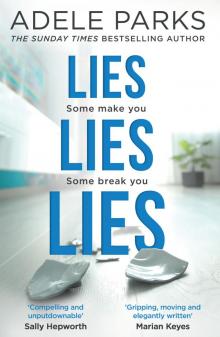
The security guard walks me downstairs, through the hallway, the kitchen and the dining room space; they all look exactly as usual. Then he directs me towards the living room area, where the second guard is waiting for us. I look around, confused. I have six impressively large indoor plants; the sort that interior decorators refer to as ‘statement’ or ‘architectural’. They are all planted in tall white concrete pots. Or rather they were. Every one of the pots is smashed and overturned, soil is spilling out onto the floor and the plants are broken, snapped off at the stem. To smash the concrete plant pots someone would have needed to use great strength, or even a tool, such as a hammer. Yuccas, palms and small fig trees lie ruined, the trunks broken and leaves wrenched off. Then I notice that the two Victorian domes that I bought yesterday have been smashed to smithereens. Thousands of tiny diamond-size shards of glass glint under the electric light.
‘I hadn’t even unpacked those,’ I mutter. The security guards look quizzical. ‘They were still in the bubble wrap and tissue paper that the guy in the shop packed them in,’ I explain.
‘What were they? Like drinking glasses or something?’ one asks.
‘No, taxidermist domes.’
He looks nonplussed. ‘Were they valuable?’
‘Not compared to many things here.’ I shake my head, confused. ‘They were special, though.’
The guards ask me to check the house for any missing property or other damage I might note. An extensive search reveals there is none. Nothing is missing. My tech, art and jewellery are undisturbed. There are no signs of a break-in. No broken windows, no forced locks, nor are any of the doors or windows unlocked or open. We find the bubble wrap and tissue paper in the bin. The bubble wrap is neatly folded, the tissue paper scrunched into tight, deliberate balls. I offer to make tea, and while the kettle is boiling, I ask, ‘What sort of intruder tidies away the packing?’ I’m mystified.
The guard who found me upstairs replies, ‘So you’re certain you didn’t put these dome things on display? You didn’t damage them or any of the plants yourself?’
‘No, of course not,’ I retort indignantly. It’s a strange question. ‘Why would I?’