

The mouth of hell, p.1
THE MOUTH OF HELL, page 1


THE MOUTH OF HELL
Translated by Alfred Allinson
Written entirely by Dumas, Le Trou de l'enfer was published in 1851 and features events that occur forty years previously. The narrative concerns unrest in Germany during the rule of Napoleon.
On their way to Heidelberg in order to accomplish a mission for Tugendbund (a secret society aspiring to freedom of the German people) two students, Julius d’Hermelindfeld and Samuel Gelb, are caught in a violent storm, close to a chasm called the Mouth of Hell. Guided by Gretchen, a pretty young goatherd, they find refuge with Pastor Schreiber, who lives with his daughter Christiane and her little son Lothario.
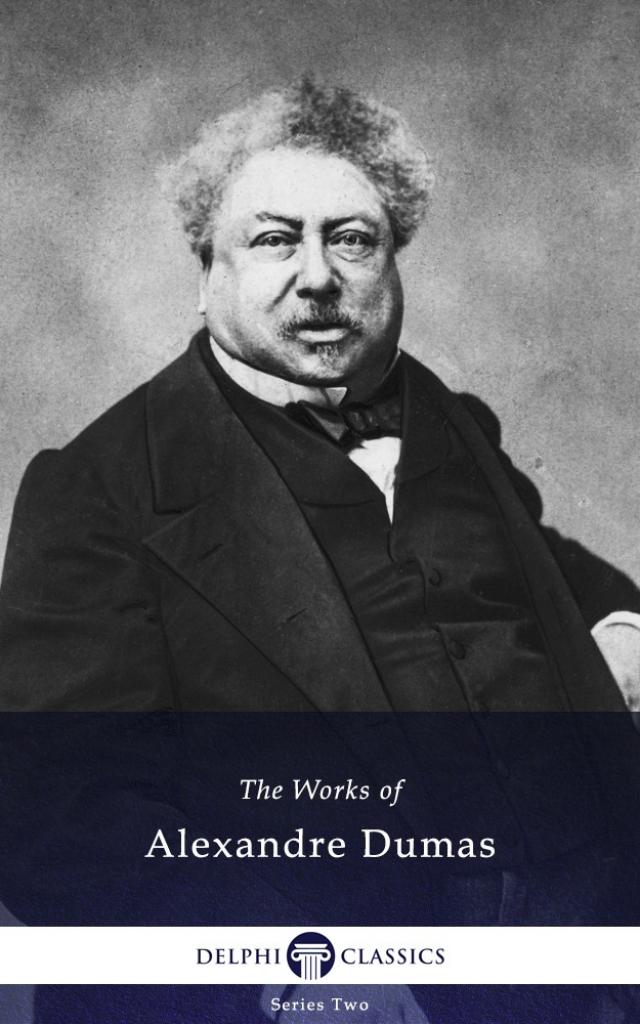
Dumas, close to the time of publication
CONTENTS
INTRODUCTION
CHAPTER I.
CHAPTER II.
CHAPTER III.
CHAPTER IV.
CHAPTER V.
CHAPTER VI.
CHAPTER VII.
CHAPTER VIII.
CHAPTER IX.
CHAPTER X.
CHAPTER XI.
CHAPTER XII.
CHAPTER XIII
CHAPTER XIV.
CHAPTER XV.
CHAPTER XVI.
CHAPTER XVII.
CHAPTER XVIII.
CHAPTER XIX.
CHAPTER XX.
CHAPTER XXI.
CHAPTER XXII.
CHAPTER XXIII.
CHAPTER XXIV.
CHAPTER XXV.
CHAPTER XXVI.
CHAPTER XXVII.
CHAPTER XXVIII.
CHAPTER XXIX.
CHAPTER XXX.
CHAPTER XXXI.
CHAPTER XXXII.
CHAPTER XXXIII.
CHAPTER XXXIV.
CHAPTER XXXV.
CHAPTER XXXVI.
CHAPTER XXXVII.
CHAPTER XXXVIII.
CHAPTER XXXIX.
CHAPTER XL.
CHAPTER XLI.
CHAPTER XLII.
CHAPTER XLIII.
CHAPTER XLIV.
CHAPTER XLV.
CHAPTER XLVI.
CHAPTER XLVII.
CHAPTER XLVIII.
CHAPTER XLIX.
CHAPTER L.
CHAPTER LI.
CHAPTER LII.
CHAPTER LIII.
CHAPTER LIV.
CHAPTER LV.
CHAPTER LVI.
CHAPTER LVII.
CHAPTER LVIII.
CHAPTER LIX.
CHAPTER LX.
CHAPTER LXI.
CHAPTER LXII.
CHAPTER LXIII.
CHAPTER LXIV.
CHAPTER LXV.
CHAPTER LXVI.
CHAPTER LXVII.
CHAPTER LXVIII.
CHAPTER LXIX.
CHAPTER LXX.
CHAPTER LXXI.
CHAPTER LXXII.
CHAPTER LXXIII.
INTRODUCTION
“I SIT here reading Dumas’ last. Dumas is astonishing; he never will write himself out, there’s no dust on his shoes after all this running, his last books are better than his first.” So wrote Elizabeth Barrett Browning from Florence to a friend in the winter of 1852-3. Dumas was then about fifty; he had written hundreds of volumes of romances and some scores of plays, and both romances and plays were streaming forth as fast as ever. “But for him the day of French novels seems over,” wrote a reviewer at this time; “George Sand is silent; Balzac and Soulié are dead; Eugène Sue has fallen into hopeless inanity and wearisomeness; Paul de Kock has exhausted his gaiety; Madame Reybaud is silent; Dumas alone is as active as ever.” Our author had lost his, excellent collaborator Maquet, but he was “as active as ever,” and in the opinion of Mrs. Browning his last books were “better than his first.”
Dumas’ performances were indeed marvellous. At one time it was pretty generally believed that the name Dumas was not that of a man, but of a company of men; but as the books and plays multiplied, it was seen that, with a few exceptions, they hung together just as the Waverley novels hang together. “Now listen,” wrote Mrs. Browning, “Alexandre Dumas does write his own books, that’s a fact. You know I always maintained it, through the odour of Dumas in the books, but people swore the contrary with great, foolish oaths worth nothing. Maquet prepares historical materials, gathers together notes, and so on, but Dumas writes every word of his books with his own hand, and with a facility amounting to inspiration, said my informant, a most credible witness and highly cultivated man.”
Mrs. Browning’s conviction was shared by most people when Maquet, after the dissolution of the partnership, wrote novels which proved failures, while Dumas produced romances of the quality of The Mouth of Hell (Le Trou de l’Enfer), its sequel Dieu Dispose, and Olympe de Cleves.
These books were enormously enjoyed even by the most jaded readers, who were accustomed to take their fiction, like pills, in small doses from the feuilleton columns of the daily papers. Indeed, from first to last, perhaps they got more enjoyment out of Dumas than did any other class of readers. One’s favourite paper was “running “a romance by Sue, Soulié, or Reybaud, in which one was more or less interested. Suddenly one morning there was an announcement. The great, the illustrious Alexandre Dumas was returning from Switzerland, or from Russia, or from somewhere else, and immediately on his arrival was going to set to work upon a long romance, the first chapters of which would appear at the beginning of the new year. The subject of the romance, known to the editor of the journal, must be a profound secret, locked in his inviolable bosom, but the title would presently be made known. The next news was that Dumas, younger than ever in appearance and wearing several new decorations, bestowed upon him by potentates in whose dominions he had been travelling, had returned to Paris, that the editor had seen him, nay, had shaken hands with him, and had been promised the first chapter “very shortly.” The next announcement gave the title, Le Trou de l’Enfer (say), and with the advent of the new year, so impatiently awaited, came Chapter I. And with the appearance of that chapter life became different, brighter, lighter, more interesting. One’s old friend, Alphonse or Adolphe, was taking the same paper, and one had the most exciting arguments with him over the romance as it daily progressed. He proved to be wrong over and over again in his prognostications about the course of events in the book, but one day, on the authority, of a bookseller who knew Dumas, he averred that the Emperor Napoleon was about to be introduced into the romance. Sure enough he was introduced, and Alphonse or Adolphe was henceforth a man of distinction.
“It is for the people that I always write,” said Dumas, but besides “the people” he had a great following among cultivated readers, of whom, as we have seen, Mrs. Browning was one. Then there was the mass of subscribers to circulating libraries, and the Mudies of the day had one half of their shelves devoted to Dumas, and the other half to his literary brethren. If serious illness overtook one, or business occupied all one’s time for a few months, Dumas shot ahead, and on returning to the literary world one found not only that the two romances one had been reading were completed, but that fifteen or twenty volumes with a new title were in existence. “Dumas’ last, Sir, is Les Mohicans de Paris; there are to be thirty-two volumes, only fifteen are published, volume sixteen we are expecting to-morrow.” And this incessant literary production went on for forty years!
To write The Mouth of Hell, our author gave a fresh turn to his. wonderful kaleidoscope, then, looking at the pattern, he pronounced it good. The reader, when his eyes have’ become accustomed to the brilliance of the colours, recognizes the fantastic pattern to be one of Dumas’. If he care for dramatic power, invention, gaiety, wit, he will plunge into the book and know only one anxiety — that the end will come too soon; if he dislike extravagance, a certain simplicity that at times amounts to childishness, and at the same time an exotic quality which is not far removed from savagery — he will leave the book on one side, and take up Stendhal or Balzac. The reader who admires Dumas will remark that the best scenes in the book are precisely those which appear to be improvised by the author; the reader who dislikes him will see nothing of value in chapters which were so clearly written without hesitation or effort.
No book of Dumas’ has a more idyllic commencement, and none has more shocking incidents; in no book is he more airily fantastic — his fancy takes him at times as a breeze does a water-jet, showering it in diamonds over foliage and turf — in none is he more bent on impressing the reader with unrealities and absurdities. He is by turns wise and foolish, witty and dull. He seems to have the key to all knowledge, but he forgets to turn it. He sets gaily out as if to tell a short story, and at the end of a long one the reader finds that he is at the beginning of another, and a much longer one. Le Trou de l’Enfer, which was published by Cadot (Paris) in four volumes in 1850-51, is in fact but the first part of Dieu Dispose.
R. S. G.
CHAPTER I.
STORM AND SONG.
WHO were the two travellers wandering amongst the ravines and the rocks of the Odenwald, during the night of the 18th May, 1810, is a question which, at a distance of four paces off, not even their most intimate friends would have been able to answer, so profound was the darkness. In vain to scan the sky for a gleam of the moon, a glint of the stars; the sky was blacker than the earth, and the heavy clouds which swept across its surface seemed like an inverted ocean threatening the world with a second deluge.
A confused mass moving against a motionless background, nothing more would the eye, most trained to darkness, have been able to disting uish of the two riders. Occasionally a neigh of terror mingled with the whistling of the squall in the fir-trees, or a shower of sparks struck from the stones by the hoofs of the horses, this was all that was seen, all that was heard of the two travellers.
More and more imminent grew the storm. Great whirlwinds of dust blinded the travellers and their steeds. Whilst these hurricanes lasted the branches writhed and groaned; plaintive shrieks resounded in the depths of the valley, then, re-echoing from rock to rock, seemed to scale the mountain which tottered as if about to crumble into ruin. And each time that one of these storm-blasts rose from the earth to the sky, the crags, torn from their granite sockets, crashed noisily down the precipices, and the century-old trees, uprooted, torn from their base, hurled themselves as if in frantic despair headlong into the abyss.
Nothing is more terrible than destruction in darkness, nothing more appalling than noise in shadow. When sight cannot calculate the danger, the danger increases immeasurably, and the terrified imagination overleaps all the limits of the possible.
Suddenly the wind ceased, the clamour died away, everything was still, everything motionless; all nature held its breath, waiting for the storm to-break forth afresh. In the midst of this silence a voice was heard; it was that of one-of the two riders:
“Upon my word! Samuel,” he was saying, “I must own that it was a most unlucky idea of yours that we should leave Erbach at this hour and in this weather. We were in an excellent inn, such an one as we had not come across since we left Frankfort a week ago. You had the choice between your bed and the storm, between a bottle of excellent Hockheim and a wind, compared with which the Sirocco and the Simoon are zephyrs, and you choose the storm and the wind! Quiet! Sturm!” interrupted the young man, reining in his horse which had shied suddenly; “quiet! If,” he went on, “there were even something pleasant to hurry us forward, if we were bound for some delightful ‘rendezvous ‘where we were, certain of finding both the rising sun and the smile of a loved one. But the mistress we are going to rejoin is an old blue-stocking, by name the University of Heidelberg. The ‘rendezvous’ awaiting us is, probably, a duel to the death. At all events, we are only summoned for the 20th. Oh! the more I think of it, the more do I feel that we are downright madmen not to have remained there, sheltered from, wind and rain. But that is my nature; I always give in to you; you lead and I follow.”
“Complain about following me!” replied Samuel, in a somewhat ironical tone, “when it is I who light your way. If I had not led the way you would have broken your neck ten times over by now, rolling from the top of the mountain to the bottom. Come, steady now, and settle yourself in your stirrups; here’s a fir-tree barring the way.”
There was a moment’s silence, during which the noise of two horses clearing an obstacle was heard.
“Holloa!” said Samuel. Then, turning towards his companion: “Well,” said he, “my poor Julius.”
“Well!” said Julius, “I still complain of your obstinacy, and I am right; instead of following the road indicated to us, that is to say, skirting the little river Mumling, which would have brought us direct to the Neckar, you take a cross-road, pretending that you know the country, when you have never been in it before, I am sure. As you know, I wanted to take a guide.”
“A guide! what for? Bah! I know the way.”
“Yes, you know it so well, that here we are lost in the hills, knowing neither which is north, nor which south, and unable either to go forward or to go back. And now we shall have to endure until morning the threatened downpour, and what a downpour! See, there are the first drops. So laugh now, you who laugh at everything, or at least pretend to do so.”
“And why should I not laugh?” said Samuel. “Is it not a laughable thing, to hear a great fellow of twenty, a student of Heidelberg, complaining like a shepherdess who has not gathered in her flock in time? Laugh! much merit there would be in that! I am going to do better than laugh, my dear Julius, I am going to sing.”
And, as a matter of fact, the young man began to sing in a harsh, sonorous voice the first verse of some strange unknown song, probably improvised and which at least derived its merit from the situation:
“I laugh at the rain
Heaven’s nasal catarrh!
‘Tis gentler by far
Than the tears of man’s pain.”
As Samuel concluded the last word of his couplet, the last note of his air, a vivid flash of lightning rent, from one end to the other of the horizon, the veil of clouds spread over the surface of the heavens by the hand of the storm, and illumined with a light, splendid yet sinister, the forms of the two riders.
Both appeared to be the same age, that is, from nineteen to twenty-one years; but there the resemblance’ ended.
The one, evidently Julius, graceful, fair, pale, with blue eyes, was of medium height, but admirably proportioned. He might have been taken for a youthful Faust.
The other, evidently Samuel, tall and meagre, with shifty grey eyes, thin mocking lips, black hair and eyebrows, high forehead, and sharp, protruding nose, seemed the living image of Mephistopheles.
Both wore a short riding coat, of some dark shade, confined at the waist by a leathern girdle, light trousers, soft boots and a white cap with a little chain completed the costume.
As was implied by several things Julius had said, both were students.
Surprised and dazzled by the lightning, Julius started and shut his eyes. Samuel, on the contrary, looked up, and gazed unflinchingly at the lightning.
Then all relapsed into black darkness. The lightning had scarcely died away ere a loud clap of thunder resounded, and went rolling in the depths of the mountain from echo to echo.
“My dear Samuel,” said Julius, “I think we would do well to stop. Our advance might attract the thunder-bolt.”
For sole reply, Samuel burst into a peal of laughter, and dug his two spurs in the flanks of his horse, who galloped off, making the sparks fly, and scattering the pebbles, whilst the horseman sang:
“I laugh at the fire
The lightning displays!
A bitter look preys
With results much more dire!”
He continued thus a hundred paces, then turning sharply round, he galloped back to Julius.
“In Heaven’s name!” cried the latter, “do be quiet, Samuel Of what use all this bravado? Is this a time to sing? Beware that God does not accept your challenge!”
A second clap of thunder, more terrible and more resounding even than the first, burst immediately over their heads.
“Third verse!” said Samuel, “I am a privileged sportsman; the heavens accompany my song, and the thunder bellows the refrain.
Then, in imitation of the thunder which had roared more loudly, so Samuel sang in a louder voice:
“I laugh at the storm
Summer’s cough of disdain!
Love’s harsh cry of pain
No such contrast can form!”
And, as the thunder was this time behindhand: “Come now, chorus!” said he, looking up at the sky; “thunder, you are out of time!”
But, in default of the thunder, the rain answered to Samuel’s call, and began to fall in torrents. Soon the flashes of lightning and claps of thunder no longer needed to be provoked, and succeeded each other without interruption. Julius felt that sort of uneasiness from which even the bravest is not exempt, before the omnipotence of the elements; the littleness of man in Nature’s anger overwhelmed him. Samuel, on the contrary, was radiant. A savage joy shone in his eyes; he stood erect in his stirrups, he waved his cap as if, seeing that danger shunned him, he longed to draw it to him; glad to feel his brows swept by his damp hair, laughing, singing, happy.
“What were you saying just now, Julius?” cried he, as if under the influence of some weird inspiration; “you wanted to stay at Erbach? you wanted to miss this glorious night? Then you have never felt the wild joy of battling with the elements, my dear boy. I brought you away because I expected this weather. My nerves have been on edge and irritated the whole day, but now I am well again. Hurrah for the hurricane. How the devil do you not feel this delight! Is not this war of the heavens in harmony with these peaks and these precipices, these bogs and these ruins? Are you eighty years of age, that you should wish everything to be as quiet and dead as your heart? You have your passions, however calm you may appear. Very well! then let the elements have theirs. As for me, I am young; I feel my twenty years singing rj. the depths of my heart, a bottle of wine boiling in my brain, and I love the thunder. King Lear used to call the storm his daughter; I call it my sister. Never fear for us, Julius. I do not laugh at the lightning, I laugh with it — I do not disdain it, I love it. The storm and I are friends. It would not wish to harm me, I resemble it. Men think it malevolent, they are fools! the storm is a benevolent necessity. It is the moment to learn a little science.. This powerful electricity, which rumbles and flames, does not kill and destroy at random, except to add to the sum of vegetable and animal life. I too, I am a storm-man. It is the time to study a little philosophy. I too would not hesitate to do evil that good might come, to employ death so as to produce life. The gist is that a superior intelligence animates these acts of violence, and justifies the murderous means by the richness of result.”


__english_preview.jpg)


