

The comtesse de charny, p.1
THE COMTESSE DE CHARNY, page 1


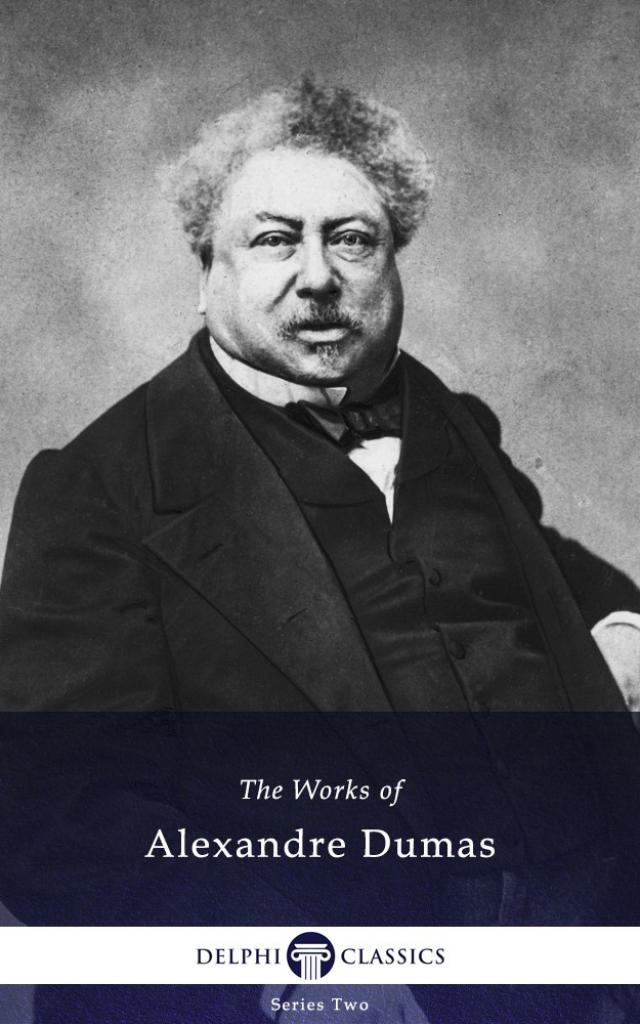
THE COMTESSE DE CHARNY
Anonymous translation, 1893
This is the last novel in the Memoirs of a Physician series and was first published in 1853. The novel concerns the French Revolution up to the death of Louis XVI. The Countess de Charny begins where Ange Pitou left off, after the attack on Versailles and the Royal family’s ‘escort’ back to Paris.
An original illustration
An illustration from the first English edition
CONTENTS
CHAPTER I.
CHAPTER II.
CHAPTER III.
CHAPTER IV.
CHAPTER V.
CHAPTER VI.
CHAPTER VII.
CHAPTER VIII.
CHAPTER IX.
CHAPTER X.
CHAPTER XI.
CHAPTER XII.
CHAPTER XIII.
CHAPTER XIV.
CHAPTER XV.
CHAPTER XVI.
CHAPTER XVII.
CHAPTER XVIII.
CHAPTER XIX.
CHAPTER XX.
CHAPTER XXI.
CHAPTER XXII.
CHAPTER XXIII.
CHAPTER XXIV.
CHAPTER XXV.
CHAPTER XXVI.
CHAPTER XXVII.
CHAPTER XXVIII.
CHAPTER XXIX.
CHAPTER XXX.
CHAPTER XXXI.
CHAPTER XXXII.
CHAPTER XXXIII.
CHAPTER XXXIV.
CHAPTER XXXV.
CHAPTER XXXVI.
CHAPTER XXXVII.
CHAPTER XXXVIII.
CHAPTER I.
The Inn of the Bridge of Sevres.
THE WELL-KNOWN manufacturing village of Sevres lies somewhere about half way between Paris and Versailles. At the door of the inn adjoining the bridge a personage was standing who is to play an important part in our narrative.
He was forty-five or forty-eight years of age. He was dressed as a workman, that is to say, had velvet breeches with leather facings at the pockets, like those worn by locksmiths and blacksmiths. He wore grey stockings, and shoes with copper buckles, and had on a woollen cap, like that of a lancer cut in half. A perfect forest of grey hair escaped from his cap and hung over his eyes, which were large, open, and intelligent, and flashed so wildly and so quickly that it was impossible to define their colour. The other features were a nose rather large than small, heavy lips, white teeth, and a bronzed complexion.
Though not large, his figure was admirable. He had delicate limbs, a small foot, and his hand would have seemed so too, had it not the bronze tint of that of all who work in iron.
Ascending from the hand to the elbow, and thence as far as the rolled-lip sleeve suffered it to be visible, it might have been seen, in spite of the volume of muscle, that the skin wag soft and fair.
This man had come an hour before from Versailles. In reply to questions asked by the innkeeper when he brought him a bottle of wine, he had said: the queen, with the king and dauphin, were coming; that they set out about noon; and they were about to occupy the Tuileries, the consequence of which would be that Paris, having in it “the baker, his wife, and the baker’s boy,” would not want bread.
He was waiting to see the cortege pass.
The assertion might be true, yet it was easier to see that he looked oftener towards Paris than towards Versailles.
After a few minutes he seemed satisfied, for a man clad almost as he was, and apparently of the same condition, was seen to approach the inn.
The new-comer walked heavily, like one who had made a long journey. His age might be that of the unknown man, that is to say, as people usually do, that he was on the wrong side of forty. His features betokened him to be a man of common inclinations and vulgar instincts.
The stranger looked curiously at the newcomer, as if he wished at one glance to measure all the impurity and wickedness of the heart of the man.
When the workman who came from Paris was about twenty paces from the man who awaited him, the latter poured out the first glass of wine into one of two glasses which stood on the table. “Ah! ha!” said he, “it is cold, and the journey is long. Let us drink, and warm ourselves up.”
The man from Paris looked around to see who gave him this invitation. “Do you speak to me?” said he.
“Whom else should I? There is no other person present,” was the reply.
“Why offer me wine?” — ” Why not?”
“Ah!”
“It is because we are of the same, or nearly the same trade.”
“Everybody may be of the same trade. It is necessary, however, to know whether one be companion or master.”
“Well, we will drink a glass of wine, chat, and find out which is the case.”
“Very well,” said the workman, advancing towards the door of the inn.
The stranger led the new-comer to the table and gave him the glass.
“Ah!” said he, “this is burgundy.”
“Yes, the brand was recommended to me, and I do not regret that I ordered it. There is yet wine in the bottle, and other bottles in the cave.”
“What are you about now?”
“I am from Paris, and await the coming of the royal cortege, which I intend to accompany to Paris.”
“What mean you?”
“The king, queen and dauphin return to Paris with the market women, two hundred members of the assembly, and the national guard under the command of Lafayette.”
“Le Bourgeois has then resolved to go to Paris?”
“He had to do so.”
“So I thought, at three last night, when I left for Paris.”
“Ah! I was curious to know what would become of the king, especially as I know him. This is no boast. A man who has a wife and three children must feed them, especially when there is no longer a royal forge.”
The stranger said only, “Then business took you to Paris?”
“Yes, and on my honour, I was well paid for it.” As he spoke, the man rattled several coins in his pocket. “The money, however,” said he, “was given me by a servant; what is worst of all, by a German servant. That was wrong.”
“Ah,” said the stranger, like a man who advances slowly, but yet advances, “you are on a business which is important, and well paid for?”
“Yes.”
“Because it is difficult?” — ” It is.”
“A secret lock? hey?” — ”An invisible door “
“An invisible door!” — ” I imagine a man in a house, who finds it necessary to hide himself. Well, the bell is rung. Where is monsieur? He is not in! no! he is! look for him! he is looked for! good evening! I defy any one to find monsieur. An iron door with oak panelling, you understand — few can tell the difference.”
“But if any one touch it?”
“Bah! just make the oak an inch thick, and no one can tell. I could not myself.”
“Where made you that?” — ”Aha!”
“Then you will not tell?” — ” I cannot, for I do not know.”
“You were then blind-folded?”
“Exactly. There was a carriage at the gate; they said, ‘Are you so and so?’ ‘Yes,’ said I. ‘Well, we awaited you. Get in.’ I did. When in, my eyes were bandaged, and the carriage was driven for nearly half an hour; at last, the door of a great house was opened; I stumbled at the first step, and then went up ten steps into the vestibule. There I found a German servant, who said to the others, ‘It is well! Go away, there is no longer any need of you.’ The others left, and the bandage was taken from my eyes, and I was told what I had to do. I set to work, and in one hour all was done. They paid me in good louis d’or. My eyes were again blind-folded; I was put in the carriage, and taken back to the place whence I was borne.”
“The bandage must have been very tight to prevent one from telling the right from the left.”
“Heu! heu!”
“Come, then,” said the stranger, “tell me what you really saw.”
“When I stumbled I took care in a slight degree to derange the bandage.”
“And when you had done so?” said the stranger with equal vivacity.
“I saw a row of trees on the right, which made me think the house was on the Boulevard; that was all I know.”
“Ah!” — ” On my word of honour.”
“That gives little information.”
“The Boulevards are long, and there are many houses with wide doors on them.”
“Then you would not recognize the house?”
The locksmith thought for a moment and said, “No, I would not.”
The stranger, though his face did not seem to say what he really wished to utter, appeared satisfied and said: “Well, then, it seems there are no locksmiths, since people send to Versailles for one to make a secret door.”
He then filled the glasses again, and knocked on the table with the empty bottle, that the innkeeper might bring a full one.
“Yes, there are locksmiths in Paris, but there are masters and professors.”
“Ah, I see; like St. Eloi, you are one of the latter.”
“I am. Do you belong to the trade?”
“Something of the sort.”
“What are you?” — ” A gunsmith.”
“Have you any of your work about you?”
“Do you see this gun?”
The locksmith took the gun, looked carefully at it, tried the lock, and approved of the click of the springs, then, reading the name on the breech, said, “Impossible, my friend! L
eclerc cannot be older than twenty-eight. Do not be offended, but you and I are close on fifty.”
“True, I am not Leclerc, but I am just the same.”
“How so?” — ” I am his master.”
“Ah, that is just as if I had said I am not the king, but his master.”
“What mean you?” — ”Because I am the king’s master.”
“Ah! have I the honour to speak to M. Gamain?”
“You have, and if I could, I would serve you,” said the locksmith, delighted at the effect he had produced.
“Diable, I did not know I was talking to a mail of such consequence.”
“Ah!” — ”To a man of such consequence,” repeated the stranger. “Tell me, is it pleasant to be a king’s master?”
“Why?”
“I think it very humiliating for one man to be forced to call another ‘your majesty.’“
“I did not have to do so. When at the forge, I called him Bourgeois, and he called me Gamain, when we spoke together familiarly.”
“Yes, but when dinner time came, you were sent to eat with the servants.”
“Not a bit of it; a table ready served was brought to me at the shop, and at breakfast he often said, ‘Bah! I will not go to see the queen, for then I will not have to wash my hands.’“
“I do not see.”
“Why, when the king worked in iron as we do, his hands were like ours. That does not, however, keep us from being honest people, but the queen used to say: ‘Fie, sire, your hands are dirty.’ Just if one could work in a shop and have clean hands! I tell you, he was never happy, except when in his geographical library, his study, or when he was with me. I think, though, he liked me best.”
“Such a pupil as a king must have been a famous business for you.”
“Not a bit: you arc mistaken. I wish devoutly it was so; for though the master of Louis XVI., the Restorer of France, while all the world thinks me as rich as Croesus, I am poor as Job.”
“You poor? What on earth does he do with his money, then?”
“One half goes to the poor, the other half to the rich, so that he never has a penny. The Coigny, the Vaudreuil, and Polignac gnaw the poor fellow away. One day he wished to reduce Coigny’s salary, and made Coigny come to the door of the shop, and after about five minutes, he came in as pale as possible, saying, ‘On my honour I thought he would beat me.’ ‘But his salary, sire?’ said I. ‘Oh, I let it stand as it is. I could not help it.’ A few days afterwards he sough t to make some remarks to the queen about the pension of Madame de Polignac; only think, three hundred thousand francs! a nice thing. Bah! it was not enough. For the queen made him give her five hundred thousand. Thus you see Polignacs, who a few years ago had not a sou, are about to leave France with millions. That would be nothing, had they any talent; but give the whole of them an anvil and sledge, and not one can shoe a horse or make a key. They, however, like knights, as they say they are, have urged the king forward, and now leave him to get on as he can with Bailly, Mirabeau, and Lafayette; while to me, who would have given him such good advice, Ins master, his friend, who first put the file in his hand, he has given only fifteen hundred crowns a year.”
“But you work with him, and something good falls in from day to day.”
“What! I work with him? No. It would compromise me. Since the taking of the Bastille I have not put my foot inside of the palace. Once or twice I met him; the street was full of people, and he bowed to me. The second time was on the Satory Road, and he stopped his carriage. ‘Well, poor Gamain,’ said he, ‘things do not go on as you wish them to. This will, however, teach you. But how are your wife and children?’ ‘Well, very well,’ said I. ‘Here!’ said the king, ‘make them this present for me.’ He searched his pockets, and all the money he could find was nine louis. ‘This is all I have!’ said he, ‘and I am ashamed to make you so poor a present.’ You will agree with me that a king who has nine louis only, and who makes his comrade so poor a present, must be badly off.”
“You did not take them?”
“Yes I did. You must always take, for somebody else would. It is, however, all right, for I will never go to Versailles, though he send for me again and again. He does not deserve it; and when I think that he had ten thousand bottles of wine, each of which was worth a dozen of this, and that he never said to one of his servants, ‘Take a basket to Gamain.’ Ah, he preferred that his Swiss, his body-guard, and his Flemish soldiers should have it.”
“Well,” said the stranger, “so it is with kings; they are ungrateful. We are, however, no longer alone.” At that moment two men and a fish-woman entered the room, and sat at a table near the one at which Gamain and the stranger were drinking the second bottle.
The locksmith looked at them with an attention which made the stranger smile.
The party, however, was worthy of attention.
One of the men was all torso: the other all legs. The woman it is not so easy to describe.
The torso was like a dwarf, for he was hardly five feet high. He perhaps lost an inch or two from the fact that he was knock-kneed. His face, instead of lessening this deformity, seemed to make it more apparent, for his straight and dirty hair was flattened on his head, and his badly-marked brow seemed to have grown Imp-hazard. His eyes were usually glassy, but, when irritated, flashed like those of a viper. His nose was fiat, and made his high cheek-bones the more apparent. To make everything more hideous, his yellow lips covered but half a dozen black and broken teeth.
The veins of this man seemed filled with mingled blood and poison.
The second, different from the first, who had short legs, looked like a crane on stilts. His resemblance was the more striking, since, hump-backed like the crane, with his head sunken between his shoulders, it was to be distinguished only by its red eyes and its long-pointed nose. Like the heron, too, it seemed to have the faculty of extending its neck at will, and picking out the eyes of any person it pleased. This, however, was nothing, for the arms seemed to have an equal elasticity, for seated as he was, he could at once pick up a handkerchief on the floor with which to wipe his brow.
The third was an amphibious being, the family, but not the sex of which could be recognized. It was either a man or woman of thirty, or of thirty-four years, and wore the dress of a fish-woman, with chains of gold, and ear-rings, with lace cape, etc. Her features, as far as they could be distinguished through the coating of rouge above them, were worn and faded. When one had once seen her, one awaited with anxiety until she should open her mouth, with the expectation that her voice, better than her appearance, would give some indication which might be definite. All this though, was nothing, for her soprano voice left the examiner in equal doubt, for the ear was not more positive than the eye.
The shoes and stockings of the woman and the two men indicated that they had walked in the mud long and far.
“Strange!” said Gamain, “but I think I know that woman.”
“Perhaps,” said the stranger; “but, my dear fellow, when you see three persons together, be sure they have business to attend to: let us not bore them.” He took up his gun, and proposed to go.
“Do you know them?”
“Yes, by sight. I swear I have seen that woman somewhere.”
“At court?” — ”Bah! she is a fish-woman.”
“They go to court sometimes.”
“If you know them, tell me the names of the men; it may enable me to remember the woman.”
“The men?” — ” Yes.”
“Which?” — ” The dwarf.”
“Jean Paul Marat.” — ”And the hunchback?”
“Prosper Vevrieres.” — ”Ah, all!”
“Does that put you on the track of the woman?” — ” No.”
“Look again.” — ”I give my tongue to the dogs.”
“But the fish-woman?” — ”Wait a bit no — yes.”
“Yes?” — ” It is — impossible.”
“Yes, at first it seems impossible.”
“It is — ”
“Ah, you will never name her. The fish-woman is the Duke d’Aiguillon.”
At the sound of the name, the apparent woman turned pale and looked around.
The stranger placed his fingers on his lips, and left. Gamain followed him, thinking that he was mistaken. At the door, ho knocked against a person who seemed to fly, pursued by persons who shouted out: “The queen’s hairdresser!” Among these pursuers were two, each of whom bore a bloody head on a pike.


__english_preview.jpg)


