

A beginners guide to sca.., p.1
A Beginner's Guide to Scandal, page 1
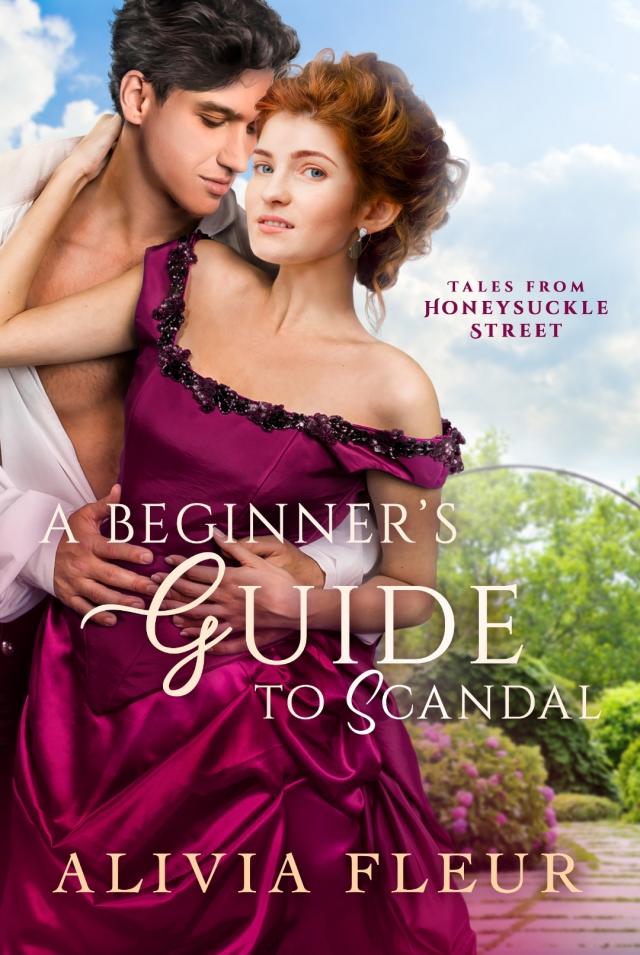


A Beginner's Guide to Scandal
Alivia Fleur
A BEGINNER’S GUIDE TO SCANDAL is a work of fiction. Any resemblance to actual events or persons, living or dead, is entirely coincidental.
All rights reserved. No part of this publication may be reproduced, distributed, or transmitted in any form or by any means, including photocopying, recording, or other electronic or mechanical methods, without the prior written permission of the publisher, except in the case of brief quotations embodied in critical reviews and certain other non-commercial uses permitted by copyright law.
A catalogue record for this work is available from the National Library of Australia.
Cover design by Evelyne Labelle at Carpe Librum Book Design www.carpelibrumbookdesign.com
A BEGINNER’S GUIDE TO SCANDAL © 2023 by Alivia Fleur
For anyone who has held the hand of someone already gone.
Contents
Prologue
1. Chapter One
2. Chapter Two
3. Chapter Three
4. Chapter Four
5. Chapter Five
6. Chapter Six
7. Chapter Seven
8. Chapter Eight
9. Chapter Nine
10. Chapter Ten
11. Chapter Eleven
12. Chapter Twelve
13. Chapter Thirteen
14. Chapter Fourteen
15. Chapter Fifteen
16. Chapter Sixteen
17. Chapter Seventeen
18. Chapter Eighteen
19. Chapter Nineteen
20. Chapter Twenty
21. Chapter Twenty-one
Epilogue
An Old Fashioned Quickie
Historical note
Acknowledgements
A Most Improper Duchess
About
Prologue
October 1863
Iris knew where Hamish would be. She waited until the sun set and the house was not yet still, but only murmuring, before she crept from her bed. She threw a coat over her nightgown, tugged on her slippers, eased the window open, and swung her legs out onto the oak branch. Moving with a familiar purpose, she shuffled along, over the fence, the way she had for as far back as she could remember over her eighteen years, then dropped to land on the overgrown lawn of the abandoned villa at Number 6, Honeysuckle Street.
The earlier frantic conversations and garbled shouts still rang in her ears. The Dalton staff spoke high and frantic, conveying horrid news about an overturned phaeton. Hamish’s father was abed and anguished, his mother had been injured badly and had died before arriving at the hospital, and Lewis, thrown hardest and furthest, was gone before the first passer-by had stumbled upon the twisted wreck. The horse, with two legs broken, had been the final casualty.
Throughout the afternoon, the rumour mill ground out grist of half-truths. Some said the earl, who had never been patient, had pulled too hard on the reigns and the horse had taken offence. Others suggested a robber from the shadows had upset the normally calm mare. The truth, when it was declared by the coroner, was more mundane. Moving too fast because they were late, a wheel had hit a rut in the road and the conveyance had tipped, spilling Hamish’s family onto the street like milk.
Far worse than the idle speculation were the comments thrown by some of the staff that called to see if the Dalton’s second son, now heir, was with his old friend, as no one could find him at home. ‘He’s a lucky one,’ the maid had said. ‘He gets to be earl now.’
Iris slipped through the backdoor of Number 6, and once inside, she felt his presence even before she heard his small sob. Fingers trailing over the peeling wallpaper and flaking paint, she followed the noise down the old hallway, calling softly to make sure he heard her approach. She navigated the staircase without thought, as she knew the path to avoid creaks and gaps, even in the dark, until she reached the old servants’ quarters and cellars buried beneath the house. There, in the old kitchen, huddled over the open belly of the oven with an old flint they used to spark kindling, sat Hamish. His coat—one of the ill-fitting cast-offs that had been his brothers—lay discarded on the grubby floor, confirmation that money wasn’t quite as lush as his family pretended. Iris took the flint and struck it, sparks flying into the cavity until a few landed on the paper, and she leaned over and blew gently, coaxing them into life. In silence they fed the small blaze some twigs, then sticks, until finally flames cast dancing shadows over the walls. Thin whisps of smoke puffed into the room, frail tendrils smelling of warmth and wood, like a memory already out of reach.
‘Iris. They say that… Lewis. And my mother. Is it true?’ He looked to her in desperation, and she knew that he wouldn’t believe the rumours until she confirmed them. She nodded, and his face crumpled and distorted with pain. She thought he might start crying again, but he didn’t, only shrank into himself as if crushed by the truth. Iris held out her arms and he curled into her side, the two of them breathing sadness into the chilled air of the kitchen. He laid his cheek against her breast, and Iris rested her chin on his unruly curls that smelt like orange water.
When she replayed the memory in her mind later, she could never be quite sure who found whose lips in the darkness, only that one moment they had clung to each other with the knowledge that everything they knew had shifted, and in the next they were pressed together. But she did know that she had been the one to find his collar and unfasten the mother-of-pearl button, and she had moved his hand to her thigh and encouraged him to explore her nakedness beneath her nightgown.
They had moved in sync, as they had always done. Offering and receiving. Giving and taking. Hamish spread his coat and bunched his shirt into a pillow, and she untied her hair so that it splayed behind her as she lay back, naked and shivering. He kissed the dip at the base of her neck, and his hands warmed her as his body chased away the chills. Lips locked and hands intertwined, they moved like making love was a dance. And when it was over, they remained curled against each other until the black of night turned grey, then violet, and they helped one another dress. No words or empty promises, as neither of them had any certainty to give.
Later that day, Iris pressed her hand to the window and watched as Hamish, now changed into a black suit, walked down the stairs of Number 8, climbed into a carriage, and rumbled away. Not once did he look back.
Chapter One
February 1875
Twelve years later
The old house had been demolished.
Hamish shouldn’t have been surprised. The place had been an eyesore and a death-trap when he was young. A dilapidated relic even in his earliest memories, Number 6 Honeysuckle Street had likely been built before the Peninsular Wars. The front door had always been boarded and nailed shut, while the back door wouldn’t close. On cold days, the wind pushed itself through cracks in the walls and broken panes of glass, sending the scraps of curtains flickering.
Hamish’s grandfather, may he rest in peace, had constantly bellyached about the state of the hideous building. When sufficiently roused, he would stamp his cane against the rug in time with each bellowed syllable until Hamish’s father promised to write to the authorities, again.
Yes, it was a blessing that the old ruin had been knocked down.
And yet Hamish, Lord Dalton, heir to Earl Caplin, felt bereft. Twelve years had passed since he had last been in London, and when he recalled his childhood visits, the old house always figured in his memory. It had been the backdrop to many epic battles and adventures as he and the other spare heirs of the street played while nannies and maids gossiped. From the clacking shutters to the missing third stair, or to the cellar kitchen where they would light small fires in the old stove and make tea in a scavenged pot, or the treasure trove of busted furniture they used to build castles, it had all remained solid in his thoughts. For how long had he imagined it unchanged when here it was rubble?
A shadow shifted, and from behind a pile of bricks and dirt, a grey tail with a white tip flicked.
‘It can’t be.’
Hamish picked his way between the uneven bricks and clumps of weeds until he stood a few feet from the pile of debris, then he squatted down. As he tugged off his glove and extended his hand, he gave a low whistle before gently calling, ‘Remember me?’
The raggedy tom regarded Hamish with narrow green eyes. His white whiskers twitched, sniffing the air, before he pushed his nose against Hamish’s outstretched fingers and smooched against his palm. He could have walked straight from a memory. Spencer, the cat owned by no one and everyone, was somehow still alive, and judging by the slight paunch to his belly, was still king of Honeysuckle Street. As Spencer nuzzled into his palm, Hamish curled his fingers to scratch beneath an ear and was rewarded with a rumbling purr.
‘I would advise against that.’
Hamish didn’t want to break his reacquaintance with an old friend, so he remained squatting as he turned towards the street seeking the source of the comment. In the strained light of a mid-morning fog, he saw only the silhouettes of two women in walking attire. He couldn’t clearly see their faces, but that voice… it wasn’t so much the tone, which was deeper than the light, girlish tenor from his memory, but the all-knowing boldness that rang with incredible familiarity.
‘All is well,’ he called before running his palm down Spencer’s back, who arched into the stroke with an extra loud purr. ‘We’re old friends.’
‘Friendship won’t save your suit, I’m afraid,’
As if scalded, Hamish pushed himself to standing and clapped his hands together furiously. How had he not noticed? Flecks of fur wafted in the air, floating languidly before attaching to his suit as if it were magnetised. His trousers, brand new, were now sprinkled with specks of white and grey. Blast it. He’d need to change now before he went to the club.
A light laugh carried, high and bright, with the same assuredness that had chased him through streets and over fences all through his childhood. Never once giving a jot for who he was or who she was. After all this time, was she still living on Honeysuckle Street?
Hamish brushed the last of the fur from his palms. ‘Do you know what happened to the house that used to be here?’
But when he looked to the street, the lady and her companion were gone.
Chapter Two
The thump of the front door closing smothered Iris’s exhalation of relief. The February morning had been the warmest this week, which hinted at the impending summer heat that would round out the end of the stifling London season. Iris unbuttoned her coat and unpinned her hat. She fidgeted with its ribbons, uncoiling the loops until they were almost pulled loose.
Lord La-di-dah had returned.
‘Are you well, miss?’ Gena Tanner, her father’s housekeeper and, in the absence of a suitable female relative, Iris’s unwilling chaperone on her morning walks, took the hat and quickly rearranged the ribbons back into their proper place. ‘Would you like tea?’
‘In the study. Please.’ Iris slipped off her gloves and tucked them into her pocket.
Even without Spencer’s purr of approval, Iris would have recognised him. Yes, his chest had filled out and his shoulders had broadened. The mop of wayward curls had been replaced by a scrupulously tamed head of black hair, and his clothes had been made to size, a change from his brother’s ill-fitted cast-offs. But the lanky boy, the one she had teased and chased and clambered through the back lanes of London with, his shadow remained etched in his easy gait, was tucked into the dimples of his confident smile, and still echoed in the impulsiveness of a man who would clamber over rubble in a good suit to stroke a street cat.
A question intruded on her reverie, and Iris had to blink hard to clear the whisps of memory. It would do no good to ruminate. Memories had no place in this house.
‘Pardon, Mason?’ The butler, Mason Richards, stood waiting in the hallway.
‘Mr Sanders has come to call. He insists on seeing your father.’ He spoke in an exaggerated stage whisper.
‘But he was just here yesterday.’ Panic gripped Iris and squeezed the breath from her lungs. ‘Where is Papa?’ she asked, her voice low.
‘In the courtyard, napping. I asked Mr Sanders to leave his card, but he insists it is important business.’
‘We can manage this.’ Iris pinched her skirt between her fingers, bunching the flannel into her fists before releasing and smoothing the soft wool out again. ‘Is Mr Rogers in?’
‘He’s seeing to the horses,’ Mason replied.
‘Right. If Papa wakes, have Mr Rogers keep him outside. And in about ten minutes, could you please interrupt us with an urgent message about something I must attend to.’ Iris took a steady breath, fixed a smile, and took a step towards the sitting room.
‘Excuse me, miss,’ Mason hissed down the hall. ‘What’s the message?’
‘What message?’
‘The urgent message. What is it?’ Mason asked.
‘There is no message. I just need you to pretend there is one, so that I can make my excuses and Mr Sanders must leave.’
‘But I can’t deliver an honest line if I don’t understand the meaning behind it.’
‘Heavens help me,’ Iris muttered. Like most of the people in their employ, Mason had found his way to them via her father’s dear friend Jonah Worthington, who had a habit of saving wretches from ruin. Mason had come to London with theatrical dreams, but like so many who arrived in the capital, had supplemented his sporadic paid roles with small jobs, and then had entered service, before one day finding he was more staff than star. Mason’s dream of walking the boards of the West End had never left him, and the old desire reared its head at the most inopportune moments.
‘It can be any message. A fire in the kitchen. A note from Miss Delaney.’ Iris smoothed her hair. ‘Improvise.’
Mason’s head bobbed in comprehension before he scuttled down the hall, calling ‘Gena? Have you seen Mr Rogers?’
Mason disappeared around a corner and down the stairs to the kitchens. Curse Jonah and his West End failures. Iris found her most polite smile—not too enthusiastic, but not too dour—and stepped into the sitting room.
Mr Sanders, dressed in a neat black suit and plain grey waistcoat, stood half bent over a bookcase, squinting over his spectacles as he examined a lower shelf. The most junior investor on her father’s board reminded Iris of a parrot she had seen in India whose owner had claimed could read, but instead squawked taught phrases when bribed with peanuts. He spoke with purpose and exactitude, but he lacked vigour or imagination. In the bright flamboyance of her father’s favourite room, Mr Sanders appeared almost a shadow amid the brighter reminiscences of their lives.
Iris cleared her throat. Mr Sanders did not move. ‘Mr Sanders,’ she called, louder. ‘A business call two days in a row. How pleasant.’
He startled, like a mouse caught by a lantern, hesitating on which way to turn. ‘Miss Abberton. I have the files your father requested.’
Iris edged closer to the table and looked down at the stack of manila folders stuffed with cream papers, all tied together with a canary yellow cord. The long, flowing script on the top file read Invoices and Returns – March 1874.
‘I asked for January, not March,’ Iris said. She checked the title on the file underneath. February. Iris looked up, annoyed, then caught the slight frown creasing Mr Sanders’s forehead. ‘That is, Papa asked for January. He wanted to compare the previous year’s figures for post-Christmas.’
‘Is your father joining us? I wanted to speak to him on a business matter.’
‘Papa is indisposed. But I can pass on any message you may have. Has the shipment from Lisbon arrived? He was very clear all three boxes were reserved for Mr Selfridge, he wanted exclusive—’
Mr Sanders waved his hand. ‘The Lisbon shipments have been unloaded. There was some trouble at the docks, but nothing to concern you. Is he not in? I would really prefer to speak with him directly.’
‘As I said, he isn’t available, but if you tell me the issue—’
Before Iris could press Mr Sanders on what trouble at the docks meant, Gena backed through the doorway singing in a slightly off-key. ‘Tea and scones, fresh from the oven. Fancy a hot bite of heaven, Mr Sanders?’
‘I beg your pardon,’ he said, his mouth slightly agape.
‘You mentioned trouble at the docks.’ Iris swerved around Gena to move closer to Mr Sanders. ‘You didn’t call the constabulary, did you? What were their complaints?’
‘Fancy a squeeze?’ Gena called, holding up a slice of lemon.
Mr Sanders flushed cherry red. Iris took a step closer. ‘Was anything damaged?’
In the hallway a door slammed, and, beneath the tinkering of plates and cups, Iris could just make out her father’s mumble, followed by the deep Welsh tones of Mr Rogers. ‘Sir, please come pat the horse some more. He only nibbles, never bites.’
‘Is your father really not in?’ Mr Sanders’s voice went up an octave. ‘I thought I heard him arrive, just now—’
Annoyance and frustration spread warm through Iris’s body. ‘Are you being evasive, Mr Sanders? Because if there is a problem, then Papa needs to know.’ If he would just tell her the issue, she could check the records, contact the more prominent men amongst the workers, and make any necessary arrangements to avoid disaster.
‘Do you take sweetening, Mr Sanders? Sugar or honey? I have a lovely honeypot,’ Gena called.
‘The horse. Sir, please come back—’


