

Rain steam and speed, p.1
Rain, Steam and Speed, page 1


For my brother
Contents
Dedication
Story 1
Story 2
Story 3
Story 4
Story 5
Story 6
Story 7
Story 8
Story 9
Story 10
Story 11
Story 12
Story 13
Story 14
Story 15
Story 16
Story 17
Story 18
Story 19
Story 20
Story 21
Story 22
Story 23
Story 24
Story 25
Story 26
Story 27
Story 28
Story 29
Story 30
Story 31
Story 32
Story 33
Story 34
Story 35
Story 36
Story 37
Story 38
Story 39
Story 40
Story 41
Story 42
Story 43
Story 44
Story 45
Story 46
Story 47
Story 48
Story 49
Story 50
Story 51
Story 52
Story 53
Story 54
Story 55
Story 56
Story 57
Story 58
Story 59
Story 60
Story 61
Story 62
Story 63
Story 64
Story 65
Story 66
Story 67
Story 68
Story 69
Story 70
Story 71
Story 72
Story 73
Story 74
Story 75
Story 76
Story 77
Story 78
Story 79
Story 80
Story 81
Story 82
Story 83
Story 84
Story 85
Story 86
Story 87
Story 88
Story 89
Story 90
Story 91
Story 92
Story 93
Story 94
Story 95
Story 96
Story 97
Story 98
Story 99
Story 100
Story 101
Copyright
Having ridden his 250cc Honda up the scaffolding plank, used as a ramp across the two steps from path to road, Owen Linton-House set the bike on its stand under the overhanging branches of a large cherry tree. In the time it took him to carry the plank and lay it down against the bottom of the wall, at the side of the house, the dripping branches had made his saddle wet. After closing the gate, he rubbed off the worst, with the sleeve of his jacket, acknowledged his sister, who was watching through the living room window, and rode off, in the direction of Wateringbury. If he was lucky, he would arrive in Caterham, before the next weather front closed in, although as he was driving towards the darkening horizon, a dry outcome was unlikely. Helen went into the kitchen to make some cheese on toast.
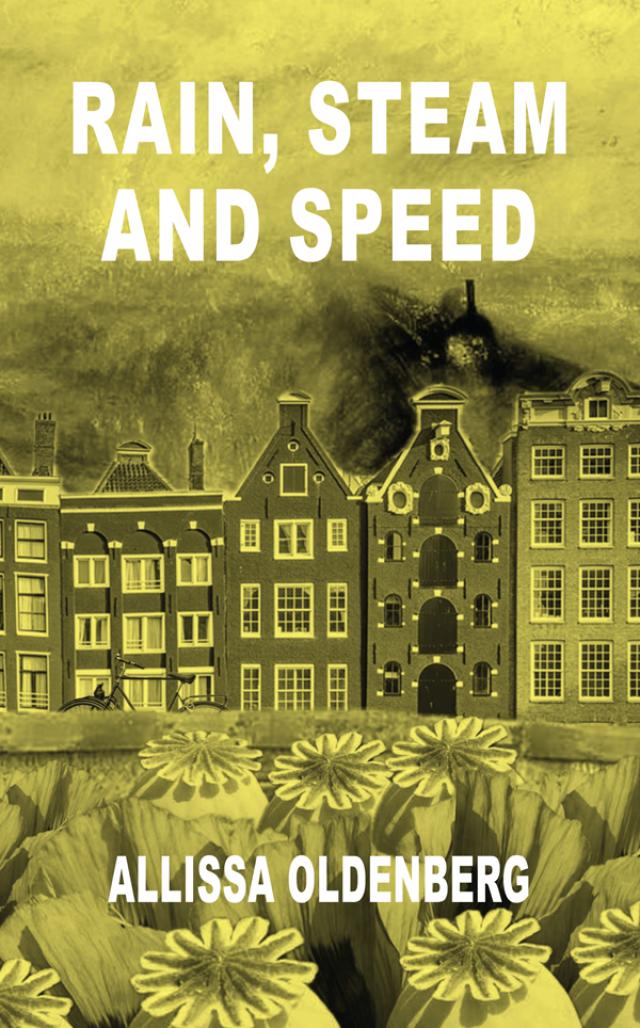
Glancing at the calendar, hanging on the back of the kitchen door, which Owen had given their mother, last Christmas, Helen noticed two things. Firstly, that the picture for the month was Joseph Mallord William Turner’s Rain, Steam and Speed. Although Helen was a huge fan of Monet, she appreciated Turner’s paintings as much, if not more. Secondly, 19th June 1979 was a due date for the cats’ worming tablets. Cadbury, the chocolate-point Burmese, was a sucker for cheese, and never noticed his pill, when disguised as a lump of cheddar. Joey, on the other hand, a rather fetching ginger shorthair, was less inclined to take his medicine. He generally needed four hands, two to hold him with two more to prize open his jaws and push the tablet down his throat, close his mouth, and rub his chin until he swallowed. Despite this palaver, he regularly outwitted his owners, if only a partial victory, which lasted until the tablet was swept up from under the table or cupboard, the next morning, and the process repeated.
Tomorrow would be Owen’s eighteenth birthday. What Helen could not have appreciated at the time, was that 19th June 1979 would be the last time she saw her brother, for twelve years. Had she known, it is hard to imagine how she might have felt, or what she might have done. The last few months had been difficult. After all the sacrifices the family had made, Owen had been expelled from school. Perhaps the outcome was more lenient than it could have been. Although he was expelled, they allowed him to take his ‘A’ levels, and they made a point of not informing the university. Beyond exam trips to Tonbridge, Owen had spent the last few weeks in his room, revising, avoiding his parents. He had no intention of spending the summer at home. He wanted to go and build his life, somewhere other than in the shadow of his parents’ pagoda.
The image was an interesting reflection on his life. After eighteen months, without any word from Owen, Gail and Ben Linton-House had decided to clear Owen’s belongings and turn his room into a guest bedroom. Before all Owen’s stuff was boxed up or discarded, Helen had sneaked into his desk, a rather fetching, although second hand, walnut-veneered bureau, with the key still in the lock, and discovered an exercise book, containing Owen’s poetry. That is where Helen read the words, ‘Why must you build your life in the shadow of your parents’ pagoda?’.
When finally, his search to cast his own shadow came to an end, Helen received the first of two phone calls in her life, she would never forget. It was twelve years, since Helen had heard Owen’s voice, since any of the family had contact from him. Around ten o’clock, one evening in May 1991, the home phone rang.
“There’s someone here who wants to speak to you,” Ben informed his daughter.
The deep, ex-patriot voice Helen heard next was unfamiliar to her.
“Hello, Sweetheart. How are you?”
For a split second, she did not know what to think or say, which caused her to ask a somewhat daft question.
“Are you in the UK?”
“Yes, I’m at Mummy and Daddy’s. We’ve already started the bottle of cognac I bought.”
“Stay up. I’m leaving now. I should get to you by one-thirty, two o’clock.”
“See you soon.”
Helen grabbed some clothes and her wallet. The journey from Nottingham to Kent, at that time of night, was clear, although when she reached the M25, the surface water suggested some quite heavy rain. Three and a half hours later she pulled up next to the back-garden gate and went into the Linton-Houses’ living room for a long overdue family reunion. Owen, Ben, and Gail had already polished off most of the bottle of cognac. Helen was not the slightest bit offended as she did not much like cognac, other than as flavouring in brandy sauce, or flaming a Christmas pudding. She hugged Owen, hardly able to believe her eyes.
Over the next few weeks and months, Owen visited Helen, in Nottingham, on several occasions, hitching a lift north, and being collected from the hotel at Junction 25 or similar destination if he could not get a ride into Nottingham. She helped him create a curriculum vitae which encapsulated the skills and experience he had gained over the last decade, without revealing secrets, official or unofficial. He shared with Helen, his adventures, since he rode off on his Honda 250, the day before his eighteenth birthday.
The second phone call came almost exactly a year later, at the end of May. Helen was heavily pregnant, when the phone rang, shortly after eight o’clock in the morning. This time it was her mother.
“Sit down.”
Helen did not argue, but she knew in her stomach that something was wrong. She sat down.
“Owen crashed his motorcycle last night and died.”
Helen was stunned.
“He was on his way home. He hit a gate post. The police came here and asked if we could go and identify him, at the scene, as it was only a mile up the road. The ambulanceman said he would have died instantly. There was no other vehicle involved.”
“But he only came home a year ago.”
“I know. There will have to be an inquest, so we won’t be able to plan a funeral.”
“Oh. OK.”
The inquest concluded that it was an accidental death, Owen having four times the legal limit of alcohol in his blood. When the arrangements were made, Gail would not allow Helen to attend the funeral, because she was so close to her due date, and travelling for such an emotionally difficult event was unwise. Apparently, it rained all day. In the end, the baby was ten days overdue. Helen’s contractions started the day before what would have been Owen’s birthday, and to Helen’s relief, after thirty-six hours in labour, Emily was born at one-thirty in the morning, the day after Owen should have turned thirty-one.
On several occasions, in the years before those two phone calls, during Owen’s self-imposed exile, Helen chose the unadventurous course of action. She told herself this was out of a sense of not wanting to heap further disappointment on her parents, but maybe it was just fear. Owen was either foolhardy or courageous. It turned out he was both, in equal measure, which is why Helen decided to write his story. This would be her third novel, since becoming Helen Painter, and starting her new life in France. She wanted her brother to be remembered for all he had accomplished, and not simply for the mistakes he had made. After al l, they had both grown up during the intervening years.
The more of Owen’s poetry Helen read, the more she gained perspective on the brother she hardly knew. He had a tremendous grasp of the English language, rich creativity, and had been badly hurt by a girl. Most significant, though, was his perspective on his own life. He had felt under so much pressure, to live his parents’ dreams and ambitions. At the age of nine, they had entered him, on the primary school’s recommendation, in a countywide competition for a scholarship. The prizes were two fully paid places as Yardley Court Preparatory School, followed by fifty percent of the fees for Tonbridge School. Owen had been successful, to his parents’ immense pride. They would cross the bridge of the other half of the Tonbridge School fees when they came to it, when Owen turned thirteen.
For the years he was at Yardley Court, Owen got up Monday to Saturday at six o’clock each morning, cycled two and a half miles to Marden train station, the nearest station to Collier Street, in all weathers, and home again each evening, arriving shortly after six o’clock. When the family moved to Yalding, the nearest station was Wateringbury, only a mile away, although up and down a steep hill. Although the cycle ride was shorter, the school day was longer, and since Owen had become involved with amateur dramatics and the Combined Cadet Force, three evenings a week he did not arrive home until a little after eight o’clock, which meant a very long day. As soon as Owen had eaten his tea, he would go to his room to do homework, after which, it was bath time and bedtime. The television, an unreliable black and white unit, which regularly required a bang of encouragement on the side, was only watched on Sundays. Occasionally, Owen would spend the weekend at the home of one or other of his two closest friends, Mason Somersby and Caleb Harris, even holidayed with Mason’s family, but neither of them ever came to stay. Caleb visited once, the previous year, as a seventeen-year-old, with a Suzuki motorbike, and Helen developed a crush on him, much to Owen’s annoyance.
It was hard to say, if the burden of his parents’ educational aspirations for Owen justified the effort. He was a bright boy, which is why he had won a scholarship, and no doubt, he benefitted from smaller class sizes than his sister’s secondary school. Would the connections he made, help him up the career ladder? Would attending a private school increase his chances of a place at Oxbridge? Owen had grown up in poverty, with Ben’s illness rendering him unable to work, living in rented accommodation, not owning a car. Would social mobility be possible? How Ben and Gail had managed to pay the other half of the fees for Tonbridge School, Helen never knew, other than money always being short. When he was fifteen, Owen even went on a school trip to Russia. Helen remembered him being bought a new suitcase, as well as a smart jacket and trousers. Helen’s trip to Beauvais, a couple of years later, involved the same suitcase, and no new clothes.
Ben never attended parents’ evenings, but Gail would make the twice-yearly trip to Tonbridge. She also went along to all of Owen’s school plays, often, just making the last train back. With her received pronunciation and general knowledge, Gail could carry off the social chit-chat with teachers and other parents, so long as the subjects of careers and acquisitions were avoided. Ben would have found it harder, although, he was uncomfortable in most social situations. It was clear from Owen’s poetry, that he felt he belonged in the context, a lot less than Gail.
Owen took fourth term Oxbridge entrance exams, unsuccessfully, and went on to achieve ‘A’ levels in French, Russian, History and General Studies, with high enough grades to secure his place at the School of Slavonic and Eastern European Studies (SSEES). Too embarrassed and ashamed to live at home, until the start of the university term, he had made the decision, to sleep at friends’ houses, over the summer. His overnight bag, stuffed in the top-box of his motorbike, gave no indication that he would not be coming home. In his mind, it was better this way.
Helen and Owen were born twenty months apart. Up until Owen started at Tonbridge School, they wavered between fighting tooth and nail or playing nicely together, although it was never long before the playing gave way to squabbling. They shared a bedroom until Helen was eight, and Gail decorated half the attic, the half that was a room with a door. Helen’s new quarters gave her space and independence, and more importantly, a sense of equality. Owen was older, and he was a boy. The reality was that Helen felt she was treated as second-best. Once Owen started at Tonbridge School, they mostly kept out of each other’s way.
The irony, concerning Helen’s feelings about favouritism, was that Owen was neither sporty nor practical, two things which their father was. It was Helen who played for the school, and later, Kent-county hockey team. It was Helen who was Daddy’s little helper, on Ben’s do-it-yourself projects, and as she grew up and gained skills and strength, it was Helen who helped in the garden or with decorating tasks, in ways that Owen simply could not. Ben once went along as a spectator to a Kent Under 18 hockey match against Hampshire, bizarrely, on the pitches of Tonbridge School, and watched Helen score an amazing goal. So, once Owen had left home for good, Helen came to feel her role was to make up for Owen’s failure.
Unlike Owen, she navigated the state system of education and came away with some ‘O’ levels, ‘A’ levels, and a place at Nottingham University. Would having similar opportunities to Owen have made any difference to her grades? Unlike Owen, Helen never touched drugs. Even before he had left home for Caterham and university, Owen had dabbled in cannabis and magic mushrooms.
One brief moment of adolescent solidarity shared by Owen and Helen was the day Ben discovered a tiny ball of resin in Owen’s room. Helen knew he had placed it in one of the pair of candlesticks on the mantlepiece, and she had swapped it for an equally sized rabbit dropping, returning the cannabis to her brother, much to his appreciation. Psychologists may differ in their opinions on whether cannabis and magic mushrooms can lead to heroin, as the family would one day learn was Owen’s case. After he left home, he became a heroin addict. So it was, in the summer of 1979, that whilst Helen settled into an extended summer vacation of picking strawberries, cherries and runner beans, enough to by her own 50cc Honda, before embarking on sixth form, Owen finished sixth form, tried to numb his pain with drugs, and began to chart his own course in life.
As anticipated, Owen rode into oncoming rain, just past Wrotham, heading along the A25, and arrived at the party soaked. Padlocking his motorcycle in the driveway, he grabbed his overnight bag from the top-box, replaced it with his helmet and rang the bell.
“Yikes, Owen, you look like a drowned rat,” Francis greeted him.
“Thank you. I don’t suppose I could use your shower.”
“Of course. Make yourself at home.”
Owen went in, removing his boots in the doorway. Francis picked up Owen’s boots and started to walk towards the kitchen.
“I’ll put these in the garage, out of everyone’s way.”
“Thanks.”
“Shower’s upstairs, second door on the left. First door on the left is the airing cupboard, where you’ll find the towels. We can put your wet clothes in the washing machine. You’re staying over for a few nights, anyway.”
“I am. Thanks a bunch. See you shortly.”
Owen ran up the stairs, chose a towel from the airing cupboard and went for a quick shower. When he came downstairs, he stuck his head round the sitting-room door to find the party in full swing. Santana, Abraxas, was playing, loudly, and some individuals he did not know were smoking a joint. Owen went into the kitchen and poured half a glass of vodka, topped up with orange juice.
“Owen, for God’s sake, what did you get caught for?” asked Dominic, ironically.
Dominic Andrews was one of the Whitworth house prefects, at Tonbridge School, and would be heading off to Oxford in September.
“It is what it is. Still think I was providing a useful service in an all-boys school. I probably got off lightly.”
“You’re still going to SSEES then?”
“Yep. They didn’t inform the university.”
“How lucky are you.”
“I know. Do you know if anyone else from our year is coming, tonight?”
“No idea. Francis seems to have various different circles of friends. It’s early yet.”
“OK. Catch up later.”
Owen disappeared into the sitting room and sat down on the floor, leaning against the wall. One of the strangers offered him the joint, which he accepted, taking a short, sharp drag, and handing it back. Just then, there was an almighty crash, in the hallway. Owen got up from his perch on the floor and went over to the door. A sixth former he recognised from school, although did not know his name, was lying in a heap on the floor, with a girl leaning over the banister looking down on him. Owen knelt on the floor, next to the sixth former.


