

The other side of her, p.1
The Other Side Of Her, page 1


Ber Carroll (also known as B.M. Carroll) was born in Blarney, Co. Cork, and is one of six children. (Yes, she has kissed the Blarney Stone many times, and talking is her favourite pastime after reading.) Ber moved to Sydney in 1995 with her boyfriend, Rob, who is now her husband of twenty years. She spent her early career working in finance but resigned when she realised that she couldn’t hold down a demanding job, be mum to two young children, and write books to contractual deadlines. Ber’s kids are teenagers now, and they are as distracting as ever … but they do provide great writing material. There is also P.J., the family dog, who thinks everything revolves around him (Ber was in the ‘under no circumstances are we getting a dog’ camp, but now she is besotted). Despite the many distractions, Ber is the author of eleven novels. Her last four novels have been written under B.M. Carroll to reflect that her writing has become darker and more suspenseful (which is also a reflection of her state of mind!). You Had It Coming was shortlisted for the 2022 Ned Kelly Award for Best Crime Fiction and the 2022 Davitt Award for Best Adult Novel.
PREVIOUS BOOKS BY B.M. CARROLL
The Missing Pieces of Sophie McCarthy
Who We Were
You Had It Coming
First published by Affirm Press in 2023
Boon Wurrung Country
28 Thistlethwaite Street,
South Melbourne, VIC 3205
affirmpress.com.au
Text copyright © Ber Carroll, 2023
All rights reserved. No part of this publication may be reproduced without prior written permission from the publisher.
ISBN: 9781922848017 (paperback)
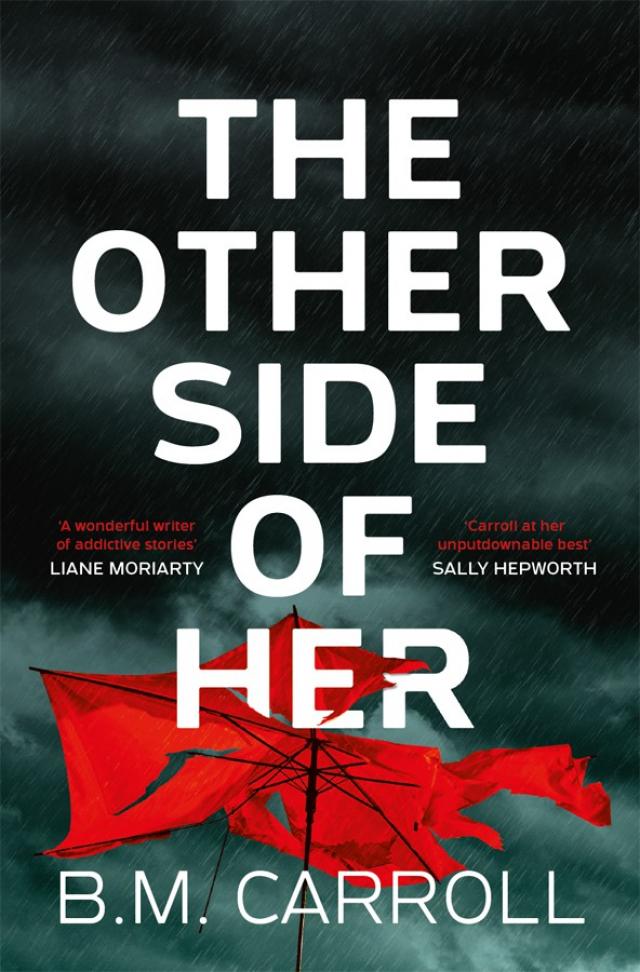
Cover design by Luke Causby/Blue Cork © Affirm Press
Typeset in Garamond Premier Pro by J&M Typesetting
For Harry
There’s a saying in Ireland and some parts of England: ‘I love your bones.’ She never used the saying until she had children of her own, never really understood its true meaning. It means I love you inside and out. It means I love you to bits (the good bits and bad bits). It applies to children who grow before your eyes, the small child contained somewhere within the young adult who is suddenly taller than you: children who exasperate one minute and delight the next, whose strengths and weaknesses are as achingly apparent as your own.
A mother can see inside her kids, into the soul of them. All their talents, quirks and potential; all their flaws, insecurities and darkness.
‘I love your bones’: I love every little thing that makes you who you are.
1
Beth
Today
Her eyes fly open, her heart thudding under the weight of the doona. The room is middle-of-the-night dark. A noise woke her up. The click of a door. Dream or real? She strains to hear. Silence, except for her own panicked breathing.
She swings her legs out of bed to check on Tilly. She is used to making this journey in the dark; turning on lights would make it easier to navigate but harder to fall back asleep afterwards. Her eyes adjust, the carpet cushioning her footsteps across the landing. The house is warm after the hot March day, with heavy rain forecast for later in the week. The rain is badly needed but Beth isn’t looking forward to it. There’s a leak in the garage roof that strikes with the same unpredictability as her ex.
Tilly is lying on her side, the sheets kicked off, her lava lamp bathing the room with a pink hue. She’s snoring softly, her hair in its usual tangle, and Beth is overcome with a rush of love. Seven years old. Enjoy this age, other mums have told her. They’re fairly independent but still need you; still playing and riding their bikes, instead of being glued to their phones and social media. Beth is enjoying it, when she’s not stressing about making ends meet, or worrying about Kane.
She backs out of Tilly’s room, leaving the door ajar, which her daughter insists upon. She is almost back to her own bedroom when she stops short. Another faint sound from downstairs. The roll of a drawer being opened? Someone is down there.
Beth knows what to do, she has practised for this, but that doesn’t make it any less terrifying. A four-metre walk feels like four kilometres; she waits between each step to regain her balance and listen for further sounds. The bedside table is nothing more than a black shadow. Her hand feels around its surface, cautious not to knock the glass of water or the photo frame, before closing in on the familiar shape of the alarm fob. Now, step by careful step back to Tilly’s bedroom, closing the door as softly as she can, locking it from the inside.
Beth sits on the bed and takes Tilly’s small hand in hers; her daughter is going to be petrified when she wakes up. Beth braces herself, steadies her own shaking hands, before pressing down hard on the red button.
The wail of the alarm splits the night apart.
∼
The panic button goes straight to emergency services. Two weary-looking male officers are on Beth’s doorstep in less than ten minutes.
‘Nothing’s been taken, as far as I can tell,’ she tells them breathlessly. ‘This way … The back door was left open … My car keys are on the floor just there.’
On the face of it, the break-in was a foiled attempt to steal her car, the thief abandoning the keys once the alarm began to scream. The fact that Beth’s handbag is still on the kitchen counter, with her purse and credit cards intact, supports this theory.
Her house is known to the local police, which is why they were so quick to respond. Kane’s name is suggested almost immediately. When did she last hear from her ex? Does he still live at the same address? Is there a reason he would feel entitled to the car? The answer to the last question is that Kane feels entitled to everything. Every item she owns. Every cent in her bank account. Every thought in her head.
The police officers have a look around, noting some damage to the lock on the sliding door that leads out to the back garden. It is a dark, cloudy night; not a lot can be done beyond sticking a head inside the shed and running a high-beam torch along the fence line.
‘It looks like the intruder has gone, Ms Jenkins.’ The older one, a heavy-set man in his fifties, has done most of the talking. ‘Do you have somewhere else you can stay tonight, to be on the safe side?’
Beth tries to weigh it up while Tilly clenches her hand. Descending on her dad in the dead of night seems extreme, given that the threat has obviously passed.
‘It’s okay. I feel safe enough to stay here.’ Her voice sounds feeble and unconvincing.
The police officers leave with the promise to send detectives first thing in the morning. Beth deadlocks the front door and arms the alarm system. She became complacent about setting the alarm every night. Tilly triggered it a few times sleepwalking, frightening the life out of both of them, but that’s not a good enough excuse. No more complacency, no more letting her guard down. The only positive is she continued to keep the fob on her bedside table, the panic button within reach.
Tilly comes into Beth’s bed with her. Poor thing. Waking up to the shriek of the alarm. The intimidating presence of the police officers. The worry that whoever it was might come back. It takes a long time to settle her down.
‘But what if they are hiding somewhere, Mummy?’
‘The police would have found them, pumpkin. They know all the best hiding spots.’
Tilly finally stops twitching and succumbs to sleep but Beth has never felt more alert, her muscles rigid and ready to spring into action, her thoughts going a hundred miles an hour in the darkness.
Is there a reason your ex-husband would feel entitled to the car?
There is a reason, although Beth felt too tired and mortified to go into it. Suffice it to say, the car was a sore point, for both sides.
Is this the start of another battle round with Kane? Just as she was beginning to relax a little. Just as she was beginning to hope that they had reached an understanding. Maybe he needs the car as collateral. Maybe he is out of his depth in some new venture. She’ll make discreet enquiries tomorrow. See what she is up against this time.
The old saying comes to mind: what’s worse, the devil you know or the devil you don’t? Kane terrorising and stealing from his own family, or a faceless stranger creeping around her house?
Beth eventually falls into a turbulent sleep. She dreams of desperate hands rifling through drawers, cupboards and clothes. Possessions are strewn on the ground, trampled on, smashed. She experiences a paralysing sense of violation. Until she realises that she is not the victim: she is the guilty one, the thief.
2
Ryan
Six weeks ago
The drive home from work is the bones of a two-hour commute: the price of living so far outside Sydney. He and Mia made the move four years ago, swapping city for countryside, concrete for open space and clean air. Elliot was literally climbing the walls of their two-bedroom inner-city apartment; he needed space to expend his endless energy. They, too, needed space, having had enough of cramped apartment living and perpetually complaining neighbours.
Ryan has become used to the commute. He uses the time productively, breaking the journey into segments. The first forty-five minutes is spent making phone calls – checking in with either his mum or his sisters – while at the same time negotiating the bumper-to-bumper traffic on Silverwater Road. On reaching the motorway, he winds up whatever conversation he’s been having and listens to a playlist from Spotify. Music with a strong beat to keep him alert. The traffic on this section is fast and heavy at this time of the evening, and prone to suddenly stopping. One small lapse in concentration could lead to a multi-car pile-up. The exit from the motorway signifies the last leg of the journey, which takes around twenty minutes. Ryan tunes into the local radio station for this part. Gets his head ready for what might be waiting at home. ‘Good day or bad day?’ he’ll ask on arriving in the door. Mia won’t need to answer: her expression will say enough.
Ryan works in a warehouse in Silverwater, a job he fell into after school and never moved on from. The money was attractive to an eighteen-year-old who wasn’t academic and didn’t aspire to tertiary education. He bankrolled Mia while she was at university, and she bankrolled him once she graduated and started earning double his salary. Unfortunately, nobody’s bankrolling anybody at the moment. Mia has been out of the workforce for most of the last ten years, since Elliot was born. Ryan is the sole income earner, which he doesn’t mind except for the fact that his income hasn’t changed that much since he was eighteen. He’s in his thirties now. He’s a father, a husband and mortgagee, all of which come with staggering responsibilities.
The property they purchased is two hundred metres from Lake Macquarie’s foreshore, eight kilometres from Morisset’s town centre, and forty kilometres from Newcastle’s CBD. A train is pulling into the station as he passes through Morisset, giving the illusion of a quick, efficient service. Transport network aside, the town has everything they need: a select choice of schools, supermarkets and restaurants. Should they want or need anything more, Newcastle is their next port of call. Ryan’s job is the only thing lassoing him to Sydney. The commute is worth it, as is the crippling mortgage. Elliot is doing so much better. Mia was right: constraining him to a two-bedroom apartment was cruel.
Ryan passes some of the neighbouring properties: Kellie and Dino on the right-hand side, then Heather and Philip on the left. Finally, he reaches the entrance to his own property, where he stops, pulls up the handbrake, and hops out of the car to open the gate; a remote-controlled mechanism will be one of their first purchases when Mia is earning again. Once through the gates, he repeats the process, leaving the engine running as he propels the gate back into place. The driveway is about three hundred metres of compacted gravel. As he approaches the house, he sees his son jumping wildly on the trampoline. Up, down, tumble. Up, down, somersault. The trampoline was a gift from Dianne, Ryan’s mum. Elliot loves it, spends hours on it every day. There’s no sign of Mia, which is odd: she closely monitors what their son is up to. Ryan beeps the horn to get Elliot’s attention. He fills with pleasure as he sees his son’s face light up, then winces at the reckless manner at which Elliot exits the trampoline, clearing the steps with an ungainly jump that almost has him faceplanting on the grass. He corrects his balance and comes barrelling towards the car.
‘Hey, mate. Take it easy coming off that trampoline, eh? And wait until the car is stopped before you run in front of it … Now where’s my hug?’
Elliot embraces him loosely, before pulling him towards the trampoline, words gushing as he explains the game he’s been playing. Next he’s dragging him to the side of the house, where his bike has been abandoned in what looks like a hurry. Then inside, to indicate a mound of half-built Lego in the playroom. The house is a 1980s bungalow, five bedrooms, three living areas, triple garage. A lot of space for three people, in addition to five acres of land in which Elliot can run, explore and endeavour to burn off some energy. Cyclone Elliot, they affectionately call him.
Mia appears from the direction of the kitchen. Her face is pinched, her mouth in a tight line. Must have been a tough day.
Ryan smiles at her tentatively. ‘Hey, I was wondering where you were hiding.’
‘We need to talk.’
His smile falls away. His wife rarely interrupts this special time with Elliot. His son usually drags him from pillar to post when he arrives home, trying to fit in every thought and game since Ryan left for work. He’s more frenetic at the moment because he’s on a break from medication. School holidays are a good chance to ease off the drugs and some of their worrying side-effects.
‘Elliot, it’s challenge time. Are you listening?’
His son jerks to attention. ‘I’m listening. I’m listening.’
‘Great. It’s a triathlon challenge, today. Stage one: ten laps of the house on your bike. Stage two: one hundred bounces on the trampoline. Stage three: run all the way down to the gate and back. Let me know when you’re ready and I’ll start the timer.’
‘I’m ready, I’m ready,’ he shrieks.
‘Go!’
Elliot flies down the hallway, yanking open the front door before crashing it shut in his wake. Mia and Ryan wear matching grimaces. The original door had glass panes. This one is Elliot-proofed.
A moment of silence. Ryan assesses his wife. She is stunningly beautiful, despite everything she has been through. The nonstop pace of day-to-day life. The broken nights with never enough sleep. The heavy burden of their financial worries. The disaster they had two years ago. Today she’s wearing denim shorts, a striped t-shirt and white sneakers. Dark brown hair, a golden sheen on her skin. But her tan is not as deep or as convincing as other summers. Up close, her navy-blue eyes are jaded and wary. Her face has thinned, and her mannerisms have become more abrupt over the years – a mirror of Elliot?
‘What is it?’ Ryan asks, stepping closer. ‘What’s happened?’
‘Come here,’ she says, taking his hand and guiding him towards the kitchen.
This is their favourite part of the house. An enormous open area comprising kitchen, dining and living. Floor-to-ceiling glass looking out on the limestone patio, the pool and its surrounds, then lawn and garden beds, followed by paddocks and trees. Mia doesn’t have time to appreciate the view. She goes to the kitchen island, picks up her phone, clicks and scrolls.
‘Here.’ She shoves it at him.
The news headline on the screen is in large bold font. The words punch him in the face.
Million-dollar reward for information on missing Irish backpacker.
Fifty per cent of the reward is being put up by the family, fifty per cent by NSW Police, according to the attached video-clip.
‘It’s two years since we saw our daughter.’ Siobhan McAllen is speaking from her home in Dublin. ‘We just want to know what happened.’
‘You know what happened, for God’s sake,’ Mia interjects, standing tensely by the kitchen counter. ‘Tara went for a swim at an unpatrolled beach. She got caught in a rip.’
‘Shush,’ Ryan says. ‘Just let me listen.’
The journalist runs through the basic details of Tara’s arrival in Australia, her short-lived job as an au pair in the Newcastle area, before she headed for the bright lights of Sydney. Drinks at one of the infamous Bondi pubs popular with backpackers. A fateful swim at dusk on the southern end of the beach.
‘It doesn’t add up,’ Siobhan McAllen says, the camera zooming in on the framed photograph clutched in her hands: a younger version of her daughter with pouting lips and heavily applied mascara. ‘Tara didn’t like swimming in the ocean. And she definitely wouldn’t have gone swimming in an unpatrolled area.’
‘She’s wrong,’ Mia interrupts again. ‘Tara was in our pool every chance she got. She loved swimming. Plus, she’d been drinking. Her decision-making was compromised.’
‘Tara’s body was never found,’ the journalist continues in a sombre tone. ‘There are no witnesses who observed someone struggling in the water.’
The segment ends with a repeat of the reward amount and a phone number to call with any information.
Ryan exhales a shaky breath. ‘That’s a shitload of money.’
‘I know.’ Mia’s fists clench and unclench as they rest on the counter. ‘This is the last thing we need right now.’
His wife has been updating her résumé and skills, with the aim of making another attempt at returning to work. Now this reward may derail those plans, put everything in jeopardy for the second time.
‘But we’re safe, aren’t we?’ he asks, searching her face for reassurance.
She was the one who orchestrated the plan, managing it like one of her large, complex projects. Each step outlined in detail, the risks identified and mitigated, all the while conscious of Siobhan and the family, seeking to give them closure and not leave them in a terrible state of limbo. Now here is Siobhan, bleating that ‘it doesn’t add up’.


