

The strange side of midn.., p.1
The Strange Side of Midnight, page 1


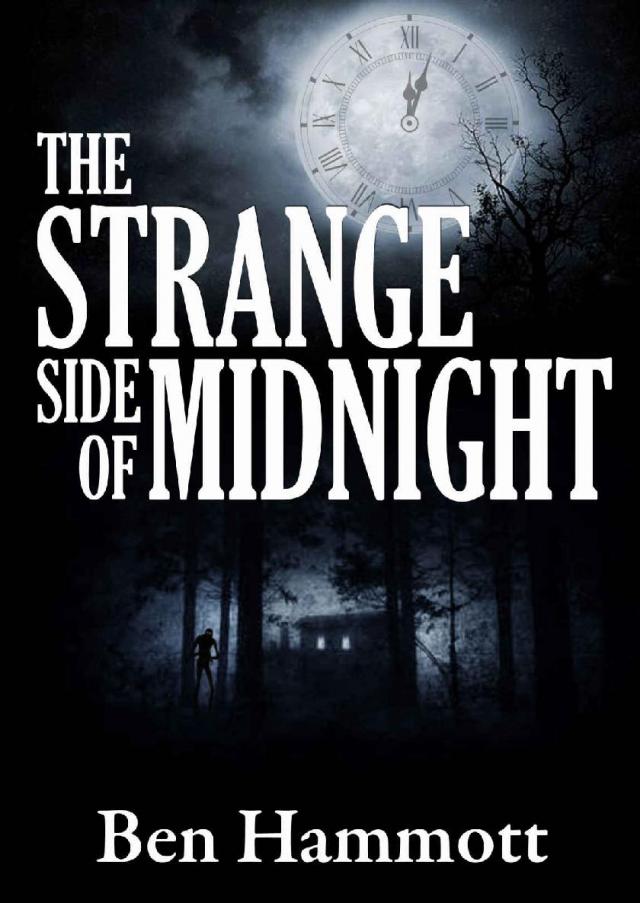
Ben Hammott
The Strange Side of Midnight
Ben Hammott
Copyright 2019 ©Ben Hammott
No part of this publication may be reproduced or utilized in any form or by any means, electronic or mechanical, including photocopying, recording or by any other information storage and retrieval system, or transmitted in any form or by any means, without the written permission of the copyright holders.
This is a work of fiction. Names, characters, businesses, places, events, and incidents are either the products of the author’s imagination or used in a fictitious manner. Any resemblance to actual persons, living or dead, or actual events is purely coincidental.
Author can be contacted at benhammott@gmail.com
Author website www.benhammottbooks.com
Author note: If you are reading this or any other book via Kindle Unlimited and have page flip switched on, can you please turn it off, as it interferes with the page count, which can result in the author losing out on any royalty due. Thank you.
Chapter 1
Sinister Mansion
KALLISTO CROWE, A ONCE successful supernatural thriller and horror novelist who had now fallen out of favor with his once loyal readers, his agent, and publisher, drove along the driveway that weaved through the forest and halted at the wrought iron gates barring the track. The faded lettering of the wooden plaque fixed to one of the brick posts revealed the name of the building glimpsed through the bars, Hagsdell Manor.
Plucking the bunch of large iron keys from the passenger seat, Crowe climbed out and approached the gates. Peering through the rusty, paint-neglected railings, his eyes took in the distant building that was to be his new home. He found it just as impressive as the first time he had viewed it a few weeks before. West and east wings of the building led off from the slightly off-center domed tower dominating the facade.
Still finding it difficult to believe he would be living in such a grand house—and being paid to do so—he unlocked the gates. Hinges screamed out for lubrication when they swung open. Adding the task to his to-do list, Crowe climbed back into his car, drove through and pulled to a stop outside the main entrance set in the east wing. Eager to begin exploring the house he had so far only seen a small part of, he immediately started unloading the car and stacked everything in the spacious hallway before deciding where it would all go.
When the car had been emptied, Crowe picked up a box of his unsold books and grunted from the weight; he should have packed them in smaller boxes. Though aware that all they would do was gather dust, as they have been doing for years, and really should be thrown away, it wasn’t something he could bring himself to do. It was his first book, and they held a special affection to him; though why he had to keep four boxes of the same title was a mystery even to him.
As he hefted them up the creaking staircase, he glanced at the title scrawled in black marker pen in his handwriting. My first masterpiece – Ghosts of Crowley Manor, and cringed slightly. It hadn’t been the bestseller he had envisioned. Out of the five hundred copies he had paid to have printed, he had sold exactly fifty-three. Luckily, his following book, Haunted, showed enough potential to persuade an agent to take him on. After some revision and, at times, hard edits, Haunted was picked up by a mid-range publishing house and sold a respectable number of copies, putting him firmly on the publishing map. His next two books did even better, selling so well he was able to give up his day job as a document archivist for the British Library and become a full-time writer. Although assembling, cataloging, preserving, and managing valuable collections of historical information had its enjoyable moments, he found creating works of fiction a more pleasurable and rewarding profession.
After three more book successes, things began spiraling sharply downward. His imaginative author-juices had evaporated to become as dry and barren as any sand-swept desert. When his next two books flopped, his agent, diplomatically, had advised him to take some time off to try and regain his writing mojo. With hefty mortgage payments and no new titles to top up his waning royalties, Crowe had no option other than to sell the house he had purchased on the back of his relatively short-lived success and search for a cheaper place to live.
As it happened, a builder friend of his, Peter Jones, had purchased a large plot of land in the countryside with some crumbling ruins set on some open ground and a grade II listed mansion positioned at the south end of an ancient sprawling forest. Hagsdell was a modest, mansion-sized dwelling that needed some remedial building work, including sorting out the subsidence caused by tree roots undermining the foundations that had sent cracks creeping up one end of the house. Though none of the repairs were severe enough to threaten the building’s structure, they would need doing before it could be resold if Peter decided to do so. It was also badly in need of modernization.
As Peter didn’t want the hassle of navigating through the red tape minefield that would arise from English Heritage overseeing the repairs, his interest in purchasing the property firmly laid in the attached land, where he intended to build ten large, luxury houses. Another problem that would deter possible future buyers was a proviso in the deeds stipulating that all the furniture, paintings, ornaments, etc., were to remain in the house. If that weren’t off-putting enough, another nail in the coffin of its salability now the prime land would no longer be part of the package, were further peculiar stipulations. Firstly, it decreed children were forbidden to live in the house. Secondly, it must not remain unoccupied for an extended length of time, and to ensure the occupation of Hagsdell at all times, a caretaker had to be hired to take care of the building and contents. The only silver lining was that funds had been set aside by the deceased Sinister family to pay the caretaker’s wages.
With little interest in the house, Peter’s proposal to Crowe was that he would install a new kitchen, upgrade the plumbing and wiring, and he could move in as its new caretaker, rent-free. Crowe had jumped at the generous offer and said he would move in as soon as the renovations were completed. With the caretaker wages and no rent or mortgage to pay, he was able to put the bulk of his belongings into storage and just bring his essential knick-knacks, which included his first baby, Ghosts of Crowley Manor.
Placing the box of unsold books on the floor, Crowe opened the attic door. Assaulted by a whoosh of ancient, musty air that caused him to gasp, he stepped back until it had settled. His eyes followed the dusty treads up the narrow wooden staircase and gazed at the pitched roof timbered with wide boards. Though originally painted white, they were now the shade of old parchment. The stifling air that drifted down seemed to be starved of oxygen and slightly asphyxiating. Leaving the door open to let fresh air seep inside, he returned downstairs and carried the remaining three boxes of his failed masterpiece upstairs. The last one he kept hold of and poked his head into the small stairwell. The air was now a lot fresher. He climbed to the attic and gazing around, marveled at the sheer number of objects cluttering the large space, none of which he was permitted to throw away. Peter had warned him it was jam-packed with some of the previous occupants’ belongings, but he hadn’t expected there to be so much.
Light seeped into the gloom from a round window at the far end, highlighting the floating dust motes the incoming fresh air had disturbed. He placed the book box to one side and moved through the attic. Everything was old and covered in years of accumulated dust. An Aladdin’s cave of antiques. There was a row of framed paintings leaning against each other, a child’s rocking horse, a pram stacked with china dolls, tea chests full of toys, linen, and clothes, stacks of old books, wooden steamer trunks, two tall cupboards, and a plethora of other objects.
Walking further into the room, Crowe stroked his hand along the toy horse’s mane, setting it into a creaking, rocking motion. He halted at one of the tea chests filled to the brim with antique toys; metal with no plastic in sight. Lifting out the one on top, he found it to be heavier than expected, made of cast iron. He blew off the accrued dust, setting it adrift to glint in the sun’s rays. It was a circus toy, a red carriage with seven blue-clad figures sat on top. Six played musical instruments, and the seventh held the reins that drove the two white horses. The front legs of the twin steeds had small wheels attached to their hooves, their back legs raised slightly, allowing it to be pushed along on the carriage’s four yellow wheels. Though it showed signs of being played with—scuffs and scrapes—it was in decent condition. A glance in the chest revealed it to be crammed with circus-themed toys, including circus animals—lions, elephants, and the like, clowns, acrobats, and a ringmaster, all with small metal wheels on their feet.
Returning the toy to the box, Crowe moved on. After sidling through a gap between the stacks of discarded possessions, he halted at a large cabinet adorned with strange mythical beasts, demons, and devils. Fascinated by the creepy, lifelike carvings, Crowe felt his writer’s imagination tingle. He could write a truly spine-chilling tale around this piece of macabre furniture alone. Stroking his hand over the dusty details, he pondered how he could move it downstairs. Maybe he could borrow a couple of Pete’s workers to help him?
Excited by the prospect, he gripped the twin demon-head door handles and twisted. The doors refused to open. After blowing the dust away from the lock plate, he stared at the keyhole fashioned inside the mouth of a snarling beast. Though Pete had given him a bunch of house keys, he couldn’t remember any that might fit this strange lock. Though temporarily thwarted to discover what was inside, he was determined to fin
Turning his back on the cabinet, he sighed at the amount of stuff he would have to reposition to create a gap large enough for it to be taken out. With possible storylines already swirling around his imagination, he knew it would be worth the effort and set about the task.
Chapter 2
Strange Painting
“YOU NEED TO LIFT your end a tad,” instructed Crowe.
Struggling from the weight of the solid piece of furniture they were trying to maneuver down the narrow attic staircase, Fred frowned at Crowe. “I thought you said this bloody thing wasn’t heavy?”
Crowe shrugged. “Sorry, it seemed lighter when I rocked it.”
“Trust me, it isn’t.”
“I can vouch for that,” moaned Charlie who supported the top end of the cupboard.
Bent over awkwardly at the top of the attic staircase, Charlie adjusted his grip and stumbled when he stepped onto a lower tread hidden from his vision by the large piece of furniture. Carried by gravity, the cabinet’s top edge bounced down the steps. When the base slammed into Fred’s chest, he shot through the attic door and crashed into the banister overlooking the hallway. With the weight of the cupboard pressed against his ribs, Fred glanced worriedly at the creaking balustrade he hoped wouldn’t break and then below at the floor he would plummet to if it did.
Crowe rushed forward, took the cabinet’s weight, and shifted it away from Fred.
Rubbing his chest when the pressure was released, Fred tapped the rail. “It’s a good job it's quality workmanship, anything modern would have broken and seen me sent below.”
Struggling with the weight, Crowe asked, “You okay, Fred?”
Fred nodded and gripped the base again, taking some of the weight off of Crowe.
“I’m also fine,” quipped Charlie sarcastically.
Fred rolled his eyes. “Can you pick up your end without dropping it this time?”
“I’ll try, but no promises.”
When Charlie had raised the top, they slowly inched it through the doorway and turned. When it was free of the stairs, they lowered it to the floor.
“I hope it’s not damaged.” Crowe moved to the top and examined the cabinet where it had bounced down the stairs. Charlie and Fred tilted it to the side so he could check underneath. “A dent or two, but nothing serious.”
“They knew how to build things in those days,” said Fred. “Quality workmanship and materials, not like the chipboard and MDF crap they use today.”
“And it has,” said Crowe, running a hand over the cabinet. “I wonder how old it is?”
“Got to be a hundred years at least,” offered Charlie.
“Older, I think,” said Fred, grimacing at the eerie carvings. “You sure you want this downstairs where you can see it?”
“Don’t say that, he might get us to take it back up,” groaned Charlie.” It was a struggle to shift when gravity was on our side. It’ll be a damn sight harder when it’s working against us.”
Crowe smiled. “Don’t fret, Charlie. I want it downstairs where I can see it. I’m hoping it’ll provide me with inspiration for a new book.”
“Oh, right,” exclaimed Charlie. “Pete said you write ghost stories.”
“Yeah, kind of. Supernatural thrillers and a bit of horror.”
Fred studied the cabinet’s ghoulish adornments. “I guess you have plenty of food-for-thought in this strange antique.”
Crowe glanced at the carvings Fred focused on. “That’s what I’m hoping.”
“If you do write a book about this cabinet, will we be in it as we’re moving it?”
“Maybe,” answered Crowe. “I’ve still not fully worked out the plot yet.”
“Come on then, let’s get this bloody thing downstairs,” urged Fred. Pete only gave us an hour for lunch, and half that’s gone already.”
With the three of them sharing the weight, they carried the cabinet downstairs and into the living room where Crowe had set up his writing desk and computer.
“Put it over there, to the right of the hearth,” instructed Crowe, pointing to the space he had cleared earlier. In full view of his desk, he’d be able to glance at it for inspiration while he wrote.
The two men placed the bottom edge on the floor, and when they hoisted it upright, something shifted inside.
“Sounds like something’s come loose,” said Fred. “Must’ve ‘appened when Charlie dropped it.”
“Don’t blame me,” defended Charlie. “Might just be something inside sliding about.”
“Either way, it’s not a problem,” reassured Crowe. “It’s the outside I’m more interested in, though I would like to take a peek inside to satisfy my curiosity as to what it might contain.”
Fred crouched to examine the lock. “A shame there’s no key because this ain’t no ordinary cupboard, and a sure bet there’s something weird inside it.”
“Looking at those spooky carvings, I’m sure it’s nothing I’d like to see,” commented Charlie. “Wouldn’t surprise me if it was full of skeletons.”
Crowe grinned. “I hope so.”
Fred’s grumbling stomach reminded him he was hungry. “Right, that’s us done. If we ‘urry we can grab a sandwich and a cuppa before dinner break’s over with.”
“Thanks again, guys.” Crowe gave them each twenty pounds. “I never would have got it down without your help.”
“As long as you don’t want it taken back up again, you’re welcome.” Fred slipped the money in his pocket.
Crowe walked them to the front door.
“That key must be ‘ere somewhere, ya want to ‘ave a rummage around for it,” advised Fred, stepping outside into the sunlight.
Crowe squinted from the brightness after the gloom of the house. “It’s on my to-do list.”
“Cheers, then, and good luck.”
Crowe glanced at the approaching gray clouds; rain was on its way. He shut the door and returned to the living room.
Standing in front of the cabinet, he ran his eyes over the demonic carvings and wondered who had created such a thing and for what purpose. What he did know was that before he could concentrate on writing his new novel, he needed to find out what was inside or face the constant distraction. God knows it didn’t take much nowadays, and probably the reason for the poor reception for his last two books. Playing games on his PC and PlayStation, and watching TV and movies had been his downfall, but no more. No, he would find the key and open the cabinet to find out what it contained. Hopefully, whatever was inside, would be something unusual enough to kickstart his writing mojo.
Feeling more excited about writing than he had for a long time, Crowe glanced around the room for a likely hiding place for the key. He had already gone through the desk before he and Pete had shifted it in here from the study. This room had a fireplace, and with the winter months almost here, he had a feeling he would need its warmth when the cold weather hit, especially if it turned out to be as chilly as the previous winter.
Carrying out a room-by-room search, he eventually found a strange-looking key tucked inside a teapot in the kitchen dresser. Almost running back to the living room clutching the key, Crowe crossed to the cabinet, inserted it into the lock and turned it. The satisfying clicks of the locking mechanism releasing brought a smile to his lips. He stepped back when the twin doors creaked open an inch with a sound like a moan coming from the bottom of a deep well. Attributing it to the wood reacting to the fresh air, he was about to step forward and open the doors when the right-hand one creaked open further with a shrill squeak of protesting hinges. Committing the eerie sounds and his anxious feelings to memory to be typed out later, he peered into the dark interior.
Something barely perceptible was inside at the back and Crowe immediately felt he was being watched. Shaking off the apprehension that had ridiculously claimed his common sense, he approached the cabinet, pulled the other door open wide and gazed upon the object inside; a painting, almost the width and height of the interior space. Crowe got the impression the work of art was the sole reason for the cabinet’s creation; to conceal it.





