

The student, p.1
The Student, page 1


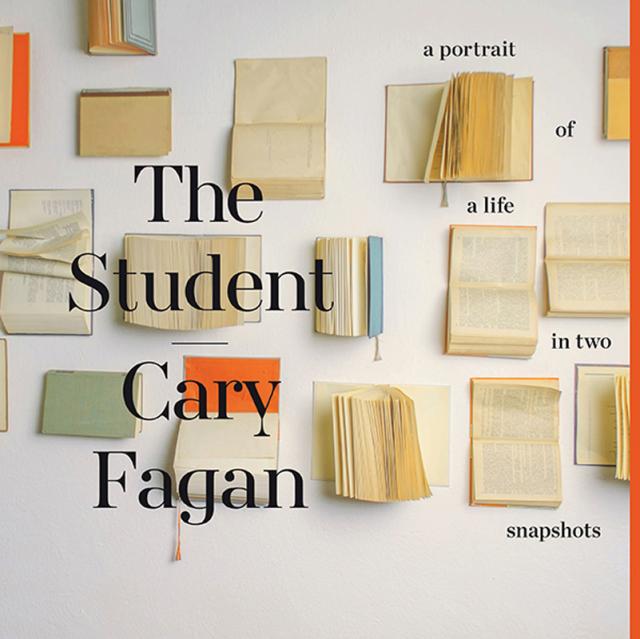
The
Student
_________________
Cary
Fagan
© Cary Fagan 2019
All rights reserved. No part of this publication may be reproduced, stored in a retrieval system, or transmitted in any form or by any means, graphic, electronic, or mechanical — including photocopying, recording, taping, or through the use of information storage and retrieval systems — without prior written permission of the publisher or, in the case of photocopying or other reprographic copying, a licence from the Canadian Copyright Licensing Agency (Access Copyright), One Yonge Street, Suite 800, Toronto, Ontario, Canada, M5E 1E5.
Freehand Books acknowledges the financial support for its publishing program provided by the Canada Council for the Arts and the Alberta Media Fund, and by the Government of Canada through the Canada Book Fund.
Freehand Books
515–815 1st Street SW Calgary, Alberta T2P 1N3
www.freehand-books.com
Book orders: LitDistCo
8300 Lawson Road Milton, Ontario L9T 0A4
Telephone: 1–800–591–6250 Fax: 1–800–591–6251
orders@litdistco.ca www.litdistco.ca
Library and Archives Canada Cataloguing in Publication
Title: The student / Cary Fagan.
Names: Fagan, Cary, author.
Identifiers: Canadiana (print) 20190047798
Canadiana (ebook) 20190047828
ISBN 9781988298443 (softcover)
ISBN 9781988298450 (html)
ISBN 9781988298467 (pdf)
Classification: LCC PS8561.A375 S78 2019 | DDC c813/.54—dc23
Edited by Deborah Willis
Book design by Natalie Olsen, Kisscut Design
Cover image © Aleksandra Jankovic / stocksy.com
Author photo by Mark Raynes Roberts
Contents
Cover
Title Page
Copyright
Dedication
1957: Late Summer–Autumn
2005: Sunday, August 21
Acknowledgments
Permissions
About the Author
for
____________
REBECCA
She walked dreamily along the curve of Queen’s Park, the afternoon air heavy (not “brooding,” she thought) and took notice of the broad leaves overhead, chestnut cases rattling. She pressed her books to her sweater, and stopped to look at the pigeon standing on the head of the equestrian statue, whose rider’s name she could never remember. But surely it was a literally hollow symbol of adventurism, colonialism, the glory of war and all the rest. Every year before the start of school some fraternity boys would set up a ladder in the dead of night and paint the horse’s sex parts. Red this year. The paint would remain until the janitors came with their buckets and long-handled brushes. It was a shame they didn’t have some political motivation, rather than acting like adolescents. Funny that she’d found it shocking the first year — blue was the colour then. And here she was about to start her final year, already nostalgic. How little she had known of anything back then!
As she walked on, a couple held hands as they passed the other way. The woman leaned in close to him and gave her a suspicious glance, the effect of which was to prompt her to re-evaluate how she had dressed that morning. Cashmere sweater over an ivory blouse, plain skirt and loafers with almost no heel. She wanted to be taken as a serious young woman, not a clothes horse. She was small and cute rather than pretty, with her long dark hair pulled back and dark eyes and perhaps too strong a chin that made her look like a small dog that wanted to bite somebody.
An older man’s aromatic pipe smoke reached her pleasantly from his bench. None of her childhood friends smoked but a lot of the women at university did and of course she had tried but didn’t see the point and, besides, they were always brushing their teeth like mad to get the stain off. A small pipe would be a statement, and everyone would chatter about it, only she wondered if it would be too mannish, like Gertrude Stein (was she holding a pipe in that Picasso portrait?). Perhaps it was even a signal of lesbianism, like going to a party in a man’s suit, not that she’d actually seen anyone do it.
She crossed University Avenue and reached the sidewalk that sloped down to Hart House. And as she put her foot down the air sounded with ringing bells. It was the carillon in the tower, some music student pulling the chords or pressing the keys or however it worked, Bach it might have been although she couldn’t be sure. It was easy for her to believe that the bells were ringing for her alone, were ringing a welcome for Miriam Moscowitz, honours English literature major with a minor in French. Of course, she thought, they are ringing for me!
She walked along the formidable stone front of Hart House. Most of the time the building was for men only, but when she mentioned it didn’t seem fair, none of the other women she knew seemed to care a wit. As if they’d want to run around a track beside sweaty men or listen to ridiculous debates about whether Riel ought to have been hung or not! And hadn’t they put in the new basement-level entrance so that a female accompanied by a man could have a cup of tea in the Arbor Room at certain hours?
As if they should be grateful for that! Yet she loved the university, as if she had found her true home. The lecture halls, the presentations and discussions in seminar rooms, the hours of library study. The sound of François Villon read aloud, or a late-night exposition of Donne’s sacred and profane. Every year she had won a prize for one course or another, hiding her exultation behind a façade of modesty that surely everyone saw through. And this year was going to be the beginning, not the end. Ahead would be graduate school, and teaching and writing, a life of literature and thought if she did everything right, if she convinced those around her she deserved to be one of them.
She paused in the arch under the tower. As always, she made herself read a few of the inscribed names of the dead. As a child walking with her father during the war she had seen canvas tents pitched on the green circle. “You see them?” he had said, holding onto her hand. “They’re going to risk their lives for us.” She stared at the young men in their uniforms standing idly or sitting on canvas chairs, talking or playing cards or writing letters. Her father had gone up to a group, had spoken a few words and then shaken them by the hand, but when he was walking back to her she saw them chuckling. But that was so long ago. One of her professors had told them that they were on the cusp of history, the leading edge of the human story, but only a few students had understood the irony — for the present moment always is. She preferred to see his words as a deeper truth. That they really were living in a new time. There were too many bombs now for another war, which in any case would interfere with her future — and wasn’t that as good as any reason for the shape of destiny?
The bells stopped ringing but their echo took seconds to fade away.
She walked briskly the few short steps to the east door of University College. It was her college and she thought of it in the most possessive terms. She’d heard that students at Victoria and St. Michael’s looked down on those at U.C. as mongrels or infidels, and it was true that the Junior Common Room had been nicknamed the Jewish Common Room. But a person went to U.C. because he was intellectually ambitious, not a social climber. She loved the old Victorian building, grand yet peculiar and friendly. She pulled open the weighty door and slipped into the cool interior. She patted the exquisitely carved griffin on the newel post, which everyone mistakenly called a gargoyle, then walked down the hall, her heels tapping softly. Soon the place would be overrun with noisy returning students and diffident freshmen peering at the handmade signs for the camera club, politics club, winter ski trip, Spanish circle. But she had escaped her father’s office and for now she had the building to herself and she exited into the arcade that surrounded the flagstone and grass quad that was enclosed by the college’s three wings. Under the arcade were wooden doors where the professors had their dark little offices. To have one of those offices for your own, to plan your lectures, confer with your students, write your books! She might hide her ambition from her family and even from her friends, but she was clear in her own mind about what she felt capable of, and believed in, and wanted.
The sky was soft above the quad, ethereally clouded. She chose a bench, brushing it off with a tissue from her handbag, and placed the books down beside her. She had T.S. Eliot’s essays and his Four Quartets, a small volume of Verlaine, The Ambassadors, and the first issue of the Evergreen Review. She’d gone to Britnell’s for the James and then had seen the Evergreen Review, buying it for the story by Samuel Beckett. She would have liked to read it now but instead opened the essays because she was in the middle of one and always imposed on her studies a pleasurably strict discipline. Otherwise she might end up like the father in To the Lighthouse, whose thought (in that hilarious but terrifying moment) went from P to Q but could never get to R.
Last year Professor Reid had said that Virginia Woolf was of interest not as a writer but as a neurasthenic.
From her handbag she drew her compact mirror and lipstick for a quick touch-up, dropped them back in and took out her current notebook and a ballpoint. She began to read, tapping the end of the pen against her lip, wrote down a thought, read on, and was about to write again when a noise broke her concentration.
Not just a noise but a grunt. And then she heard it again, not a grunt but a snore.
Frowning, she forced her gaze to stay on the page. Next came muttering, the words not quite decipherable. She had to look up and there, acros
Why hadn’t he found a sofa in the Hart House library, like the male students who were always going on about their naps? She found it impossible to go back to her reading. Instead, she stared at the back of his wrinkled jacket. She closed her book, not quite slamming it, gathered up the rest, and on a sudden impulse strode across the grass towards him. She would prod him between the shoulder blades with her pen and let him know what a nuisance he was.
He startled her by shifting onto his back. “Not … not now,” he mumbled, and she quickly retreated several steps, then walked quickly away. Like a scared rabbit, she said to herself in disgust.
She was named Miriam after her great-grandmother on her father’s side but, growing up, everyone called her Minnie. In her first days at university she had introduced herself as Miriam, and all her school friends called her so, although every time she met a childhood acquaintance on campus she feared getting tagged again. Living with her parents, she moved back and forth between the new world of Miriam and the old one of Minnie. The only benefit she could see was a particular sensitivity to the naming of characters in literature.
She almost always kept Isidore waiting. It was never her conscious intention to be late for their dates, although she couldn’t deny knowing that it kept him in a state of anxiety and expectation. She was known for not giving a hoot about appearances, for saying that Madison Avenue and the whole fashion business were a conspiracy, and once she said to her oldest friend Faiga, “I’d be happy in a potato sack.” Only after she said it did she remember having once seen a poor sharecropper’s child wearing just such a sack and staring with large, resigned eyes into the lens of a Life magazine photographer.
In any case, it still took her considerable time to get ready. And on this night she chose her outfit carefully (a wool-crepe sheath dress) and then applied a thin black line around her eyes to make them look bigger and her nose smaller. A little powder to de-accentuate her stubborn chin.
Downstairs, Isidore was making awkward conversation with her father. Her father liked Isidore but she was sure that the very thought of him having some sort of intimate relation with his daughter filled his mouth with bile. Miriam didn’t trip down the stairs as usual but descended with mock-dignity and Isidore, who had been strangling a fedora in his hands, turned to her with obvious relief. No doubt her father thought his hat brim too wide, like a hoodlum’s.
“There you are, Minnie. We don’t want to miss the start.”
Her mother came in from the kitchen carrying a glass of ice water. Isidore thanked her and gulped half of it down. Her father, in his jacket and tie, held the evening edition of the Star under his arm. He also read the Globe in the morning, but not the Telegram, which he considered anti-Semitic. “And what are you going to see?” he asked, as if he kept up-to-date on the latest Hollywood movies when in fact he had no patience for them and refused to go with her mother even to The Pajama Game.
“A western,” Isidore said. “Minnie indulges me. Thank you for the water. It really hit the spot.”
Her mother took back the glass. “Mr. Moscowitz is a Coca-Cola drinker. He has three a day, don’t you, dear? We should have bought stock in that company.”
“I don’t believe in stocks,” her father said. “They’re no different from gambling.”
“Actually,” Isidore said, “stockholders provide capital that help businesses to grow.”
“You’re disagreeing with my father?” said Miriam. “How brave of you.”
“Well, I was only making a joke,” her mother said. “My husband is too serious.”
“You’re not too serious, Daddy.” Miriam, who saw the look of distress and knew well her power to change her father’s mood in an instant, put a hand on his shoulder and kissed his cheek.
“It was nice to see you, Mr. and Mrs. Moscowitz,” Isidore said. “My parents send their best. And say hi to Brian for me. I didn’t see him.”
“He’s building a bridge from his chair to the bed,” said her father. “He loves that Meccano set. I think maybe he’ll be an engineer.”
“I think it’s more likely he’ll blow bridges up,” Miriam said lightly, putting on her camel-hair coat.
The Eglinton Theatre was only a couple of blocks away but Isidore insisted on driving, in case they wanted to go somewhere after, as if she didn’t know what that meant. She thought of reminding him to call her Miriam but let it pass. They had started to go out at the end of high school, and even though she had thought it a mistake to get involved just as she was going to begin the life she wanted, she didn’t stop herself. He was Jewishly handsome, black hair and eyebrows, a little full in the face, not tall but big-shouldered. Already he made a decent salary working for his father and he wore good suits, cut well for his figure, with a silk handkerchief in his pocket. They had even less in common now than when they had first gone out, but he let her talk, trying to understand what she was on about, and suddenly she would notice his pained expression, like a puppy confused by his master’s command, and her heart went out to him even as she wanted to laugh out loud. Twice he had asked her to marry him, or rather talked about being married without quite asking, afraid of what she would say, so she hadn’t felt obliged to give him an answer. But one day, she knew, he’d do something atrocious like get down on his knee. He was kind, and big-hearted, and devoted, and she told herself that she would marry him if she could get herself to say yes and wouldn’t marry him if she couldn’t, and that until the moment came she didn’t have to decide.
So many people now stayed home to watch television, but she couldn’t stand sitting in the living room staring at the fluttery screen. Her mother once told her about the Eglinton Theatre opening and how people had lined up to see a movie starring Jack Oakie, who nobody remembered anymore, but just as much to see the art deco furnishings. Miriam didn’t know the name of the movie they were going to see until she glanced up at the marquee — Gunfight at the O.K. Corral. And really she didn’t mind, not when she got to see Bergman and Akira Kurosawa at the university film society. And there was the French Cine Club at the Hyland Theatre where she went with three or four of her university friends every month. So she didn’t mind seeing a Hollywood horse opera if it made Isidore happy.
And when the lights went up again, she found herself blinking and with only a fragmentary sense of the story, for her mind had drifted to her work, and the influence of certain new critics on her despite reservations, and the question of what the topic for her PhD thesis might be. After a movie Isidore was always hungry and they went into the Honey Dew where she had tea and he coffee with pie and ice cream. He wanted to talk about the film and so she went on about moral ambiguity until he interrupted her by saying, “Why are you trying to spoil the film? Come on, Minnie. Lancaster was the good guy and Douglas was the bad guy. All that studying is going to your head.”
“Where else is it supposed to go to, my kidneys?”
He got that hurt look, which meant that she had made him feel dim. So she changed the subject by asking about the family dry cleaning business. “I tell you, we’re coming on like gangbusters. It’s all these suit-and-tie office jobs. And with all the new subdivisions there’s only room to grow. We just signed a lease in Streetsville and we’re thinking about getting into Don Mills. My father’s still got me doing grunt-work, spending half my time driving from one store to the next, checking up on things. We had five workers call in sick yesterday from that Asian flu. I had to work the shirt-folder myself. But he’ll see what I’m worth, the SOB. I’ll be in head office by next year.”
And then instead of driving the two blocks home, he suggested they go for a ride. They drove along Bloor and up Spadina while he fiddled with the radio, turning the knob from Elvis Presley, from Paul Anka, from Presley again to settle on Johnny Mathis singing “Chances Are.” Along the high curve of Davenport they cruised, listening to the tinkling piano and quavering voice, turning through the old gate into the shadowy circle of Wychwood Park. Slowly they rolled past the pond to the old houses and long green lawns until he pulled up against the ditch and turned off the engine. They sat in the dark and she tried to turn towards him only she couldn’t get herself to and just continued to stare through the curving windshield, feeling the vinyl beneath her dress. So he turned and leaned into her to kiss — his lips were always damp — and he slid his hand along the curve of her leg and up her dress and she found herself unpleasantly, or perhaps unwillingly, aroused, her breath catching, and she gently moved his hand away and put her own onto his bulge. She helped to open his trousers and he leaned back and closed his eyes. Was he gigantic compared to other men or were they all this big? With one hand always moving, she expertly opened the glove compartment to retrieve the box of tissue. He made almost comical noises, lurching forward so that she almost lost hold of him. And when he was done she balled up the tissues and snapped open her suede handbag and dropped them in.





