

The birds of opulence ke.., p.1
The Birds of Opulence (Kentucky Voices), page 1


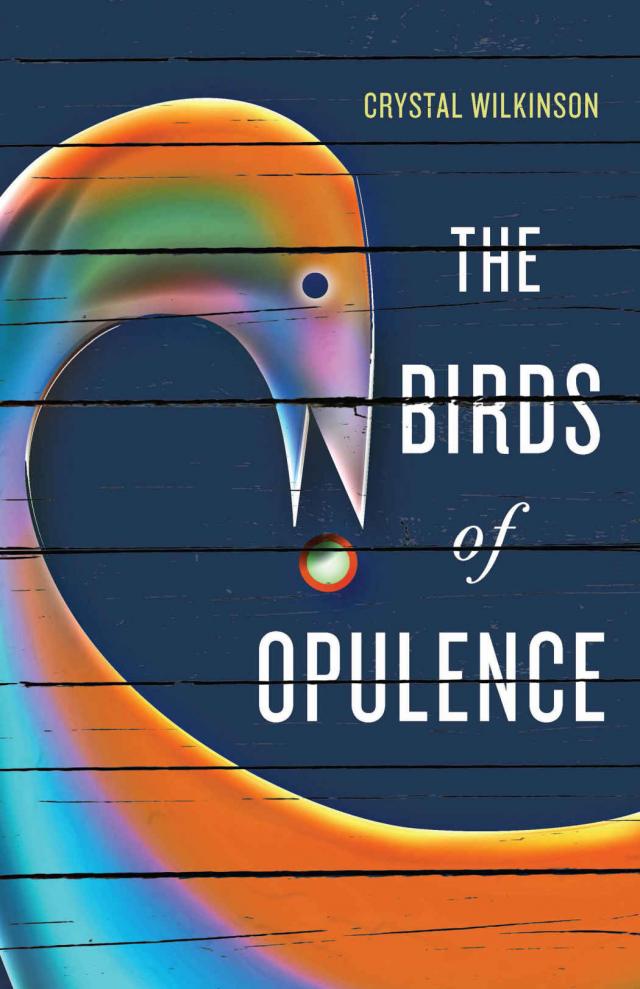
The Birds of Opulence
The
Birds of
Opulence
Crystal Wilkinson
Copyright © 2016 by The University Press of Kentucky
Scholarly publisher for the Commonwealth, serving Bellarmine University, Berea College, Centre College of Kentucky, Eastern Kentucky University, The Filson Historical Society, Georgetown College, Kentucky Historical Society, Kentucky State University, Morehead State University, Murray State University, Northern Kentucky University, Transylvania University, University of Kentucky, University of Louisville, and Western Kentucky University.
All rights reserved.
Editorial and Sales Offices: The University Press of Kentucky
663 South Limestone Street, Lexington, Kentucky 40508-4008
www.kentuckypress.com
Library of Congress Cataloging-in-Publication Data
Names: Wilkinson, Crystal, author.
Title: The birds of Opulence / Crystal Wilkinson.
Description: Lexington, Kentucky : The University Press of Kentucky, [2016]
Identifiers: LCCN 2015041245| ISBN 9780813166919 (hardcover : acid-free paper) | ISBN 9780813166933 (pdf) | ISBN 9780813166926 (epub)
Subjects: LCSH: African American families—Fiction. | City and town life—Fiction. | Domestic fiction.
Classification: LCC PS3573.I44184 B57 2016 | DDC 813/.54—dc23 LC record available at http://lccn.loc.gov/2015041245
This book is printed on acid-free paper meeting the requirements of the American National Standard for Permanence in Paper for Printed Library Materials.
Manufactured in the United States of America.
Member of the Association of
American University Presses
For Christine, Dorsie, and Lovester
(the holy trinity of mothers)
Contents
1962
The Known Bird. Yolanda
Sky. Blood. Bone. Breath. Lucy
Little Bird. Francine
1963
Summer Birds. Touch. The Visitors. Francine
1972
Wild Birds on Easter Sunday. Mona
Girls. Ducks. No Stars in the Sky. Mona & Yolanda
1974
A Rock. A Stick. A Hummingbird. Mona & Yolanda
1976
Warming of Old Bones. New Ways. That Hurting Place. Minnie Mae
The Prodigal Uncles. The Conk Story. The Red Heat of Memory. The Goodes & The Browns
Dinner on the Grounds.
The Homeplace.
1977
That One Thing Her Mother Warned Her About. Mona
1978
The Birthday Dinner. First Sign. Mona
Flapping Wings. Nightjar. The Story of a Scar. Mona & Yolanda
The Kitchen Ghosts. The Goode Women (Yolanda, Tookie, Minnie Mae)
1979
The Crow in the House. Tookie
1980
Spooning Tomatoes. Long Night. Accustomed to Death. Mona
Blest Be the Tie That Binds.
Need Is a Four-Letter Word. Mona
1994
Girls Everywhere. Kee Kee
1995
A Bird in the Darkness. A Cluster of Lonely Stars. Mona
Little Fish. Lucy
The Kitchen Ghosts. Joe
Acknowledgments
1962
The Known Bird.
Yolanda
Imagine a tree, a bird in the tree, the hills, the creek, a possum, the dog chasing the possum. Imagine yourself a woman who gathers stories in her apron.
The sun peeped through the silver maples the day I was born. In the back field, one of Old Man Lucien’s beagles cornered a possum. The dog snarled, pulled back on her haunches, and bit the possum’s neck and hindquarters. The possum, bloody and scared, caught in the first streams of daylight, played dead. Up on the knob, mist burned off quickly into another hot day.
Outside, my daddy, Joe Brown, tinkered underneath the hood of his pickup. Scars webbed out like a map on his hands, the longest one disappearing between the thumb and forefinger of his right hand. The smell of coffee drifted from the house into the driveway. He looked back toward the porch, where the kitchen was, and knew my mother would be calling him to the table soon. He sped up his work, quickened his hands.
Sometimes a discomfort settles in Daddy’s back. He stops whatever he’s doing, holds his palms to his kidneys, and says “Mercy!” A look of longing slides down his face. We can see he misses Aunt Jo and Uncle Peck, who took him in as a boy when his mother died and raised him in the city. But he’d been away from them for more than twenty years by the time I was born. By then, Daddy was devoted to Mama, devoted to all of us. He had already learned how to blend into this river of crazy women.
On that day, by the time he moved from the pickup to the Plymouth, morning had opened like an orange flower. He smeared grease on his forehead when he reached to wipe the sweat. Later, he would change the oil on Clem Jenkins’s Ford and replace a muffler on Mrs. Carter’s Oldsmobile.
Inside the house, Mama Minnie, my great-grandmother, rubbed the low swell of my mother’s belly. I was there, quiet as a bird, curled like a question mark, waiting. Mama Minnie thumped Mama’s belly as if it were a melon, then pushed gently, pressure I could feel from inside.
“She’s a good size,” Mama Minnie said to all her girls: Mama, Granny Tookie, and even me.
“She?” Mama asked.
“Yes, she!”
Tookie, my grandmother, swept the floor and sucked her teeth and bounced the dirt off the broom hard when she heard Mama Minnie say I was a girl. She checked the biscuits, turned the bacon with a fork, winced at the heat; she felt a headache coming on.
“Lucy, sure as I’m Minnie Mae Goode, that’s a girl in there.”
Mama Minnie patted Mama’s belly again, then poured the last bit of raw egg from the bowl into the hot skillet.
Mama pulled dishes from the cabinet, sat five plates on the table.
Mama Minnie groaned, sort of sung.
Tookie made a clicking noise in her throat, adding to the rhythm.
My brother, Kevin, who we’ve always called Kee Kee, played under the kitchen table. If he craned his neck toward the ceiling he could see their faces, but he already knew the expressions they were making. He watched their feet moving from one side of the green linoleum to the other. He knew their kitchen dance well. He pushed a car along the floor, letting it crash into the table leg. A growl grew louder in his stomach and blended with the scraping, the humming, the scooting sounds of his family. He watched Mama Minnie, Granny Tookie, and Mama, already learning the ways of women.
Mama poured coffee.
Mama Minnie pulled out a stick of butter.
Granny Tookie stirred a pan of sweet rice, and couldn’t stop herself from thinking her new grandchild should be another boy. Boy give you less to worry about.
But Mama Minnie was sure of the signs when she saw a bird on the window ledge—not a Kentucky bird that she could identify: a rare bird with a breast of red, freckled with yellow dots. She sunk the heavy skillet into the hot water, its weight straining against her wrist. The bird perched on a branch outside the window and ruffled its feathers, then pranced in a full circle before it looked Mama Minnie square in the face and cocked its pretty head like it was listening to what she had to say.
“Won’t be long,” she whispered to the listening bird and to herself.
This knowing, reading signs, was as familiar as her own two hands.
A long time ago, when Mama Minnie was a girl, women down home came to her mama’s kitchen door looking to know what sign of the moon to cut a baby’s hair, when to wean it from its mother’s nipple, whether the ball of woman’s belly contained girl or boy. Even the white women came with their full bellies and colicky babies.
Now Mama Minnie was the one who could spot a woman in the family way, before anyone else, sometimes even before the mother knew herself. Had nothing to do with the belly, had to do with “that look around the eyes” when they were baby-full, she’d say. She delivered babies too, though women don’t catch babies for one another much anymore. They go to the hospital.
“Seen more tail than most men,” she said. “Saw just about every woman from Opulence to Dry Ridge, on up across Patsy Rife, and clear on up to the Tennessee border with their legs spread. Sweating, gripping a bed sheet, bringing along another life to this old suffering world.”
And of course she could gauge the weight of a reaching child on a woman’s hip, squeezing sweet fat knees around a mama’s waist. Twelve pounds, fifteen, eight. If it was a scrawny baby, she’d look the mother right in the eyes and say, “Feed that baby some sugar rice.”
“Nothing like a young un in this whole world,” she said.
She had given birth to three round-faced babies of her own. First Uncle Butter, then Uncle June, then Granny Tookie, who never left home until the day she died, unlike the boys.
Outside, Hazel Sloan came out on her porch, shook her rugs into the yard, and greeted my father.
A dog barked down the road somewhere.
Daddy glanced up from the hood, nodded his head, threw up his hand.
He looked up at the hills. That astronaut, John Glenn, had gone clean around the world in four hours. Daddy wondered what it felt like to be that high up. He looked up at the trees, to the hazy sky, and then again to the hills. The look of those hills come morning—the fog rising up like God’s hand on them—always amazed him. In fact, he was amazed at everything he saw outdoors. Sometimes he’d walk to the edge of town to see the hills better, or drive down to the homeplace before dawn just to watch the sunrise over the pines while the dew was still in.
He had never thought he’d become a country man, but by then it was too late.
Daddy’s buddies back in the city would get a big laugh if they could see him out hoeing a garden, working on a car in an open field, standing with a walking stick, looking down on a meadow.
“Joe Brown’s a country nigger now,” they’d say.
Mama hollered out the side porch door. She waved him inside.
Hazel Sloan was watering her plants; so many plants that she would still be pouring water from her jug when we were half through with breakfast. Miss Hazel turned to wave at Mama, pausing to stand straight up.
“You sure poking out there.”
Hazel made a round motion in front of her own waist.
“Eight months along,” said Mama. She cocked her head like that listening bird, patted the place where I waited, and slipped back inside our house.
The heat was beginning to come on quick, but it was not quite hot yet. A snake slithered through the grass and into the blackness of a garage. Old Man Lucien’s beagle had left the possum for dead, but returned now to find the possum gone, the scent lost.
Later, after Sunday school, even though Mama Minnie thought it was too much toil on the Lord’s Day, we headed to the garden.
My brother ran circles, roaring like an airplane, the quilt draped over his shoulders flapping in the wind like a flying thing. I was still inside Mama’s belly, but I could also fly out and around, watching all of this before I was born. Granny Tookie grinned at Kee Kee, but lost her smile just as quick once the Plymouth was in motion and there was nothing to do but drive and think. It was the thinking that was bothersome to her. Memory reached out, swirled around her head, and pounded like a fist. A headache pressed at her temples.
Mama poked near her navel, right where I strained her womb. I wonder if she loved me then. I moved a foot or an arm from time to time, just to let her know I was there, waiting. I stretched myself out along her ribs. My spirit stretched itself out and flew around in the sky a time or two before settling back inside her.
Granny Tookie pulled the Plymouth off the gravel road and down the path to the garden.
Kee Kee pulled candy from a sack and jingled the pennies in his pocket. He rolled out of the backseat, followed by a round, staggering Mama. He ran his finger through the dust that coated the car, and popped his finger into his mouth before Mama could stop him.
Mama Minnie rose up from the front passenger’s seat and steadied herself with her cane. She closed her eyes and prayed. Granny Tookie had already opened the trunk and removed the metal buckets before Mama Minnie opened her eyes again.
“Let’s get a move on, make this quick.”
Granny’s eyes centered on my mama’s protruding navel like a bull’s-eye.
Trees formed a curtain around the holler and danced in the whiteness of afternoon sunlight. The smokehouse sat next to the garden. A rusting tub, wire, and sweetgrass string hung on the outside of the building. In the center of the yard, a well support leaned; the water dipper, secured by a nail and chain, still gleamed with flecks of silver through the rust. The old house loomed in the distance, its gray shingle siding glistening in the sun.
All was old and good here at the homeplace, and we could all feel something shifting.
A feeling seeped into Mama Minnie’s bones, a feeling like the return of everything lost. Old-time people from across the waters gathered all around her. She put her bony hand on her hip. Every yesterday converged.
A pair of crows cawed from the apple tree, and a squirrel scampered through the underbrush. Kee Kee looked for it, pulling back the branches and weeds. He turned to Granny Tookie for help, but she was looking up toward the top of the trees. He turned his head, hoping she had spotted a hawk, but there was nothing there he could see but sky.
Granny thumped her chest, cleared her throat. Ma Teke’s black walnut pie and apple dumplings; playing tag with Tess and Lou Lou around the holly bush; Pa Green whittling her a play-pretty from a piece of firewood; the grand whisper of daffodils in spring. Granny was running with plaits splayed out around her shoulders, her bangs sticking straight out stiff as a pinecone. Over the hill, behind the smokehouse, brown legs skipped all around. Then girlish frolic halted, entombed somewhere deep within the walls of Granny Tookie’s chest. She put her hands to her throat and coughed hard, but nothing came up.
“You alright, Mama?” my mother asked.
“Must be these weeds.”
Mama grabbed one of the buckets and reached low to the ground to snap the squash from the vines. It was, as it had been for some time, hard to work around me, like having an extra appendage. Blood rushed to her cheeks. A tendril of hair coiled up like a grapevine and fell into her face. She grunted each time she bent. When she fetched another squash, Kee Kee crooked toward the ground with her. He pulled milk thistle, Queen Anne’s lace, and pokeweed. The legs of his pants were already covered in cockleburs. He scratched at his ankles.
Mama Minnie and Granny picked, their buckets filling more quickly than Mama’s.
“Boy, watch out for snakes,” Granny said to Kee Kee.
I settled my head against a pillow above my mother’s tailbone.
Mama stretched up one way then down the other. She was hot. The chiggers were biting her ankles. She tugged at the front of her dress and tried to move me to a more comfortable spot with her fingertips. She looked around, and her mind set on a shady spot underneath the apple tree. The outhouse seemed miles away. Her legs grew wobbly, like two thin branches. The raw smell of freshly turned dirt churned her stomach, made her head swim.
Mama Minnie and Granny moved over the potato vines, turning each of the leaves to make sure the bugs weren’t eating them up.
“Too hot, Lucy?”
Mama Minnie had one eye on Mama’s sweaty face, one on that place that held me.
“Do nicely with a pot of green beans,” Granny Tookie said, shaking dirt clods free from a handful of new potatoes.
Mama Minnie nodded, glanced toward Mama again.
Kee Kee stepped carefully through the garden, so as not to land his foot on a squash. When he was one giant step away from her, a stream of water trickled down our mother’s leg. Mama stood in the squash patch, her back humped over, and the wet spot grew wider in the dirt beneath her.
Mama Minnie sent Kee Kee for the quilt from the car.
Granny watched a buzzard soaring low up over the hills.
Kee Kee ran toward them with the quilt, shaking out candy wrappers and pennies.
Mama Minnie anchored her walking stick in the dirt and spread the quilt on the ground.
“What’s Mama doing?”
“Hush boy,” Granny said, and patted Kee Kee on the head as she squatted beside Mama.
“Is Mama going to die?”
“Go on, now, back to picking your weeds.” Her voice was sugar, was biscuit-warm. “Go on,” she said again.
But Kee Kee stayed, watched, even when he didn’t want to. Mama Minnie squatted. My grandmother kneeled. Mama thrashed around on the quilt, flopped on her back. Her legs and arms were like spinning wheels.
“Scat on, boy,” my Granny Tookie said. “Ain’t nothing here for you to see.”
But Kee Kee watched. He watched Mama balance on her elbows and knees with her head down low to the ground. He watched Mama Minnie and Granny Tookie bare Mama’s private place, and as the day wore on he eventually saw me being born. He looked at me, a squalling thing caught slippery and wiggling in Tookie’s hands.
Back in town, Daddy was beneath the backside of Judy Carter’s Oldsmobile, wrenching the stubborn clamp from a rusted muffler. He told himself stories of his boyhood while he worked. He lifted the new muffler in place, new bolts gleaming on the ground like jewels.
He remembered a neighborhood kickball game on Ohio Street; Luciella Tanner (he kissed her once); riding his bike to the corner store for a pickle every Friday, twenty-five cents; sitting between Aunt Jo and Uncle Peck in morning church service, Uncle Peck’s cologne bearing down on him like roses at a funeral; the fight that nearly cost him his life.


