

No more empty spaces, p.1
No More Empty Spaces, page 1


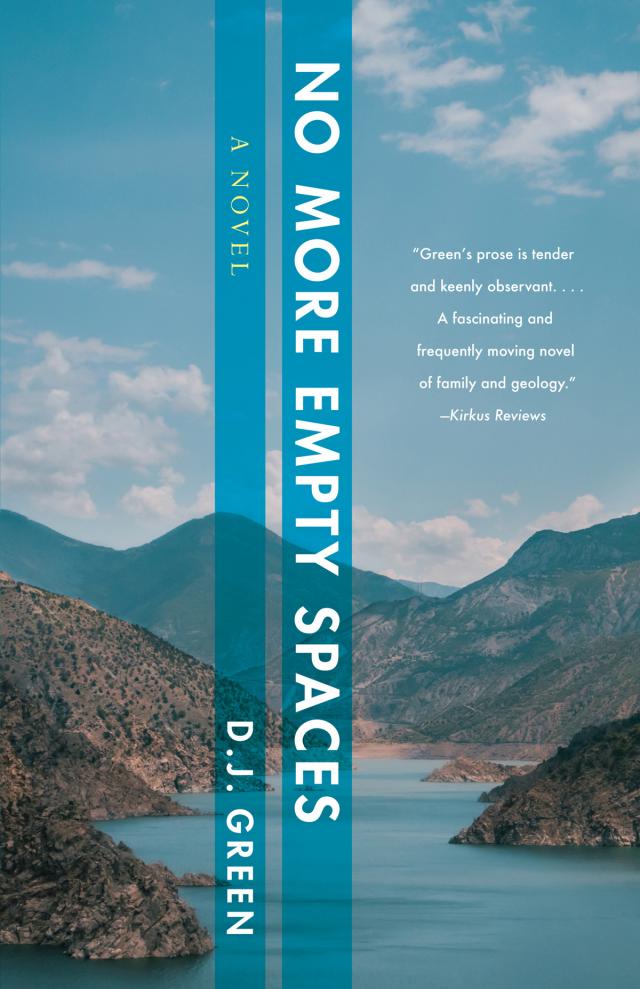
PRAISE FOR NO MORE EMPTY SPACES
“No More Empty Spaces is an excellent debut—straight-forward and yet deceptively complex as it situates its multi-layered narratives between the competing forces of nature, both human and geological, over time. Green’s depictions of the rugged and earthquake-prone Anatolian Mountain region of Turkey evoke a dangerously shifting landscape every bit as unstable and unpredictable as the broken American family that seeks to heal itself there.”
—JAMES ANDERSON, author of The Never-Open Desert Diner and Lullaby Road
“American geologist, Will Ross, has landed the job of a lifetime, one that will take him from Philadelphia to a remote region of Turkey along the Euphrates River. At the eleventh hour, when he’s packed and ready to fly, the divorced father of three discovers his ex—passed out and naked—on the family’s living room couch. Will has to decide what to do. Without hesitating, he does the hard, risky, right thing. Turns out, it’s a habit with him, one that impressed the hell out of this reader. No More Empty Spaces is a rich and rewarding read, a novel to savor, like a steaming cup of Turkish coffee.”
—SHARON OARD WARNER, author of Writing the Novella
“D. J. Green is that rare writer who takes us inside worlds we may never be able to experience firsthand.”
—WILL MACKIN, author of Bring Out the Dog
“. . . a wonderful read, with some of the best prose I’ve seen regarding the intractable forces of nature. This struggling blended family faces every kind of overwhelming challenge, from love to liquor to the great dam at Kayakale in Turkey. The book made me want to go there and see this extraordinary landscape for myself!”
—A. R. TAYLOR, author of Jenna Takes the Fall and Call Me When You’re Dead
“D. J. Green skillfully intertwines a story of what lies below: the Earth with its complex geology and a man’s emotions, also buried deeply, each affected by history and environment. In No More Empty Spaces, Green takes us to the world of Turkey where Will, an engineering geologist, moves his family while he seeks to investigate a problematic dam structure, along with unexpected challenges to his beliefs about family and integrity. Green’s debut is both masterful and engaging.”
—SHARON BIPPUS, author of This Blue Earth
Copyright © D.J. Green 2024
All rights reserved. No part of this publication may be reproduced, distributed, or transmitted in any form or by any means, including photocopying, recording, digital scanning, or other electronic or mechanical methods, without the prior written permission of the publisher, except in the case of brief quotations embodied in critical reviews and certain other noncommercial uses permitted by copyright law. For permission requests, please address She Writes Press.
Published 2024
Printed in the United States of America
Print ISBN: 978-1-64742-616-3
E-ISBN: 978-1-64742-617-0
Library of Congress Control Number: 2023915532
For information, address:
She Writes Press
1569 Solano Ave #546
Berkeley, CA 94707
Interior design and typeset by Katherine Lloyd, The DESK
She Writes Press is a division of SparkPoint Studio, LLC.
Company and/or product names that are trade names, logos, trademarks, and/or registered trademarks of third parties are the property of their respective owners and are used in this book for purposes of identification and information only under the Fair Use Doctrine.
This is a work of fiction. Names, characters, places, and incidents either are the product of the author’s imagination or are used fictitiously. Any resemblance to actual persons, living or dead, is entirely coincidental.
For NRT
PART I
ONE
Will needed perspective, and flying afforded an outlook that walking-around life could not. He hustled across the Flying W Airfield, sweat soaking through the back of his shirt. It was a busy Saturday afternoon, but today he didn’t stop to talk with the other pilots he passed.
When he got to the plane, Will flung his flight bag onto the tarmac and slammed his hand into the door. That stopped him. His palm throbbed. He lowered his hand, shook it out. It still stung reaching into his pocket for the keys. He unlocked the plane, flicked the light switches on, and began his preflight checks.
A 1953 Cessna 180, the plane didn’t show her age. It was twenty years since she’d rolled off the assembly line, but freshly polished, she looked sleek. His hand skimmed the fuselage, almost a caress now. He checked the lights, the tires for wear, and the brakes for drips of hydraulic fluid. He loved the ritual of preflight, but today, running his eyes and fingers over the leading edges of her wings and prop didn’t fill him with the usual mix of focus and excitement; instead he seethed in the summer sun.
Will unhooked the tie-downs and climbed into the cockpit. He donned his headset and adjusted the microphone close to his lips. Then he slid his aviator sunglasses on. He had never worn sunglasses before this summer—didn’t care to have his views of the world altered. But he was compelled to try them back in June when the kids had pooled funds and given them to him for Father’s Day. At the time, he’d been surprised they could agree on anything, but this morning Will saw that his children could cooperate in ways he wouldn’t have imagined. Talk about altering his views.
Master switch on. Fuel mixture full rich. Throttle in. Brakes engaged. Will leaned out and yelled, “Clear prop!”
The plane shuddered to a start as if she’d been asleep since their last time up and was shaking off the nap. He taxied the short distance to the runway, turned ninety degrees to the left, and braked. His hands moved over the controls as his eyes scanned the gauges. He made his final checks quickly, wanting to get up and out of the heat. He looked for planes on downwind and base legs, and final approach. He found none, turned the plane the remaining ninety degrees onto the runway, and peered at the cornfield at the end of the airstrip through the blur of the whirling prop.
“Cessna one eight zero, two zero Mike Foxtrot, taking off, runway zero one, Flying W, over.”
The engine’s power vibrated from the soles of his feet up through his body. When no other air traffic responded, he eased his feet off the brakes and gave her full throttle. Sensing the velocity, he glanced down at the airspeed indicator—spot on at sixty miles per hour. He pulled back evenly on the yoke.
Airborne—the moment of lift. There was nothing like the feeling of gravity loosening its grip on you.
His plane was a partner he could trust. If he took care of her, she’d take care of him. He reveled in her grace in the dance of flight, and his lead. He was in control of everything except the wind and the weather, and it was his job to read them, understand them, and adjust to the ride. You studied and learned these things, and they all made sense. But you could spend your whole life studying people and not make sense of them. How do you adjust to a ride like that?
“Philadelphia Control, this is Cessna one eight zero, two zero Mike Foxtrot, heading three five five degrees to Stillwater V-O-R Sierra Tango Whiskey. Climbing to sixty-five hundred feet.”
He’d go higher than usual today, get the wider view.
“Roger, two zero Mike Foxtrot. Squawk zero four one one,” the tower answered.
Will regarded the landscape below and asked himself again how he’d ended up in New Jersey. He turned toward the Pennsylvania hills, what people here called mountains. The Poconos’ll be pretty today, he thought. Pretty can’t hurt.
Will had a weak spot for pretty girls. Pretty could cast a spell, like the day he’d met his ex some sixteen years ago. Her smile had drawn him across the barroom like iron to a magnet. When he slid his arm around her slim waist the first time they danced, she moved like a feline against him, and Kat had gotten her nickname that night.
A pretty scene could take him in, too. Like June 3, the day in 1968 he’d interviewed for the Philadelphia Port Expansion job. It had been perfect—warm but not hot, bright and clear, breezy but not blustery. The Delaware River Valley was all the things that Arizona, where he’d just finished his master’s degree in engineering geology, wasn’t. Spring in the Southwest was a hot, gritty, brown blast of a season, and Will had been ready for a change.
The folks from the Port Authority had flown him over the project area in a helicopter, then continued the tour of the wide verdant valley. To Will, the rich greens below were like luxuriant carpets unfurled to welcome him. The pretty had worked its magic, and when an offer came on the mid-June day with the mercury hitting 115 degrees Fahrenheit in Tempe, he’d accepted without a second thought.
Since then, Will had lived into a healthy mistrust of pretty. What took you in on June 3 rarely looked so good come winter.
With altitude, the temperature dropped. Will twisted the vents to get more air flowing, cooling him down. The vice-grip headache constricting his temples eased for the first time since that morning, when he’d followed the kids into what had been their family home before the divorce last year. But he couldn’t erase the image of Kat from his mind. Passed out. Face down on the couch. Naked. An empty bottle of Johnnie Walker Red on the floor.
He knew she’d been drinking more the last couple of years. He’d seen the signs. He knew them all too well from his own drinking days. But he had no idea she’d gone so far down that road to nowhere.
Good thing she’d left the car, its fender crushed, out on the front lawn last night, or Will might never have known, united as the kids seemed in keeping her secret. K evin, his fifteen-year-old, had shouted at Will to leave—actually pushed him out the door. Shocked, Will had stumbled down the porch steps backward, and stared at the door his son had slammed.
Will leveled the plane at sixty-five hundred feet, backed off the throttle, adjusted the pitch of the prop, and fine-tuned the fuel mix. Almost set, he reached down and spun the trim tab until he felt the balance he was seeking, the perfect trim, in which the yoke took the lightest of touches for the plane to go where he wanted.
Now, it would take more than a light touch to get where he wanted to go. He’d mapped his course with such care over the past weeks. It had started with an article in the Engineering News Record, “Swiss Cheese Rock Slows Kayakale Dam.” Another dam where insufficient geological studies had impacted construction. Will had decided he was finished with his paper-pushing job at the Philadelphia Port. Turkey would be his next stop.
But now there was a big hitch in his plan; he couldn’t leave the kids with Kat. He’d have to get full custody in the next two weeks, along with wrapping up at the port, packing to move, and selling the plane and the car, and, and, and. . . .
Turbulence jolted the plane—and Will’s attention—back to the cockpit. He gripped the yoke and rode through the bumps. Leaving the wide floodplain of the Delaware River, he steered toward the peaks of the Poconos, the landscape rising beneath him. When he got to the Susquehanna River, he followed its green ribbon west–southwest. Where the river split, the confluence of the north and west branches, he left it behind and headed for the heart of the Valley and Ridge physiographic province.
Ridges of resistant rocks, sandstones, conglomerates, and limestones yielded to valleys underlain by soft shales, then climbed again on the harder rocks of the next ridge. The rock units spanned the land surface in parallel bands, except where anticlines and synclines, geologic structures like the crests and troughs of ocean waves, angled into or out of the subsurface—there the units formed striking chevron patterns. To the geologist’s eye, those patterns told the story of Earth’s processes through the ages.
In Turkey, Will would read the story in the rocks. And in that story, he would find the answers they needed to make Kayakale Dam work.
He looped among the lofty cumulus clouds, leaning into turns and rolls, feeling the physics of flying in his muscles. His internal gyroscope engaged. Then he pulled into a stall. The stomach-dropping sensation of losing lift tested him. He stayed with it, fighting any hints of fear that rose in his throat. Satisfied he was under control, he pushed her nose down, gave her more throttle, and resumed his private air show by plummeting through another cloud break.
His neck relaxed, and his jaw unclenched as he moved with the forces acting on the plane—never against them. That’s what you do, he decided. Move with the forces acting on you. There’d be no more lawyers, no more court dates, and no more negotiating. He would take the job in Turkey and take the kids with him.
Will banked the plane hard left, turning back toward Flying W. There was even more to do now, and he’d best get to it. Coming out of the steep turn, he steered due east.
TWO
The revolving door spun Will out of the hotel lobby onto the busy streets of an Ankara Monday morning.
Turkey, Will thought. Made it.
There were days during the past two weeks he’d had his doubts, but here they were at their first stop, in Ankara. The kids were asleep in a spacious suite upstairs. Jet-lagged, they’d probably snooze until he got back. If not, Kevin would watch out for his brother and sister.
A bellhop approached. He looked like an organ grinder’s monkey in his red brocade jacket. “Taksi?”
Will waved the boy off. He had plenty of time before his eight o’clock meeting. He’d woken early, excited to start his new job with Design Engineers and Constructors Company. He consulted his map and began walking, smiling with satisfaction. As of this morning, he was DECCO’s chief foundation geologist for Kayakale Dam.
The sidewalks bustled with men and women in workday garb, mostly suits in somber tones. This could’ve been any city, but the scents that surrounded him told Will it wasn’t. Yeasty goodness wafted from a bakery. The tang of roasted hot pepper and smoked paprika made him slow his pace. Tall spits turned in a window. Juices glistened on the meat’s surface.
Will passed a grocer, a tanned wiry man with dark, thick hair and an equally heavy mustache dominating his thin face.
“Merhaba,” Will said. Hello.
“Merhaba,” the man replied and handed Will a small apricot from the basket of yellowish-pink fruit he was stacking onto a stand. “Amerikalı?”
“Evet,” Will said. Yes. He reached into his pocket for change.
“Hayır,” the grocer said, refusing any money. “Türkiye’ye hoş geldiniz.”
Will ambled on, then stopped to thumb through his pocket- size Turkish–English dictionary to see what the grocer had said: Welcome to Turkey.
He ate the sweet, juicy apricot in one bite and spit the pit out. It flew into the gutter in a satisfying arc.
At the next shop, another one with spits turning in the window, Will paused to savor the spicy aroma. The words Kebap Lokantasi were painted across the expanse of plate glass. Consulting his dictionary again, he confirmed that lokantasi meant restaurant. Fiery Adana kebabs would become Will’s favorite Turkish dish.
As he tucked the dictionary back into his jacket pocket, he caught his reflection in the glass. His freshly pressed khakis, crisp white oxford shirt, and brass-buttoned navy blue sport coat, which he’d always considered business attire, looked colorful and casual compared to the uniformly dark-suited Turks. He owned only one dark suit. It was black, and he reserved it for funerals. He certainly hadn’t brought it on this trip.
The air warmed as the sun climbed into the man-made canyon of blocky buildings. Will shed his jacket, folded it neatly across his arm, and walked on. The small shops and restaurants wedged among the offices added color and character to Ankara’s streets, like garnets and micas sparkling in otherwise dull gray stones.
Will wasn’t much for breakfast, but every whiff of fresh-baked bread made his stomach growl. He stepped into the next bakery. “Merhaba,” he said.
A short, stout woman wearing a red-and-yellow paisley headscarf looked up. “Günaydın,” she said. A shy smile plumped her cheeks and crinkled the corners of her eyes.
“Do you speak English?” he asked.
Her dark eyebrows pulled together. “İngilizce? Hayır.”
He shrugged, remembering how he’d gotten by in Pakistan before he learned much Urdu. He pointed at the golden flatbreads she’d been placing in a basket, held up one finger, pulled all the change from his pocket, and extended his hand to her. “Okay?” he asked.
“O-kay.” She dipped her chin. “Tamam, tamam.” She took the coins she needed. The bread she handed him was warm.
There was a bust on the counter. The face had high, pronounced cheekbones and a wide forehead. The eyes were intense under arched eyebrows that drew together into deep lines. The man appeared both severe and noble. Will had seen portraits of this same man everywhere he’d been in Ankara—in the airport when they’d arrived, over the hotel reception desk, in the restaurant last night, and in several shops he’d passed this morning.
“Atatürk?” he asked, referring to the father of modern Turkey, whom Will had read about in the little time he’d had for research. The leader of Turkey’s revolution in the 1920s, Atatürk transformed the country from a sultanate to a republic. Among other sweeping reforms, he’d outlawed the fez, a symbol of the Ottoman Empire; had linguists invent modern Turkish using a modified Latin alphabet, replacing the Arabic; and given women the right to vote. Without Atatürk, Turkey would likely not be the country it was today, seeking its place in progressive Western culture. And the dam Will was here to help build would likely not be underway.
“Evet, evet, Atatürk!” The baker folded her hands over her heart.
This adoration of their deceased leader was yet another sign this wasn’t just any city. At least, not any city in the States. Even in Philly, where so much US history resided, the forefathers’ portraits were not ubiquitous. And as for Nixon, it looked like he might end up in jail, rather than the White House. So much for reverence. What a relief to be away from the Watergate scandal headlines screaming across the front pages of the papers back home.


