

Mission vegan, p.1
Mission Vegan, page 1


Contents
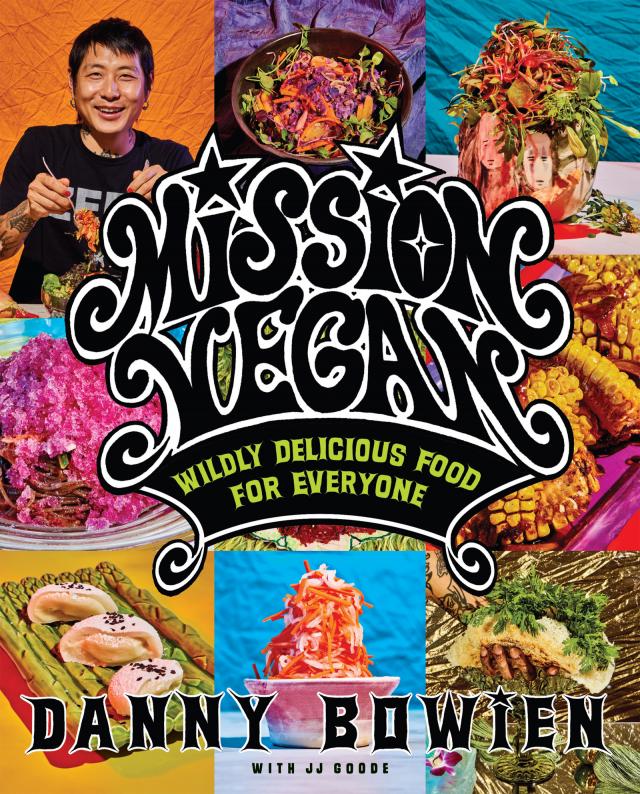
Cover
Title Page
Foreword
Introduction
Kimchi
Watermelon Kimchi
Pineapple Kimchi
Habanero Kimchi
Stuffed Cucumber Kimchi
Radish Water Kimchi
Go-To Cabbage Kimchi
Stuffed Cabbage Kimchi
Quick Red Cabbage Kimchi
Koji Chive Kimchi
“Instant Ramyeon” Kimchi
Dilly Dandelion Greens
Tangerine Kimchi
Pickles
Passion Fruit Cucumber Pickles
Green Chili Pickles
Peter’s Pickled Peppers
Tartine Tofu Pickles
Bánh Mì Pickles
Sweet-and-Sour Seaweed Pickles
Soy Sauce–Pickled Perilla Leaves
Dried Mushroom Pickles
Sweet Braised Peanuts with Old Bay
Other Sides
Smashed Cucumbers with Tingly Granola
Tingly Granola
Sara’s Sesame String Beans
Roasted Sweet Potato Salad
Squeezed Spinach with Scallion-Miso Dressing
Dad’s Carrot Banchan with Raisins and Pineapple
Kimchi-Marinated Broccoli Rabe
Sweet and Sticky Lotus Root
Mung Bean Pancakes
Vegetables
Sweet-and-Sour Eggplant
Honey Butter Corn Ribs
Mushroom Bulgogi
Steamy Mushrooms
Kabocha Samgyetang
Smoky Fried Napa Cabbage
Whole Eggplant “Miznon”
Hot Sauce Greens
Watercress Salad with Acorn Jelly
Tiger Salad
Stews and Soups
Mapo Tofu
Mapo Ramen
Quick Doenjang Stew
Kimchi Stew
Spicy Silken Tofu Stew
Not-Spicy Silken Tofu Stew
Potato and Perilla Leaf Stew
Army Stew
Mino’s Lentil Soup
Seaweed Soup
Pea Leaves in Pumpkin Broth
Kim’s Kabocha Congee
Chilled Tofu in Peanut Milk
Noodles and Dumplings
Matcha Phở
Lemon Pepper Glass Noodles
Somyeon in Iced Soy Milk
Knife-Cut Noodles in Shiitake and Squash Soup
Hand-Torn Noodles in Hot Pepper Broth
Cold Buckwheat Noodles with Radish Water Kimchi Broth
Cold Buckwheat Noodles with Dragon Fruit Ice
Black Bean Sauce Noodles
Chilly Green Chili Noodles
Pasta Pomodoro
Somyeon in Seaweed Broth
Somyeon Salad with Sesame, Yuzu, and Shiso
Cumin-Flavor Tofu Skin
Kimchi Dumplings
Cilantro-Tapioca Pot Stickers
Lung Shan’s Vegan Delight
Rice
Scorched Rice
Fragrant Chili Fried Rice with Herbs
Pineapple-Kimchi Fried Rice
Portobello Jerky Fried Rice
Ume-Shiso Fried Rice
Fragrant Fried Rice with Charred Bamboo and Hojicha
Dim Sum Go Go Fried Rice
Golden Fried Rice
Dolsot-Bibimbap with Grapefruit Gochujang
Barley Rice Salad
Multigrain Rice
The Walrod Special
Spicy Sticky Rice Cakes
Crispy Rice Cakes with Garlic Soy and Pumpkin
Sweet Sticky Rice Lotus Leaf Parcels
Spicy Crispy Rice Salad
Sweet Treats
Sandy’s Purple Sweet Potatoes
Burnt Banana with Blueberries and Walnuts
Seaweed Rice Krispies Treats
Peanut Brittle
Divinity
Microwave Mochi with Sesame Ganache
Jim’s German Chocolate Cake
Sauces and Seasonings
Lemon Kosho
Whipped Garlic Sauce
Tart Garlic Sauce
Charred Chili Paste (Red and Green)
Grapefruit Gochujang
Scallion-Miso Dip
Ginger-Scallion Sauce
Black Bean Sauce
Smoky Coconut
Cashew Cream
Chili Oil
No-Cook Hot Sauce
Mushroom Stock
Mushroom Seasoning Powder
Umami Salt and Pepper
Ingredients
Acknowledgments
Index
About the Authors
Also by Danny Bowien
Copyright
About the Publisher
Foreword
BY KIM HASTREITER
I’ll never forget the night I first met Danny Bowien. The year was 2011 and I was in San Francisco with my crazy bestie Joey Arias to perform with my other brilliant friend Thomas Lauderdale’s band Pink Martini. For fun, Thomas had invited Joey to sing and me to play the triangle and cymbals as guest performers with the band for a few nights at the Symphony Hall there. None of us were from San Francisco, but I had some great friends there who knew everything and everybody from the underground up and steered us to the best newest, most genius stuff to do and see while we were in town. As usual, I became the “tour guide” bossing my posse around about what we should do, buy, eat, and see. Casing out the alternative city culture as soon as I arrived, I immediately discovered that at that moment in time, San Francisco seemed to be nurturing a whole fresh youth cultural movement that was centered around FOOD.
As a self-described cultural anthropologist, seeing this new generation latching onto food as culture in this town where the queen mother–legend of New American Cuisine—the visionary Alice Waters—had opened Chez Panisse in 1971 made sense to me. Waters had changed everything with Chez Panisse. Her powerful philosophy of serving only ethically and locally sourced food cooked simply was new and began a seismic change in American cuisine, eventually putting the United States on the global culinary map. News of her then-radical ideas spread, turning San Francisco in the seventies into a culinary mecca for food makers and lovers everywhere. And now, forty years later, new generations seemed to be picking up the baton and continuing to shake things up once again.
As soon as I arrived in town, the very first thing I was emphatically instructed to do with my big motley crew was to head down to Mission Street and wait in line for a table at an innocuous, generic-looking, old, beaten-up Chinese restaurant there called Lung Shan, where some young punk-y kids had supposedly taken over the kitchen guerilla-style a few nights a week and were serving a super radical and creative menu (alongside the OG Chinese takeout fare). All my Frisco friends were talking about this. The buzz was BIG. The lines were LONG. The food was RAD. The idea was NEW. The prices were DEMOCRATIC. The ingredients were ETHICAL. And the chef/cofounder (Danny Bowien) was COLORFUL, COOL, and TALENTED. Oh, and he was supposed to be really really NICE, too.
The wait was quite a while, so our whole Pink Martini crew happily joined the party taking place on the sidewalk with the other hungry festive local culture vultures outside waiting to get in. When we finally got our table, I discovered Danny was a fan of Paper (the magazine I used to make back then). He took the time to give us a giant warm welcome in the middle of his chaotic and overwhelming night. The place was pumping, Danny was racing around like an athlete, and I loved him immediately. We ordered everything on the menu. And with every dish delivery, he checked in with us like an eager puppy to see how we liked it all. Of course, his kung pao pastrami was the star of the night for everybody. It kind of summed up Mission Chinese Food’s rebel attitude to me and how this new generation of subversive kids were pushing boundaries with their new medium. They were turning it all upside down, experimenting with OG cultural dishes while respecting the provenance, ethics, and heritage of San Francisco’s early “eat-local” mavericks like Ms. Waters.
Now, I am not a part of the culinary world or a food critic. I am a culture person. I’ve spent my whole life and career chasing creative subcultural movements—and the subversive energy of dinner that night eleven years ago really struck a chord with me. After stuffing ourselves to the gills, I left Mission Chinese that night with the strong feeling in my gut that something new culturally was going on with these new creatives coming up in this town. Danny was the kind of rebel kid that years before (if he’d been in my generation) would’ve channeled that energy into making art, starting a band in his garage, or shooting Super 8 movies underground. As I sniffed around San Francisco that trip, I began to notice more and more very cool young folks who were making culture around food—growing it, cooking it, butchering it, reinventing it, fusing it, and most important, building communities around it. I was so inspired by this new young San Francisco food scene that I decided then and there that I needed to create a special food issue of Paper. Danny Bowien was the one who excited me the most that trip, so I crammed in a few more visits before I left town and by the time I returned home, I’d made a new friend. As I pulled my food issue together six months later, I got word that Danny had rented a little basement spot on Orchard Street to open a Mission in NYC. I was ecstatic! So of course he became part of my issue, front and center.
From the moment my issue came out and Danny moved to NYC, I watched his journey become a saga. As years passed, Mission opened and closed on Orchard Street, reopened in Chinatown, opened in Bushwick, closed in Chinatown.
Mission Chinese became my canteen. I met so many people and made so many friends there over the years. Danny introduced me to his posse of young friends there, and of course I’d drag my family of OGs to Mission often so he met my old friends there. Our friends then met each other and young and older generations of like-minded creative New Yorkers got all mixed up. So much love in that place. Friends got married. Friends got divorced. Friends got famous, friends had babies, friends fell in love, friends went into rehab, friends even died. There are so many stories. Like the time Danny cooked for twenty-five of us at Mission after the huge women’s march before the catastrophe of Donald Trump’s presidency began. Or the first birthday party at Mission Chinese of Danny and Youngmi’s beautiful son, Mino, who was dressed in traditional Korean gowns. I remember the day well, especially the huge platters of food they served from neighborhood places like Katz’s Deli and Russ & Daughters. Danny loved those kinds of legendary old-school New York spots. He was always excited to turn me on to somewhere he loved. Like the time he took me to eat my first burger at Peter Luger (with no reservation and no wait) or schlepped with me for the first time to Barney Greengrass for matzoh brei or to some insane sushi place on the Upper East Side or to his favorite old-school Ballato’s for spaghetti and meatballs on Houston Street. And everywhere he went he’d bring bags of his mapo tofu or hotter than hell chicken wings as a treat for the staff at whatever restaurant he was eating at. Of course, Danny was beloved and treated so well everywhere. I remember Danny hosting a Pink Martini practice once during Mission Chinese off hours for a gaggle of my friends who were immigrants from all over the world. It was at the beginning of the Trump years and so I invited lots of my immigrant friends to perform the song “America” from West Side Story at Brooklyn Academy of Music that night. Danny joined us onstage!
Which brings me to Danny’s generosity. Danny is much more comfortable giving than receiving. He loved to give his food to people. He’d always drop food over if I was sick or bring tons of his food to parties I might throw. He knew I couldn’t eat spicy food, so Danny cooked everything on the menu special for me: no chilies. Our dear late friend Jim Walrod hated any kind of vegetables, so Danny made all his greatest hits for Jim with no veggies. Many of the kids downtown were vegan so Danny began to offer, among other things, vegan mapo tofu, which became a big hit. Danny, who kept his killer lamb, ribs, beef, broccoli, and pastrami on the menu, started adding lots more vegan dishes so the vegan kids would be able to eat there, too. It was a challenge for him, I think, but he got into it big-time, aiming to create innovative vegan dishes that nonvegans would love too. Danny made a vegan kabocha congee that I flipped for. It was the most divine-tasting thing and I became addicted to it. I ate so much of it he now calls it Kim’s Kabocha Congee on the menu. It’s even in this book, so I urge you to make it as its high on the list of my favorite foods in the world.
Looking at this beautiful new book you hold in your hands, some might think that Danny is now a vegan and Mission Chinese Food is a vegan restaurant. Nope. This book is just a facet of the complex and wonderful Danny Bowien. It is more about his democratic nature and generosity of spirit that makes him want to please and include everyone who comes by his restaurant, whether meat eaters or not. Until recently, vegans often have had a difficult time finding amazing, innovative, and delicious plant-based food that they could dine on with any of their friends, whether vegan or not. Danny made this vision happen. And people loved it. But Danny tells his own story best in his own words. It’s a great story that explains how and why he became who he is. Once you read this you will understand this is more than just another cookbook. It’s a gift to us all from Danny.
Introduction
Danny as a senior on the way to school in 2000
Courtesy of Jim Bowien
I was nineteen when I left Oklahoma to move to San Francisco. I got off the plane, jumped on a bus, and before I’d even seen my new apartment, I was eating kimchi for the first time in my life.
On my two-block walk from the bus stop to my apartment, I spotted Muguboka, a frill-free Korean restaurant on Balboa Street, and wandered in with my bags. It took them a few moments, but the people who ran Muguboka quickly worked out that the Korean-looking kid with long emo-rocker hair and a studded white belt didn’t speak a word of Korean and had never eaten Korean food.
It’s not that there weren’t any Korean restaurants back home in Oklahoma City. I just wasn’t particularly interested in finding them. Partly because I was happy eating fried chicken at Eischen’s, spicy tuna rolls at Sushi Neko, bún bò Huế at Phở Củởng (which used to be a Long John Silver’s), and shrimp fajitas at Chelino’s, which came on a sizzling platter, a feature I’d eventually borrow and use at every restaurant I’ve ever opened, because it embodies the loud, head-turning fun I aspired to in everything I make. But also partly because I wanted to keep my parents comfortable. I thought that maybe taking their adopted son to eat the food of his ancestral homeland, where I’d lived for all of three months as an infant, had the potential to be meaningful and therefore possibly kind of awkward.
THAT FIRST TIME AT MUGUBOKA, I was full of the unbridled optimism my move to San Francisco had stirred in me. On paper, I had moved here to go to culinary school. I was a Food Network kid. My heroes were Emeril and Bobby, and after my mom died, my band broke up, and I (barely) graduated high school, I followed a friend to the Bay. The moment I arrived, everything felt possible, for all the reasons most kids get pumped to be on their own. And also because I was finally free of some of the burdens of my life in Oklahoma—especially the ever-present “What’s your deal?” question that came when people saw Korean me next to my white parents.
In that sense, stepping into Muguboka felt familiar. Unfamiliar was what or how to order, so I asked them to feed me, and they did, beginning with half a dozen small plates set on my table. There were blanched bean sprouts dressed with sesame oil, sweet slabs of lotus root, a tangle of dark green seaweed, and red-tinged squares of cabbage. By the time they brought out the spicy pork, broiled mackerel, and kimchi stew that they’d picked for me, I’d emptied most of the little dishes, just like I used to demolish the chips and queso at Chelino’s before my fajitas came. On my next visit a few days later, I naively tried to order the little dishes with some rice, only to be informed that these were banchan—the assortment came with every meal, not on their own.
I felt strange when that first meal ended. Not because I had flashes of some alternate life where I was never put up for adoption and was instead raised on sujebi and doenjang-guk. It may have been the sense that even though the flavors were mostly unfamiliar, they all immediately made sense to me. I liked everything. What did that mean?
Muguboka became my neighborhood restaurant. It was the first time I had found a place where I wasn’t just another customer, where I was cared for. It was also the first time I felt like a member of a Korean family. The language barrier meant we never moved beyond small talk, but I felt their affection. They were like aunts and I was the kid at the family barbecue, with cheeks to be pinched. I’d show up on my way to class, holding my student-chef whites, and they’d tell me how cute I was, urge me to try out for some K-Pop version of American Idol, and send me off to school with a Styrofoam clamshell full of banchan and a container of hot rice.
After graduating culinary school, a program that was supposed to take eight months but took me something like three years, I bopped around various kitchens, where I learned to make sushi rice and slice hamachi before I wound up at Farina in the Mission. It was funny. Here I was, someone whose previous experiences with Italian food were bowls of alfredo at Olive Garden and shrimp scampi at Red Lobster, cooking under the tutelage of an uncompromising Ligurian. The chef, Paolo Laboa, showed me how to make fresh pasta, octopus terrines, and the pesto his grandma’s grandma’s grandma once made. He was the reason for my first brush with fame—in 2008, he took me to the World Pesto Championship in Genoa. I had assumed I’d just be assisting Paolo, but then I somehow found myself among the competitors, me and a hundred others, most of them from Liguria, clutching olivewood pestles and marble mortars, and Paolo too far away to handhold. As an Asian American, I made a real splash even before they announced the winner. The next day, I took an early jet-lagged walk in Genoa and saw front-page headlines in every local newspaper screaming that a Korean chef from California had won. It was crazy.


