

Burning mountain, p.1
Burning Mountain, page 1


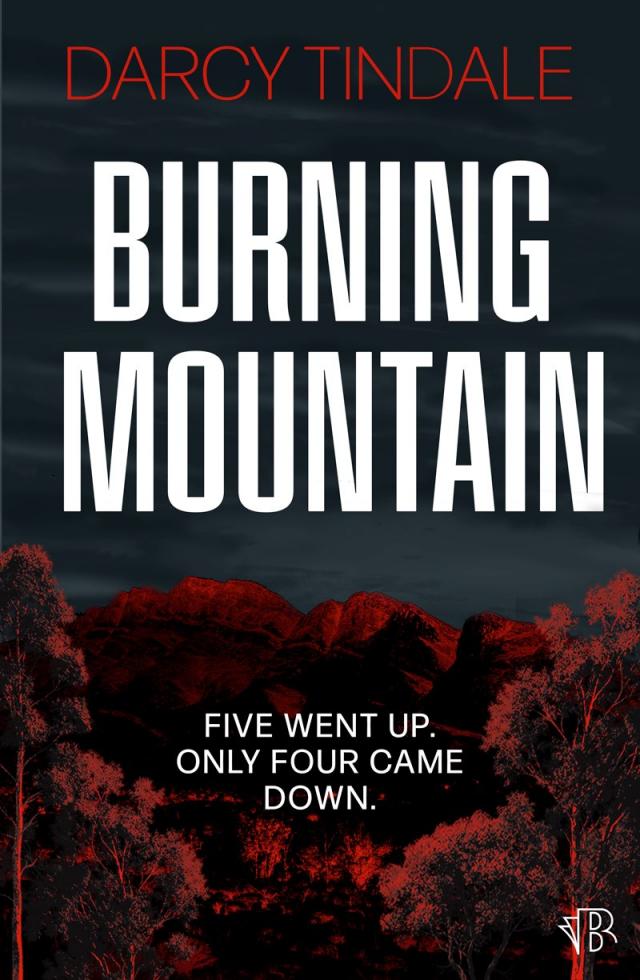
BURNING MOUNTAIN
DARCY TINDALE
Copyright © 2023 Darcy Tindale
The right of Darcy Tindale to be identified as the Author of the Work has been asserted by them in accordance with the Copyright, Designs and Patents Act 1988.
First published by Penguin Books in 2025
Bantam is part of the Penguin Random House group of companies, whose addresses can be found at global.penguinrandomhouse.com.
Published in 2026 by Bloodhound Books.
Apart from any use permitted under UK copyright law, this publication may only be reproduced, stored, or transmitted, in any form, or by any means, with prior permission in writing of the publisher or, in the case of reprographic production, in accordance with the terms of licences issued by the Copyright Licensing Agency.
All characters in this publication are fictitious and any resemblance to real persons, living or dead, is purely coincidental.
www.bloodhoundbooks.com
Print ISBN: 978-1917705691
CONTENTS
Newsletter sign-up
Prologue
DAY 1
Chapter 1
Chapter 2
Chapter 3
Chapter 4
Chapter 5
Chapter 6
Chapter 7
Chapter 8
DAY 2
Chapter 9
Chapter 10
Chapter 11
Chapter 12
Chapter 13
Chapter 14
Chapter 15
Chapter 16
Chapter 17
DAY 3
Chapter 18
Chapter 19
Chapter 20
Chapter 21
Chapter 22
Chapter 23
Chapter 24
Chapter 25
Chapter 26
Chapter 27
Chapter 28
DAY 4
Chapter 29
Chapter 30
Chapter 31
Chapter 32
Chapter 33
Chapter 34
Chapter 35
Chapter 36
Chapter 37
Chapter 38
DAY 5
Chapter 39
Chapter 40
Chapter 41
Chapter 42
Chapter 43
Chapter 44
DAY 6
Chapter 45
Chapter 46
Chapter 47
Chapter 48
Chapter 49
Chapter 50
DAY 7
Chapter 51
Chapter 52
Chapter 53
DAY 8
Chapter 54
Chapter 55
Chapter 56
Chapter 57
Chapter 58
Chapter 59
Chapter 60
Chapter 61
Chapter 62
DAY 10
Chapter 63
DAY 12
Chapter 64
DAY 13
Chapter 65
Also by Darcy Tindale
You will also enjoy:
Newsletter sign-up
Acknowledgements
About the Author
A note from the publisher
To Mum: who constantly asked for a happy ending. So, they quaffed endless flutes of Veuve Clicquot, rode Vespas into the sunset, and all lived happily ever after.
To the reader: you already know this novel isn’t going to end well. Enjoy x.
PROLOGUE
A bush walker, with his dog in tow, steps off the main hiking track deciding to forge through the thick scrub of the National Park. He has no idea this seemingly insignificant decision to comb for wildflowers will not only alter his day, but turn a town on its head.
He is a little more than forty kilometres from Muswellbrook, off the New England Highway and up Petwyn Vale Road, close to the Maiden Jewel Camping grounds. On a hunch, he takes a shortcut hoping to reach the cliff face along the mountain range, where he’ll hunt for native flora.
He is only a few minutes into the bush, searching for rare orchids under the canopy of the tall ironbark trees, when the blue kelpie picks up a scent amongst the clump of scrub. The dog’s paws trot along with pace, until it darts off along the dirt trail, faster, faster, tracking the smell through the dense bush, disappearing into the thick foliage.
The dog momentarily hesitates as its master calls for it to return, but the scent calls stronger.
It pants. Its muzzle drools. Eventually the kelpie stops with its nose to a dirt crater, and there it begins to dig in a flurry. The animal picks up the find and, buoyant, trots back with it towards its owner.
‘Watcha got there, yah dopey bastard?’
The hiker wrestles the object from the animal’s fangs. A second later he drops it to the ground.
‘Fuck me dead! What in the name of, geez, crikey . . . stuff me!’
He swiftly nudges the animal away with his boot, wipes his hand – repeatedly – down his thigh and thinks he’s going into cardiac arrest. The whole time he’s still cursing, until he runs out of expletives.
The dog, stirred, confused and overexcited, barks and growls at the item. It takes more than a minute for the man to compose himself, then he snatches the dog by the collar and yanks it away. He gags at the thought of that thing being in his dog’s mouth and knows, when he gets home, he’ll be scrubbing its teeth with a bloody toothbrush.
As the bushwalker charges out of the scrub, dragging his dog through the undergrowth, a kookaburra begins to call. Its low hiccupping chuckle quickly turns into a raucous laugh, and it feels and sounds strange and oddly inappropriate. He presses on, only slowing to look back over his shoulder for a landmark, and sees a termite nest, a clump of Coolatai grass, and a patch of softly textured silvery-green leaves and bright yellow flowers – yellow buttons. He knows he’ll remember the spot (how can he bloody forget it?), but it’s the landmark of yellow flowers that he’ll tell the cops to look for when they arrive.
Oblivious to the dog that has just altered his days to come, Bob Bradbury – Robert only to his late father – sits perched high on the scaffolding, docile and unaware of his impending undoing. He pulls a Winfield from his pack, settles his bum comfortably into the grooves of stacked bricks and lights his smoke. His back aches from another day of loading bricks, and a fresh blister, small and bubbly, red and raw – all thanks to the wobbly wheelbarrow – has swelled in the centre of his palm.
He looks at the bubble. Pinches the soft skin between his nails and makes a small hole at the edge of the blister, then gently squeezes out the clear fluid. He knows he should wash his hand, or swab the area with iodine, but he can’t be bothered climbing down the scaffolding to get to the water tap or first-aid kit. Instead, he wipes his palm on his shorts, sits back in the shade and sucks on his smoke.
He scowls as he rolls out the aches in his neck and shoulders. The day’s heat has made him lethargic, and with only half an hour before knocking off, instead of finishing the job he figures he’ll kill the time hiding from the late-afternoon sun (and his boss).
At the top of the building, Bob looks out over Muswellbrook. The town is sliced in the middle by the main road, Muscle Creek, train line and golf course. Residential homes are divided by the A15, some boozy, poorly played rounds of golf, the noisy pond of frogs, and endless train carriages carrying coal.
Fucking coal.
Coal dust gets into everything in town. It darkens the sandstone, people’s driveways, dirties windows and sours the mood of homeowners trying to keep their patios and poolside paving nice.
To Bob’s far right, the tallest building is the Anglican Church with its soaring steeple and bell tower. To his left is his favourite pub. The Royal Hotel. Not as fancy as Eaton’s, but its chicken parmigiana is bonza.
For once, it isn’t the town’s pub that holds Bob’s attention. No, this other shop has prospects. This other shop has the potential to solve Bob’s financial woes. The answer to his fuckonomics is in a simple shop that sells, of all things, fish.
Bob squirms his backside into the contours of the bricks like putty, draws back on his smoke and watches the seafood shop across the road.
It was a laugh when the town saw the sign go up. A little over a hundred kilometres from the nearest ocean, and some stupid bastard moves to town and decides to sell fresh seafood. It was the main topic for weeks down at the pub. Then sure enough, a month later the town had a fishmonger.
A few days after opening, curiosity got the better of them, and people started popping their head in, buying a snapper or some dory, half-kilo of prawns, and since no-one ended up in the local hospital, word got around town quick that this guy’s fish was alright.
‘Hard working,’ they’d say.
‘Bloody oath.’
‘Is it fresh?’
‘Must be. Hasn’t killed me yet.’
Three days a week, in the early hours of the morning, the owner drives to Newcastle. Down the Golden Highway, flicking off onto the New England Highway, then landing in Wickham at the fishermen’s co-op.
‘Struth, you’d have to be keen.’
And he is.
The fishmonger is there and back, and within half an hour of returning, his ice display is layered with the next fresh instalment.
‘Gets there first so he can select the best.’
‘Nice piece of fish, if I say so myself.’
Everyone in town reckons that if the owner is willi ng to make the four-hour round trip to Newcastle and back, they’re willing to buy.
A year after opening, the fishmonger and his wife have built up a roaring trade.
For three weeks Bob has been working on the building site labouring away, and for three weeks he’s watched the little man go about his business in the shop across the road.
During the lunchtime rush there have been the stay-at-home mums buying chips for the kiddies to nibble on while they play in the park. Suits from the real estate, banks and council chambers buying grilled salmon and salad; the law firms going for chilli crab and fresh prawns, with black opal eyes and the odd spike that nicks fingers and stings like a paper cut; fat bastards ordering everything deep fried, and tradies walking out with Chiko Rolls and bottles of fizzy sugar drink, enough energy to kick in and see them through until knock-off time.
The only afternoon when the routine is altered is on a Wednesday.
Every Wednesday right on three, the little bloke kisses his wife goodbye, steps out the front door, lights up a smoke, slides it into the gap where he once had a tooth, and puffs on it like a steam train. He scuttles down the road, then down the side alleyway with two garbage bags, one in each hand. One bag, full of prawn shells, fish guts and other discarded oceanic crap, he tosses into the pale blue ‘Cleanaway’ dumpster. With the other garbage bag, fat and bursting with the week’s cash takings, he hobbles across the road and disappears into the bank. Bob has watched that too. A week’s worth of notes, silver and gold dough, all shoved in a bloody black garbage bag. Who would’ve guessed?
A fucking week’s worth.
Bob smiles and thinks, Someone oughta rob that guy, then extinguishes his smoke against a brick, and I reckon that someone oughta be me. As he flicks the cigarette butt up into the air, he grins with confidence. Easy as. What could possibly go wrong?
Joe Thicket – also unaware that a dog has exposed an event that took place before he was even born – drags his feet, as he moves slowly down the footpath. In the days to come, for reasons he will never truly understand, this discovery will too weave across his path.
Unknowingly, he shuffles along; his schoolbag is heavy, and his mouth is dry. He can feel the warmth of the afternoon sun on his shoulders. The thin cotton school shirt is no shield against the relentless heat. The tips of his ears burn, but he doesn’t hurry.
He idly kicks the long strips of stringybark that litter the footpath. He likes the leaf-stained patterns on the concrete. The swirls, the impressions the bark and leaves have left, are like fossils, marking time and place. Joe kicks at the bark like a lazy soccer player and scuffs the toe of his school shoe in the process.
Bugger.
There is no shoe polish at home, yet he knows that spit fixes everything. Spit to a child is like a measuring tape to a carpenter – the first tool to reach for. He crouches on the footpath and wets his index finger. It’s warm and frothy, and he rubs the tip of his shoe. The saliva soaks into the synthetic leather and the scuff mark dissolves, disappearing almost like a magic trick.
Beside the boy’s feet there is a frenzy of black ants busy racing about in unpatterned lines. There is a sense of urgency in their movement, and Joe feels annoyed, confused at why the ants need to rush, especially in the heat. He stands and places his foot above them, hovers a moment and then, in one stomp, he grinds the ants into the concrete.
Fossils, he thinks. They are ant fossils now.
Joe wipes the sole of his shoe on the gutter, scraping it clean, clearing his conscience along with the evidence. The air smells of lemony vinegar. The smell of dead ants.
Head down he moves along with haste, weaving between shadows and sunlight, between dogs barking behind gates and local newspapers rolled up and yellowing beside letterboxes, between weeds and patches of flowering groundsel, dodging cars parked in driveways, and garbage bins left on footpaths.
At last, he’s home.
While his legs are thin, pale and gangly, they feel heavy as he steps up onto the patio of number thirteen Swiftlet Street. It’s an unlucky number for a house. It’s unlucky that it’s his house. He stands at the front door and, in his haste to insert the key, scratches the wood. He licks his thumb and wipes away the crumbling paint.
He tries not to make a sound. It’s late. Late. The school day ended long ago. He has wasted too much time dawdling, stalling to come home.
There is a soft click of the lock turning behind the wood, and he wants to say, Shhh, shhh, door. The door swings open without a sound, and he steps quietly into the darkness of the hallway.
Joe peers into the lounge-room. The blob in the armchair, with one stout leg hanging over the armrest, is his father, Trent Thicket, wreathed in a cloud of cigarette smoke. The smell irritates the boy’s nose and stings his eyes. The haze is illuminated by the television. The ceiling is dull and stained like a prison cell. It is the colour of burned toast, chalking up the number of smokes it’s absorbed.
Joe pauses.
He listens.
The old man is still breathing. Still got air in his lungs to suck back another smoke. To live another day. Still alive to fill the boy’s days and nights with fear.
He squints, looking at the back of his father’s shaved head. At the dips and bumps, searching for the indent. The bad depression. The dent that makes his father snap.
The boy runs his fingers through his own hair, feeling the shape of his skull, small and lumpy. He wonders which bump or dent in his head is the bad depression, the one that will make him snap, just like his father.
DAY 1
1
Rebecca Giles grabbed a bottle of beer from the fridge and flicked the top off with a spoon. The metal lid flipped in the air then hit the kitchen floor with a ting, before rolling under the fridge.
Ah, bugger.
It wouldn’t be the only bottle top under there.
She leaned back against the kitchen bench and poured the golden liquid from the bottle into a tall weizen glass. But she was too quick, too greedy. The beer frothed and spilt over the side, dripping onto the floor tiles. With her foot, she mopped over the spill, using her sock to soak up the mess.
She had just returned from an afternoon run and was now pink-faced and thirsty; only instead of grabbing a bottle of water to quench her thirst, she had decided on a beer. As she raised the glass to her lips, her other hand lifted her long dark ponytail in the air and off her back. She could feel the sweat in her scalp, dripping down her neck and back, under her breasts. She contemplated whether she should hit the shower or finish the rest of her beer and help herself to a second. Mid-thought, she felt her mobile buzz against her thigh. She dropped her ponytail, fished around in the pocket of her tracksuit pants and looked grim-faced at the screen when she saw Detective Sergeant Bray’s name. It was her last rostered day off. She wasn’t due back at the station until morning.


