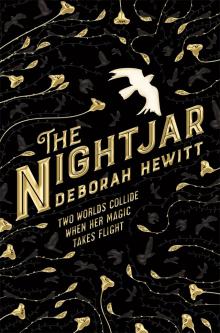
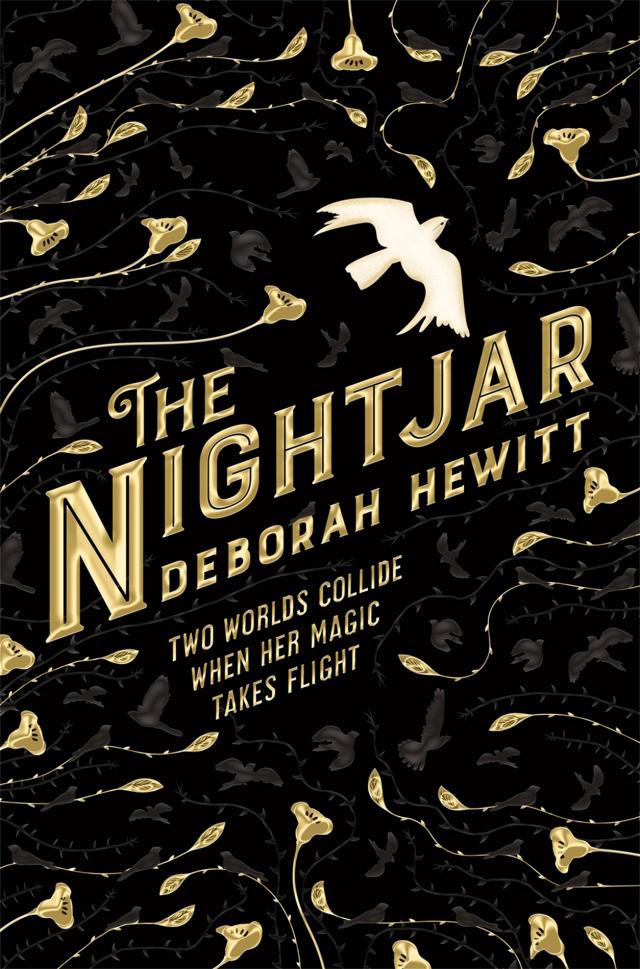
The nightjar, p.1
The Nightjar, page 1


Seb and Archie – to infinity and beyond
CONTENTS
Prologue
Chapter 1
Chapter 2
Chapter 3
Chapter 4
Chapter 5
Chapter 6
Chapter 7
Chapter 8
Chapter 9
Chapter 10
Chapter 11
Chapter 12
Chapter 13
Chapter 14
Chapter 15
Chapter 16
Chapter 17
Chapter 18
Chapter 19
Chapter 20
Chapter 21
Chapter 22
Chapter 23
Chapter 24
Chapter 25
Chapter 26
Chapter 27
Chapter 28
Chapter 29
Chapter 30
Chapter 31
Chapter 32
Chapter 33
Chapter 34
Chapter 35
Chapter 36
Chapter 37
Chapter 38
Chapter 39
Chapter 40
Chapter 41
Chapter 42
Chapter 43
Chapter 44
Chapter 45
Chapter 46
Epilogue
Acknowledgements
PROLOGUE
The pears in the orchard had ripened too early. Their swollen carcasses littered the grass, a rotting feast for the ants and fruit flies. He could smell the sticky juices from the terrace, mingling with the nauseating sweetness of the garden’s wildflowers. It was too hot for September, and Helena’s beloved hydrangeas were wilting. They lined the terrace like a guard of honour, heads bowed respectfully and yellow-brown petals shedding in the late-evening sun.
Tyres crunched over the gravel drive at the front of the house and he stiffened, a tumbler of whisky halfway to his mouth. The amber liquid caught the fading light, and its reflection danced like fire across his hand. He put it down without drinking and closed his eyes. The air was alive with moth wings and the rhythmic churring of birdsong. A soothing white noise. Calm. Peaceful. A lie.
‘S … Sir? John?’
His eyes snapped open. The boy – Vincent, the gardener’s son – was trembling. His thin face was tanned and streaked with dust and tears. The boy’s hand was anchored to the patio door, as though he were preparing to flee through it and into the safety of the house. Another lie. Nowhere is safe.
‘Sir, the police …’
John stared at him blankly before nodding. The boy slipped back inside, his trainers crunching through the patio window glass, strewn over the carpet.
John looked down at himself – at the polished shoes, the dinner jacket and crisp white shirt. His tie had worked itself loose and his left cuff was undone. Police. He ought to greet them. He smoothed down his rumpled shirt and straightened his jacket, wiping the blood from his hands on the lapels.
The music was still playing when he moved towards the house. A warped, tinny sound crackled from the antique gramophone and echoed through the hallways of Cranleigh Grange. Helena had gifted him the gramophone on their wedding day.
He couldn’t breathe.
The music was still playing, but there was no one left to listen. All the diners were dead.
He clutched at his chest. It was too tight; he couldn’t breathe. He staggered across the terrace, stomach convulsing with cramps, and gripped the iron railings for support. He retched into the hydrangeas, but nothing could disgorge the images of the dining room from his mind.
Broken shards from the mirror glittered over the lush carpet. Streaks of blood painted the upturned dining table, his mother’s desperate fingerprints stippling the oak … His elderly father was splayed on the wing-back chair, spine bent backwards; his sister-in-law was slumped on the floor beside his brother’s lumbering form … and there was Helena, cut down by the bay window, blood spreading out beneath her like a rose in bloom. If he had been home an hour earlier, he might have saved her …
He stumbled down the steps to the lawn. No. He would not greet the police. He would not follow them back into that room. He would not show them the pale dove’s feather in his pocket, stained pink at the edges: the calling card of the beasts who had slaughtered his family.
Vincent’s nervous footsteps pattered onto the terrace behind him.
‘Sir!’
The police officers were hammering at the front door with increased urgency now. Soon they would discover the gate that led to the back of the house.
‘Sir, the baby is alive!’
He wheeled around, and Vincent held the child out to him. Soft tufts of dark hair and brown eyes … Helena’s eyes. He recoiled – from the child, the boy, and the awful, awful scene in that house.
But there was something in the baby’s hand … He frowned. It was a hydrangea. One of Helena’s beloved hydrangeas. The wilted flower was clutched tight in a little fist. The pale stem was mottled brown, the faded petals withered and curled.
‘What’s … What’s happening?’ murmured Vincent in awe.
The baby’s arm jerked and the flower began to straighten. The stem grew thicker, rich greens bleeding through the plant’s cells, giving it a healthy vibrancy. The withered petals smoothed, the colour deepening, becoming a vivid mauve. Then the flower head quivered and the mauve faded into a soft purple … then cream … He stared at the baby, shaking the flower as the petals opened and closed, as if by command.
The child gurgled and his chest tightened again. Helena’s eyes … Helena’s hydrangeas. This was wrong. Wrong.
John shook his head. ‘The child … should have perished with its mother,’ he rasped.
‘But sir—’
His arm snapped forward and he hurled the whisky tumbler across the garden like a missile. With a clinking thud, it struck the trembling boy clean in the face, slicing through his eyebrow and cheek.
The boy stared at John in shock, clapping a hand to his face as the blood poured through his fingers and onto the baby’s vest. In the child’s quivering fist, the flower rotted to dust.
John moved away, his eyes glassy and his legs leaden.
Behind him, the baby began to scream.
1
The trouble began on a bitter November morning, when Alice Wyndham left her flat and found a box on the front doorstep. It was entirely unremarkable: a plain brown cardboard cube about twelve inches wide. The only odd thing about it was that every inch was wrapped in clear adhesive tape.
For Alice Wyndham, the label said. Do not open.
She stared at it. Who on earth would send a parcel and give instructions not to open it? A glance at her watch made her wince. Damn. Her bus was due in ten minutes. She could not be late today. The mystery of the box would have to wait.
She quickly stowed the package in the hallway and hurried down the path. Head bent into the biting wind, she failed to spot the driver of a nondescript black car, watching her with mild disinterest. Robert Lattimer was slender, with skin the colour of weak porridge and a cultivated ability to hide in plain sight. He glanced up from his notepad and carefully inscribed Alice Wyndham, box number 326 on a blank page. His pen hovered over his notepad, and after a moment’s hesitation he added, Aviarist?
Half an hour later, Alice was mentally composing her own obituary. Of all the things she’d expected this morning, death by psychotic bus driver was not one of them. Still, it might be preferable to what was waiting for her at the office. A full contingent of the senior managers would be arriving soon, ready to listen to her presentation – her first since she’d joined the company over a year ago. Her best friend, Jen, had promised her a bottle of prosecco if she got through it. Privately, Alice thought she stood a better chance if she had the prosecco before the presentation.
She tried to recall the opening lines. The survey of customers who complained about our concessionary stores revealed that … that they … Shit. What had the survey revealed? Her handouts were in the office. Why had she left them there?
Without warning, the driver stamped the brakes, and Alice lurched forward, her knees hitting the chair in front. There was a flash of blurred movement outside and the doors burst open. A swirl of icy rain drenched the front-row seats.
She closed her eyes as a little old lady clambered on-board. Concentrate. The survey revealed—
Something brushed her shoulder. The old woman was looming over her, engulfing her in a waft of Yardley’s English Lavender.
‘Hello,’ she croaked, staring at Alice with cataract-riddled eyes. She looked too old to exist, like something long dead that had been dug up and stuffed.
‘Do you mind if I sit here?’ she asked.
Alice smiled politely. There were plenty of other empty seats, but Alice was a magnet for lonely pensioners. It was something to do with her face – a wholesome, rosy-cheeked sort of face that spoke of chastity and virtue. Though if she was in any way chaste it wasn’t through lack of trying. Old ladies loved her face. Men? Not so much.
‘Of course,’ she said. ‘Let me move my bag.’
When the bus finally rolled off, it ploughed through a cluster of magpies and the birds scattered, pinwheeling into the dull skies above Larkhall Park.
The old woman watched them intently. ‘Pretty little things, aren’t they?’ she said, waving a bony hand, her fingers fluttering like the birds’ wings.
Alice’s heart sank as she watched one lone magpie swoop back over the roof of
‘I know what you are,’ the old woman continued.
Alice’s brow furrowed.
‘I know what you are,’ she repeated.
There was a bewildered pause. This was all a bit existential for a Friday morning. ‘I’m a customer complaints researcher for a shoe company,’ said Alice, with a confused smile.
‘No,’ said the woman. ‘That’s what you do, not what you are. I know about the birds.’
Alice stiffened. Birds? Where was the polite but stilted conversation about traffic jams or bad weather? Hardly anyone knew about her fear of birds, and it was the last thing she wanted to be thinking about this morning.
‘What do you mean?’ Alice asked slowly. ‘You can tell … I don’t like birds? Is that it?’
The woman nodded but fixed her with a stern look, as though personally offended by Alice’s ornithophobia.
‘Birds are incredible creatures,’ she said, her reedy voice stretched thin. ‘Did you know the bald eagle mates for life? Faithful. Loyal. Now tell me this: are those not qualities you admire?’
Alice winced. Even the bald eagle had a more successful love life than she did.
‘I … appreciate what you’re saying …’
‘Sylvie,’ the old lady supplied.
‘Sylvie,’ said Alice. ‘Well, birds are just … The thing about birds is …’
Her throat tightened, and she turned away. It was the thing she most disliked about London. She didn’t mind the traffic, the noise or the unfavourable odds of being murdered. It was the birds she detested, and London was riddled with them. Ravens in the Tower, swans on the Thames, pigeons … everywhere. They’d blighted her entire childhood, and now, the only place she liked to see them was on her dinner plate.
They sat in silence for the rest of the journey, the rain slamming against the glass with malevolent intent. At Trafalgar Square, Alice hauled herself upright and edged past her neighbour.
‘Just a moment, dear.’
Sylvie was teetering up behind her, swaying on her little matchstick legs.
‘This is my stop too. Could you help me off?’
She held out her arm, and after a brief pause Alice took it and led her carefully into the full might of the thundering rain.
‘Thank you,’ said Sylvie as the bus rolled away. ‘Would you mind seeing me across the road?’
Alice glanced helplessly at Trafalgar Square: one of her least favourite places in the city. She had no umbrella, and she’d hoped to sprint all the way to work.
‘Please?’ said Sylvie.
Alice felt a pang of guilt. She could hardly say no.
‘Of course,’ she said, flashing Sylvie a strained smile.
She squinted into the rain and wrapped one arm around the old woman. As soon as a gap opened up in the traffic, she propelled Sylvie across the road and plunged reluctantly through the square’s mass of pigeons.
The rain had plastered her hair to her face. Perfect. Just the impression she wanted to make to her bosses.
‘Okay then, well you have a nice day,’ she said, preparing to dart away.
‘Wait a moment,’ said Sylvie, snatching at her wrist. She was staring at something. Alice glanced over her shoulder, but only saw Nelson’s Column towering above.
‘I haven’t been quite truthful with you,’ said Sylvie.
Alice smiled distractedly. ‘Look, if this is about – oh, I don’t know – the benefits of RSPB membership or—’
‘It isn’t. It’s about the box.’
Alice’s mouth fell open. ‘Sorry, did you just say “the box”?’
Sylvie nodded.
‘Which box?’ asked Alice. ‘Are you saying you sent the box I found on my doorstep?’
‘I did.’
Alice let out an astonished laugh. ‘But—’
‘Listen to me, Alice,’ Sylvie said quietly.
‘How do you know my name?’ asked Alice, growing uneasy. ‘Who are you?’
‘I don’t have time to explain,’ Sylvie wheezed. Her breath was coming in shallow bursts, and her skin had turned the exact colour and texture of parchment.
‘I left the box for you just in case I didn’t meet you today,’ she said, forcing a smile. ‘But I wanted to see you, to make sure I had the right person.’
‘The right person for what?’ asked Alice.
The smile fell from Sylvie’s lips and she stumbled backwards, her heels scattering pigeons as she went. With a soft moan, the old woman’s knees sagged, and Alice shot forward and threw an arm around her waist.
‘Shit! Sylvie?’
Small and slight though Sylvie was, Alice could barely hold her up. She cast a panicked glance about her at the commuters hurrying past.
‘Help!’ she yelled. ‘Call an ambulance!’
The old woman’s eyelids flickered and she sighed a deep, rattling breath. Her fingers fumbled blindly at Alice’s collar and tugged her closer.
‘The birds,’ she whispered. ‘You mustn’t spurn them …’
‘What?’ said Alice. ‘No, Sylvie, that’s not—’
‘Crowley …’ she murmured. ‘Crowley is coming for you, Alice. You’re not … safe. Once I go … you won’t be safe.’
‘Shh,’ said Alice. ‘It’s okay. Don’t try to speak.’
She caught a glimpse of movement. A security guard had peeled away from The National Gallery. He rushed down the steps towards her, followed closely by two luminous yellow blurs. Paramedics.
Raindrops glistened on Sylvie’s face and pooled in the hollows of her collarbones.
‘Someone’s coming,’ Alice said, her voice trembling. ‘They’re going to take you to the hospital. Okay? Just hang on.’
Sylvie’s eyes flew open, alert and wild.
‘Alice,’ she hissed. ‘Open the box!’
With one last, futile gasp, the breath left her body and she fell limp in Alice’s arms, her brow smoothing at the last.
Something seemed to change in the air. A stillness stole over the square and hushed the fluttering of wings and the pecking of the birds. The pigeons crowding Trafalgar seemed to freeze in a silent tableau of respect. It held for just a moment, like an intake of breath, and then it broke. Motion and noise snapped back into the city and every single bird rose, whirling into the sky above Nelson’s Column – a teeming, churning mass of wings and feathers and claws.
‘Did she hit her head?’ a voice barked. ‘Are you a relative? Is she on any medication?’
The paramedics had appeared and were shouting questions at her that she couldn’t answer.
‘What?’ she mumbled in a daze.
With frustrated sighs, they snatched Sylvie from her arms and pushed her away. They lowered the old woman to the ground and began to count out loud as they compressed her creaking chest. But they were too late.
Alice stood in silence, the rain falling around her like white noise, like sand through an hourglass, as the strange old woman met her death in Trafalgar Square. The birds watched from the tops of the surrounding buildings, lining the slanted roofs and parapets like mourners at a state funeral.
2
Her hands were shaking so much that she dropped her swipe card twice before managing to open the electronic doors. The office was deserted – the desks empty, the phones silent – and she knew a brief moment of elation. Maybe there’d been a fire alarm and they’d evacuated the building. But then she heard cups chinking nearby and realized they were all crowded into the conference room. Great.
She quickly peeled off her sopping coat and scarf as she scanned her desk for her handouts.
They weren’t there.
She surveyed the horror of her empty workstation. Maybe someone had taken them into the conference room for her? She nodded. Right. She took a breath and marched in, smiling manically at the expectant faces. A cry went up from one of her workmates, Ryan.
‘Call off the search! She’s arrived!’
There was a rumble of corporate-style laughter – like a herd of braying donkeys – and she cast a frantic eye over the room, searching for her documents.
An irritated voice rose, and the room fell silent. ‘Shall we begin?’
Mr McGreevy, the most senior of the senior managers, peered at her over the top of his laptop and snapped the lid down sharply.
‘Yes,’ she croaked. ‘Of course.’ She cleared her throat, and her eyes alighted on Sandra, the office gasbag. She was watching Alice with a smirk, and suspicion as to the fate of her handouts curdled in Alice’s stomach.