The albanian, p.1
The Albanian, page 1


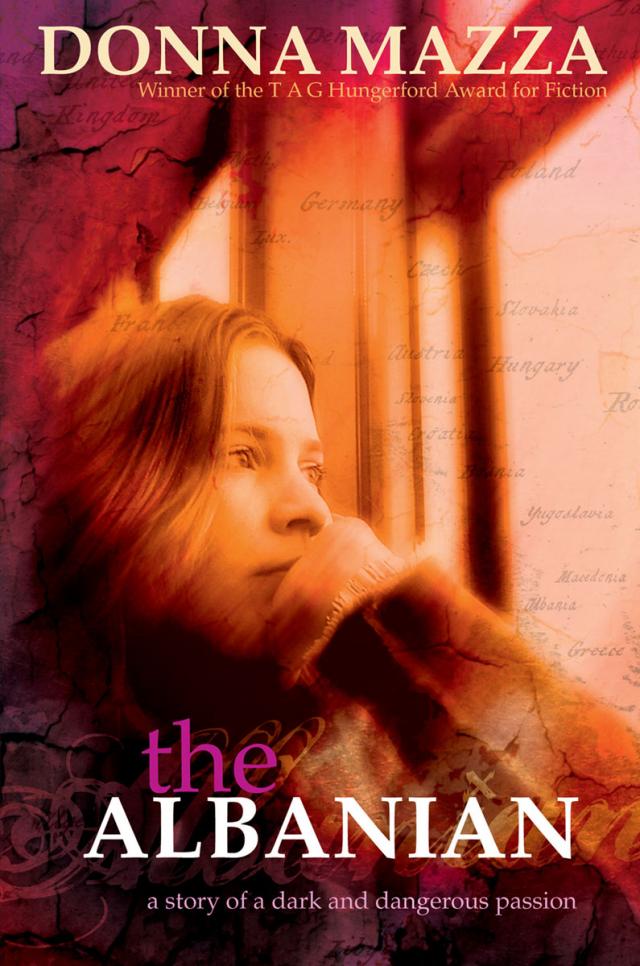
a novel
I am facing the great white walls of Dubrovnik, a fortress-city that clings to the floor of the sea … I stand in a dip worn into the marble step. The stone is almost conscious, exhales its history into the soles of my feet. My breath is distinct, this is just the beginning, I will stand upon history all over Europe. I can hardly wait … I feel like my future is gathering before me — new and wonderful. I have built it from desire, from the things I dreamed, I map it out with my footsteps.
My feet may yet be soaked with the contents of my heart.
The map may tear apart.
Donna Mazza was born and grew up in Bunbury, Western Australia. She lived in Perth for a number of years, has travelled extensively in Europe, North America and South-East Asia, and completed a PhD in English at Edith Cowan University in 2005. She has now returned, with her partner and their children, to live in the south-west of the state, where she enjoys a life of parenting, teaching and researching her next novel.
In 2005 The Albanian won the prestigious T A G Hungerford Award for an unpublished first work of fiction.
First published 2007 by
FREMANTLE PRESS
Fremantle Press Inc. trading as Fremantle Press
PO Box 158, North Fremantle, Western Australia, 6159
www.fremantlepress.com.au
Copyright © Donna Mazza, 2007
The moral rights of the author have been asserted.
This book is copyright. Apart from any fair dealing for the purpose of private study, research, criticism or review, as permitted under the Copyright Act, no part may be reproduced by any process without written permission. Enquiries should be made to the publisher.
Consultant Editor Janet Blagg.
Cover Designer Tracey Gibbs.
ISBN 9781921064616 (paperback)
ISBN 9781760991562 (ebook)
Fremantle Press is supported by the State Government through the Department of Local Government, Sport and Cultural Industries.
Fremantle Press respectfully acknowledges the Whadjuk people of the Noongar nation as the traditional owners and custodians of the land where we work in Walyalup.
For Allegra and with thanks to Richard
‘You won’t give me a chance of life, you mean,’ she said sullenly. ‘However, I’m not helpless, yet: I’ll open it myself.’
And sliding from the bed before I could hinder her, she crossed the room, walking very uncertainly, threw it back, and bent out, careless of the frosty air that cut about her shoulders as keen as a knife.
Wuthering Heights, Emily Brontë
One
Dubrovnik
October 1989
1
Along by the sea is a city of stone with columns and statues and marble stairs and salt in the air. It is a walled city and the road winds around the perimeter and sugary parcels fall from the fig trees. They rot sweetly all around the limestone walls and on pink-veined marble. It is silent and a salty breeze blows.
I am facing the great white walls of Dubrovnik, a fortress-city that clings to the floor of the sea. I walk across the drawbridge, under a pale guardian saint that stands over the Gate of Pilê and into a portal of steps. This is an ancient city. I stand in a dip worn into the marble step. The stone is almost conscious, exhales its history into the soles of my feet. My breath is distinct, this is just the beginning, I will stand upon history all over Europe. I can hardly wait, the thrill of it shakes inside me.
I feel like my future is gathering before me — new and wonderful. I have built it from desire, from the things I dreamed, I map it out with my footsteps.
My feet may yet be soaked with the contents of my heart.
The map may tear apart.
I take the stairs slowly, they are slippery and well trodden. Now I can see within, to a wide, white street of marble and old buildings, creamy as veiled flesh. I emerge into the sun inside the walls of the city. It is more golden than I imagined, the light reflecting off walls and pavement. There is a burble of conversations, and I wait for a moment, try to gather together the strange feelings, fragments of thoughts. There are no cars inside the walls, I’ve never been anywhere this old before.
I walk to a low dome; it is a fountain that looks like a small church, made of terracotta segments with sixteen spouting heads. People sit around it and the water trickles behind them. I lean over and drink from my cupped hands and cold water spills over my fingers, trickles off my elbows. I have longed for this chill on my skin, longed to wash away the sweat and fear of my journey. I wash my face in the fountain but the feeling pervades me. I will walk, try to forget how far I have travelled from home and the anxious, shaking feeling inside.
On either side of this main boulevard, which stretches the length of the town, there are alleys crossed with washing lines, shops and restaurants, and I can see long, narrow stairs rising up to another level of buildings. I walk in a long furrow meant for rainwater, so it will flow to the sea or the moat and not leave puddles, slippery mirrors on the marble. If I slipped, nobody would know me. I wonder if they would help. Even the thought makes my footing unstable. I walk the length of the Old City, to another gate where the sea appears. I turn around, not ready to exit this space, and walk the length of the Stradun back to the Onofrian Fountain. I follow a path to the right, up and down stairs, past heavy wooden doors and potted plants until I wind my way to a stairway that leads right up to the top of the city walls.
Endless steps, narrow as a ladder, go up and up to the rampart walk. I can hear my heart bulging in my ears. I glance downwards, waiver; my mind soars out into the air, swings back and around me. It is 22 October, 22 October … I whisper to myself aloud, trying to anchor, to stabilise. A man stamps my ticket, it says libertas. I walk clockwise, find my balance. The walls are sheer and cut like a coronet around the roof of the city. The cloak of terracotta rooftops is green with lichen, jagged and patched with crooked and ornamental chimneys leaning in black angles. Their pattern is pierced with tall, white monuments to time and God — a clock tower, domes and steeples like index fingers. Down among the houses I can see tiny courtyard gardens, a small swimming pool, prolific, sprawling tomatoes. There is a map on the ticket. I feel libertas up here on the city walls, in the fresh sea air. Around and along the great fortifications I move, where Germans take photographs and lean over and look at the water. I see scenes of human knees, of toilets, a coffee pot on a stove, the angry face of a man. I can hear his voice booming against the walls and I quicken my step, feeling skittish and tense. I could get lost down there in those narrow walkways, maybe never find my way home. I see through windows and open doors. Perhaps it would not be so bad. I see the heads of tourists tilting, wearing hats. It seems that here a bad day could never come. It is so tranquil and I am sure I am the only one who feels a little nervous.
The wall is lower by the harbour and under the wall the arched portico of the coffee house and the dock juts out into the bay. Brown-backed fishermen, barefoot and salty, fold orange nets and heft large buckets of fish to each other. I imagine merchant ships and caravanserai from the East arrived here once for trade and shelter. Centuries of human visitors have come to this harbour — some to steal this fortress. Now tourists wander about with their hands in their pockets. They watch the salty fishermen and pay for gelato and handmade lace and jugs of white wine. They look for lovers.
The sea curves around and the walls rise up again, tracing a ramshackle path that circumnavigates the Old City. Along this coastal face the walls are high and protective. I stop in a place that is like a parapet. There is a balcony with old cannons and clover-shaped openings in the walls through which I can see. I imagine lining up crossbows or muskets against invaders. I peer through at the dense blue of the sea and the mystery of its dark islands. I never dreamed there would be a place this exquisite. I wedge my arms into this chink in the fortifications and feel the mist of the wave-spray, warm and cool and blissful. There must have been reason to defend this place, must have been aggressors. On the seabed, I imagine the leftover bits of this culture sinking into the sediment. I imagine oyster shells, broken porcelain, glass and coins, fish bones, bits of ships, settling on the sea bed, becoming part of the city’s foundations.
Further on the wall becomes low and thick and I am nearing the large fortress at the mainland corner. I sit for a moment on the wall. Down below me the foundation stones of Dubrovnik are grafted onto rock, onto the bones of the earth. I see ruined sections where disaster has struck. I lie on my stomach on the thick, sun-warmed wall and look into the water. Today there are no crashing waves; they rise and break gently on the stone, they leave sea foam, white against the white rock. This city could be made of sea foam, baked in the sun and hardened to stone — it has breath inside, perhaps some tiny creatures and shells, human bones. The damp air sprays at my face like heaven showering me. The rise and fall of the sea hushes like breath, a long ssshhh-ssshhh conducted to my body through the rock. I can feel the mark of the water on my skin, smell the salt. The repetition soothes me, is a balm for my fear; it rocks me into quietness.
Sky moves in slices between cobalt curtains. I lie on the bed or sit on a green wooden chair in my hotel room which cuts into the cliff face. I look out and see mine is one of a hive of balconies, clutching the shape of the coast. I don’t really know how to be a tourist, here on my own. Sometimes I don’t know what to do, I just sit all day, look out at the sea and think of home.
I remember Isabella on her lounge. I had said, ‘I’m restless. What do I do here? There’s nothing exc iting.’
I sipped tea, she sipped tea, in a room darkened from the hard sunlight by heavy red curtains. I sat on a piano stool, she reclined on a heap of pillows. She is dressed in velvet, with snakes of hair winding around in a tall pile.
‘It’s a different world over there, Rosa.’
She leaned towards me.
‘You’ll love it. Australia doesn’t have all those wonderful churches, those layers of history, paint and bones. Our families left our culture over there, you know, and when you go back, you’ll find a missing bit of yourself.’
The house is dusty and fragrant with musk, sandalwood, hand-rolled cigarettes, books, Jesus, birds made of horn on thick wooden shelves. I sipped tea, she sipped tea. I brushed her hair.
‘I know it’s frightening to go on your own, but we’ll be here when you get back. This is your home. Just go. Go where you dream of going.’
‘I dream of Istanbul,’ I said. ‘I see pictures of it and it stirs me up inside, it looks so colourful and I wonder how it smells and sounds and feels.’
‘Well you should go there, then.’
‘I will.’
Outside in the sun her eyes were gems, sparkling amber, and she hugged me in the driveway. I feel safe with her, I wish she was here.
I drove away from home, I sold my car and booked the ticket. I didn’t think about not knowing language or feeling strange, I just picked an airline that was cheap and a destination near enough for me to make my way to Istanbul.
I wiggle across the bumpy pebbles of the beach and immerse my feet in the sea. It paints me an anklet of wetness and I wade for a while. People on deckchairs read and sleep and are silent and I wonder if they are alive and if they know that the touch of the Adriatic is gentle and that I have only ever felt the Indian Ocean against my skin. I feel as if it makes me grow wiser, to immerse myself in other waters.
I’ve always been frightened of things that live in the water, things that might hurt me. At home there are blue-ringed octopus and bluebottles, great floating jellyfish, sharks. You can die in the sea, we all grow up knowing that. There are small fishing boats halfway to the horizon and I look out at them, wonder if there are deadly creatures swimming beneath them.
Time goes past — days walking through unknown streets, once hiding from a man with brown felt teeth who sat beside me, spoke fervently in strange words; time drinking tea, drawing. I learn a phrase from my guidebook and try it out at a kiosk.
‘Dobar dan.’
But I can say no more and when she speaks to me in her language I feel frightened and embarrassed because I cannot reply. I walk away, buy orange biscuits and a bottle of still water in a supermarket instead. I begin to learn the streets.
I have not spoken English at ease for days. It feels like a long time. I meet people sometimes — from here, from Germany, Scandinavia — but I have to trim and edit my words so that they understand me. I met a young man from the north of the country, he wanted to drink coffee with me. I was tired of being alone, so I thought I might, just to talk to someone. I sat with him a while but we could not speak more than our tastes for sugar in our coffee and our geographies. I wanted to leave him because the silent spaces could not be filled with words and something frightened me in his full lips, something which might burst out at me. I searched my phrase book and found, ‘Leave me alone.’
‘Ostavite me na miru.’
He laughed and swiftly touched me, his face close to mine, his copious lips overflowing at my mouth. Anger rose in me and I yelled, ‘Fuck off!’
I ran from the table, I could hear him laughing. Broken-English conversations remind me that all I think and all I cannot say is stuck there, remains inside me. I leave no imprint. It is as if I were not real, my shadow is blown around corners.
I follow a cat for a while one day, just to be taken somewhere without thinking about it. We move in unison through the streets past artists, postcards, jewellers: my eyes entwine in the filigree: fine coils of silver, fascinating and intricate. The cat leads me away, up narrow stairways, underneath the lines of washing, into uncleaned places and back down to the Stradun. Following the cat, I am free from decision. She leads me like a mother; she is teaching me the map, knitting me into the city with her trail. The pattern of streets carves into my mind like the lines on my palm. I lose the cat, sit along the waterfront and read my guidebook.
Early in the morning of April 6th, 1667 came a great Earthquake. The ground trembled, dust rose all around the city as buildings crumbled. Many of the people were still in their beds. In the Pharmacy, glass and porcelain containers were filled with sage, wormwood and other herbal mixtures and these stocks were all shattered, releasing a mix of smells into the streets. Then, quick as it began, all became still. Voices cried for help from under piles of stone, wood and fractured terracotta. Houses were gone and the famous Cathedral was all dust and rubble. Then there was fire, which tore through the ruins before many of the survivors could be pulled out. Then nearby residents plundered what they could. Five thousand residents of Dubrovnik died in all this calamity, but from the ruins, determined citizens rebuilt the city they loved.
I can feel it trembling underfoot, smell the dust dislodged by tiny movements of the earth. There are fault lines shivering all through the Balkan Mountains, according to the book. I hope it does not crack while I am here. A section of the city still lies in ruin, I saw it from the wall.
I read about the Pharmacy Museum where the monks made potions and fought infections like the Plague. The cat passes by me again, so I close my book and follow it back through the gate from the sea to the city.
The cat takes me to the stairs of the new cathedral. There are drawings of the one that stood on this place before the earthquake. A plaque in English says that it was built as a gift of thanks from Richard the Lionheart for rescuing him from his ship, wrecked in the Adriatic. It was grand and famous and I feel sad that it is gone. This one is prettier though. I leave the cat and go inside. There are Renaissance paintings by famous Italians — sad-faced Madonnas and their chubby Jesuses. At the back of the altar is the Treasury and I pay to see it. It is silent, my steps echo here. The Treasury gates have three keys, the security guard says, and he tells me the details of the locks and gates and some of the things inside. Arm bones of saints are relics here, encased in gold shells. The remains of Saint Blaise’s head is locked inside a jewel-encrusted helmet. His hand is here too. He’s the patron saint of Dubrovnik; it is his statue above the big entry gate. It’s just so awful to think that some person dismembered him, chopped his head off and sealed it up in this gold helmet. What sort of person chops up saints?
There is wood from the cross of Jesus, where his blood leaked and soaked, mounted in filigree gold and silver. There are Holy Innocents under glass — little brown fibulae and finger bones, now bloodless, jumbled together after some slaughter — it doesn’t say where or why they were killed. I think of Moses. The bones have browned in their elaborate casket with glass panes and golden ornaments. I am looking deep inside, trying to count them. So many Innocents. Air has bored bubbles into the core of their remains. If I could touch them, I think they would turn to dust.
I have no human bones in my possession, only stones. Some are fashioned into shapes by human hands. Some have been laundered by many tides to a smooth face, some are hardened bubbles in a matrix of sand, green with lichen. I pick up my stones in alleys and gardens and beside the sea — I am starting a collection. I collect tiny pieces, loose parts which sheer off the buildings, and I keep them in a red box lined with tissue paper so I can touch them one day in another place, so this place might seem real.
I wander alone here for days, in the Old City and by the sea. Alone as a little girl, clutching for my handbag. The wind and the sea erode me — they work away at my skin, my eyes, my feet, my fingernails — and I feel closer to the surface of myself. As if the me I didn’t want anymore is gone. I’m collecting this experience, building myself into a bigger person, a different, more interesting person. I will never return to Australia as I was before, and I don’t want to.