

The darling killer, p.1
The Darling Killer, page 1


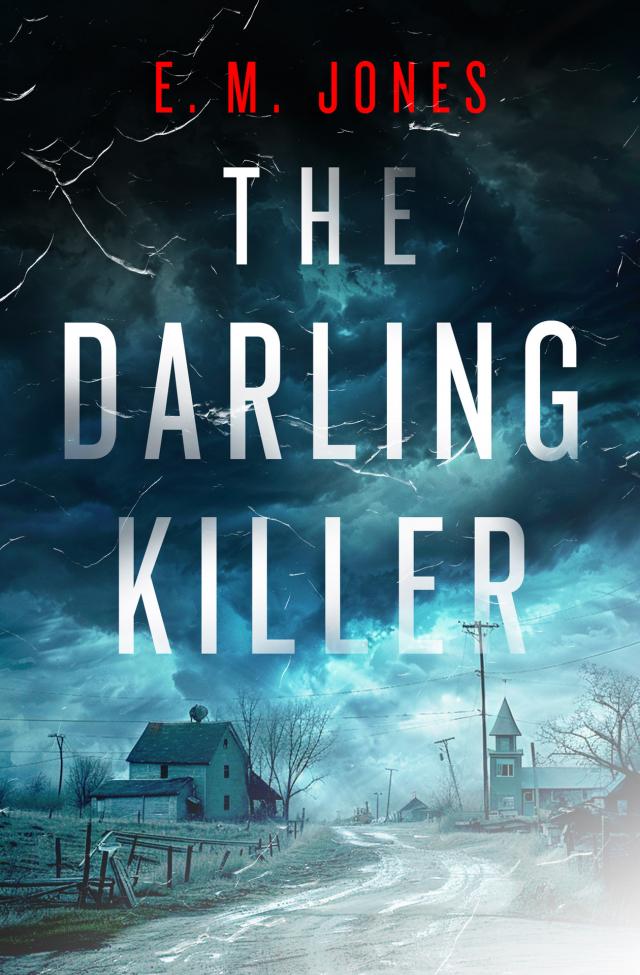
THE DARLING KILLER
THE DARLING KILLER
E. M. JONES
Copyright © 2024 by E. M. Jones
All rights reserved. No part of this publication may be reproduced, distributed, or transmitted in any form or by any means, including photocopying, recording, or other electronic or mechanical methods, without the prior written permission of the publisher, except as permitted by U.S. copyright law. For permission requests, contact Lamppost Publishing LLC.
Published 2024
Hardcover ISBN: 979-8-9910106-0-3
Paperback ISBN: 979-8-9910106-1-0
E-ISBN: 979-8-9910106-2-7
Logo design by Kim Taylor Creative
Cover design by Stuart Bache
The story, all names, characters, and incidents portrayed in this production are fictitious. No identification with actual persons (living or deceased), places, buildings, and products is intended or should be inferred.
For Caitlin, for everything
Contents
1. Chapter 1
2. Chapter 2
3. Chapter 3
4. Chapter 4
5. Chapter 5
6. Chapter 6
7. Chapter 7
8. Chapter 8
9. Chapter 9
10. Chapter 10
11. Chapter 11
12. Chapter 12
13. Chapter 13
14. Chapter 14
15. Chapter 15
16. Chapter 16
17. Chapter 17
18. Chapter 18
19. Chapter 19
20. Chapter 20
21. Chapter 21
22. Chapter 22
23. Chapter 23
24. Chapter 24
25. Chapter 25
26. Chapter 26
27. Chapter 27
28. Chapter 28
29. Chapter 29
30. Chapter 30
31. Chapter 31
32. Chapter 32
33. Chapter 33
34. Chapter 34
35. Chapter 35
36. Chapter 36
37. Chapter 37
38. Chapter 38
39. Chapter 39
40. Chapter 40
41. Chapter 41
42. Chapter 42
43. Chapter 43
44. Chapter 44
45. Chapter 45
46. Chapter 46
47. Chapter 47
48. Chapter 48
49. Chapter 49
50. Chapter 50
51. Chapter 51
52. Chapter 52
53. Chapter 53
54. Chapter 54
55. Chapter 55
56. Chapter 56
57. Chapter 57
58. Chapter 58
Acknowledgements
Chapter 1
I remember.
Greta Shaw opened her eyes just in time to slam on the brakes. She drifted through her gravel driveway, stopping within inches of hitting the garage.
She parked her car and opened the door without thinking.
The wind yanked the door from her grip and swung open, letting the torrential rain pour inside. She snatched her purse and shuffled out, almost falling over, fighting against the wind to close her door.
White lightning split the dark sky above her and thunder immediately followed, shaking the ground beneath her. Straight ahead, her house weathered the storm. Every light was on, as if Clive had made a lighthouse to guide her home. Had there ever been a darker night than this?
Greta rushed forward, trying not to slip on the front walkway. “I remember,” she whispered in the cascading rain. “Clive! I remember!”
She heard it coming up behind her: a sound like a freight train in a tunnel. It came roaring over the hills, leaving trees splintered and broken.
Greta spun around as the tall trees at the end of her driveway shook like pitiful saplings. The whole forest moved as one, bending under the hurricane winds. It came toward her, a wind so strong it looked like a blast wave.
She gripped her keys, her fingers slipping on the wet metal. She unlocked the front door, the wind bearing down on her, and barely managed to slip inside and slam the door. The house groaned as the wind washed over it. The lights flickered. Something shattered on the screened-in deck.
Greta leaned against the door. “No, no, no, don’t go.” The memory was already slipping away. After an entire year, she had finally remembered something about her life. It started in a house like hers, on a night like this. Clive! Maybe he could piece it together.
“I’m home,” she announced and struggled to calm her breathing. Getting worked up was bad for her heart. Rainwater dripped from her clothes, a soft patter in the quiet house. “Honey?”
Clive’s rocking chair was empty, but swaying gently, as if he’d just stood up.
“Clive?”
Their house only had floor lamps. The ceiling fans were equipped with lights, but she’d removed the bulbs after the accident. The sun was allowed to tower over her—all other lights had to be eye level or lower. And none of that fluorescent, LED, soft-white stuff either. She lived in a home, not a hospital. Her living room had an elegant wool rug with red and gold patterns, two couches facing each other (a coffee table between them), and a small wood stove perched on the back wall beside a two-person walnut-colored table. Two handmade rocking chairs faced the wood stove. And still, no sign of her husband.
“Clive!”
Something turned in her chest—her heart, protesting. In her head, the memory kept fading like a dream after waking up.
“Clive!”
She checked the bedroom, the master bath, even the closet. She opened the basement door and yelled her husband’s name. She looked in the kitchen, the bathroom, the office. Clive wasn’t home. Where else would he be?
Greta spun in a circle. What am I missing? What did I forget?
She couldn’t trust her memories. Her mind played tricks on her all the time, like making her believe Clive was still alive. Of course, he died in the accident a year ago. And she’d been adrift ever since.
She couldn’t remember life before the accident due to a rare form of amnesia. The doctor said it would likely come back, but since that dreadful night, her memory had only fallen further into chaos. She knew she was fifty-one, living in a little town in Southern Ohio. She knew Clive had been her partner for life until last year. Before that, she knew nothing.
“No, please. Please be here.” She held her stomach, afraid of getting sick, getting too worked up. “Please be here, Clive, why did you leave? I remembered something, I told you it would come back!”
She had so many questions about her life. The accident occurred one week after they moved to Darling, Ohio. But she couldn’t remember why they had moved, or where they lived before. They never used social media—all they had was a photo album, and she couldn’t find it.
“I need you,” she said, losing her breath, her chest starting to hurt. “I can’t do this, honey. I can’t do this alone.”
Then her heart stopped. Greta fell against the wall, holding her chest, gently tapping it. As quickly as it had gone, her heart started again.
Tick, tick, tick.
Her ticking heart rose above the thundering rain. The mechanical valve inside her worked hard and diligently. She pressed her hand to the thick scar on her chest. Tick, tick, tick, it went. It never stopped—not since her second open-heart surgery. When she saw Clive’s lifeless body on the cold metal table, she wanted to tear the valve from her chest and plant it in his. Watch his heart come to life, watch his lungs fill with air.
Something clattered on the deck. After realizing Clive was dead, and with her heart pausing again, Greta needed to busy herself before her heart stopped forever. She plucked an umbrella from the coatrack and stood by the double glass doors, staring at the deck. The rain hadn’t let up. Neither had the lightning. Midwestern summer storms were their own sort of brilliant. And the wind. She’d never felt a wind so violent. It would destroy her potted flowers if she didn’t move them. One had broken already.
Greta opened her umbrella and stepped onto the deck, the wood planks slippery beneath her shoes. Two wicker chairs were set around a metal table with a glass top. Against the house, a hot tub hummed beneath a thick brown cover. Her flowers danced in their pots, their petals falling. If she didn’t save them now, there would be nothing left to save.
Her house stood on top of a steep hill. From the deck, she could normally see the bike trail at the hill’s base and the river just beyond that. Tonight, the storm kept her from seeing anything. In the distance, even the streetlights in downtown Darling were no brighter than faint stars.
As she moved toward the flowerpots, the wind rose with a great bellow, swimming through the trees, grinding them together. Branches snapped like brittle bones. Most trees held, despite their groans. But their roots were tired. The wind pushed harder, and somewhere close, a tree split and fell, and the house lights flickered again.
This storm’s going to tear these woods apart, she thought, clinging to her umbrella, trying not to fly away like Mary Poppins. Half of Darling would be flooded by dawn, if not sooner.
A gust of wind hit her. She batted hair from her eyes with one hand and lost her grip on the umbrella. It flew against the screen and stayed pinned there. She grabbed a wicker chair for support, but her fingers slipped.
The wind crawled along her skin, creeping between her teeth. It whispered in her ears and played with her hair. It filled her lungs, replacing her a ir, breathing for her. It pushed against her body, comforting her shaking bones, pressing invisible thumbs against her eyes, as if to mash them in their sockets. She wondered if drowning felt like this.
The wind let go and she fell backward, as if she’d been leaning against a wall and the wall just vanished. As she fell, the wind whistled in the eaves, and—
I remember now, she thought, not falling, but flying. Flying through her memories like a loose kite. The memory had returned—the same one that came to her as she was driving home.
I remember.
How could she have ever forgotten about—
Her head bounced off the deck. Sticks and leaves clattered on the roof, as if the storm meant to bury her house alive.
Memories overlapped, playing fast-forward through her brain. She stitched the images together in her mind—a mental quilt—and stepped back, seeing the bigger picture for the first time since the accident.
When she closed her eyes, her mind was a home. It used to be empty and blank, with enough memories to occupy a small corner of the living room. Now, the house was evolving. Memories moved in. Vandalizing. Graffiti on the walls.
Up, up, up, the house grew. Into something else. Something new.
Greta cupped her hands over her mouth as blood oozed from her head, mixing with the rainwater, leaking through the wood planks beneath her.
“I remember,” she murmured. I remember what I did.
Chapter 2
Julie Baker rushed inside her house and slammed the door. She locked the doorknob, the deadbolt, the chain lock, dropped her purse on the floor, and took three steps back.
Knock, knock, knock.
There was no one at the door, no one following her inside, but still, she heard someone out there, didn’t she? The storm raged outside. She heard trashcans spilling over, tree limbs falling, loose shutters banging against siding.
In her living room, three windows faced the driveway—a great picture window in the middle, with a narrow window on either side. A single curtain rod extended across all three windows, with blackout curtains overlapping in the middle. Julie knelt on the couch and parted the curtains, scanning the driveway and front yard for movement.
Nothing.
On the road, cars cut through the rain, their white and yellow headlights like blurry lanterns in the darkness. She closed the curtains and checked the locks, tapping her finger against the doorknob, deadbolt, and chain.
One, two, three.
Tap, tap, tap.
She lived in downtown Darling. It didn’t hurt to be cautious. The small town wasn’t exactly known for low crime and upstanding citizens. Buying a house downtown, so close to so many people, once frightened her. But living in the country was far worse. When someone broke in and pressed a gun in your mouth, no one would hear you scream.
Plus, living downtown put her close to the library, and she could walk to work if she wanted. Her proximity to work and people made her days easier. She didn’t have to be afraid of what lurked in the small grove of trees behind her house.
The nights, however, were the same as always—long, quiet, dark.
Julie draped her rain jacket over the couch’s arm, found a towel in the kitchen, and used it to mop up the rainwater dripping from her hair while she inspected the windows. Inside her small, three-bedroom home, every window had a blackout curtain and an additional lock. Julie checked the locks every night before bed, tapping them with her finger.
But Aunt Susan had moved in three weeks ago and loved fresh air, especially at night. More than once, Julie had crept inside her guest bedroom and locked the window while her aunt slept. Aunt Susan never said anything the next morning, but Julie wished she’d stop opening the window—it was dangerous—Julie knew that, and so did Aunt Susan.
Right now, all the curtains were in place, the windows closed and locked. The living room light was on, but her aunt wasn’t in there.
Julie tossed the towel on the kitchen counter when her phone buzzed with new texts. Her coworker, Tori Duvall, kept inviting her over for a wine date.
The kid is in bed
Stephen’s boring and falling asleep on the couch, and I could use some laughs
On a scale of 1 to 1,000 how obnoxious was Carly tonight?????
Julie smiled. Tori had probably started the wine date already. Julie texted back, making up excuses about her aunt visiting, and being tired, and how Carly’s level of obnoxiousness was immeasurable by any human metric.
Tori responded with kissy face emojis.
You’re no fun!!! See you tomorrow morning!!!
If I don’t drink too much…
Right, Tori was picking Julie up in the morning because they had the same shift. Julie had never been to Tori’s house, never met her child, Sophie. Never met Stephen. Yet Tori kept inviting Julie over, as if Julie hadn’t said no a thousand times already. Tori didn’t care. Her life mission was getting Julie to leave her homey turtle shell and be cool for once in her damn life. Julie suspected it wouldn’t work, but she loved Tori for trying. Picking her up in the morning, for a three-minute drive, was the closest Tori would get to seeing Julie outside of work.
Julie imagined what it would be like—wine dates with a best friend, talking about TV shows, work, kids, and significant others.
It would be normal, wouldn’t it?
That life was a dream. Even the thought of kids, family vacations, and every other aspect of typical family life made Julie squirm. She was twenty-nine and had managed to survive her twenties the same way she’d survived her teens: by avoiding people. It didn’t always work. She tried having close relationships once. But stuff like best friends and boyfriends and work parties all ended the same way.
With the same thoughts.
No one knows who I really am. They don’t even know my real name.
People assumed because she was almost thirty and childless that she was either living wildly or busy climbing a corporate ladder. When they got to know her (however much one could get to know Julie Baker), they realized the truth: she wasn’t a reckless youth or vying for someone’s job. She was a boring old librarian cat lady. Everyone bought the façade. Everyone except Tori, maybe.
Julie filled Oscar’s food bowl, realizing he hadn’t shown his mean mug yet. He normally waltzed into the living room whenever she came home, his tail high and twitchy.
She called his name and heard a pathetic meow from behind Aunt Susan’s closed door. Julie knocked on the door and cracked it open. Oscar ran out as if he couldn’t get away fast enough. The room smelled of stale sweat, leftover carry out, and old tea.
“I’m sorry,” Aunt Susan mumbled, rolling over in the tangled bedsheets. “I was going to let him out. I just wanted to pet him, but he doesn’t like me.”
“He’s a picky little guy. How are you feeling?”
Aunt Susan lifted her head. Her bloodshot, tired eyes didn’t meet the skin around them. Her cheeks sagged. Her thick eyebrows crowded a wrinkled forehead. She smiled. “I’m feeling like it’s the end of the world.”
Three weeks ago, Aunt Susan appeared on her doorstep, in tears, asking for a place to stay. Julie hadn’t seen her aunt in over a year, and when she told Julie about her terminal lung cancer, they both cried, despite all the pain and drama and distance between them. After a few days of living together, Julie liked having Aunt Susan around. She enjoyed coming home to a house with warm lights on, a mug of hot tea, and Aunt Susan watching TV on the couch, curled up in blankets. Never warm enough.
But today, she was in bed looking much worse. She used to pick through a daily pill box but had given that up. There was nothing anyone could do except wait with her.
“Do you need anything?” Julie asked. “You tired?”
Aunt Susan nodded. “How was work?”
Oh boy. Julie had a million things to complain about. On one hand, it felt silly, complaining about trivial work matters to a dying woman. On the other hand, Aunt Susan insisted these trivial matters distracted her.
“You know that part-time intern I told you about? Carly? She left early today. To meet her boyfriend for his birthday. I get she’s nineteen or something, but we could’ve used her help.”
Aunt Susan shrugged. “I still celebrate my birthday.”
Silence took over. She wouldn’t see another birthday.
Julie tried to laugh and failed. “I don’t know, something about her just grates on me. She spends all her time talking to Nancy, and Nancy hates it when anyone stands around talking.”


