

The case of the phantom.., p.1
The Case of the Phantom Fortune, page 1
part #73 of Perry Mason Series


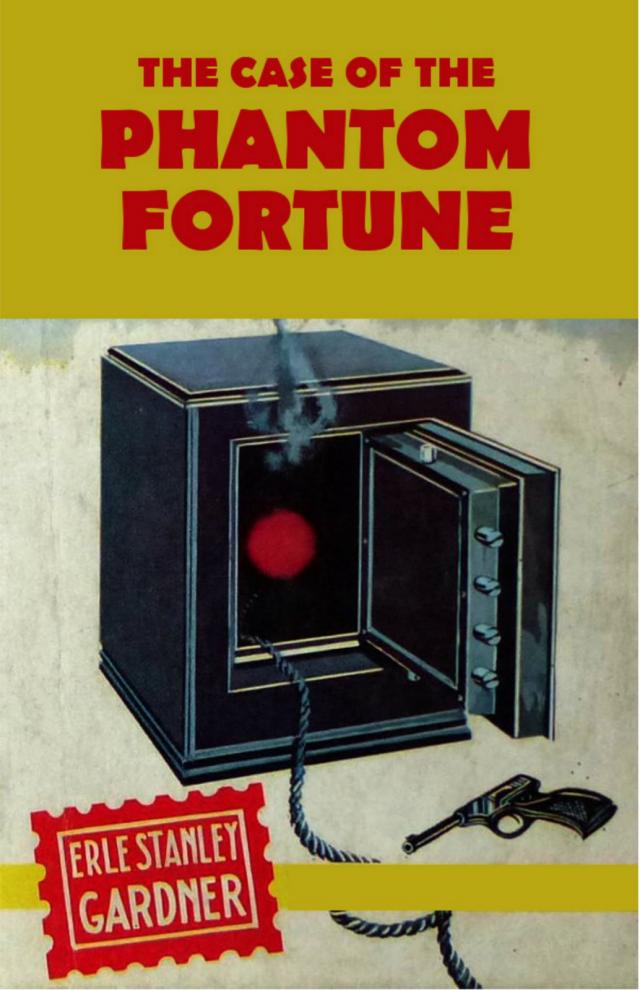
The Case of the
Phantom Fortune
Erle Stanley Gardner
Foreword
Shigeo Ogata, MD, an expert in the field of legal medicine whose background fairly bristles with academic honours, received a large part of his training under Dr Richard Ford, whom I have mentioned from time to time in these forewords. I think that one of Dr Ford’s great satisfactions is the knowledge that men who have been trained by him are having an important effect upon the field of legal medicine throughout the world.
Dr Ogata has an attitude toward science that is typically Japanese. In the presence of the science which he has made his life work he is as a priest entering a temple. In his search for truth he is always conscious of his great responsibilities and everything is subordinated to his desire to be worthy of the trust that has been placed in him.
He was educated in Japan and then had post-graduate experience at Boston in the United States, England, France, Belgium, the Netherlands, Denmark, West Germany, Austria, Italy and Switzerland. He is at present professor of the Department of Legal Medicine at the Kyoto Prefectural University of Medicine.
Dr Ogata says: “When I begin an autopsy, I always pray God in order to obtain an exact answer. If I do this in a humble and pious frame of mind, the cadaver tells me the facts.”
It was with this humble attitude that Dr Ogata performed an autopsy upon a woman who had been found dead in the reeds beside a big river at the foot of a dike.
At first the police felt the woman might have committed suicide. However, the chief of the criminal department of Kyoto police headquarters asked Dr Ogata to perform an autopsy.
There was nothing by which the body could be identified: no marks on the clothing, no papers, no other means of identification.
Dr Ogata carefully dissected the corpse, learning, as he did so, many things about the lifetime habits and environment of the woman whose body he was dissecting, her temperament and her mentality. He learned many things from clues which a less able man would have overlooked.
Finally he was able to find out and publicize so much about the habits, background and environment, as well as the mental characteristics of the woman, that a person who had employed this woman as a servant almost a year earlier recognized the description, and upon being shown the body, was able to make an identification.
Using this identification as a starting point, the police, under Dr Ogata’s direction, were able to find the man who, under the guise of befriending the dead woman, had sought to rob her and had killed her.
Dr Ogata, having shown by his autopsy that the woman had been murdered, had then gone on beyond the cause of death to find so many clues to the characteristics of the woman in her lifetime that an identification was made purely from his minutely detailed description and the facts pinpointed by his deductive reasoning.
It was a remarkable achievement.
I mention this case in some detail because it is so typical of the work being done by this devoted group of medical specialists who have dedicated themselves to the field of legal medicine.
As a result of what these men learn from the dead, the living can lead their lives in greater security.
And because Dr Ogata is a typical representative of this group of dedicated experts and because he is so thoroughly humble, with a truly Oriental and devout appreciation of his indebtedness to the Deity, I respectfully dedicate this book to my friend: SHIGEO OGATA, MD
Erle Stanley Gardner
Cast of Characters
DELLA STREET
If possession is nine-tenths of the law, Perry’s secretary allows him only a fractional existence
PERRY MASON
With a wit as dry as his Martinis, the barrister illustrates that “cop” art can hang outside the rogues’ gallery
HORACE WARREN
The man who has everything, including the leisure to repent a hasty marriage
PAUL DRAKE
Through catering to ladyfingers, Drake takes the cake
GERTIE
Perry’s enthusiastic receptionist who “likes to take a button and sew a vest to it”, comes up with a law suit for a seamy character
JUDSON OLNEY
Well-groomed executive who claims he met Della on a cruise, but his unchartered voyage results in a windfall rather than a landfall
LORNA WARREN
Her husband made this luscious dame a present of her past – but her future is indeterminate
COLLISTER DAMON GIDEON
This ex-con whom Lorna thought heavenly, is “wearing more tails than Halley’s comet”
DREW KEARNY
A witness who wasn’t suborned yesterday
LIEUTENANT TRAGG
His method was once over lightly in the dark, but when the lights went on, he lit on the evidence
HAMILTON BURGER
The audacious DA wants to prosecute Mason for his one-man show, but Perry proves that one picture is worth a thousand legal briefs
Chapter One
Della Street, Perry Mason’s confidential secretary said, “Mr Horace Warren, an executive type who seems accustomed to getting what he wants, is anxiously and impatiently waiting in the outer office.”
“And what,” Perry Mason asked, “does Horace Warren wish to consult me about?”
“That,” Della said, “is a mystery.”
“Well?” Mason asked. “What’s the mystery?”
“All he’ll tell me is that he’s willing to pay five hundred dollars to have you attend a buffet dinner tonight.”
Mason said, “Tell him I’m not a paid entertainer, that I have a busy schedule today, and that I see clients only by appointment.”
“I don’t think that he wants you as a social lion,” Della said. “He said he would like to have you get a feminine partner of your own choosing, and that he would like to have you observe a certain person and give him your impression of that person.”
Mason regarded Della Street thoughtfully. “Were you by any chance thinking of a buffet dinner?”
She nodded. “With champagne,” she said.
Mason grinned. “Show Mr Horace Warren in, Della.”
Della Street flashed him a grateful smile, returned to the outer office and a moment later was back with a man somewhere in his late forties; a man with steady grey eyes that flashed out from under bushy eyebrows.
“Mr Mason,” he said, “I’m Horace Warren. I’m a businessman.”
Mason smiled slightly. “A student of character would so classify you.”
“And you are a student of character?”
“Any trial lawyer likes to think that he is. If he’s at all successful he has to be. Won’t you be seated?”
Warren sat down across the desk from Mason, regarded him thoughtfully, then leaned forward and put his elbows on the desk. His heavy shoulders and neck gave him an air of belligerency.
“That,” he said, “is one of the reasons I came to you.”
“What is?”
“That you’re a judge of character. I want you to do some judging.”
Mason said, “I take it that what you want is a little unusual?”
“Do you,” Warren asked abruptly, veering away from the subject under discussion, “have some good detective agency that does your work?”
“Yes,” Mason said, “the Drake Detective Agency, with offices on the same floor of this building. Paul Drake has done my work for years. He is highly competent and completely ethical.”
“Does he know fingerprints?” Warren asked.
“What do you mean?”
“Can he classify fingerprints and match them, things of that sort?”
“He has had some experience in courtroom cases,” Mason said warily. “He’s never qualified as a specialist in fingerprinting, but he is an expert and in touch with highly competent experts.”
Warren hesitated a moment, then reached into his coat pocket and pulled out a slip of white cardboard. Attached to this cardboard was a strip of transparent tape, and underneath the transparent tape were the black whorls of a fingerprint.
“I want you to hire Paul Drake and have him get busy right away,” Warren said. “I want a report by five o’clock this afternoon. It is imperative that I have it by that time.”
“Why don’t you step down the hall and talk with Mr Drake yourself?” Mason asked.
“Because I don’t want Paul Drake to know who your client is. I want Paul Drake to follow your instructions and yours alone.”
“Perhaps,” Mason said, “you’d better tell me a little more.”
“Tonight,” Warren said, “my wife and I are giving a buffet dinner for a small, intimate group. There will be not more than sixteen or eighteen people. I want you to attend that dinner and bring with you some feminine partner, and I want it to appear that your presence is very casual; in fact, if possible, unexpected.
“The manager of my enterprises, Judson Olney, will ostensibly be the one responsible for bringing you there. Olney will apparently have invited the woman who is with you to come and bring a male escort. You will be the escort she has selected.
“I don’t want anyone to suspect you are there in your professional capacity. You will be prepared for a black tie, champagne buffet dinner. You will arrive at seven for cocktails, dinner will be at eight, and you can leave at ten. That will take three hours. I am prepared to pay five hundred dollars for those three hours, in addition to whatever the charge may be for this consultation
Mason regarded the enigmatic grey eyes thoughtfully. “I don’t like to go at things blind,” he said.
“This is not the usual type of case,” Warren hastened to assure him.
“So it would seem,” Mason told him. “Now, what’s all this about a fingerprint and why do you want a detective agency?”
Warren tapped the cardboard on which appeared the lifted fingerprint. “I want your man to find out to whom that fingerprint belongs; that is, who made it.”
Mason shook his head.
“What do you mean, no?” Warren demanded.
“What you are asking is a practical impossibility,” Mason said. “While the FBI and the police have done wonderful work in matching single fingerprints in the cases of well-known and much-wanted outlaws, nevertheless single fingerprint identification is an exceedingly difficult and tedious job, far beyond the range of any detective agency.
“What is not generally realized is that complete classifications are made through ten fingerprints. Then those fingerprints are broken down into a code so that the searcher using that code is limited to a relatively few number of fingerprints from which to make a match.”
“If you had ten fingerprints you could tell who the person was?” Warren asked.
“There again, another factor enters into the picture,” Mason said. “If the fingerprints of the person in question are on file in the criminal side of the FBI, we could get some police officer to make an inquiry for us by wire and get a match. If, however, the fingerprints are not on file in the criminal department, it would probably be impossible because fingerprints which are filed for civilian identification are considered confidential.”
Warren nodded, his eyes half closed as though contemplating some matter entirely disassociated from what Mason was saying.
Then abruptly he got to his feet, took a billfold from his pocket, extracted a cheque and handed it to Mason.
“Here,” he said, “is a cheque for a thousand dollars. Five hundred dollars will cover your attendance at dinner tonight. I have given the address to your secretary. The other five hundred dollars will act as retainer.
“Now, in strictest confidence I am going to give you some additional data on that fingerprint.”
“It is always advisable to give an attorney all the facts,” Mason said dryly.
Warren said, “This fingerprint may have been made by one of the servants in my house, it may have been made by one of the guests who will be at the dinner tonight, or it may be that it was made by a total stranger. Would it be possible for your man, Drake, to go through the house and get the fingerprints of the servants without their knowing? I believe you refer to it as developing latent prints.”
Mason shook his head. “I don’t think that would be possible, and if you don’t want Drake to know the identity of my client it wouldn’t be at all feasible.
“Developing a latent print, Mr Warren, is a matter which calls for the use of various coloured powders which are dusted over the fingerprint. Then the developed fingerprint has to be photographed or, as was done in the case of the fingerprint here, lifted.”
“Lifted?” Warren asked. “How is that done?”
“The fingerprint is dusted. Then transparent adhesive tape is placed over the dusted latent fingerprint. The adhesive tape is smoothed carefully so that it covers the entire surface, then it is peeled back off and placed upon a card having an appropriate colour so that the fingerprint will show in contrast.
“For instance, on this card which you have handed me, the fingerprint was dusted with a graphite powder; therefore the print, after it was lifted, was placed upon a card with an off-white background, which makes it readily visible.
“Now, if Drake were to go to your house and start lifting fingerprints, he would have to dust various surfaces and it would be virtually impossible to remove evidence that he had dusted those surfaces, and complete his search within the allotted time.”
“Have you any suggestions?” Warren asked.
“I have one,” Mason said. “It might or might not prove effective. It would, however, necessitate Drake knowing the identity of my client and it would be expensive.”
“Money is no object,” Warren declared. “That is, I don’t want to be a pigeon, I don’t want to be charged more than the going rate, but when I want something, I want it.”
Mason nodded thoughtfully.
“What was your scheme?”
Mason said, “Have a caterer for this party. Ostensibly, Drake will be the head of the catering service.
“In that way the service will furnish its own china, its own crystal, its own silverware. Employees of the catering firm will park a truck in your driveway. That truck will be the headquarters of the catering service. Apparently dishes, glassware, silverware, etc., will be taken from your house to the truck to be washed. Actually there will be no washing facilities available but there will be an unlimited supply of glassware and silverware, which will be replaced from time to time as occasion demands.
“This catering truck will actually be a portable fingerprint laboratory in which Drake will have assistants who will develop latent fingerprints on glasses, silverware, etc., as fast as the materials is brought out.”
“How much would something of this sort cost?” Warren asked.
“It is expensive,” Mason said. “How many guests do you intend to have at your party?”
“Fifteen,” Warren said, “if they all come. My wife and I will make seventeen, and you and your friend will make nineteen.”
“And what did you intend to serve?”
Warren said, “Champagne, filet mignon, hors d’oeuvres, the works.”
“Catering alone,” Mason said, “would probably cost you twenty-five to thirty-five dollars a person. This dummy caterer’s truck, which is really a fingerprint laboratory with several trained assistants, costs five hundred dollars for an evening, in addition to the catering charge.”
“It’s available?” Warren asked.
“It’s available unless some other detective agency has it tied up for this evening. It is, of course, a very hush-hush service. The public generally knows nothing about it. It is held in readiness for private detective agencies who are confronted with a problem somewhat similar to the one we are discussing.”
“Get it,” Warren said.
“Just a minute,” Mason said.
He nodded to Della Street, who picked up the telephone and dialled Paul Drake’s number.
When he had the detective on the line Mason said, “Paul, I have a very confidential fingerprint job I want done tonight. The suspect may or may not be a guest at a champagne buffet dinner. Can you arrange to get the fingerprint truck for tonight?”
“I don’t know,” Drake told him, “but I can find out pretty fast.”
“Find out and call me back,” Mason said.
“I’ll run it down and let you know,” Drake said.
“That’s fine,” Mason told him, and then putting a little more emphasis on the words, said, “find out and call me back just as soon as you get the information, Paul.”
“I got you,” Drake said. “I gottcha the second time anyway. I was a little dense the first time. I’m to keep away from the office and report by telephone. Right?”
“Right,” Mason said, and hung up.
Mason turned to his client. “We’ll find out in a few minutes whether it’s available.”
“Now, let me emphasize one thing,” Warren said. “This is a business party and I want the catering to be very high class. I don’t want some detective agency bungling the–”
“The detective service is entirely beside the point,” Mason said. “The catering is in the hands of a professional. The detective end is a sideline carried on in one end of the truck. You will, of course, have to have your driveway kept open so that the truck can park there. Trained servants who are taught to put everything on trays will take the things to the house and see that they are not touched except by guests and by your own servants. Then those articles will be removed and sent to the truck, ostensibly to be washed. Actually they will be given the closest fingerprint examination by well-trained assistants.
“There may be inquiries about the catering service. You will have to say that you hired them because of a recommendation by a friend, and of course under no circumstances can any guest go to the truck to look around.”





