

Moth to a flame, p.1
Moth to a Flame, page 1


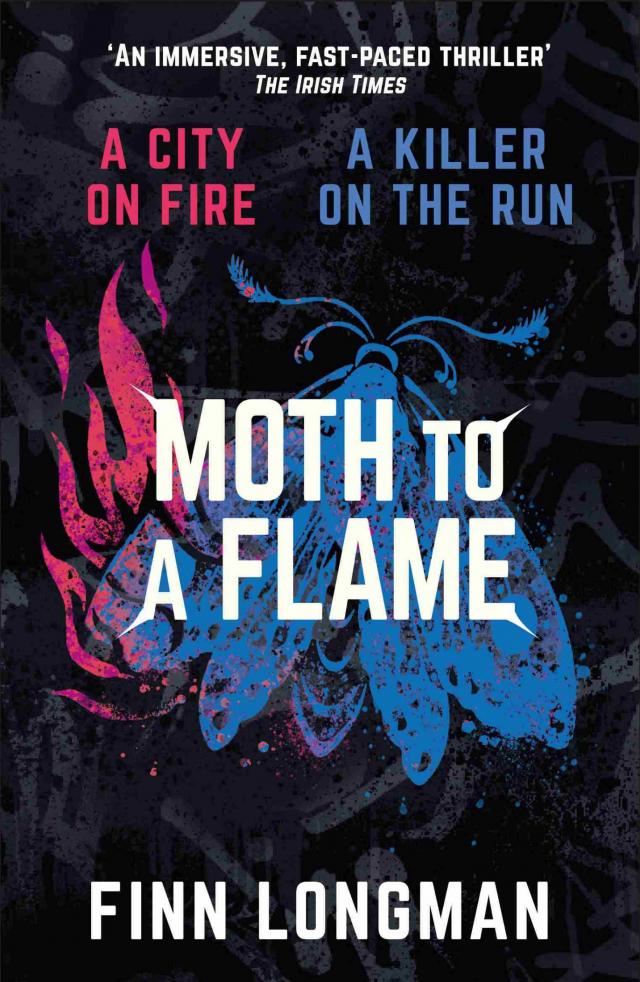
PRAISE FOR THE BUTTERFLY ASSASSIN
‘[A] dark, enthralling thriller’
The Guardian
‘An immersive, fast-paced thriller’
The Irish Times
‘With a complicated heroine, richly-drawn characters and pulse-pounding action, Isabel’s story had me racing through the pages, gasping for breath. What an electrifying debut!’
Chelsea Pitcher, author of This Lie Will Kill You
‘Sharp and layered, with a bright beating heart. It will lure you deep into a fascinating and dangerous new world.’
Rory Power, author of Wilder Girls
‘A heart-in-your-mouth thriller that grips you from the first page until the very last.’
Benjamin Dean, author of The King is Dead
‘A bold, jagged and uncompromising thriller that will keep you guessing all the way to the end.’
Tom Pollock, author of White Rabbit, Red Wolf
‘Dark, vivid and uncompromising – an utterly addictive story. I told myself “just one more chapter” well into the night.’
Emily Suvada, author of This Mortal Coil
‘Fierce, thrilling, and impossible to put down. Packed full of amazing friendships, plot twists and a desperate fight to survive’
C. G. Drews, author of The Boy Who Steals Houses
For those working to repair harm, not perpetuate it.
Content warning: This is a book about grief, and the messy process of healing after trauma. It depicts depression, PTSD, and self-destructive behaviour, including drug and alcohol abuse and references to unsafe sexual activity. It also contains references to violence and past child abuse.
‘THESEUS: Stop. Give me your hand. I am your friend.
HERAKLES: I fear to stain your clothes with blood.
THESEUS: Stain them, I don’t care.’
Herakles by Euripides
(translated by Anne Carson in Grief Lessons: Four Plays by Euripides)
ANTAŬPAROLO (PROLOGUE)
A girl, running.
A dark tunnel: an artery for the blood she trails, a road to the unknowable, her only chance. When she stumbles, there’s nobody to see her fall, or hear the faint sobbing gasp of her breath. Dead. She’s left them all behind. Her city of death, her lost friends, any safety she’s ever known, and now she runs towards a world she doesn’t believe in, not knowing what she hopes to find at the other end. It’s a gradual abandonment, leaving behind her name and her self. Each step stitches the thread of her footprints into the black seam of the unlit tunnel, binding her to the earth.
It’s endless, interminable, unbearable. And then it isn’t. The faint glimmer of light through a manhole cover, reflected on the rungs of a ladder screwed into the wall, is a blinding sun. It sears her eyes and heart with undeserved hope, her bloodstained hands almost too weak to grip the rungs. She tries anyway, climbs anyway. It takes three attempts to shift the hatch.
The girl emerges into the world like a maggot from a corpse, grotesque and unwanted. The corpse makes a final attempt to claim her, tugging at her exhausted knees, but she stumbles onwards on a pilgrimage to nowhere. One foot in front of the other, survival by unwilling degrees, bloodied feet on potholed tarmac roads. Lost and losing: memories, strength, the will to continue. The place she’s left is a nightmare, vague and terrifying. The place she’s going is an emptiness, unfathomable.
They find her in the end. The darkness first, and then the people.
She falls again, and this time it’s a relief.
1 PERDITA (LOST)
She wakes nameless and fragmented in an unfamiliar room, her fingers clenched around weapons and blood sticky and persistent on her hands. The air conditioning bites, stripping her of her skin one layer at a time and leaving her flayed and exposed, and the sound of approaching footsteps thunders like her heartbeat in her ears. She lashes out, protecting herself, but the blade in her hand is an illusion and a memory, dissolving inches from the stranger’s throat, and she’s unarmed and helpless to resist as they pin her arms and wrap thick restraints around her wrists.
‘And I thought you said she wasn’t dangerous, doctor,’ says a voice.
‘While she was unconscious,’ says another voice, ‘she wasn’t.’ The doctor, she presumes. Here to cut her up and slice her open to find out what it is that made her a monster. Maybe if they peel off enough of her skin, they’ll see her rotten core; maybe they’ll see the damage on her, written into her bones.
She doesn’t know where she is. Barely knows who she is. But she knows she’s not there any more, wherever there was, trapped in a crowd that hated her. Nor is she out on the road, running, running, trying to outrun the need to kill anybody else because there’s enough blood on her hands already. All she remembers is the tunnel, dark and endless, and the thought that she might really be dying this time.
But here she is. And there’s a doctor watching her, and restraints around her wrists, and she doesn’t have a weapon.
She considers opening her eyes and demanding to know where she is, who they are, what they want – but that would require curiosity, and the ability to care about the answers. And that’s gone, lost somewhere along the road to the exhaustion and the blood and the hollow inside her where her name should live.
‘Is she awake?’ says the first voice.
‘Oh, I think so.’ The doctor sounds vaguely amused. She would resent that, if she had the capacity to resent anything. Instead, it washes over her as a fact of her current situation: she is here, and she is being watched, and they will not let her fight back. ‘But we can wait until she’s ready to talk. There’s no rush.’
A laugh from the first voice. ‘True. She’s not going anywhere.’
And maybe that should frighten her. But fear, like curiosity, requires her to care about consequences. What can they do – kill her? Everybody else is already dead. She should have joined them, given her scars to the earth and her bones to the dust, and now, here, it’s impossible to remember why it is that she didn’t.
Eventually they tire of watching her. She hears them walk away, leaving her to the bed and the restraints and the images behind her eyelids.
They’re all dead. And it’s her fault.
* * *
The next time she wakes – an hour later, or a week, or anything in between – she’s alone in the room. She knows this instinctively, but she takes the time to double-check, listening for breathing and all the soft noises the living can’t help but make. Nothing. Only the faint buzz of electronics and the sound of rain against a closed window.
She opens her eyes.
The room is as grey as her thoughts, washed out and made meaningless. She’s still restrained, tied to a simple metal bedframe. She can’t see her hands from this angle, but they feel clean. Dry. Somebody washed off the blood. Took her clothes, too, by the feel of it, and the scratchy T-shirt and trousers they’ve given her instead are abrasive against her skin.
The window – she can see it if she cranes her neck – is a small, high pane of clouded glass, firmly closed, letting in no sight of the outside world.
Outside. Is that where she is? Maybe. She remembers running. She remembers leaving everything behind.
Leaving everyone behind.
She’d thought, because of the doctor, that this might be a hospital, but it looks less like a place where people are brought to get better, and more like a place they’re left to be forgotten. There are worse fates, she thinks, than being forgotten; she might even welcome it. Maybe, if she tries hard enough, she can forget herself.
You are not allowed to forget, her brain tells her, ever-cruel. Forgetting is a luxury reserved for those who aren’t monstrous, who haven’t committed atrocities. Her mind denies her the knowledge of her name, but it gives her this: the memory of her hands wrapped around necks, holding weapons, lathered in blood. An endless parade of deaths in high definition.
The door opens. She can’t see that, either; it’s in the corner, beyond the narrow line of sight her restraints allow. But she hears the steady tread of comfortable shoes across linoleum flooring, and closes her eyes pre-emptively before the blow lands.
It never does. A voice – the doctor – says, ‘I know you’re awake.’
She doesn’t answer. She wouldn’t know how to speak even if she wanted to, her words swallowed deep in her dry throat.
The next question: ‘Do you know where you are?’
No. She can guess, from the room, their unfamiliar accents, the wariness with which they approach her. She guesses that she got out, or someone got her out, and they brought her here: a holding place for the fugitives nobody wants. Perhaps they’ve been waiting for her to wake so they can send her back. They won’t want her if they know who she is, and they must know. They must have seen her, and the blood, and the knives she carried.
Maybe they know her name.
She might have asked them that, if she had her voice, and if the words would obey her. But she’s not sure she wants it back. She’s crawled out from under her name, and she sees no reason to go clawing to retrieve it. Let them have it. Let them take all the words people use to explain her, to make her, and do what they like with them. She’ll stay here, grey thoughts in a grey room, and wait to be allowed to follow the others.
The others. Her fault.
‘You’ve been asleep for several days,’ says the doctor, as though volunteering this information might encourage her. ‘You were dehydrated and suffering from blood loss. There were a dozen injuries—’
She opens he r eyes. The doctor stops speaking, lips parted expectantly, waiting for her explanation. She doesn’t have one. She’s not sure she knew she was wounded.
The doctor is not grey, which comes as a surprise. Blue, instead: pale blue scrubs and cap, like this is a real hospital and not a forgetting-place. He wears an expression of professional interest, not concern. To him, she is an anecdote more than a person.
She thinks perhaps she’s okay with being a story, if only somebody will let it end.
‘We have some questions for you,’ says the doctor finally. ‘When you’re feeling up to answering.’
She closes her eyes.
* * *
The next bout of wakefulness brings light but not clarity, the room lanced with sharp beams of filtered sunlight streaming through the dirty window. Around her is the babble of words she can’t understand, her grasp of English fragmenting under the weight of pain and grief as the threat of memory grows in her shattered mind. Questions – she knows they’re questions by the inflections, and some part of her wants to explain that she doesn’t understand, can’t answer them, but the rest of her only wants to close her eyes and wait for the darkness to claim her again.
Nokto. Night. It was always her home: softer than day, sharper than morning.
Their daylight’s no use to her now, and their words mean nothing.
* * *
The first thing she notices is that the restraints are gone.
No. Not the first thing. The first thing she notices is that she is no longer alone in this room. The second thing is that this is a different room. And the third thing, after all of that, is that the restraints are gone, which she notices because her hands have curled into defensive fists even before she knows that she’s afraid.
In this room are other beds, neatly spaced with a small locker in between. The beds closest to hers are empty, but the sound of raspy sleep-breathing from the corner near the door confirms a second occupant. The walls are as grey as the last room, but perhaps that’s her, her weak incurious vision filtering out the unnecessary colours that might tell her whether or not she’s alive.
She knows, though, that she’s alive. She resents it. She resents the fact that she’s grateful, hates herself for the small relief of drawing breath. The rest of them don’t get this. Why should she? Just because she ran? Just because she killed? She hasn’t earned her survival.
She knows this with a certainty she lacks about all else. Her name, their names, their faces, are nothing more than the memory of a knife in her hands and the pounding of her heart and the need to run. But she knows she doesn’t deserve this.
Footsteps. A figure stops just out of sight at the end of her bed. She’d have to sit up to see them, and her exhausted body won’t allow that. She’s made of rocks and lead, so heavy she’s surprised she hasn’t sunk straight through the mattress and deep into the ground.
They ask her a question. She doesn’t understand the words. She tries to tell them this: I don’t understand you. But her tongue’s as leaden as the rest of her, and the words won’t take shape. Her mouth is sandpaper-dry.
‘Akvon,’ she manages, in a rasp of a voice. ‘Akvon, mi petas.’
They say something else, but the blackness is already creeping back in. She closes her eyes and waits for it to be over.
The next thing she knows, something is being held against her lips. Her first instinct is to recoil, until she realises it’s what she asked for. Water. Greedily, she latches onto the bottle, swallowing in great gulps. They pull it out of reach, a note of warning in their voice, but she doesn’t care if it’ll make her sick. She needs water.
With the water comes a clarity she’s lacked these last few times she’s woken. She blinks grit and sleep from her eyes and sees the person the voice belongs to, their grey clothes blending in with the room. They wear a lanyard and a staff badge with a logo she doesn’t recognise. It tells her nothing of use, and their expression is unreadable. But they gave her water.
‘Dankon,’ she says, her gratitude genuine.
They give her the bottle. She holds it herself in shaking hands and tries to ration it with care. She fails, is sick on the floor beside the bed, and sinks back into unconsciousness because it’s easier that way.
* * *
Gradually, she comes back to herself. Still no name. Still not sure she wants one. She senses that it’s there, somewhere, inside her head, waiting to be claimed, but it’s tangled up in a world of hurt she doesn’t dare to touch. When she prods at it, she remembers nothing but death, and fear, and flight. There’ll be no kindness in the memory of herself.
She learns that these people keep her alive out of duty, not care, and that they’re only waiting for her to be well enough to speak. Sometimes her mind cooperates, sifting meaning from their words, but sometimes English abandons her, and she’s left with only fragmentary Esperanto, Russian, German – nothing that belongs here – to package her scattered thoughts.
She’s not sure if she’s a prisoner or a patient, but that, at least, is a familiar state of affairs.
Finally, there comes a day when they take her from her bed and along grey corridors to a room, where they sit her on a chair and shackle her hands to a table and say, ‘Are you ready to talk now?’
She’s got enough English today to ask them what she’s supposed to be talking about.
‘Espera,’ they say, and she—
She remembers.
Espera. City of hope, city of fear, city of death. Walls and art and murder. Her whole world playing out within a few dozen square miles, the outside as unknowable as eternity. Espera that made her and Espera that would have unmade her again.
Remembering the city means remembering the rest of it.
‘Papilio,’ she says. The word tastes strange on her tongue and she tries again. ‘Noktopapilio.’ It comes with the rotten scent of something forgotten, but this, this is the closest she can get to her name.
The Moth. Trapped now and burning.
* * *
In the end, she talks.
They tell her it’s the only way she’ll be allowed to leave this place, and though she’s got no interest in the world beyond these grey walls, she still feels them closing in on her, the ceiling heavy and ready to crush her hateful body. She’s got nowhere else to go, but this is not a place where anyone can live, and she’s not sure she’s ready to die.
They ask a lot of questions. She didn’t realise how many answers she’d be able to give them until they come spilling out of her. There are gaps, lacunae, languages layered over each other until meaning is lost, but she can give them enough to keep feeding the wolves. Enough to earn herself a brief walk around the grey courtyard they call a garden. Enough for a glimpse of the sky.
She keeps talking, and all the while a part of her mind whispers, you will pay for this, says, they will kill you for this, says, traitor traitor traitor, but she can’t think about who she’s betraying without remembering who she is, and she’s got no interest in remembering who she is, remembering her guild and the blood on her hands. It comes back anyway. Comma. Ronan’s face in her dreams, smiling as he makes a weapon of her. Nightmares of Daragh crumpling to a bloody hospital floor, the doctor unmade in a place of healing. Running, trapped and cornered, knowing the whole city wants her dead.
But she’s not in Espera any more, and she doesn’t truly know why she ran.
Coward.
Too afraid to die. Let everyone else do it and couldn’t bear it for herself.
The names come back one by one, when she lets them. Mortimer is next; she remembers his smile and his carpenter’s hands before his name, but she gets there eventually. Laura she puts off as long as she can, not wanting to recall the look on her flatmate’s face when she left her behind in her hospital bed, but she can’t hide from it for ever.
One day she remembers Leo, and for the first time it occurs to her that she might not be completely adrift in this strange, unfriendly world.
‘Leo Jura,’ she says, tentative. ‘In this city?’
They don’t know what to do with that. She tries to clarify, scrambling for details that might help – he’s a librarian, he left Espera, he’s good, please find him – but her English is slipping away again. The Esperanto always comes back first, a relic of a childhood spent learning to kill before she ever learned how to live. So in the end she can only beg them: ‘Leo Jura. Mi petas.’


