

Pale shell book one part.., p.1
Sunbirth, page 1


also by an yu
Braised Pork
Ghost Music
A Novel
Grove Press
New York
Copyright © 2025 by An Yu
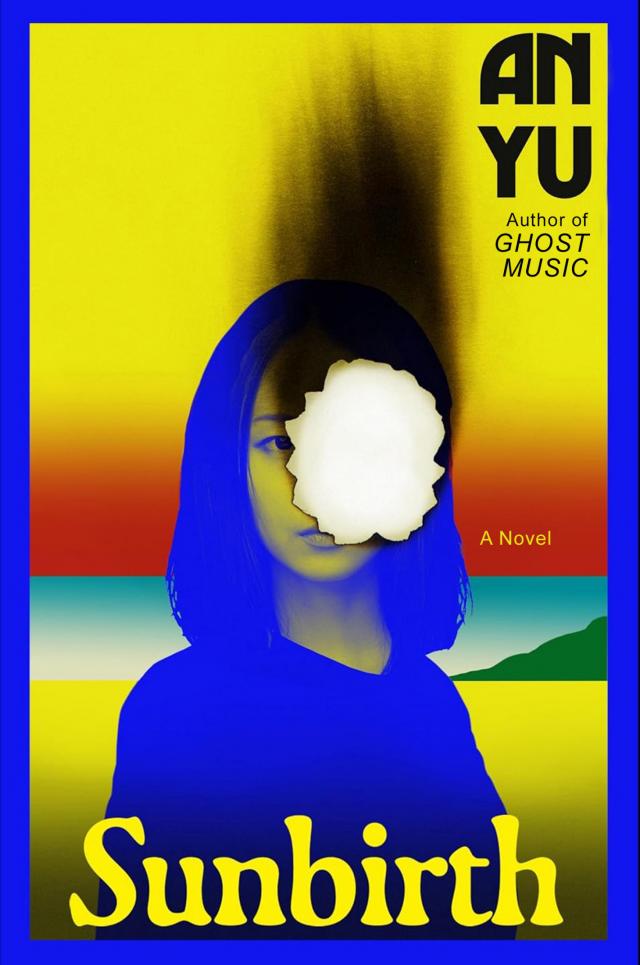
Jacket illustration and design, incorporating images courtesy of iStock and Shutterstock © Suzanne Dean
All rights reserved. No part of this book may be reproduced in any form or by any electronic or mechanical means, including information storage and retrieval systems, without permission in writing from the publisher, except by a reviewer, who may quote brief passages in a review. Scanning, uploading, and electronic distribution of this book or the facilitation of such without the permission of the publisher is prohibited. Please purchase only authorized electronic editions, and do not participate in or encourage electronic piracy of copyrighted materials. Your support of the author’s rights is appreciated. Any member of educational institutions wishing to photocopy part or all of the work for classroom use, or anthology, should send inquiries to Grove Atlantic, 154 West 14th Street, New York, NY 10011 or permissions@groveatlantic.com.
Any use of this publication to train generative artificial intelligence (“AI”) technologies is expressly prohibited. The author and publisher reserve all rights to license uses of this work for generative AI training and development of machine learning language models.
First published in Great Britain in 2025 by Harvill, an imprint of Vintage, part of the Penguin Random House group of companies
Printed in the United States of America
First Grove Atlantic hardcover edition: August 2025
ISBN 978-0-8021-6427-8
eISBN 978-0-8021-6428-5
Typeset in 12/16.62pt MinionPro by Jouve (UK), Milton Keynes
Library of Congress Cataloging-in-Publication data is available for this title.
Grove Press
an imprint of Grove Atlantic
154 West 14th Street
New York, NY 10011
Distributed by Publishers Group West
groveatlantic.com
All that is pure lies in the primordial and the divine, everything in between is filth.
Somewhere, Sometime, a Long Time Ago
The Su+n People stripped the blind man of his clothes and ordered him to walk.
‘Find the Sun,’ they said. ‘Find the God of Light.’
‘There,’ they told him. ‘You will finally see.’
Naked, the blind man marched towards the Sun.
Three hundred mornings, he treaded east.
Three hundred dusks, he hiked back west.
Never once did he reach the Sun.
He walked in darkness, until he no longer believed in the light.
The world must’ve always been black.
He lost his faith,
and was left with a limited body, wrapped around his bottomless desires.
Those desires grew.
His body remained.
The Sun People gathered around as the blind man fell to the ground.
‘Help me,’ he begged. ‘I am but a man.’
But silently, the Sun People stood and watched, as a light, a brilliant gold, poured out of the blind man’s mouth.
The light grew bigger,
and swallowed the blind man’s head.
Upon witnessing what had happened, the Sun People picked up the blind man’s body and built him a temple.
‘He found the Sun!’ they exclaimed. ‘He found the Sun!’
‘The Light is in him!’ they shouted.
As the years went by,
as mountains eroded,
as rivers broke the soil,
the Sun People lost their God, the sun,
and believed, now, in the Blind.
The sun dimmed and disappeared.
Everything died.
The Blind died, too.
No one lived to tell what happened thereafter.
Five Poems Lake, A Long Time Thereafter
1
The sun was half bright, half warm, half full.
It was a morning in August and it was cold. I’d made the mistake of using a damp towel to seal the gap under the bedroom window, and now the fabric had frozen solid. I must’ve caught a cold, because I’d woken up with a stuffed nose and a painful lump in my throat. After having rubbed my legs as fast as I could for a few minutes, I got out of bed and boiled some hot water on the stove. I unclasped my lab coat from the rack, relieved to discover that it was finally dry. The lab coat had felt too tight for some time now, ever since I started wearing my coat underneath, but I didn’t care enough to replace it with a larger size. Dong Ji had reminded me on many occasions that I looked like a gigantic steamed bun. She couldn’t understand why I never felt embarrassed looking so silly.
I’d hung up some quilted curtains on the door connected to the shop floor, but they hardly did anything to keep the draught from creeping into the living area. The colder and darker mornings nowadays meant that I’d been having trouble waking up at the usual hour, leaving me with just enough time to quickly stuff down a boiled egg before opening the pharmacy.
To soothe my throat, I crushed up some dried monk fruit and dropped it inside my hot water flask. I went into the shop, unbolted the lock on the front door and turned the wooden sign to the ‘Open’ side. There were already two people waiting by the steps: a balding man and a short, plain-looking girl whom I recognised as one of the Su siblings. The man was dressed in heavy jeans and a brown waxed coat. All the angles on his face – his nose, chin, brows – were so pointed that I imagined his teeth to be sharp as well. I bade them good morning, to which he responded with a puzzling, ‘We’re not together’, and proceeded to hand me a prescription that he’d been holding.
I took the paper from him and looked towards the east. The morning sun was like half of an orange, rays oozing out from its cut side.
‘We’ve made it twelve years,’ I said.
‘I don’t want to talk about it,’ the balding man mumbled as he gestured for me to lead him inside.
The first time a part of the sun disappeared was on the fifth day of August, exactly twelve years ago. It almost went by unnoticed. If it wasn’t for a schoolteacher who was measuring the sun with her students, it really could’ve passed like any other rotten day. It makes you wonder whether the astronomical observatory is just a place for researchers to sleep, though eventually they too discovered that the sun had risen like usual that summer morning, but a sliver of it just wasn’t there. It was like a waning gibbous moon, they said at first, but it wasn’t long before they stopped calling it that, because, unlike the moon, that sliver of the sun never came back. Since then, from time to time, entirely unpredictably, a little ribbon of the sun would vanish again. As this happened, days became colder, winters longer, birds flew away, leaves turned black and the lake froze over.
There wasn’t one person at Five Poems Lake who could tell you where the other half of the sun had disappeared to. Maybe it’d abandoned us for another town – if such places still existed – but we had no way of knowing that. There was a time when people cared, gathering in front of the astronomical observatory, demanding answers. Some who believed too much in their capabilities took it upon themselves to come up with solutions, but it soon became clear that the sun was not something we could understand or control. By the time winter fell upon us, having discovered no new information, the head researcher of the observatory resigned, putting an end to the protests. Despair blanketed the town, days went on, years slipped by and nobody asked questions any more.
Now, you might ask, how could they stop there? Half of the sun was gone.
Beats me. If I had to guess, I’d say that it was because of time passing. Anyone who spent twelve years under a fading sun had better accept it as part of the natural course of things. People had to live, after all, and life was already a large enough mess, even before the sun started to disappear. This may all sound foolish – mad, even – but as long as the sun continued to rise, we had to live, and to live, for most people, was to survive as an individual, not as a species. So, time. That is my guess. Time stretches everything thin. Change is a creature that crawls.
I guided the balding man to the back counter, reading the prescription while I walked. He followed keenly, so close that I could feel his warm breath on the crown of my head.
‘We’re out of wu wei zi,’ I said, relieved that the counter was separating us now. ‘It’s been weeks since we had any stock.’
The man’s hands were rubbing against each other, but they went limp and slid onto the walnut countertop.
‘When will you be getting some more?’ he asked. His nasal voice paired well with his facial features.
‘It’s hard to say. Maybe next month if we’re lucky. All the suppliers tell me the shortage is only going to get worse. But you never know!’
I tried my best to sound optimistic.
‘Do you have everything else that’s listed in this prescription?’ he asked.
‘I do, but it might cost you a bit more than usual.’
He began deliberating, so I folded the prescription and gave it back to him. The Su girl was standing in the corner, torso leaning over the counter, neck stretched forward, squinting at the small labels on the apothecary cabinet. She was wearing a white denim jacket – too little for weather like this. There was a white scarf tied around her neck.
‘What can I get for you?’ I walked over to her.
I’d never spoken to her before. She had a limp in her right leg that had been there for as long as I can remember. All I knew about her was that her family once owned the boat that used to shuttle people across to the other side of the lake before it froze.
‘I was just looking,’ she said. ‘You need new labels. The writing is all faded.’
She spoke in a strange manner. It wasn’t her tone but rather the way she pronounced her words. It sounded too crisp, I suppose.
‘I’ve been putting it off,’ I said. ‘My great-grandfather made those. It feels wrong to replace them. Plus, I know where every ingredient is.’
Her skin was pale and her lips were so thin that they seemed as though they were constantly pursed. Up close, I realised that she was younger than I’d thought. Sixteen, maybe seventeen. Her expression had a maturity that masked her real age. She pulled her scarf up to her nose and took a sniff.
‘Some of this stuff can be poisonous if combined the wrong way,’ I warned her. ‘I suggest seeing a doctor before you buy anything.’
One of the regulars, Miss Pan, walked through the entrance and waved her gloved hands at me. She was wearing a mauve coat that had circular holes cut out from the fabric. Underneath, she had on a second, bright red coat. She looked like a flower.
‘You’re welcome to stay and look around,’ I told the Su girl. ‘I’ll be here if you need me.’
‘Good morning, Miss Pan,’ I said. ‘You’re early today.’
‘Look,’ Miss Pan said. ‘No one should sleep in on a Monday. Not even me. It’s important to start the week off right.’
Her voice rang across the shop. Every time she came in, she would fill the place with her presence. Gracefully, she removed her leather gloves from her hands, loosening each of the fingertips before pulling the whole thing off. Her pregnant belly was bulging behind her two coats, and she pressed it against the counter like a cushion.
I squatted down, my blocked nose making my head spin, and unlocked one of the lower cabinets. I pulled out the two boxes of bird’s nests she’d ordered.
‘I bet you’ve never heard this before,’ Miss Pan said, shooting a quick glance at the Su girl, ‘but my cook is terrible at cooking.’
I laughed and wiped the dust off the boxes with a tea towel.
‘I don’t know why I keep eating her food,’ she continued. ‘Maybe I do it because she’s worked for my family ever since I was little, but for heaven’s sake, her rice is like congee.’
‘There are cooking classes she can take,’ I said. ‘Did you see the sun on your way here?’
‘Of course, silly girl, it’s in the sky.’
‘That’s not what I mean.’
‘Then I don’t know what you mean.’
‘It’s been twelve years since it started disappearing,’ I said. ‘Did you think we’d make it this long?’
‘Back then, I felt that just making it to the next day was a miracle.’
‘Do you feel differently now?’ I asked.
She looked down at the bird’s nests and answered my question with a soft hum.
‘Looking back at it all,’ I said, ‘we seem to have done all right.’
‘You think so?’
She grinned at me and flipped one of the boxes around to read the back label. She had silken hands, much like my sister’s, milky and fine.
‘I have an idea,’ she said. ‘Do you think you can cook this for me? I’ll pay you.’
‘I don’t run a restaurant, Princess Pan. It’s not even that difficult to make.’
On occasion, I liked to call her that. Princess Pan. She must’ve found humour in it too, because she would lift her chin up slightly and show her little nostrils to me. Sometimes, she’d hold out her hand and I’d pretend to kiss it or spit on it, and no matter what I did, both of us would laugh.
‘I’d take it to a restaurant, but they always use too much sugar,’ she said. ‘Help me, will you? All you have to do is throw it in a pot with some water.’
‘You’ve never cooked a meal in your life, have you?’
She gave an embarrassed smile as she shifted her weight onto her other leg and pushed the box back to me.
The balding customer seemed to have made up his mind. He walked up behind Miss Pan and tried to get my attention by waving his prescription in the air. I looked around. The Su girl had left at some point without my noticing.
‘All right,’ I told Miss Pan. ‘Just this once. I’ll get it delivered tomorrow to your home.’
‘You’ve just made my day. Cook one box and keep the other one for yourself. Think of it as a thank-you gift from me. Here, take these too. They’re quite soft.’
With her slender fingers, she combed through the fur on her gloves and then handed them to me.
‘I’ll ban you from the shop if you’re going to keep doing this,’ I said, pushing her hands away. ‘I haven’t even worn the hat you gave me last time. Keep these. It’s cold out. I’ll store the other box of bird’s nests for you until you’re done with the first.’
She reached effortfully over the counter and stuffed the gloves into my lab coat pocket.
‘If you don’t want them,’ she said, ‘give them to Dong Ji. Now, how much do I owe you?’
I wrote her an invoice. She handed me some bills and insisted that I kept the change. She was always forcing me into taking things – expensive clothes, money, food – which made me feel closer to her and farther from her all at once.
‘Thank you,’ she said before she left. ‘Really.’
I waved goodbye to Miss Pan as she walked out the door, put the bird’s nests back into the cabinet and turned my attention to the balding man.
‘I’ll take it,’ he declared. ‘Everything you have.’
‘Everything I have?’
‘Your entire stock of the ingredients in this prescription,’ the man said, stabbing at the piece of paper with his index finger. ‘I’ll take it all.’
It wasn’t uncommon for customers to offer to buy more than they required. People were afraid that things would run out, so they’d snatch up all sorts of medicine they didn’t need and had no idea how to use. I always declined their requests, of course, because I couldn’t run the shop without a balanced inventory. I wouldn’t be able to fill any prescriptions that way. On top of that, it was a waste of money most of them didn’t have. Yet I must admit that the fading sun had been, in a way, a blessing for pharmacies.
‘I can’t do that, sir,’ I told him.
‘Why not?’ he said, shocked. ‘It’s cash for you. What’s the difference? This medicine is really important to me.’
‘Sir, just come back once you run out and I will refill your prescription. This summer’s been colder than the last. There are plants that just don’t grow any more. I need to make sure all my customers can find what it is they need.’
‘But you don’t even have all the items I need now!’
‘I’m expecting a delivery tomorrow morning. Maybe I’ll get some wu wei zi. You can come check again then.’
‘So sell me your stock now. You’ll get more tomorrow, right?’
‘I can’t do that, sir. No matter what you say.’
‘Well, you’ve just lost my business.’
He snatched up his prescription and stormed out the door, stirring up a puff of dust. The balding spot on the back of his head was shaped like a keyhole.
Of everything that had vanished over the past twelve years, I did not miss much. Five Poems Lake had been in decay long before the sun began to disappear. Buildings had been deteriorating, machines breaking down, soil eroding, the population ageing. I did find myself thinking fondly of the old seasons, despite the fact that we’d never had much change between them. Five Poems Lake had been a hot, humid place, though it was surrounded by the endless desert. Winters were just cool enough to indicate a shift towards a new year: when those days arrived, we wore skirts with bare legs, winter jackets on top, wool hats. We sucked on popsicles and drank hot ginger tea. These contradictions made sense to us. Girls would wake up early every day to put on make-up, showing the world their long lashes, cherry lips and velvety cheeks.


