

Orphans and strangers, p.1
Orphans and Strangers, page 1


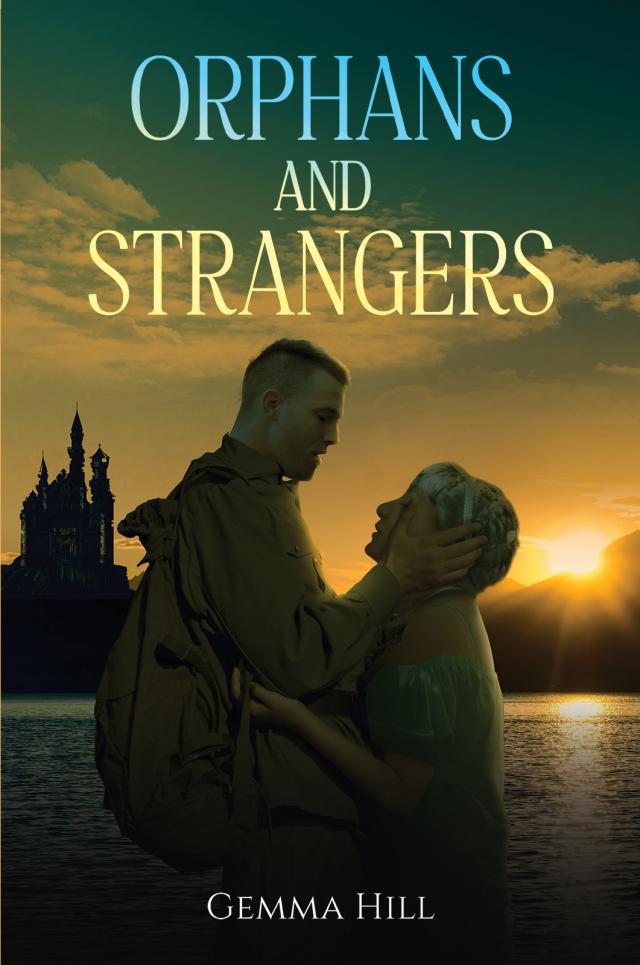
Orphans and Strangers
Gemma Hill
Austin Macauley Publishers
Orphans and Strangers
About the Author
Dedication
Copyright Information ©
Acknowledgement
Chapter 1
Chapter 2
Chapter 3
Chapter 4
Chapter 5
Chapter 6
Chapter 7
Chapter 8
Chapter 9
Chapter 10
Chapter 11
Chapter 12
Chapter 13
Chapter 14
Chapter 15
Chapter 16
Chapter 17
Chapter 18
Chapter 19
Chapter 20
Chapter 21
Chapter 22
Chapter 23
Chapter 24
Chapter 25
Chapter 26
Chapter 27
Chapter 28
Chapter 29
Chapter 30
Chapter 31
Chapter 32
Chapter 33
Chapter 34
Chapter 35
Chapter 36
Chapter 37
Chapter 38
Chapter 39
Chapter 40
Chapter 41
Chapter 42
Chapter 43
Chapter 44
Chapter 45
Chapter 46
Chapter 47
Chapter 48
Chapter 49
Chapter 50
Chapter 51
Chapter 52
Chapter 53
Chapter 54
Chapter 55
Chapter 56
Chapter 57
Chapter 58
Chapter 59
Chapter 60
Chapter 61
Chapter 62
Chapter 63
Chapter 64
Chapter 65
Chapter 66
Chapter 67
Chapter 68
Chapter 69
Chapter 70
Chapter 71
Chapter 72
Chapter 73
Chapter 74
Chapter 75
Chapter 76
Chapter 77
Chapter 78
Chapter 79
Chapter 80
Chapter 81
Chapter 82
Chapter 83
Chapter 84
Chapter 85
Chapter 86
Chapter 87
Chapter 88
Chapter 89
Chapter 90
Chapter 91
Chapter 92
About the Author
Gemma Hill is the author of The Twins’ Twins, her first well-received and well-read fictional novel. A storyteller, poet, and playwright, she has a way of crafting plots and creating characters that tempt the reader to stay up all night and read her novels. A retired lecturer in Communication, Social Science, and Health and Social Care, she loves nothing better than penning stories, long and short, that have a strong element of fiction based on her own life experiences and upbringing in Co Donegal as the fifth daughter of a small shopkeeper and café owner parents in a market town in Ireland.
Dedication
To my late father, Tommy, who was born in the railway station house in Fermanagh when my grandfather, Tom, was a signalman there
with the GNR in 1915.
Copyright Information ©
Gemma Hill 2025
The right of Gemma Hill to be identified as author of this work has been asserted by the author in accordance with sections 77 and 78 of the Copyright, Designs and Patents Act 1988.
All rights reserved. No part of this publication may be reproduced, stored in a retrieval system, or transmitted in any form or by any means, electronic, mechanical, photocopying, recording, or otherwise, without the prior permission of the publishers.
Any person who commits any unauthorised act in relation to this publication may be liable to criminal prosecution and civil claims for damages.
This is a work of fiction. Names, characters, businesses, places, events, locales, and incidents are either the products of the author’s imagination or used in a fictitious manner. Any resemblance to actual persons, living or dead, or actual events is purely coincidental.
A CIP catalogue record for this title is available from the British Library.
ISBN 9781035879786 (Paperback)
ISBN 9781035879793 (Hardback)
ISBN 9781035879809 (ePub e-book)
www.austinmacauley.com
First Published 2025
Austin Macauley Publishers Ltd®
1 Canada Square
Canary Wharf
London
E14 5AA
Acknowledgement
My thanks to Austin Macauley Publishers for supporting me in becoming a published author with my first novel, The Twins’ Twins and for accepting my second novel Orphans and Strangers.
Chapter 1
William watched, dead-eyed, as the hilly ground held fast against the best efforts of the pallbearers to force the flimsy wooden box into the narrow slit in the ground.
He glowered at the sombre-faced undertaker. He’d delivered Margaret’s coffin from Blesswell Hospital. “It’s not to be opened. We don’t want tuberculosis spreading in Fermanagh,” he’d said, grim-faced.
William closed his eyes and held fast to the image of Margaret’s face framed in a halo of hair the colour of ripened corn. It felt as if this was happening to somebody else. There was some mistake. The person in that box, they were preparing to pile filthy clay on, couldn’t be his Margaret. His eyes fell on his daughter, Trisha. It should be her I’m burying, he thought savagely.
The rain running in rivulets down his collar did nothing to cool the burning rage that bubbled inside him. He wiped his wet face with the sleeve of his badly fitting grey demob suit the Red Cross issued him with when he was discovered as a prisoner of war in Poland in 1946. He could smell the strong odour of mothballs that permeated its every fibre. It fits no better, twelve years on, he thought, looking down at the rain dripped off the too-short trousers onto his farm work boots.
He started as a clump of thick mud and stones, loosened by the heaving of the pallbearers, fell with a clatter on the coffin wedged half down the grave.
An old woman, kneeling on the muddy ground, discreetly fingered her rosary. “At least she has the decency to pray,” William said to no one in particular.
He straightened his long back. Looking out over the head of the assembled mourners, he focused on a group of people standing on the periphery of the graveyard. Most of them wouldn’t bid us the time of day in the street. Mother and that old poo-faced hypocrite of a clergyman saw to that, he thought bitterly.
He stared at Reverend Snodgrass, standing under a black umbrella, droning on as the shivering altar boy stood beside him.
Eight-year-old Trisha shrank back from the look in her father’s eyes.
“Stop moving about,” her fourteen-year-old brother, George whispered. “Da’s watching you. You know what happens when he gets angry.”
Above her head, Trisha could hear grown-ups talking in low voices. Gusts of wind snatched away some of their whispering, but she heard them ask why her mammy wasn’t being buried in the family plot where her grandad and granny Armstrong and wee Sarah were buried.
She wondered where heaven was, and if Sarah be there. She didn’t remember when her big sister, Sarah, fell into the well. But she remembered Miss Lillian, the Sunday school teacher, had given her a new doll. Her eyes kept coming back to the dark gaping hole in the ground.
Looking at the men leaning on their shovels, she tightened her grip on her brother’s hand. She wondered if her mammy could hear the plop of rain falling on the lid of the box that covered her face.
George looked down at her. “Don’t cry,” he warned, seeing her lower lip beginning to quiver.
“I’m afraid of the men with the shovels,” she said too loudly.
Her father turned and glared at her. “Keep her quiet or I will,” he growled at George.
Trying not to look at the shovels, Trisha watched the branches of the trees casting dark, swaying shadows on the puddles of water at her feet. Every time a gust of wind came, the shovels made a grinding, whining sound against the stony ground. The gravedigger nearest to her straightened up. Unable to hold back any longer, a scream erupted from Trisha throat.
“Oh mammy, mammy,” she shrieked.
Reverend Snodgrass stopped praying and frowned over the top of his half-moon glasses. He glared at George as he thumbed through his prayer book. Where had he left off? “May she rest in peace,” he said, giving the gravediggers a curt nod of his head.
There hasn’t been much of a collection for this burial, he thought. I would have expected the usual five shilling, but with the decline of the Armstrong farm, it’s not enough to bring me out on a morning like this!
He glanced surreptitiously around the windswept graveyard. The Hamiltons and Robbie Black, William’s nearest neighbours, had come to offer their support. He nodded at the postman’s wife and a few other villagers. The Kieltys from the hotel were there too, but Annie Swanton, the postmistress, hadn’t come.
“I suppose it’s what one would expect under the circumstances—burying a papish in a Protestant graveyard,” he murmured.
His eyes slid to William, standing forlorn a
“I’m depending on you, Geoffrey,” she’d hissed, her words coming in gasps. “See that it’s done.”
“Rest now, Sarah. We can talk about it tomorrow,” he’d said.
“No! We’ll talk about it now. I can’t go to my grave knowing that William and she would be welcome in my church.”
“Think what you’re asking me to do, Sarah! And as for the farm, William is still your son. He has a right to inherit the farm.” Geoffrey had remonstrated with her.
Sarah lay quiet for a minute. Geoffrey thought she had fallen asleep.
“The day William puts a weddin’ ring on her finger, be it in church or chapel, is the day he ceases to be my son.”
He could hear her husband, Samuel, moving around outside in the yard. Did he know what Sarah was planning to do?
“What does Samuel have to say about it all?” he’d asked gripping his Bible.
Sarah’s fingers had twitched on the bedsheet. “Samuel is a good husband and father, but he’s not able for William. Aye, and even less able for his daughter, Lisa,” she sighed. “Promise me, Geoffrey, that you’ll see to it.” She’d shifted in the bed and turned perceptive eyes on him. “Farm and all the land as far as Hamilton’s was left to me. It’s mine, not Samuel’s. I’ll see the renovation to the church—new electric light—done the way you want it,” she vowed, gripping his hand tightly.
Geoffrey shook himself out of his melancholy and looked around for Lisa. William will need his sister more than ever now, he thought. She hadn’t made it home from Scotland for her mother’s or father’s funerals. But she had always been close to William, and he was sure she’d be home for Margaret’s funeral.
Yes, a bit of a rough diamond; her father’s favourite, and unlike William, she had her heart set on working the farm, he mused. He furrowed his brow, wondering why Sarah hadn’t left the farm to her daughter. Maybe she would have if Lisa hadn’t run away and married the first man that asked her, after the American GI stole her bloom and left her with child, he sniffed.
The rumbling in his stomach reminded him that his cooked breakfast would be getting cold. But I have one more job to do before I can enjoy it, he thought guiltily, looking around for the couple he had seen near the grave.
“Poor Margaret didn’t last long,” he said in a suitably conciliatory tone as he shook hands with Fergal and Maureen, Margaret’s parents.
“We weren’t told she was sick,” Fergal said.
“Your dear daughter is at peace now,” Geoffrey said, a note of tetchiness creeping into his voice. It’s always the same, he thought, family members snub each other for years and then turn up expecting to be treated like the chief mourners.
“Were you with Margaret at the end?” Maureen asked.
Geoffrey noted the incongruity of the woman’s brogue amongst the chatter of northern voices around them. It irked him. “No, I wasn’t,” he said curtly.
“Did she receive the Last Rites of the Catholic Church?” Maureen asked, tears running unheeded down her cheeks.
“The hospital chaplain saw to all that,” Geoffrey said, anxious to talk to them about William and the children and get home to his breakfast.
“William is not a well man,” he said without preamble. “The war, you understand, had a devastating effect on his… mental capacities.” Geoffrey let his words die away as he tasted the half-truth on his tongue. He shrugged. Nothing was to be gained from going on about their son-in-law’s past behaviour. What he wanted to impress on them was that, with Margaret gone, their granddaughter might feel the full force of William’s episodes of war weariness.
He cleared his throat. “With their mother gone, William will need support with the children. I was hoping his sister Lisa might have been here…”
He held up his hand as Fergal Furling opened his mouth to speak. “The farm is in a very rundown state. And then there is the fear, even with the new medicine, the children might contract consumption.”
“Hold on, hold on a minute,” Fergal Furling said, a shocked look on his face. “You’re telling me Margaret had tuberculosis—TB!”
Geoffrey nodded realising this was going to be a more protracted conversation than he had anticipated. He held tightly to his patience. What part of what I’m trying to tell them do they not understand? he thought irritably. “There’s been talk in the village…”
“Margaret had TB!” Fergal repeated, unable to take it in. Taking him by the elbow, Rev Snodgrass steered him away from the group of locals who were eavesdropping.
Fergal looked at him in utter bewilderment. It had been an unspeakable shock to receive word that Margaret had died. But to learn she had died from TB! “When did it star—how long…”
Geoffrey briefly recounted their granddaughter Sarah’s untimely death from drowning. He paused when he heard Maureen’s sharp intake of breath.
“Sarah drowned… in the well on the farm,” she said in an incredulous voice.
“It was a terrible loss to William… and Margaret,” Geoffrey added. He firmed his stance on the uneven ground against the rising wind as he avoided thinking about William’s appalling behaviour the day his daughter drowned.
“Your daughter never really recovered from the loss,” he said, moving his thoughts on swiftly. “She had a breakdown and was admitted to Blesswell Hospital.” He fumbled with his vestments, trying to keep them from blowing in the wind. He sighed. “Sarah was the only child William took to when he returned from war. He was inconsolable when she drowned.” Geffrey paused. “He simply never came to terms with her death. And then… Margaret contracted tuberculosis.” He sighed again as he placed a steadying hand on Fergal, who was obviously shocked from what he was hearing. Feeling weak, Fergal leaned against the railings of an old grave.
“God almighty, if I had only known things were so bad. I didn’t want her to marry William. But my god, I wouldn’t have wished this on her or my grandchildren,” he said. Fumbling his hankie out of his pockets, he swiped at his tears. “I thought she’d have full and plenty,” he said helplessly.
Geoffrey cleared his throat and tapped his fingers on his prayer book. “Yes, well, mixed marriages bring their own problems. The Armstrongs became estranged from their son, as you did from your daughter,” he said, a niggling sense of guilt worming his way around his gut. “Now, the present problem: the children. If you intend to help, this would be the time to do it.”
I’ve done my duty, Geoffrey thought in the silence that followed. He cleared his throat. “I must have a word with Doctor Coles…”
Straightening his shoulders, Fergal stepped between the haphazardly laid-out graves in the direction of his son-in-law.
“We’re staying at Kielty Hotel. Come and have a bite to eat with us, William?” he said. He had met William once before, at Margaret’s nursing graduation at Queen’s University Belfast. William had been non-communicative and withdrawn, but nothing like this dishevelled, angry man trying to brush him aside.
“Ah don’t need your charity,” William growled.
Mindful of Reverend Snodgrass’s veiled warning, Fergal held fast to his mounting concern. “If you’ll not come, let the children come.”
“George is needed on the farm; he has no time for eatin’ in hotels.”
“What about her?” Fergal asked, nodding to where a girl stood, shivering.
William’s face darkened. “Aye, her,” he said spitting on the ground.
“Margaret is—was—our daughter, man!” Fergal said losing his patience. “And these are our grandchildren. With poor Margaret lying in her grave, all we want to do is help if we can.”
William balled his fists. Fergal flinched, sure William was going to strike him.
“Oh, so she’s your daughter now!” William spat. “And where were you the past fifteen years? Answer me that?” He turned blazing eyes on Maureen. “You sent her a wedding dress she had bought to marry another man,” he said.
Margaret hadn’t dressed in white for their wedding day, but as she’d got sicker, she had begged him to dress her in the wedding dress for her funeral.
A grim smile flittered across his face as he caught sight of the black-coated undertaker gabbing with Reverend Snodgrass. No doubt he’s telling him how I prised open the coffin; stripped the harsh calico shroud from my wife’s body and dressed her in the white wedding dress, he thought.


