

Didnt we almost have it.., p.1
Didn't We Almost Have It All, page 1


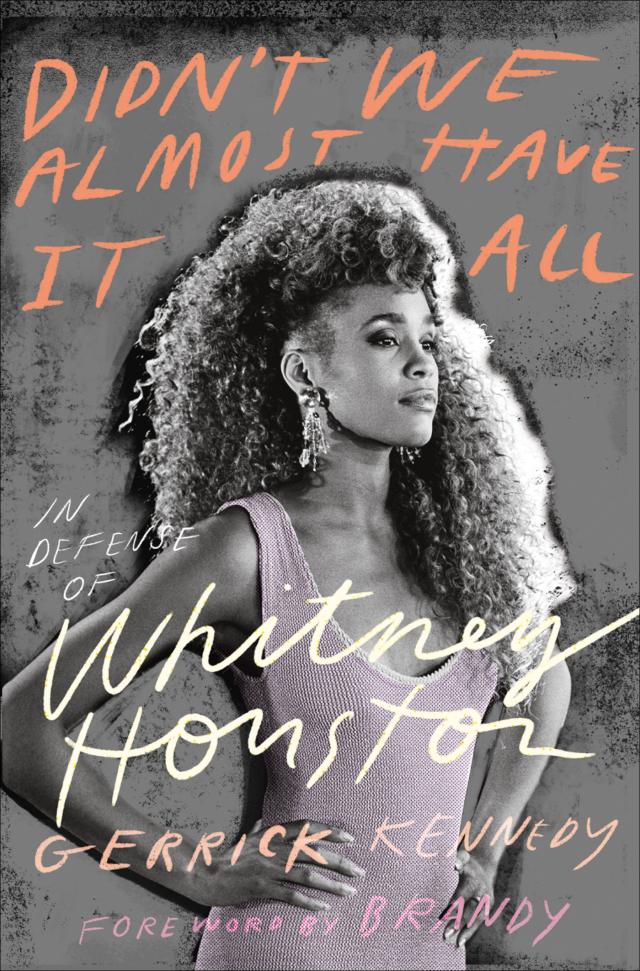
Copyright © 2022 Gerrick Kennedy
Cover © 2022 Abrams
Published in 2022 by Abrams Press, an imprint of ABRAMS. All rights reserved. No portion of this book may be reproduced, stored in a retrieval system, or transmitted in any form or by any means, mechanical, electronic, photocopying, recording, or otherwise, without written permission from the publisher.
Library of Congress Control Number: 2021933481
ISBN: 978-1-4197-4969-8
eISBN: 978-1-64700-047-9
Abrams books are available at special discounts when purchased in quantity for premiums and promotions as well as fundraising or educational use. Special editions can also be created to specification. For details, contact specialsales@abramsbooks.com or the address below.
Abrams Press® is a registered trademark of Harry N. Abrams, Inc.
ABRAMS The Art of Books
195 Broadway, New York, NY 10007
abramsbooks.com
CONTENTS
FOREWORD by Brandy
INTRODUCTION
DIDN’T WE ALMOST HAVE IT ALL?:
A Meditation on Loss and Memory
UNDER HIS EYE, BLESSED BE THE SOUND:
Faith, Gospel, and the Almighty Power of Cissy Houston
HOME:
Newark and the Black American Dreams That Birthed Whitney Houston
STUFF THAT YOU WANT, THING THAT YOU NEED:
The Brilliance and Influence of Whitney’s Voice
MY LONELY HEART CALLS:
On Sex, Desire, and Sexuality
MISS AMERICA, THE BEAUTIFUL:
The Burden of the National Anthem and the Politics of Whitney’s Blackness
BOLDER, BLACKER, BADDER:
The Sisters with Voices That Transformed Whitney
TELL THE TRUTH AND SHAME THE DEVIL:
How Trauma, Shame, and Tabloid Culture Broke Whitney
THE UNDOING OF WHITNEY HOUSTON:
Virtue, Vice, and a Requiem for Redemption
WON’T THEY ALWAYS LOVE YOU?:
Reflections on Meaning and Legacy
ACKNOWLEDGMENTS
NOTES
INDEX
FOREWORD
by Brandy
The first time I heard Whitney’s voice, she was singing “Greatest Love of All.” I felt feelings, emotions I’d never before felt in my body and in my spirit. I don’t quite have the words to describe what her voice did to me. How it was able to move me. And how I was suddenly able to see all of her—her grace, her class, her beauty, her smile. She was an angel. She was the person I wanted to be exactly like. I knew I could never be exactly like Whitney Houston, but if I could just do a little bit of what she did with her voice, if I could make someone else feel the way she made me feel, then that’s what I wanted to do. I was mesmerized by her. I spent my childhood practicing to all her records and imagining myself meeting her. Those were my dreams and prayers. I wanted to be a singer, and I wanted to meet Whitney Houston.
I was a young Black girl growing up in the South when Whitney took over the world. She was an effortless singer, and it inspired me to see someone with a voice as powerful as hers. She had every range you can imagine—her falsetto was as strong as her head voice, and she could do all these amazing things with her tone. Whitney made me feel like anything was possible, even though everything she was doing had been so impossible for Black girls to achieve. She was the result of so much, and she was the reason why I could be everything I wanted to be, why any of us who came after her could be anything we wanted to be. Whitney was the blueprint. That was the magic of her. I remember going to my mother and telling her: “I want to be as big as Whitney Houston.” My mom encouraged me to dream big, but Black girls rarely saw the type of success Whitney achieved. Selling tens of millions of records, all the history she made, and all the accolades—we didn’t see many artists, let alone Black artists, reach the levels Whitney did. I don’t think I would’ve made it as far as I was able to make it as an artist if she were not the idol I looked up to most. Whitney was magical. She opened—literally—every door for every singer. Black, white, Hispanic—anyone who wanted to do this has Whitney in their Top Five.
When I was twelve years old, I sang my way down the audience of The Tonight Show in order to get backstage. BeBe and CeCe Winans were there to perform, and I wanted to meet them, not just because I loved them so much, but because I knew they knew Whitney and I wanted to meet Whitney. “Is there a way you can just call her, so I can talk to her?” I begged CeCe. She actually called Whitney, and I got to talk to her. I got to hear her voice. I couldn’t believe it was her on the other end telling me to have a great summer and sweetly listening as I professed my love of her and my dream to be just like her.
And then I got a chance to go to one of her concerts. I was up in the nosebleeds, but I told everybody—all the ushers—that I was going to be a big star and I was going to pay all their bills if they let me move down. Just like at The Tonight Show, my charm got me backstage. But Whitney was already gone by then. I was crushed; plus, I missed the entire concert trying to get to her. As I stood in the rain outside the Forum in tears, my mother looked me in the eyes and told me: “You’re going to see Whitney at the top. That’s where you’re going to meet her.” Three years later, my first record came out and did pretty well. Whitney was hosting the 1995 Kids’ Choice Awards, and I was performing on the show. We were going to be on the same stage. At rehearsals, I saw this woman coming toward me. I couldn’t believe that it was really her. It was really Whitney Houston. I was so taken aback that I ran from her. It just didn’t feel real. When she embraced me, she embraced me as if she knew me. And she did know me, because of my music, and that’s exactly what my mother had told me would happen in the parking lot after missing Whitney’s concert trying to meet her. You will see her at the top. Whitney gave me her jacket to wear, and I hung out with her for the whole day. It was a dream, one of the best days of my life.
To experience that moment of meeting my idol just as all my dreams were coming true was surreal. And then Cinderella happened. First of all, I didn’t realize that I was making history with the role. For me it was, “Oh my God, I’m working with Whitney Houston.” Just a few years earlier, I was at the Forum trying to meet Whitney, crying because I couldn’t. And then I was in the studio with her? There was something about Whitney that made me feel like I could completely be myself. I was so happy to be in the same studio with her, to both hear her sing and sing with her. My voice was not even fully developed yet, and I got to ask her to do all these things that I wanted to hear her do vocally—all the things I dreamed of hearing her do with her voice. When I look back now it’s like, “Oh my God.” I was the first Black Cinderella, and it was because of Whitney that I got a chance to play such an iconic role. It was because of her that I became the first Black Disney princess. I couldn’t really appreciate it in the moment because I was busy doing the work. But my life had quite literally become a Cinderella story. My dreams had come true—except I didn’t care about finding a prince, because I had met my fairy godmother.
***
Whitney’s support helped me realize my potential to grow as an artist. Whitney saw me, and she pushed me. “You need to sing from your gut,” she would tell me. “You need to sing from your heart and choose songs for you. Don’t try to be me. Be you, and that is what will carry you through.” I think about her in so many different ways, all the time. And I miss her so very much. Even when she lost her voice, when she lost it, Whitney still got up on that stage and sang from her heart, whether she could hit the notes or not. It speaks volumes that she still showed up and still tried to do what she had to do—no matter what. She was a different kind of lady. To go through everything she went through and still give so much to us is unbelievable. But that was her magic.
The day she passed, I woke up in the morning and didn’t like the way I felt. It was my birthday, and I was supposed to perform with Monica at Clive Davis’s pre-Grammys gala. I don’t know if I was just afraid to perform or nervous about letting people down, but I woke up not feeling very good. My voice was weird, and there was something so off about the energy of the day. I went to my voice doctor, and when I got back to the Beverly Hilton there were paramedics outside. Nick Gordon saw me and shouted, “Brandy! Brandy! Come in the elevator! Come in the elevator!” Just seeing him, I immediately started praying. I knew him from seeing him with Whitney and her crew. I didn’t know what the stretcher I saw was for, and I wasn’t putting two and two together. As I was getting hair and makeup, I got the call that Whitney had passed away. I was in complete denial. I had just talked to her three days before. We had a long conversation. We talked about everything—from the beginning of our relationship to where we were at that moment. I couldn’t understand that she was gone. It just wasn’t registering for me. To this day, I still don’t understand it. I feel like I could have been there for her more than I was. I could have loved her differently than the way she was being handled. There was a gap in our relationship, but that’s just life—you go and do your own thing and grow. But I had a moment with her during those harder times. We talked about her coming and staying with me to get away. So for her to pass away, the way she did? I’ll never be the same.
I really try to carry on in Whitney’s tradition. She taught me not to allow fame to beat me and not to allow negativity to stop me. I never dealt with any of the negativity shown toward me or my brother after Whitney died. I didn’t feed into it. Ray
It’s so important that we honor and respect Whitney’s legacy. Her voice had the power to sit you still. The magic in her voice could help get you through whatever you were going through. Whitney’s voice could bring you closer to God. There was so much love and joy in that voice. Listening to her voice has gotten people through heartbreak and anguish. Her music has been there for our darkest moments and our brightest days. There was such beauty and grace in her voice. Whitney could take you to so many places with just her voice. She has inspired generations of little girls all over the world to sing from their heart and guts. That was her magic, and that’s her legacy. And we’ll never see another Whitney Houston.
INTRODUCTION
I’m met with variations of the same three questions anytime someone asks me about writing a book on Whitney Houston: Did you get Cissy to talk? What really happened with Robyn and Bobby? What’s Clive got to say now? Every time, without fail. But the question I’m asked the most? Why do you want to write a book about Whitney Houston? Typically, my elevator pitch about the motivation and intent behind this book is met with curiosity and enthusiasm. But I’ve lost count of how many times I’ve witnessed that same curiosity and enthusiasm drain from someone after I tell them I’m probably not writing the kinda book they think I am. I didn’t write a traditional biography; nor did I write an exposé full of bombs about Whitney or her life. But I get it. We associate Whitney with the many scandals that befell her, and it’s hard to see past that with a story that ends as tragically as hers does.
And I was no different. When Whitney died, I couldn’t listen to her music anymore. It hurt too much. I had met her, and two days later she was dead. That was gutting enough on its own and hearing her was a painful reminder of that weekend, so I made the conscious decision not to play any of the Whitney albums I once loved and frequently listened to on repeat. I loved her so much, but her voice no longer reminded me of the euphoric feeling her music once gave me. In its place was regret for what could have been and deep sadness for what no longer was, and my love of her was now engulfed in guilt. There was guilt over how we treated her—all the crass jokes at her expense, the punch line she became, and how common it was for us to play into it. To indulge in tearing her down. My memories of Whitney evaporated into a fixation over thinking of all the ways her life and career should have gone. How things could have been different if we stopped speculating and taunting. If we were a little bit louder in our support for her to pin down her addictions than we were about her inability to come back swinging. For so long my guilt had eaten up the joy I found in Whitney’s music. All I could see were the years that had stripped her of a dignity that has only been restored in the years after her death, once we learned of the burdens and shame she carried. So I understand why so many of us haven’t moved on from the tragedies that swallowed Whitney whole. But I wanted to be able to rejoice in all that she was. I wanted to reconnect to the joy I found in her music. So I went back to the beginning, to our first time seeing Whitney on television, when she belted “Home” from The Wiz, and spent hours one night cycling through the decades of concert footage that has been preserved on YouTube. I watched the great ones that left goosebumps on my arms and the not-so-great ones that made me remember how much it broke our hearts to see her lose parts of herself. Then I moved on to her music videos, watching them all again and again. And then I went back to her movies and revisited the albums that once had permanent residence in my CD changer. Sitting in the past made me fall back in love with Whitney in the present, and it allowed me to see her fully, without her tragedies obscuring my view.
Didn’t We Almost Have It All arrives just as we’re marking a decade without Whitney. We now live in a time when the way she was treated by the press and the music industry wouldn’t dare go unchecked. Millennials and Generation Z have transformed the way in which we see the world around us. Our understanding and language around all that makes us unique has broadened, which has diversified all facets of popular culture. There were so many barriers eviscerated by the power of Whitney’s voice and the success she found. But chipping away at all those cultural barriers came with a cost, a mighty one, as we know. Whitney left this earth as a cautionary tale, but reading her solely through the lens of tragedy does her a major disservice, and it took projects like Kevin Macdonald’s unflinching 2018 documentary Whitney and Robyn Crawford’s 2019 memoir A Song for You to show us just how wrong we had gotten Whitney.
We missed so much the first time around. We were too busy judging and consuming her. And Whitney is overdue for a reexamination now that our dialogue around celebrity, addiction, sexuality, gender, mental illness, and Blackness in America has changed dramatically. We have undergone a degree of self-reflection on much of what tore her down. We now hold more compassion for celebrities battling addiction and mental illness, but it took the tragedies of losing Whitney and Michael Jackson and Amy Winehouse and Scott Weiland and Prince and Chris Cornell and Tom Petty and Lil Peep and Mac Miller to get us there. In a seven-year stretch, Michael, Whitney, and Prince died. The three biggest stars of the MTV generation—Black artists who challenged our ideas of race and sex, broke new ground for generations to come, and redefined pop music—dead. They all succumbed to addiction before we collectively shifted our thinking; before our views of the struggles to assert one’s Blackness in America evolved; before our consideration of the spectrum on which sexuality and gender lines expanded; before our realization of the toxicity of celebrity culture and the role we play as consumers deepened; before our understanding of the lasting traumas of childhood abuse and the way we think about mental health faced a needed reckoning; and before our common vernacular included terms like “accountability” or “problematic.”
These conversations have altered the way we’ve been able to reframe our icons in the years after their tragic deaths as we continue to confront the psychological toll of being a Black superstar in America. I’ve often fantasized about how their lives—our lives—would be different had they not fallen, if they had lived to see a time in which our thinking was generally more progressive. Would they still have lost themselves to drug abuse? Would the last years of their lives still be remembered more for their eccentricities than for their talents? The sad truth is we’ll never know. Just as we will never really know who Whitney was. The woman behind the voice was an enigma, and that state of unknowability is remarkable on its own given how much the concepts of fame and celebrity as we’ve always known them operate on overexposure and oversharing. Even when Whitney was directly telling us who she was, she was telling us only what she wanted us to know, and all that we have discovered about her in death doesn’t change the reality that she was the only one who could offer any real insight into her interior life and her motivations as an entertainer and she’s not here to give that to us.
So why write a book about someone as unknowable as Whitney Houston? It’s simple: There wasn’t a book about her that was grounded in scholarship and reverence, and that absence felt profoundly unfair to her legacy. Plenty of books have gotten down in the weeds on the gossip and the scandals that formed our view of Whitney, but none of them have explored her importance or searched for any meaning in her triumphs and tragedies. Those closest to her—her mother, Cissy; her ex-husband, Bobby Brown; her mentor, Clive Davis; and her confidant, Robyn Crawford—have all written about their life in proximity to Whitney, and while each of those books has provided more clarity and insight into her life, those were stories born from the necessary burden of setting the record straight about her.




