

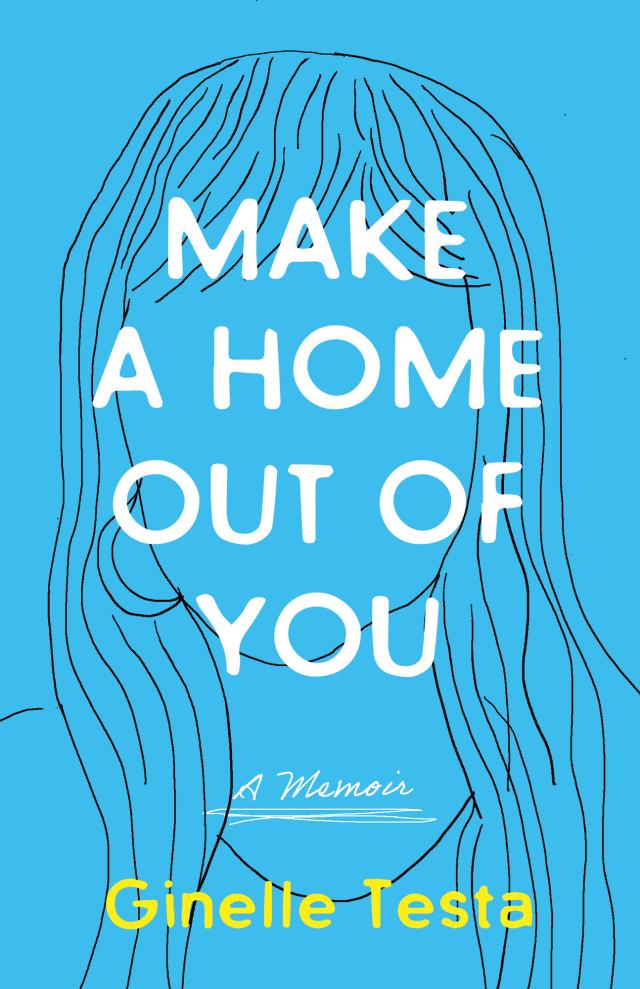
Make a home out of you, p.25
Make a Home Out of You, page 25


But I knew I didn’t have anywhere else to turn. Either I got back into the program, or I’d be looking at a lifetime of chaos and pain. It was just after 6:00 p.m., and I knew of a 7:00 p.m. SLAA meeting nearby.
“What if I went to the meeting tonight?” I said. “I’ve been before. I’d probably even know people there.”
“I think that’s a great idea,” she said, nodding. “We can hang out for a few more minutes, and then you can head over?”
“Okay.” I swallowed hard, my whole body trembling. What was I getting myself into? How in God’s name was I going to survive all this change, all this structure, all these rules?
“Give it a chance. Ready to go?”
I nodded but closed my eyes for a second and pictured the parlor of the church where the meetings were held. I could smell the mustiness. I could see the worn-out couches and fold-out chairs lined up on the ratty old carpet. The place was crammed with people, the air a loud buzz of voices chattering about recovery and life without any of the vices they’d sworn to give up.
“Okay, I’m ready,” I said as I drank the last bit of my tea and put my cup away.
Was I, though?
CHAPTER
Eight months after turning my back on SLAA in favor of diving back into the arms of a bunch of strange men and a few women, I walked with my head down into a church just outside of Boston. When I looked up, I saw about forty people there, mostly men. Oh great, probably another bunch of creeps. I looked around and realized I recognized several folks there, a woman whose sobriety I had admired when I was in before and an old guy who was one of the few who didn’t creep me out. I nodded at them and took a seat. I can’t believe I’m back here, I thought. Do I really need to put myself through this? Ugh.
The meeting began and proceeded as they always do, with the Serenity Prayer and the requirement for being there (a desire to stop living out a pattern of sex and love addiction). During the meeting, I faded in and out of focus. I thought about my most recent two-week fling, how he didn’t want to see me anymore. My heart ached about it, and I wanted to cry. And by the end of the meeting, I did cry. When it came time for newcomers to introduce themselves, I raised my hand, tears already streaming down my cheeks before I could get the words out.
“I’m Ginelle, and I’m a sex and love addict. I’m just coming back.” I breathed heavily, grasping my skirt.
People said in unison, “Welcome back,” and I wiped my face with my sleeve, smearing black mascara all over my pink sweater. After the meeting, the one girl I knew came up to me and gave me a big hug.
“Hey, we’ve missed you.”
“Oh, yeah. I got myself into some trouble. I think I need to be here.” She gave me another hug, and I worried that I was mucking up her sweatshirt with my running makeup. She didn’t seem concerned, as she held me for a long time.
Two other women came up to me to offer hugs and their phone numbers. I still felt scared that I was going to be told to stop dating, but I hung in there anyway.
The next day, I called Jessie, one of the huggy women. I knew her from my previous stint in SLAA and she seemed to be in a healthy relationship, showed up to meetings, and had answered my calls before.
“Hi, Jessie, it’s Ginelle.”
“I know. Hi, Ginelle! How are you doing after yesterday’s meeting?”
“I’m struggling, but I was hoping to talk to you about something.”
“Sure, anything. What’s up?”
“I was wondering if you’d be my sponsor. I’m finally ready to stop my shitty behavior and actually do the program.”
“Of course. I’d love to be your sponsor, but we have to set some ground rules. If you’re going to work with me, you have to take a break from dating and sex.”
I told her, “I’ve taken breaks from sex and dating in the past because my AA sponsor suggested it while I did the steps, but I guess they weren’t true breaks. I was intriguing”—which in SLAA means any interaction that can lead to acting out—“and feeding my obsession. Plus, I had sex with a stranger I met on the T.”
“I see. I get it. I tried to take breaks in the past, too. But they weren’t true SLAA breaks. This time I want you to make it a time of self-healing and growth.”
A real break meant not flirting with people, not telling them I’d get to them later (also known as rain checks), and not acting out in any of my bottom-line behavior. A true SLAA break meant committing to just being alone and feeling my feelings. Terrifying for a sex and love addict.
I took Jessie’s advice and deleted all my dating apps. I deleted the numbers of anyone I might booty call, and whenever someone contacted me trying to date or hook up, I blocked their number. Committing to sobriety in SLAA was one of the hardest things I’d ever done, much harder than getting sober from alcohol and drugs. I think this was my core addiction, one that preceded drugs and alcohol all the way back to when I was webcamming as a child. It wasn’t as simple as just not drinking, there was a bunch of behavior, a lifestyle I had to change.
I was attending two meetings a week, occasionally seeing my sponsor at one of the meetings. A few weeks into my commitment to SLAA, I called her and sobbed, “I don’t know what to do. Not dating is making me feel like I’m going to die. I know it sounds dramatic, but it feels like a hole is going to rip through my chest.”
Jessie’s voice stayed low and calm, not elevating to meet my drama even one bit.
“Ginelle, all you have to do is not date one day at a time. Do you think you can get through the rest of this day without texting anyone, flirting, or downloading a dating app?” she said. Just like Elena had said to not drink one day at a time, SLAA taught the same concept, just get through one day at a time.
“I guess. I can try. But I really want to download a dating app.”
“Just try to make it through one day without downloading an app. Just give it a try.”
“What’s the point of all this?” I knew the point. I knew it was to get healthy. It just felt so hard living without the gratification and attention I was used to.
“The point is that you heal and discover yourself so that you can be a whole person. Then, eventually, you can bring that whole person into a new relationship. But, for now, it’s time to heal your wounds.” Ugh, I knew she was so right, but it was so hard!
Withdrawing from my addiction was a shock to my system. It was as though all my feelings were attacking me at once. I’d gone from back-to-back dating and as much casual sex as I wanted to being completely alone with a quiet phone. I wasn’t even flirting with anyone. This was unheard of—night after night spent not texting, sexting, flirting, opening the doors for the next encounter. The nights often felt blank, empty.
It was horrible. But there were also moments of beautiful healing. I did have meaningful friendships that helped me feel less alone. I reached out to friends on the phone and hung out with them, and slowly but surely began to feel that maybe, just maybe I could do this!
I stuck with it. And more and more as I freed space in my head, I became present with friends and family. When I was out with friends, I wasn’t constantly checking my phone or leaving early to be with my flavor of the week. I began to pursue more interests and activities that I desired for myself, such as writing, playing recreational floor hockey, doing yoga, and trying new things like Krav Maga classes. I was no longer the product or the object of who I was dating. And I continued to make peace with my past—acknowledging that although I had done terrible things, I was not those terrible things.
After about a month in SLAA, attending twice a week, I began to create bottom lines with my sponsor, behaviors I needed to avoid doing because they caused me harm. I’d rebelled against setting bottom lines in the past because I didn’t want my behavior restricted. To create such rules felt to me like a punishment. But this time around, I understood that the restrictions were meant to keep me safe. Some of the bottom lines I chose were:
No sleeping with anyone outside of a committed relationship
No chasing emotionally unavailable people
No unprotected sex
No dating at all until I finished the steps
The behaviors I’d listed were my usual suspects. They were the ones that had always gotten me into trouble. Unless I stayed away from them, I wouldn’t be sober according to SLAA. And dammit, I was going to get sober if it killed me.
While I was getting used to the routines and requirements of SLAA, I became a sponsor in AA. My twelve-step mentors had done so much for me that I wanted to give back to the program. I had completed the AA steps, and I wanted to light a path for a woman who needed it, as so many extraordinary women had done for me.
I was now five years sober. I was speaking at meetings, sponsoring, and doing service like leading meetings or being the treasurer of a meeting. It was interesting to me that my sponsees and some of my fellows admired me in AA, and I felt high levels of self-esteem in that program, but I just couldn’t measure up in my efforts to develop a healthy sex and love life. This felt like a weird contradiction; I was crushing the twelve-step thing on the booze side, so why couldn’t I make the same kind of progress on the sex and love side?
Because recovery is a layered onion.
The current layer I was uncovering was my ability to listen to what was right and wrong for me. I’d always had good sense in me, as in, I knew what a good or bad move was, but before SLAA, I didn’t have the strength, didn’t have the tools to choose in my best interest. Although I’d honed this sense in much of my life, it seemed to be broken with lovers. My picker was off. I was choosing those who weren’t best for me, hadn’t listened to my gut. This was starting to change.
Three months into SLAA, during a break from listening to my AA sponsee read her fifth step to me, I got a Facebook message from Peter, the married man. I felt that familiar flutter in my chest. I went to his Facebook profile, and a few quick clicks told me that he and his wife were no longer together. For a moment I considered messaging back because maybe he’d changed. Right? I opened our message and stared at it. Then I closed the app. And opened it again. Finally, I reminded myself how he’d behaved with me even though he had a wife; he’d certainly do the same to me if we were ever together.
I pressed the “block” button and didn’t respond. Wow. Relief washed over me, and I let out a big sigh. I was choosing myself for once. My intuition, strength, conviction, and adherence to boundaries were getting stronger. I was learning not only that I needed this period of no sex or love shenanigans, but that by God, I deserved better. I deserved to date someone who could show up for me. And this person deserved a whole me, so I was working on becoming whole.
For six months, I stayed single. Truly single. No flirting or obsessing or intriguing with people. And a real turning point in my recovery happened when I realized that my predicament wasn’t situational, which is to say that I’d had these problems for a long time. I began to recognize the pattern of problematic sex and love situations that had held control of my life for as long as I could remember. Now I no longer allowed myself to think of or refer to a bad date, bad weekend, or bad relationship. Now I had recognized the pattern and was calling it by name.
Walking through the steps with my SLAA sponsor meant looking back on my life so far. That was rough, and I would have loved to have skipped it, but I’d made a deal with myself to get to the other side. That meant looking honestly at the choices I’d made along the way.
There was Anthony, who beat the crap out of me. He physically and emotionally abused me, and still I stayed. I thought possessiveness was love and care. I now know that this is far from the truth. In SLAA, we say that love is a thoughtful choice rather than a feeling in which we are overwhelmed. I now know that love is not that fiery passion; rather it’s safe and warm.
There was Peter, who was physically and emotionally unavailable because, well, he was married. I chased after a completely unavailable person. Now I knew I deserved someone who was whole because I was working to become whole myself.
There was Penny, who I couldn’t show up for because I feared my own queerness, and her overwhelming love scared the crap out of me. I left her hanging for a while, and that was far from cool. Now I knew I could be with anyone, regardless of gender, because my queer identity is valid, and I can accept people’s love.
There was Diego, who I couldn’t seem to connect with in a meaningful way. I cheated on him and felt resentful of him for most of the relationship. Now I knew I didn’t have to stay in a relationship that wasn’t working. I could show both parties dignity and respect by leaving when I felt it wasn’t working.
Despite how bad all of those relationships were for me, I chose to give a lot of myself to those flawed people. But I also brought all my flaws to their tables. I wasn’t consistent or trustworthy or emotionally available for Anthony, Penny, Diego, or probably for anyone I dated.
This was my life. I was a sex and love addict.
Working through the program made me open my eyes to how I’d tried to make homes in other people. I saw people as foundations and tried to build on that but was using some of the worst materials available. I was going forward without building permits, not following any safety regulations, and not even worrying about who else might already live there. Back in those days, I didn’t yet know where the best home for me was, but at least now I knew where it wasn’t.
It was six glorious months into my self-assigned singlehood when I sat on the beach at the edge of Thoreau’s beloved Walden Pond. I’d never been there before, but I chose it because multiple people had told me it was a beautiful and serene place to be. It was about a forty-five-minute drive from where I was living, and on a warm, sunny afternoon, I set out to spend some quality time with myself.
Wearing a red polka-dot bikini and stretched out on a beach towel, I scribbled in my notepad and soaked up the soothing August sun. I was working through Julia Cameron’s The Artist’s Way: A Spiritual Path to Higher Creativity. In her book, Cameron presented a program to encourage creativity and build self-esteem. I progressed through the workbook at the same time I was working the steps of SLAA, so every day my head was full, and every night I fell asleep with a satisfied thump. Each day I would write my “morning pages,” whose purpose was to get everything out of my head and onto the page, all my thoughts about my relationship with myself and a Higher Power, and my connection to my creativity. It felt like emptying the contents of my mind onto paper. As instructed, I let go, suspended judgment, and just wrote everything I was thinking.
When I was on week four of The Artist’s Way: “Recovering a Sense of Connection,” I realized that for once, I was learning to reconnect with myself. Much as I imagine Thoreau must have been—thriving in nature’s solitude, free from distraction—I was focused, thinking, breathing, dreaming. Feeling utterly connected to myself and to the greater universe. Sitting near Thoreau’s own writing spot, I thought I might even be able to become a writer. I certainly had stories to tell. Maybe I could write something important and lasting, as he did.
Shutting the notebook, I rolled onto my back to enjoy the summer heat, and it occurred to me that I was there alone. I’d never really spent any quality time alone before this round of SLAA. Even when I’d been “alone” in AA, I was always pining for someone, always reaching in the wrong directions.
But here I was, taking myself on an artist’s date. Just me for the day. According to Cameron’s program, I’d been assigned to spend two hours alone in a place where I felt creative, and right away I knew I wanted to go where Henry David Thoreau had written Walden, where he’d spent that extraordinary two years and two months all on his own, living “deliberately.” Sitting there, digging my toes in the sand, I thought with great comfort, He was a weirdo loner, too. Maybe I can do this.
I thought back to the Serenity Prayer that Nana had taught me so long ago and that was now such a regular part of my life. I’d now found some of that serenity in my acceptance that I was an addict to my core. That no matter how healed I’d become, I might always feel a tug to do something toxic and have the desire to reach for a locked door, might even try to start a fire within a healthy partnership in the future. That addicted person will always be part of me, but she has a strong support system now and a whole lot of powerful tools.
I recognize my courage when I catch myself obsessing about a stranger on the bus or feeling an urge to reach out to exes but use my bravery to choose a different path. And I revel in how much I’ve learned. Instead of trying to make a home in someone else, I can choose to build my own home from materials that will last. The floor will be constructed with my self-respect, self-acceptance, and self-love. The walls, from the support of friends, twelve-step fellows, mentors, therapists, and sponsors. The roof, from my self-forgiveness, knowing that while I needed to do much better than I was doing, at the time I was always doing the best I could. The fireplace will burn with my determination to never again accept the unacceptable, not from myself or from anyone else. And from now on, I’ll be honest with myself about whether a door I’m about to open is a healthy one or one that should remain forever closed. It’s with a contented sigh that I realize I now have the wisdom to know the difference.
ACKNOWLEDGMENTS
This book was a kernel of an idea in 2016. I thought I had stories to tell, so I began jotting them down. The process took about seven years from idea to finished product, and boy, was it a journey! I feel like I pulled out a chunk of my heart to get this thing written, and there was an abundance of people during that time who helped me stay sane, motivated, and hopeful.
I have countless people to thank for this book coming together—from friends to editors, beta readers to family, my publisher to blurbers, Instagram pals to NaNoWriMo buddies, everyone who voiced their encouragement to those who quietly supported me through the madness of writing this book.


