

Justice for all, p.2
Justice for All, page 2
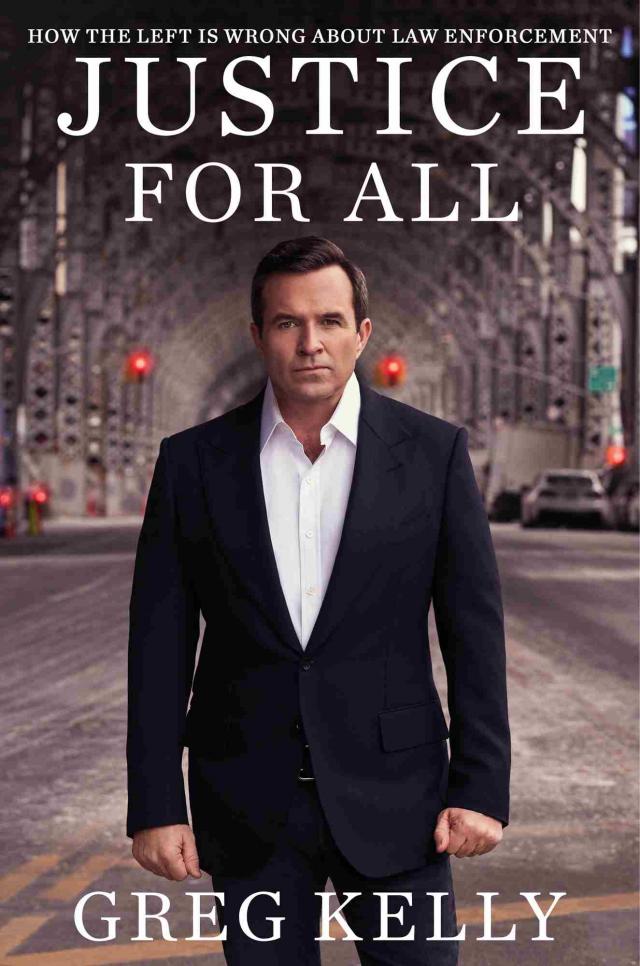


My father was a lieutenant in the Marines and served in Vietnam as an artillery forward observer, eventually ending his career as a full colonel. He talks about it, but doesn’t go into detail about combat. I sort of knew, intuitively, not to ask him if he ever killed anybody. The radio host Howard Stern once asked him on the air, not without charm, how many people he had killed. My father kind of laughed it off, which is how men of his generation usually respond to that type of thing.
We would hear stories, of course, and they were crazy, just as war is. War—as I would find out for myself—is random, wild, boring, weird, hilarious, terrifying, surreal. All kinds of stuff happens, and sometimes the only thing you can do is shrug and realize you are caught up in something so much bigger than yourself that there’s no option but to roll with it.
Marine Officer Candidates School required me to attend summer boot camp sessions in Quantico, Virginia, that were excruciating and brutal. My upbringing at home wasn’t especially strict; my father was hardly the Great Santini, if you’re familiar with that book or movie. Arriving at OCS, on the other hand, was a definite culture shock, and adjusting to the rigors of military life was not at all natural, at least for me. I wish I could say that the boot camp experience changed me in a permanent way and made me ultra-disciplined, but once no one’s yelling at you and you don’t need to hop to, you pretty much go back to being your regular self.
My military service started right after the Gulf War ended, and the armed forces were resetting themselves to deal with the “New World Order” following the collapse of the Soviet Union. It’s hard to believe how much the world has changed since then, and the extent to which the position of the United States has declined. It was in the Clinton years that we gave China most-favored-nation trading status, which seen from now was like committing national suicide, because they have taken over our manufacturing base—the source of our broad middle class and our national prosperity—and stolen our technological and military know-how. What a disaster: we basically ceded our global dominance in exchange for keeping prices low on consumer electronics.
My active duty started in October 1991, when I entered training as a second lieutenant. My Full Metal Jacket–style basic training was mostly taken care of during the summers in college, and my entry training, while intense, was more gentlemanly. It was kind of like becoming a junior executive. Learning the trade of arms, weapons training, management training. Learning everything you need to know to lead troops into battle. They had already screened us to determine that we had what it takes to be a Marine; now they were training us to do the job of being an infantry officer, which is how all Marine officers start off. I was with about 150 other second lieutenants, and for six months there was a lot of work with weapons, going into the field, sleeping overnight, simulated battles.
When people think about the Marines, they may think about a band of brothers and team building and camaraderie. There was plenty of that, and there is no question that the average Marine is a cut above his or her civilian counterpart. But people serving in uniform are still just people. I have seen great Marines and I have seen Marines convicted of serious crimes. My time in the military has given me enormous respect for those who serve, but at the same time inoculated me against reflexively assuming that anyone in uniform is above criticism. For example, one thing that sticks out from my junior officer training was a system of peer evaluation. Everybody in the platoon—fifty guys—had to choose the top five guys and the bottom five guys. I assumed that everybody would agree on who the top and bottom people were, but I was fascinated to see that I was wrong. I was shocked to discover that only two or three men out of the entire company were not selected at all: everybody thought that somebody was either really good or really bad.
It was an unpleasant experience. They would read you the comments that other people had made about you, good and bad. It was tough to listen to, but what it really taught me was how subjective everyone’s perspective can be.
My dad maintains a kind of good, simple reverence toward the Marine Corps. He’ll tell you about different lessons he learned about leadership, and says that the Marines taught him how to lead. To this day, he and I can both recite the Marine Corps’ fourteen Leadership Traits—justice, judgment, dependability, integrity, decisiveness, tact, initiative, endurance, bearing, unselfishness, courage, knowledge, loyalty, and enthusiasm—and maybe I don’t give my service enough credit in how it’s shaped me.
One thing I did learn is the importance of keeping your wits about you when all hell is breaking loose. Nothing communicates failure more than when the leader is frazzled. Also—and this sounds silly—but a leader should look like a leader. Keep your hair cut; dress the part. People who are putting their trust in you want to read the signs of self-confidence. Be decisive. Even if you make the wrong decision, that’s better than making no decision. At least you will learn what doesn’t work. These are things that I did learn in the Marine Corps that I have kept with me through today.
When I went back to Iraq as a journalist covering the invasion in 2003, many of these lessons came back to me. It’s easy in a war zone to become an animal and let your beard grow and let your morals slip. But I made sure, even when we were sleeping in our vehicles and eating on the ground, to maintain certain key elements of propriety.
One time, someone gave me a gold-plated Walther PPK pistol that had belonged to Saddam Hussein. I said thanks, and someone else asked what I was going to do with it.
“Well,” I answered, “I’m going to go throw it in the Tigris River.”
“What?!?” he exclaimed. “Why? It’s so cool!”
“Well, I’m not going to go over to the palace and return it, because it’s dangerous,” I explained. “And I’m not going to keep it, because it’s illegal.”
Later it got back to me that word got around that Greg Kelly is a real leader, that I set a good example—at least in war. That, I believe, came from my Marine Corps training.
I had the privilege of becoming a pilot in the Marines. I flew attack planes—the Harrier Jump Jets that you may have seen, which can take off and land vertically, like a helicopter. Being an attack jet pilot in the Marines, on board a ship for months at a time, is an amazingly intense experience. For one thing, of course, flying these intricate machines is a high-pressure, high-adrenaline activity, especially in a combat zone. Being aboard ship with thousands of other people was also a unique, and often unpleasant, experience.
I flew over Iraq when it was technically hostile territory. After the Gulf War in 1991, when we expelled Saddam’s forces from Kuwait, we established a “no-fly zone” over much of Iraq throughout the nineties, as part of our sanctions regime. The United States had destroyed most of the Iraqi economy and its armed forces already. But we would control and patrol the airspace over Iraq. These flights would be recorded as combat missions, even though I was never actually fired upon and the missions became somewhat routine.
My experience deploying to the Middle East as a U.S. Marine probably enhanced my patriotism, but it also made me critical of some aspects of American foreign policy. After the terrorist attacks of September 11, 2001, when the George W. Bush administration began beating the drums for a new war against Iraq on the grounds that Saddam had developed “weapons of mass destruction,” I was immediately suspicious. Having served over there, I knew full well that we had maintained total air superiority over Iraq for more than a decade. Our sanctions against the country meant that not much got in or out without our knowledge and approval. So the odds that Iraq, which could barely feed itself, had built up a sophisticated arms program without our notice seemed pretty unlikely. I don’t want to come off like a foreign policy smart aleck, but I was pretty skeptical about the claims that Iraq had developed WMDs and dismayed that there weren’t more voices in opposition to the war.
Domestic politics have changed a lot since the days of the Cold War. People used to think that conservatives were pro-war and liberals wanted peace. These stereotypes never really held up, of course. All the big wars in the twentieth century were started by Democrats, and it was Republicans like Dwight Eisenhower and Richard Nixon who ended the Korean and Vietnam Wars, respectively. Ronald Reagan built up our military in order to face down the Soviet threat, but he was hardly the warmonger the liberals painted him as.
I never felt comfortable with the political lines along foreign affairs in our country until Donald Trump encouraged us to put America first. I’m no fool—I believe America needs a strong military. But the occupations of Iraq and Afghanistan were a total disaster. We can’t go around the world trying to impose our versions of democratic institutions and civil society on countries with completely different histories and values. It’s insane.
GROWING UP
After leaving the Marines I decided to go into broadcast journalism. I thought about law enforcement, but I wasn’t sure I wanted to follow my father’s career. I wanted to make my own path. I got a job in upstate New York at a regional station in Binghamton and worked hard until I got hired in New York City as a political reporter at NY1.
On 9/11, I was home in my midtown studio apartment when the planes hit. I and a cameraman were sent by the station to Beekman Downtown Hospital, a few blocks east of the World Trade Center, to report on casualties. In what emerged as a grim and gruesome footnote to that tragic day, hospitals across the city prepared for an influx of trauma cases that never came in. For the most part, people either got away from the attack, or they died.
When we saw that there wasn’t much going on at the hospital, I decided to see if we could get over to the WTC site itself. National Guardsmen had blocked off the streets and wouldn’t let us through, but I kept trying until one young soldier looked at my official press pass and waved us through. Press passes in New York City at that time were issued by the police department and stamped “NYPD,” though local cops know very well that reporters’ access to crime scenes is limited.
In any event, we got through and walked down to Church Street, right across from where the towers had stood until just a few hours earlier. It was incredibly eerie. I remember seeing a woman’s high-heeled shoe in the middle of the street. A deserted fire truck covered with ash. Building 7, to the north, was still standing. I called my producer.
“We’re here,” I said.
“Where?”
“Down at the site… at the World Trade Center.”
“That’s impossible!” he insisted.
“I’m telling you, I’m right here in the middle of it… at ground zero.”
I’m not 100 percent certain, but I think that was the first use of the term “ground zero” to describe the site of the biggest act of mass murder on American soil. Shortly after that, the station used it in a graphic, and pretty soon it became the standard term.
The 9/11 attacks were a revelation for everyone, and woke us up from the fantasy that the United States could rule the world from a position of splendid isolation. The world would change dramatically after that.
September 11th was also primary election day in New York City. Rudy Giuliani was term-limited and could not run for reelection. Liberal candidate Mark Green was considered the likely next mayor. He won the Democrat primary when it was finally held two weeks later, and faced Michael Bloomberg, the billionaire financial media magnate. Though Green was considered the favorite, the attack on our nation gave Giuliani the spotlight and he stood up and demonstrated real leadership. My father, like Giuliani, was backing Bloomberg, whom he considered the best man for the job. Bloomberg won and appointed my father as NYPD commissioner. Having first served under Mayor Dinkins in the early nineties, my dad was the first person ever to fill the position of NYPD commissoner twice.
I was hired by Fox News in late 2002, and Roger Ailes asked me if I would be willing to go to Iraq. Having been there before, I said sure, but I didn’t really believe the invasion would happen. I was assigned to Atlanta, but before I could even find an apartment, Fox News management told me they wanted me to go over to Kuwait. Looking back, I was sort of blasé about the whole thing. Other reporters were constantly marveling at the vast military apparatus, and filing stories on MREs (Meals, Ready to Eat, the boxed field rations the Army distributes to soldiers), while to me it was just chow.
I had left the Marines only a few years before, so a lot of the experiences were familiar to me. This caused some friction with the public affairs officers who were assigned to manage the media, because it was harder to wow me with flak jackets and military nomenclature than some of the other reporters who had experienced only civilian life.
I was embedded with the Third Infantry Division, Second Brigade Combat team, which was like the headquarters element of a big tank brigade, with three tank battalions. We had live satellite coverage and were rolling live as we crossed the border into Iraq. Quite frankly, it was a thrilling experience. I was the first television reporter to broadcast live images of our forces reaching the presidential palace in Baghdad. It was heady stuff.
I would return to Iraq several times over the next few years, each time feeling increasingly vindicated that my initial doubts about the reasons for the war had been correct. I was later assigned to cover the White House and the Pentagon, but given my position on the war and who I was ideologically at the time, it was an uneasy fit politically for me within Fox.
Subsequently, I transferred inside Fox to host Good Day New York for almost ten years. Those were good years. I should note that a brush with law enforcement came during that period, in 2012, when a woman I had met went to the police and claimed I had raped her. The NYPD, which was run by my father at the time, recused itself from the investigation and turned the case over to the Manhattan district attorney, whose office maintains the nation’s foremost sex crime investigation unit. The DA examined the case in depth for two weeks and issued a letter stating that the facts did not indicate any violation of the law. The Huffington Post described the letter as a “total exoneration.”
Because of my local fame and who my father was, the case was national headline news. It is no exaggeration to say that the story received considerably more press attention than Tara Reade’s accusation of sexual assault against Joe Biden did a few years later. I was thankful that the system worked, and thoroughly exonerated me, but I got a taste of what it’s like to be in the spotlight of scandal, which is a thoroughly traumatizing experience.
REAL NEWS AND FAKE NEWS
I’ve made my career in broadcast journalism for over twenty years now, and consider myself a serious student of the form. The lying, cowardice, and partisanship of my colleagues in this industry regarding Trump and his policies have never been seen before in American history.
Part of the reason I wanted to write this book is that the lying media—the “fake news”—has put our country in danger. There has always been a “slant” to the news, but Trump’s presidency caused the American Left to go insane and drop everything they pretended to know about fairness and honesty. The explosion in crime across the country goes unremarked upon or excused because to mention it would give ammunition to Trump and his supporters. Everything in American life is now cast in terms of whether it would help or hurt Trump.
I make my living in the news media, but I don’t consider myself part of the beast. Reporters and media figures used to at least pretend to report the news in an unbiased, nonpartisan manner. A careful listener or reader knew there was underlying bias, but journalists at least attempted to keep their personal opinions buried. Neutrality was still the standard by which the game was played.
That’s all gone. The mainstream media is now avowedly far to the Left. They all went along with the Democrat lies about Russiagate and Trump, they pushed the treason narrative, they amplified leftist lies about the police, and they colluded to keep the American people in the dark about essential matters.
Law and order have deteriorated badly in America over the last decade. The American way of life is under ruthless, relentless attack. If we don’t act, and act fast, to roll back the damage, the country we know and love will be gone for good.
CHAPTER ONE Defunding the Police or Defending the Police
THE DEATH OF GEORGE FLOYD at the end of May 2020 provoked a kind of mass hysteria across America. Locked down, quarantined, driven crazy by four years of media madness about Donald Trump and his allegedly racist and authoritarian regime, people in cities across the country saw the infamous video of Minneapolis police officer Derek Chauvin kneeling on the neck of career criminal, aspiring porn star, and drug addict George Floyd, and went into a collective temper tantrum.
America erupted. Protests attracted millions of people who marched with banners declaring that “Black Lives Matter” and demanding—in a unified voice, seemingly out of nowhere—that police departments across the country be “defunded” and disbanded.
City after city burned. Minneapolis and St. Paul were rocked by violent protests that resulted in widespread looting and arson, which caused massive destruction to property. Blocks of businesses were set ablaze. The Minneapolis Police Department’s Third Precinct building was besieged by thousands of protestors and began receiving mortar fire. Thirteen officers, grossly outnumbered, huddled inside and sent text messages to their families in anticipation of being killed. As the protestors breached the station, Mayor Jacob Frey gave the order to evacuate and abandon the building, which was invaded and burned by a gleeful mob.
The scene was repeated across the nation. While the country remained “locked down” because of COVID-19—with schools, gyms, and churches closed for fear of catching a virus that turned out to be dangerous mostly for people over eighty-five—massive protests were exempted from the general prohibition on the grounds that “the public health risks of not protesting to demand an end to systemic racism greatly exceed the harms of the virus,” as one Johns Hopkins epidemiologist said in an utterly preposterous claim.1 Outdoor church services with parishioners seated far apart from each other were broken up by the police,2 but enormous marches and rallies demanding an end to policing were celebrated as a necessary antidote to “structural racism.”


