

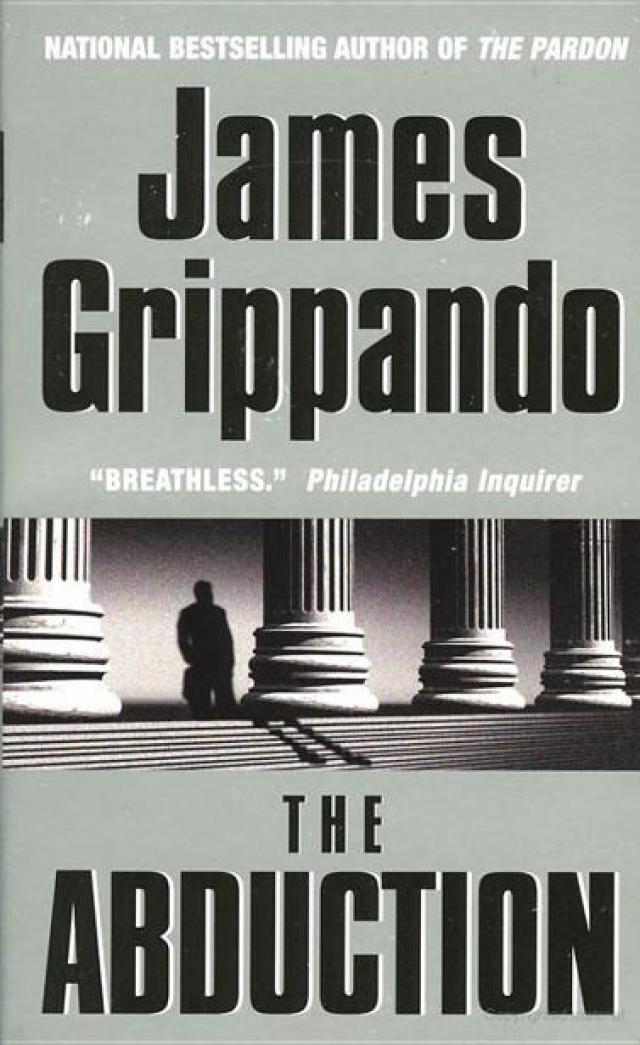
The abduction, p.2
The Abduction, page 2


Allison switched off the bedroom lamp and walked sleepily down the hall. The cordless receiver in her pocket continued to emit little Emily’s normal nighttime sounds. A little baby noise was nothing to worry about. It was sustained silence that sent new mothers rushing to the crib to make sure all was well.
She smiled with anticipation as she neared the darkened nursery. She peeked through the doorway, then caught her breath. The baby was on her stomach. Allison never laid her on her stomach. The recommended SIDS position was on the side or back. She hurried to the crib and leaned over the rail.
Her scream pierced the darkness.
A doll lay in Emily’s place. Allison frantically pitched it aside and unfurled the blanket, knocking something to the floor. She flipped on the light switch. It was a hand-held Dictaphone emitting the sounds of her baby.
She screamed louder and rushed to the window. The latch was unlocked. A round hole had been drilled through the glass—just big enough to allow a thin metal rod or a pointed stick to pass through and unlock the latch. Her horrified expression was reflected in the window.
“Emily!”
She raced from the nursery and down the hall, grabbing the portable phone. Without breaking stride she checked the kitchen, the bathroom, every room in the house, shouting her child’s name. She was still running as she dialed 911, then stopped at the kitchen counter.
“Somebody’s got my baby!” she told the operator.
“Just calm down, ma’am.”
“Calm down! My four-month-old daughter’s been snatched from her crib. Send a squad car right now. Nine-oh-one Royal Oak Court.”
“Are they still there?”
“No. I don’t know. I don’t see anyone. They took my baby!”
“I’ll dispatch a unit right now, ma’am. They’re on their way. Just stay inside.”
A car, thought Allison. They must have a car! She flew through the living room and out the front door.
“Emily!”
She checked the porch, the shrubs and the rose bed by the walkway. Thorny branches tore into her skin and shredded her robe. She sprinted to the street and checked for cars or pedestrians—anyone at all. Her chest heaved with a shortness of breath. A pain ripped her belly from the inside out, and a flood of tears warmed her cheeks. She glanced left, then right, toward both ends of the street. There was no sign of anyone.
“Ma’am,” said the 911 operator, “are you still there?”
Allison couldn’t answer. She fell to her knees at the end of the sidewalk, her shoulders heaving with great racking sobs. A crackling noise was coming from her pocket. Her hand shook as she reached inside her robe and pulled out the receiver.
A chill ran through her as she realized what it was. The baby monitor was still transmitting from the nursery. The Dictaphone was still on.
The recorded sounds of Emily were playing in her hand.
Part 1
October 2000
1
Allison could feel her heart pounding. Her lungs burned as she fought for air. The treadmill’s digital display told her she was passing the two-mile mark. She punched the speed button to slow the pace and catch her breath. Perspiration soaked her, pasting the nylon sweat pants and extra-large T-shirt to her trim forty-eight-year-old body. It was her favorite T-shirt, white with bright red and blue lettering.
It read, “Leahy for President—A New Millennium.”
After nearly four years as the United States attorney general, Allison was just fifteen days away from the historic date on which voters would decide whether the nation’s “top cop” would become its first woman president. The race was wide-open and without an incumbent, as her boss—Democratic President Charlie Sires—was at the end of his second and final four-year term. Allison was his second-term attorney general, part of the president’s shake-up of his own cabinet upon reelection in 1996. Eight months ago, Allison didn’t consider herself a serious presidential contender. But when the Republicans nominated Lincoln Howe, the nation’s most beloved black man, the polls made it clear that the only Democrat who could beat him was a charismatic white woman.
Ironically, thirty minutes of walking in place on the treadmill had actually put Allison thirty miles closer to her afternoon rally in Philadelphia. She was on the last leg of a two-day bus tour through Pennsylvania, a critical swing state with twenty-four electoral college votes. Her campaign bus had logged nearly ten thousand miles in the past six months. Now more than ever, it was showing the signs of a well-oiled political machine in the homestretch—which to the average organized human being looked remarkably like utter chaos. A dozen noisy staffers were busy at the fax machines and computer terminals. A scattered collection of bulging archive boxes blocked the bathroom entrance, as if strategically placed to trip up anyone desperate enough to use the on-board facilities. Thousands of campaign buttons, leaflets, and bumper stickers cluttered the rear storage area. Four small color television sets were suspended from the ceiling, each blaring a different broadcast for simultaneous multi-network viewing. One set was electronically “padlocked,” permanently tuned to CNN’s virtually continuous coverage of Campaign 2000.
“That’s about enough self-flagellation for one day,” said Allison, groaning. She hit the stop button and stepped down from the treadmill.
Walking had been her chief source of exercise since the beginning of the New Hampshire Democratic primary in January. Whatever the town, she’d walk up and down Main Street, and people would join in and walk along with her. It provided great photo ops early in the primary, but after she won the Democratic nomination in August the crowds grew so large that she needed a parade permit. In the last week, time constraints and cold Appalachian rains had forced her to confine her walking to the treadmill during bus-ride debriefings from her campaign strategist, David Wilcox.
“What else, David?” she said as she leaned over and stretched her calf muscles.
Wilcox was a tall and wiry fifty-one-year-old graduate of the Woodrow Wilson School of Public Affairs at Princeton. He had shone as a young White House Fellow under President Carter, but a bitter loss in a personal bid for Congress in 1982 convinced him he’d rather not be a candidate. In high school he was voted most likely to become a game show host, and he’d finally found his niche as a political strategist. Over seventeen years his list of satisfied clients included nine United States senators, seven congressmen, and five governors, and he’d masterminded Allison’s upset victory over a sitting vice president in the Democratic primaries. In the last few weeks, however, he’d grown concerned about the growing influence of outside consultants, so he’d decided to glue himself to Allison’s side for the bus tour. At the moment, he was reviewing his checklist, seemingly oblivious to Allison’s sweaty exercise attire or to the blurred Pennsylvania countryside in the window behind her.
“The drug problem has reared its ugly head.” He had an ominous voice for a thin man, part of an overall seriousness that was more suitable for a White House state dinner than the frenetic campaign trail. “I think our distinguished opposition is turning desperate. They’re finally trying to make something out of your treatment for depression, back in ninety-two.”
“That was eight years ago. Politically speaking, it’s ancient history.”
“They’re saying you took Prozac.”
“I told you I was in counseling.”
“Are you splitting hairs on me?”
She flashed a sobering look. “My four-month-old daughter was taken right out of her crib, right from my own house. Yes, I was depressed. I was in group counseling. Eight of us. Parents who’d lost children. No, I didn’t take Prozac. But if you ask the other members of my support group, they’ll probably say I needed it. So don’t expect me to apologize for having reached out for a little support. And don’t sit there and act like this is news to you, either. I laid out all the skeletons the day I hired you.”
He grimaced, thinking it through. “I just wish we could put the whole episode in more of a context.”
Her look became a glare. “I won’t make Emily’s abduction part of this campaign, if that’s what you mean.”
“Allison, we can’t just say you were depressed and leave it at that. We need a positive spin.”
“Okay,” she said sarcastically, “how about this? Depression is a good thing. It’s what stimulates ideas. Every invention, every accomplishment stems from depression, not euphoria. Nobody ever said, ‘Life’s swell, let’s invent fire.’ It was the malcontent in the back of the cave who finally stood up and said, ‘Hey, I’m freezing my ass off in here!’ You want something to get done in Washington? By all means, elect the clinically depressed.”
He was deadpan. “Please don’t repeat that publicly. Or I’ll be very depressed.”
“Good,” she said with a smirk. “We could use some new ideas around here.” She took a deep breath. Wilcox didn’t look amused, but she knew he wouldn’t push it. Throughout the campaign she’d nipped every mention of the abduction with some brusque remark—sometimes pointed, sometimes flip—which immediately moved the agenda to less personal territory. “Anything else?” she asked.
“I hate to keep harping on this, but General Howe’s wife has been stumping hard for him lately. Our polls show she’s making inroads. A lot of voters—male and female, Democrat and Republican—are nostalgic about having a First Lady in the White House. We can’t counteract those warm fuzzies unless we define the role of a First Husband. The election is two weeks away, and forty percent of the public still has no opinion on Peter Tunnello.”
“Sorry, but the CEO of a publicly traded company can’t duck out of a stockholders meeting for a rubber chicken luncheon at the VFW.”
“That’s kind of my point. I think he would, if you asked him.”
“How do you know I haven’t asked?”
“Your attitude, that’s how. It started right after the convention, when Howe’s camp floated those ugly rumors that you married Peter just to bankroll your political ambition. Ever since then, you’ve been on a one-woman crusade to shake more hands and raise more money than anybody in history. Don’t get me wrong. The money’s great. But the more you adopt this go-it-alone persona, the more you fuel suspicions about your marriage.”
“This is not a buy-one, get-two presidency. My marriage is my business.”
“It would still be nice if the American people could see you two together sometimes, especially as we get closer to election day. Just a few strategic public displays of affection, like Nancy and Ron Reagan.”
“News flash!” shouted one of her aides. He pitched his cellular phone onto the seat beside him and spun around, facing Allison. “Howe’s about to launch something in New Jersey. Check out CNN.”
Allison moved closer to the main set. Her aides watched intently, straining to hear over the rumble of the bus’s diesel engine. Wilcox raised the volume. General Howe was near the end of a short speech before the National Convention of the American Legion in Atlantic City.
On screen, a handsome African-American man stood tall behind a chest-high podium, facing an enthusiastic crowd. The American flag hung limply on the yellow wall of painted cinder block. A blue and white banner hung from the rafters, proclaiming the campaign slogan, “Lincoln Howe—Lincoln Now!” The house was packed, and the most enthusiastic supporters were strategically standing in the aisles to make the turnout seem even better than it was.
General Howe was an imposing figure, even when wearing a simple business suit and VFW cap. Army regulations prohibited him from wearing his uniform after his retirement, but the larger-than-life photograph in the background reminded voters of his distinguished forty-year career. It was a photo fit for history books: the triumphant general inspecting his troops, dressed in riding boots, bloused green trousers, and short-waisted jacket. His chest was decorated with an array of medals, including a Medal of Honor. Each shoulder bore four silver stars, indicating his rank. To his right was a photograph of Howe in another uniform, old number twenty-two, carrying a football for Army. He was a Heisman Trophy—winning running back in 1961. The best player in college football had given up a promising career as professional athlete to serve his country.
“The thing I remember most about my combat experience in Vietnam,” he said in a commanding voice, “is the eerie feeling of fighting an invisible enemy. As we marched through the thick tropical jungle of the A Shau Valley, gunfire would quickly erupt, men would fall—and then all was quiet. The enemy was nowhere to be seen.
“This presidential campaign has been strangely reminiscent of that experience. Marching along the campaign trail, I get machine-gunned out of nowhere with a barrage of clever sound bites created by my Democratic opponent’s high-paid advisers. When it comes time to stand and fight, however, Ms. Leahy is nowhere to be found.”
A combination of light laughter and applause rolled across the auditorium.
General Howe flashed a serious expression straight into the camera, his voice growing louder. “The American people deserve better than that. So today I issue this challenge. Come out from your hiding place in the Washington jungle, Ms. Leahy. Debate me on the issues, one on one!”
The crowd cheered, but the general kept talking.
“I’m not talking about another round of sickeningly sweet question-and-answer sessions, like those so-called debates we held earlier this month. No more use of a single moderator who would sooner pick up a rattlesnake than ask a potentially embarrassing question. Forget the town-hall format, where the tough questions may or may not be asked. Let’s have a panel of four independent experts. You pick two, I pick two. Let them ask the questions the American people are asking. And let us answer them!”
The crowd erupted into louder cheers. Balloons fell from the ceiling. Supporters clapped their hands and waved their red and blue cardboard signs, chanting, “We want Lincoln! We want Lincoln!”
The television coverage quickly shifted back to a stiff and serious anchorman fingering the small audio piece into his ear. “Joining me now from Washington is CNN political analyst Nick Beaugard. Nick, why does this challenge come now?”
The screen flashed a head-and-shoulders shot of a silver-haired reporter before a mock-up of the White House. “If you believe General Howe’s campaign staff, they’ve been trying to persuade the nonpartisan Commission on Presidential Debates to approve another debate ever since the first round failed to produce a clear winner. But the real urgency for the Howe campaign stems from the painful reality of recent trends in public opinion polls. For the eight weeks following the August conventions, General Howe ran neck and neck with Attorney General Leahy. That’s not surprising, since they’re both moderates and, apart from the question of military spending, their stand on the issues is quite similar. Conservative Republicans have recently dubbed the general ‘Lincoln Center,’ an unflattering play on the native New Yorker’s middle-of-the-road politics.
“In the past nine days we’ve seen a dramatic shift. The major polls show that an increasing number of previously undecided voters are now leaning toward Leahy. Today’s CNN/USA Today/Gallup poll shows Leahy up by a whopping six points. A clear victory over Ms. Leahy in a no-holds-barred debate may be General Howe’s only hope. Otherwise, when faced with the choice between a black man and a white woman on November seventh, the American people may well elect their first woman president.”
The anchorman furrowed his brow inquisitively. “Has there been any response yet from the Leahy campaign?”
“None yet,” said the correspondent. “Some say the attorney general is content to sit on her lead. But there are also reports of concern within the Leahy camp as to how their candidate would fare in a debate against General Howe in a format where, essentially, anything goes.”
“All right, thank you. In other news today—”
Allison hit the mute button on her remote control. Her expression had fallen. “I’m already being cast as the chicken. We can’t go another minute with no response to a challenge like that.”
“Let’s not be knee-jerk,” said Wilcox. “We need to check things out, make sure it’s the right thing to do.”
“Of course it’s the right thing. He’s proposing a format that actually forces the candidates to think on their feet. If the previous debates showed anything about his speaking abilities, General Howe has more of the old college football jock in him than the commanding general.”
“Careful, Allison. You’re dealing with a military mentality. Howe wouldn’t invite you to debate unless he were thinking ambush. Before we agree to anything, we need to have a very clear understanding of what he’s proposing.”
“Work out the details later,” she said with a wave of her hand. “Set up a press conference before the rally in Philly. I want to make sure we air my response in time for the six o’clock news.” Her mouth curled into a confident, almost imperceptible smile. “I’d love a good old-fashioned debate with Lincoln Howe. Anytime. Anyplace. Of course I’m accepting the challenge.”
2
All four thousand red velvet seats at Atlanta’s Fox Theatre were filled with partisan politicos. Signs and hats were prohibited inside the auditorium, but the political buttons fastened to lapels indicated an audience fairly evenly divided between Leahy and Howe supporters.
Immediately following Allison’s Monday-night acceptance of General Howe’s challenge, the Commission on Presidential Debates scheduled the debate in Atlanta on Thursday, twelve days before the election. Allison had spent the balance of Wednesday night and all of Thursday studying up on the issues, meeting with advisers, and gathering last-minute tips from her consultants.
Allison stood behind a mahogany podium to the audience’s left. She wore a bright blue St. John suit, and her hair was up in a stylish twist that completed the serious but feminine look that had graced the cover of thousands of magazines. Lincoln Howe was to the right, dressed in a well-tailored suit with a light blue shirt, red tie, and gold cuff links. He’d campaigned in civilian clothes all along, of course, but he had somehow always looked like a soldier caught out of uniform. Tonight, he looked decidedly presidential.


