

The sanctuary, p.1
The Sanctuary, page 1


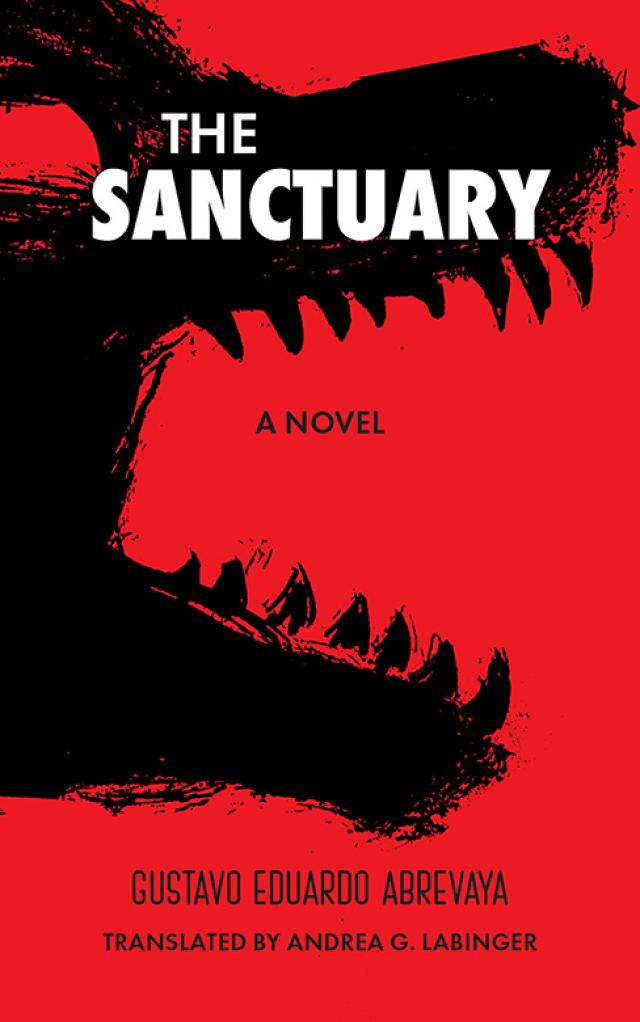
THE SANCTUARY
THE
SANCTUARY
GUSTAVO EDUARDO ABREVAYA
Translated by Andrea G. Labinger
Copyright © 2023, Gustavo Eduardo Abrevaya
English Translation Copyright © 2023, Andrea G. Labinger
The Sanctuary was originally published in Spanish as El criadero in 2003 by Cámara Argentina del Libro
First English Language Edition
Trade Paperback Original
Cover & Interior design by Evan Johnston
No part of this book may be excerpted or reprinted without the express written consent of the Publisher.
Contact: Permissions Dept., Schaffner Press, PO Box 41567, Tucson, AZ 85717
Library of Congress Control Number: 2023937494
ISBN: 978-1-63964-022-5 (Paperback)
ISBN: 978-1-63964-023-2 (EPUB)
ISBN: 978-1-63964-043-0 (EPDF)
The characters and events described in this book are entirely fictitious. Any resemblances to persons living or dead are purely coincidental.
Printed in the United States
To my wife, always
Lacrimosa dies illa,
qua resurget ex favila
iudicandus homo reus.
REQUIEM MASS
CONTENTS
I. Introitus
II. Kyrie
Sequentia
III. Dies Irae
IV. Tuba Mirum
V. Rex Tremendae
VI. Recordare
VII. Confutatis
VIII. Lacrimosa
Offertorium
IX. Domine Jesu
X. Hostias
XI. Sanctus
XII. Benedictus
XIII. Agnus Dei
XIV. Lux Aeterna
Author Bio
Translator Bio
{I}
INTROITUS
“THE CAMERA PANS slowly, from right to left and back again,” Álvaro explained, standing in the middle of the road with the camera mounted on his shoulder, filming takes. “The entire, empty expanse of road stretches out before you, desert on both sides, and a brutal sun that falls like lead, accompanied by the lighting, which is sheer and bright, forming a stark contrast with the interior shots, à la John Ford, Stagecoach, let’s say, or like some Peckinpah productions, essentially The Wild Bunch, you know what I mean? That familiar steam rises from the asphalt and blurs the images, as you know, and gives them that shimmer as if they were moving, it’s a pretty classic optical effect, and on the horizon a sort of pond seems to form, as unreal as a mirage. Do you see it, Alicia? As a title, maybe Mirage? Or Steam and Sand? It’s nearly midday, and Álvaro and Alicia—because that’s what we’re going to call them, like us—it’s our adventure, remember; you could even be the lead and play the role of Alicia, and of course I’d be Álvaro, it’s my way of immortalizing us—are standing in the middle of nothingness, a place not quite as arid as the Sahara in Lawrence of Arabia, to give you a sense of it, waiting for a car to come along and rescue them. That’s where the idea of emptiness comes into play: devoid of people, of help, of plans. We’re talking about the precariousness of life; that has to be implicit, but also made very clear. When emptiness is the only presence, it produces vertigo—how do you like that? Can you see it?” Álvaro asked Alicia, fascinated by the contrast of some rustic herbs growing alongside the road. “The Presence of Emptiness, it’s very paradoxical and full of fleeting beauty, a fatal oxymoron, opposites playing with the destiny of a man who doesn’t accept the rules. The title sounds like something by Bergman. Now, the camera makes a one hundred and eighty-degree turn and you can see the car, a red Chevy coupe, Seventy-six model, a beauty, resting on the sand, two wheels on the road, the coupe tragically listing to the right, its hood raised and the motor steaming. This needs to be very painful for the viewer; it’s an esthetic pain, even more painful considering the hero’s indifference toward his prized vehicle. He doesn’t love it, but he needs it—pay attention here—it’s a pact you see every day. Oh yeah, I really like this. Ry Cooder plays in the background, yeah, like in Paris, Texas—I love this. Even though it’s more like David Lynch, who also has his empty roads, let me remind you. Now our hero, Álvaro, walks along, back and forth, heavy footsteps, revealing his somber mood; the guy’s really annoyed, but he’s got it all together, evaluating the situation: how much time they have left, possible outcomes, solutions, especially solutions, and he identifies them quickly, because he knows it’s a matter of mental agility. This is what he does while Alicia—what could that Jean Harlow-style bleached blonde possibly be doing? If she ever stopped dyeing her hair, she’d look just like you, darling, a curly-haired brunette, my type…” Álvaro went on, smacking his lips and gazing into Alicia’s eyes, as black as her curls: “But meantime, come on and show me how clever you are and how self-critical: What could she be doing, with that platinum blonde hair of hers? Of course: sunbathing. She’s leaning against the car, with her standard-issue Marilyn sunglasses, you know the ones I mean: they’re like a black mask with silver decorations at the tips, quite classic. She’s got a kerchief wrapped around her head, super-tight, red Capri pants, an embroidered white blouse tied at the hip so you can see her navel—a very important detail—and on her feet, little black flats, of course. The chick’s an icon. Álvaro is the perfect complement, the yang to her yin, hard and distant, badly shaved, a tough-guy profile with a cigarette butt dangling from his mouth. His mirrored Ray-Bans reflect the deadly horizon as he stands there with the slight trace of a smile. Naturally, he wears his inevitable, scruffy blue jeans, black leather jacket, and old snakeskin boots. The dude’s another icon. His boots could have metal taps on the toes and heels, what do you think? That’s it: a close-up of Álvaro’s boots, walking away from Alicia; you hear the noise of the taps as the heels hit the asphalt… how do you like that? Heel and toe, heel and toe, a heavy effect, dense, like the steamy horizon. This is beautiful: metallic vipers slithering along under the desert sun, and in the background a slide guitar: slow blues. Here’s another interesting title: Iron Snakes. Really powerful. It combines the idea of the reptile with the speed and toughness of the turn of the century; it alludes to industrialized and cybernetic society, the iron found in nature. But let’s talk about the nature of the reptile: swift, aggressive and creeping. A viper can’t survive by instinct alone; it needs armor. I like it. The only problem is that it might sound like science fiction or some cyberpunk bullshit, like all that modern crap you see nowadays. Well, we can leave it on stand-by for now; I’ll decide later. Alicia casts a nonchalant glance to see what her he-man will do now that they’re without a vehicle. The cops are on their tail and the coupe had been their freedom, with a six-cylinder boosted engine and a Mad Max style, to boot; I’m crazy about that, a dark effect that boosts its power all at once, thirty or forty percent. Whipping along at ninety-five per hour, every time Álvaro pulls on that magical gear shift, the coupe jumps to one twenty-five or one thirty-five. At that speed, the cops will be left behind in a flash, standing like posts in the middle of the road, a miracle worked by his friend Firulo, a wild man who lives for guns. With that beast roaring down the highway, they never would have caught them, but here, now, in this desert and this heat… ”
“It would’ve been a good idea to check the water at the last gas station,” Alicia interrupted absently, gazing at the horizon. She lit a cigarette with an old gray Zippo that she pulled from her purse, leaning against the trunk of the car, from where she observed Álvaro.
“It would’ve. That Zippo is going to have a place in my road movie, I’m telling you right now,” Álvaro warned her, sticking one finger in the field of the lens. He was filming the scene with his camera. And his camera was looking at Alicia; it looked at her as she took out the cigarette, as she flicked the Zippo. As the tip lit up, he zoomed in on an extreme close-up of her overly plump, red lips. When she turned her back, annoyed, he kept filming her and said with a relentless expression:
“Alicia avoids the subjective camera of Álvaro’s fierce gaze. She smokes nervously, remembering the switchblade in the man’s jeans, but above all, she thinks about the thirty-eight nesting in his jacket, the thirteen notches engraved on its mother-of-pearl handle. That weapon has been with him for as long as they’ve been together, maybe even longer. And it has a sweet, obedient trigger. On the other hand, the edge of the switchblade nauseates her; it’s quite capable of cutting through a high-voltage cable. Yeah, Alicia doesn’t screw around with Álvaro, who’s now resting against the nose of the coupe. He’s deep in thought, as silent as a cobra, or anyway, a scorpion. A scorpion’s better. Ry Cooder is playing when Álvaro turns to gaze toward the south. Extreme close-up of his intense black eyes, fixed on the road. Those eyes reflect what they see: nothing. He turns his head gently and seems to concentrate. Alicia is well acquainted with his keen hearing. Yes, something’s coming; it’s like a buzzing sound, moving along, something vague that can’t yet be differentiated from the sounds of insects, the dehydrated breeze. It can only be a decent-sized engine that’s still out of sight. It’s not a car, not a truck, either, because the cargo bed would have already appeared like a small, square bulk slicing the horizon. Enormous trucks, trailers, cross that desert, transporting… something, I don’t know, alfalfa or bootleg whiskey, it doesn’t matter much right now. And it’s not that Álvaro knows the area—as he explained to her with a raised index finger that sketched something in the air and then suddenly pointed at the woman’s chest—it’s simp le perception. There aren’t any fields there for trucks to pass by with sheep, and no family four-by-fours looking for a place to camp and hang out their snot-nosed shitty kids’ dirty diapers. The wind comes from the south, carrying the sound of the machine that’s already outlined on the horizon; you can see it, its silhouette is like a burnt, smoking match that comes along down the highway, disappears from view into a hollow and reappears a moment later. A black match with silvery sparks that comes thundering through the air a mile away and approaches at the same speed can be only one thing: a Harley is coming; no other machine can make its presence known like that.”
“You’re wrong,” said Alicia, who had already stubbed out her cigarette. The filter tip peeked out halfway from the sand. “We don’t need your road movie. Just a phone or the decision to walk. We’ll find something. I’m not about to spend the rest of my life here while you present your film at the Sundance Festival, darling. Get down before the eagles nab you.”
“I don’t know if I should take that as a compliment, sweetheart. I fly high, and this desert inflames my muses. Stop kidding around—a nice truck with a gaucho inside will come along soon and give us a lift—you, me, and the coupe. It looks like the end of the world, but it’s just a road where twenty percent of cars have some kind of breakdown. Statistics, my love, those things that bore you so much. It’s true there are no gas stations, nobody has come by in the last fifteen minutes, also true, but people live here, even though you don’t see them. And sooner or later they’ll come along in their nice little trucks to distribute their country crap: fruit, pigs, and beans. End of story. And now, woman, you’re about to surrender to male dominance,” Álvaro announced, as he unbuttoned his jeans and walked over to her, assuming his famous monstrous-perverter-of-school-girls expression.
“Elizabetha, I give you eternal life,” Álvaro recited, displaying his incisors. And he was Gary Oldman, no doubt about it.
“Come out of there, idiot.” Alicia laughed. “They’ll see us here.” She was still laughing, with her virginal face. And, of course, she was Wynona Ryder.
“So much the better, because then they’ll come over and rescue us, you rebel female. I have to teach you your lesson for the day,” Álvaro said, drooling, making obscene noises, and licking his lips. “And if someone’s watching us, my exquisite Transylvanian bride, let them enjoy it: let’s give ’em a good show. I’ve crossed oceans of time to find you, never forget that, Elizabetha, oh, my beloved, you remind me of glorious battles against the Turkish invaders; my sword rises in your honor.”
High-angle view that zeroes in on Alicia’s feline features, detects the tip of her tongue peeking out between her bloated, flame-colored lips, her gesture of submission and desire before the majestic emergence of her man. She half-closes her eyes and falls backward into the coupe’s rear seat. Álvaro crawls between her legs, now bare, his pants halfway down. Giggles burst out in the clear, dry air. Fifteen minutes later, an intemperate ahem interrupts their demonstration of affection.
“Ahem.” It sounded like an explosion followed by a brief throat clearing.
The lovers were startled. Álvaro leapt up; his erection, which wouldn’t last more than another few seconds, was still viable. He pulled up his jeans—clumsily—while he studied the intruder’s gaze at Alicia’s nakedness. She covered her hips as best she could with Álvaro’s shirt; her pants, as red as her overflowing lips, rested in the middle of the asphalt.
“And where’d you come from?” Álvaro asked in a smothered voice, noting the man’s bicycle beneath his crotch.
“Sorry to interrupt, caballero. It’s just that I thought you needed help, and… oh, excuse me, I meant with the car, no offense.”
At that point, through maneuvers of excessive modesty, Álvaro’s shirt produced a strange torsion on Alicia’s hip, and a dark patch shone between her legs, as the gentleman now stared intently at the sky without letting go of his bicycle and sneaking furtive glances at the inside of the car.
Alicia adjusted her shirt as well as she could and got up onto her knees on the seat, her hands resting on Álvaro’s shoulders, as she listened to the conversation with her best expression of composure.
“Have you been here a long time?” she asked, trying to avoid a new malfunction of her precarious wardrobe.
“I just got here. I was on my way home, and I saw the car with the hood raised, so then I thought you might have a problem, and I came over to see. Do you want me to call somebody?”
“Do you know a mechanic?”
“Not a real mechanic, no, but El Tolo can solve any problem. He fixes engines on boats.”
“On boats,” Álvaro confirmed, or asked.
“He’s a mechanic and a sailor; his title is Naval Mechanic, that’s how El Tolo makes his living. If you’re in the middle of the ocean and your charter breaks down, you ain’t gonna call the Auto Club, right?” The man laughed.
“And does El Tolo live far from here?”
“You gotta find him, but don’t worry, I’m on my way to the pharmacist’s house right now; he’s got a phone, and we’ll find him. He’ll leave a message for El Tolo, and if nothing’s come up at the last minute, he’ll see you tomorrow without fail. How long will it take him to come? By this time of day tomorrow, give or take, you’ll find him stretched out under your coupe. If El Tolo can’t fix something, it can’t be fixed, believe me, amigo. Nice car. You don’t see beauties like that anymore.”
“Not till tomorrow,” Álvaro moaned. “What’ll we do?”
“And where will we sleep?” Alicia asked.
“At the hotel,” the man replied.
“What hotel?” asked Álvaro, convinced that the world was empty for miles around.
“The Seagull, it’s about two miles from here; just go straight, there’s no way to get it wrong. Just a matter of starting to walk,” he explained buoyantly.
“The Seagull, sailors… Two miles?”
“You got it.”
“Along the main road?”
“Yes, señor.”
“In the desert.”
“We’re in the desert, my friend. But make no mistake, there are sailors everywhere. Just the same, so you won’t get lost, I’ll tell you that the hotel is at the very end of town. It has red lights at the front door, you get what I mean; it’s a by-the-hour hotel, excuse me, señora. All the kids go there. There’s no way to get lost; even the village idiot knows where it is.”
“Village? I didn’t know there was a village around here. What’s the town called, Don… ?”
“Tanco, a pleasure. It’s called Los Huemules, can you imagine? The town, I mean. Los Huemules—what a name, right? They say there were lots of ’em, seems like there was a whole herd of ’em, and they all ran around here. But I never saw one, never even seen the bones of a dead huemul, so I don’t talk about that. They might’ve gone south, who knows, all those stories about migrations. Las Casas—that’s what we call the town, you know, it’s less formal, like it was before, when our parents founded it, and the truth is that it hasn’t grown much, señor…”
“Álvaro is my name, and she’s…”
“Alicia, I see,” interrupted the man called Tanco.
“How’d you know?”
“Isn’t that what it says on her T-shirt?”
Alicia didn’t lower her eyes, but she knew that the man had gotten a good look at her skimpy, sweaty T-shirt. Her breasts were clearly visible beneath her printed name. And while modesty assailed her cheeks, she remembered almost incidentally that she was still squeezing Álvaro’s shoulders, and that he hadn’t abandoned his position between her and the man on the bike. The old guy’s got quick eyes, her thoughts resounded through her brain like a horn. Not to mention, he had enjoyed a free show for who knows how long, fucking old fart, the horn concluded, leaving the matter closed.
“Tanco, Álvaro and Alicia: now we’ve been introduced. Thanks for your help, señor Tanco.”
“That’s how we are in Las Casas, señora.” The man touched the edge of his beret and took off pedaling toward the ravine. Álvaro stood there watching him for a moment, listening to Alicia protest and get dressed at the same time. He was thinking about his Harley approaching from the same place, when Alicia snorted directly into his ear.


