

Doris, p.1
Doris, page 1


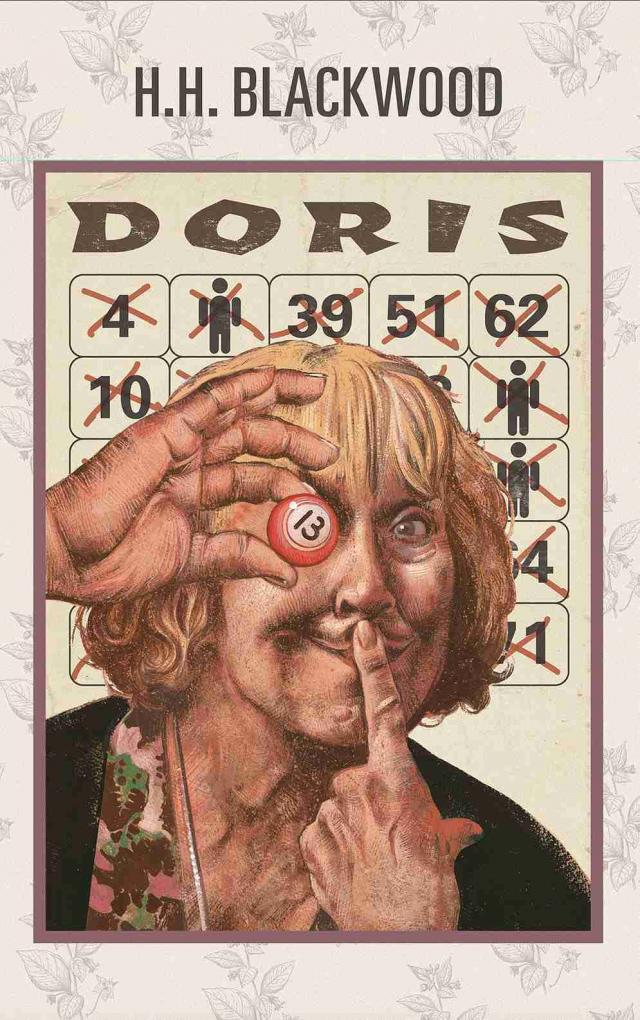
H.H. Blackwood
Doris
First published by Darkest Day Publishing 2025
Copyright © 2025 by H.H. Blackwood
All rights reserved. No part of this publication may be reproduced, stored or transmitted in any form or by any means, electronic, mechanical, photocopying, recording, scanning, or otherwise without written permission from the publisher. It is illegal to copy this book, post it to a website, or distribute it by any other means without permission.
This novel is entirely a work of fiction. The names, characters and incidents portrayed in it are the work of the author's imagination. Any resemblance to actual persons, living or dead, events or localities is entirely coincidental.
First edition
Cover art by Graham Humphreys
This book was professionally typeset on Reedsy
Find out more at reedsy.com
For my darling wife and daughter
My brightest flames
Contents
Prologue
1. Chapter One
2. Chapter Two
3. Chapter Three
4. Chapter Four
5. Chapter Five
6. Chapter Six
7. Chapter Seven
8. Chapter Eight
9. Chapter Nine
10. Chapter Ten
11. Chapter Eleven
12. Chapter Twelve
13. Chapter Thirteen
14. Chapter Fourteen
15. Chapter Fifteen
16. Chapter Sixteen
17. Chapter Seventeen
18. Chapter Eighteen
19. Chapter Nineteen
20. Chapter Twenty
21. Chapter Twenty One
22. Chapter Twenty Two
23. Chapter Twenty Three
24. Chapter Twenty Four
25. Chapter Twenty Five
26. Chapter Twenty Six
27. Chapter Twenty Seven
28. Chapter Twenty Eight
29. Chapter Twenty Nine
30. Chapter Thirty
31. Chapter Thirty One
32. Chapter Thirty Two
33. Chapter Thirty Three
34. Chapter Thirty Four
About the Author
Prologue
The first sound was the scrape of a knife.
A dull rasp, metal against wood, slow and deliberate.
It was the kind of sound that could strip warmth from a room. Even the air seemed to draw back, holding its breath.
The man in the mask sat alone at a narrow table pressed against the far wall, his posture rigid, his movements methodical. Before him lay a loaf of bread, its crust hardened with age, cracked like old skin. Each slice he carved was thin, precise, the act so measured it might have been sacred. The knife he used was old, its handle smoothed by years of use, its blade nicked, dulled, and flecked with rust, but he held it with reverence, the way a priest might handle a relic.
The basement was a room that time had forgotten. Concrete walls glistened with condensation; thin rivulets ran down them, feeding the dark stain that spread near the floor. A single lightbulb dangled from a frayed cord above the table, swaying gently whenever he moved, its yellow glow pulsing with the current’s unsteady rhythm. The smell was damp and sour, a mixture of mould, rot, and something faintly metallic that clung to the back of the throat. Somewhere beyond the reach of the light, water dripped into a tin bucket, the sound irregular, patient, like the ticking of a clock that refused to stop.
In the far corner, a woman sat bound to a wooden chair. The varnish had long peeled away, leaving splinters that dug into her skin. The rope around her wrists and ankles had eaten into the flesh, leaving dark, swollen grooves. A strip of filthy cloth gagged her mouth, so stiff it rasped against her teeth whenever she tried to breathe.
She had stopped crying hours ago. There was no one left to hear her. In this place, noise didn’t travel; it was absorbed by the concrete, swallowed whole.
He worked in silence, every motion deliberate. When the bread was cut, he opened a small refrigerator in the corner. Its light burst out, harsh and sterile. The bulb inside buzzed faintly, its hum the only sign of life in the room. Inside, jars lined the shelves, old jam jars, pickle jars, glass bottles, each containing something that did not belong in a kitchen. Some were filled with liquid that shimmered faintly under the light. Others held shapes impossible to identify at a glance.
He reached past them, taking out butter, a block of cheese, and something wrapped in butcher’s paper. His mask caught the light, not the crude simplicity of something plastic or theatrical, but a disturbingly human likeness. It resembled a person’s face, sculpted with such precision that for a moment it seemed alive. The skin tone was an unnatural pallor, the kind that came not from paint but from something aged and lifeless, stretched thin across an unfeeling mould. Faint cracks traced the cheeks and forehead, like the fractures of porcelain left too long in the cold.
The lips were faintly parted, carved into the suggestion of a calm expression, yet the stillness of it was wrong, too serene, too deliberate. Where eyes should have been, deep hollows stared outward, catching the light just enough to reflect a dull, ghostly sheen.
The man beneath the mask stood motionless, his posture rigid, his presence heavy with quiet violence. His clothes were ordinary, workmanlike, dark, practical, but on him they seemed uniform, like the costume of someone who no longer needed a name. The mask didn’t hide his identity so much as erase it. It was the mask of a man who had shed every trace of who he was—a man who wanted to become no one, and in doing so, had become something else entirely.
He moved back toward the table with slow, deliberate steps, the old floorboards creaking beneath his weight. The empty eye sockets glimmered for a heartbeat, giving the illusion of a man both there and not there. He placed the items he had taken from the fridge on the table, the sound was soft but final, a domestic gesture performed with unsettling precision. Around him, the air felt thick, charged with the quiet weight of something unspoken, as though the mask itself absorbed the humanity of the room and returned only silence.
He spread the butter carefully, the dull knife dragging across the bread with a quiet sigh. The cheese followed, cut into thin, even slices. Every movement was domestic, ordinary, ritual without emotion. When he finished, he pressed the slices together, squared the edges, and sat back.
Only then did he look toward her.
The woman’s eyes locked on the sandwich. Her body trembled with exhaustion, hunger twisting inside her like wire. Her stomach clenched at the smell of the butter, the faint tang of the cheese. She didn’t dare move, but her eyes pleaded for mercy.
He tilted his head slightly, observing. Then, with a gesture almost gentle, he lifted the plate and crossed the floor toward her.
His boots made soft sounds in the dust, slow, heavy, deliberate. When he stopped in front of her, the smell of him filled the air: damp fabric, old leather, the faint sting of disinfectant. He held her gaze for a moment that stretched far too long, the silence thick between them. Then, with slow precision, he crouched and set the plate down on the small table beside her chair. The plate rattled faintly against the surface, the sound sharp in the stillness.
Straightening again, he tilted his head slightly, a small, unnatural movement, birdlike, assessing. His gloved hand rose and gestured toward the plate: a slow, deliberate motion that might have been kindness in another setting. The mask’s expression never changed, frozen in its eerie neutrality, but there was something behind it, an expectation, a quiet demand, that made her throat tighten.
Her eyes widened, a sound escaping her throat, half sob, half plea. When he leaned forward to remove the gag, she recoiled at first, unsure whether this was mercy or another game. But when the cloth came away, cool air hit her lips and she gasped, tasting the salt and dust of the basement.
He stepped back and untied her wrists. The rope released with a sound like tearing paper, and blood surged back into her hands, hot and dizzying. She blinked through the blur of tears and stared at the sandwich.
Her hands shook as she reached for it. Her nails were split and ragged; her fingers trembled so violently that she could barely grasp the bread.
That was when the light flickered.
The bulb sputtered, dimmed, and for the briefest second the room fell into darkness. When it came back, he was different. Not in stance, not in expression, his mask never changed, but in the way the air shifted around him.
Something inside him had turned.
She froze, halfway between hunger and dread.
The silence stretched thin, the kind that hums in your ears when the world forgets how to make sound.
Then, without warning, he moved.
The suddenness of it broke the stillness like glass. His hand shot toward the counter, fingers closing firmly around the cleaver’s handle. The metallic scrape against wood was sharp, decisive, a sound that made the woman flinch before she even understood what was coming.
There was no pause, no hesitation. His arm rose and fell in a swift, controlled motion, precise, inevitable. A dull, heavy thud followed, echoing through the small room, and then a momentary silence.
The light swung wildly, the bulb’s trembling glow scattering shadows across the walls like black wings.
Her scream rose, then broke into silence, swallowed by the gag that returned before the sound could escape.
He stood still for a long time after, breathing through the mask. The faint, rhythmic rasp of air filling the quiet.
On the workbench lay an assortment of tools, ordinary things, dulled by age and rust. His gloved hand drifted over them until it found a screwdriver, its handle worn smooth from years of use. He lifted it, turning it once in the light, testing its weight. Then, almost as an afterthought, he also picked up a mallet that rested beside it.
The woman’s breath caught in her throat. A pulse of cold dread rippled through her, spreading from her chest to the very tips of her fingers. She didn’t move. She couldn’t. Her eyes followed the man as he turned back toward her, the tools hanging loosely at his sides. There was no hurry in his steps, no anger in his movements, only purpose, slow and steady.
She began to shake her head. He didn’t react. The mask, that terrible imitation of a human face, gave nothing away, no expression, no mercy.
Each step he took felt like a countdown. The dull thud of the mallet against his leg, the soft scrape of the screwdriver’s metal edge as it brushed his glove, it all blended with the faint hum of the light overhead, creating a rhythm that filled the air with unbearable tension.
The woman’s mind raced, grasping for reason, for escape, for anything, but there was nowhere to go. The realisation settled over her slowly, heavily, as sure as the shadows around her. This was how it would end.
Her eyes darted to the tools in his hands, then back to the mask. She wanted to scream, but the sound stayed trapped behind her teeth. The man stopped just short of her chair, silent and unblinking, and for one agonising moment, the air between them held nothing but inevitability.
He stood before her, the silence stretching thin, taut, ready to break. The woman’s trembling breaths came faster now, her eyes wide, pleading, searching for even a flicker of humanity behind that awful, lifeless mask. But there was none. Only the steady rhythm of his breathing, calm and measured.
Then, without a sound, he raised his arm.
For a heartbeat, the world seemed to hold still—the light above them flickered once, the faint hum of electricity filling the void. And then came a single, heavy thud that echoed through the basement, dull and final.
The sound reverberated off the concrete walls before fading into stillness. Nothing else moved. The man stood there a moment longer, his head tilted slightly as though considering his work, or perhaps listening for something only he could hear.
Then, with quiet composure, he lowered his arm. He set the tools aside, wiped his gloved hand once against his trouser leg, and turned away.
He moved back toward the small table, unhurried, methodical. The plate still sat where he’d left it, the sandwich untouched. He pulled out the chair, sat down, and without a second thought, lifted the sandwich to his mask.
As he ate, the light continued to sway above him, casting soft, rhythmic shadows across the basement walls, each swing revealing, then concealing, the motionless shape on the floor behind him. The only sound now was the quiet, deliberate crunch of bread between his teeth and the slow, steady ticking of time in a room that had already forgotten what had just occurred.
He finished the last bite with the same meticulous care he had shown in every movement before, setting the plate down with a soft clink. He leaned back in the chair, hands folded, posture relaxed, as if nothing unusual had happened at all. The room seemed to acknowledge him, the shadows pooling in the corners like dark water, the faint hum of the basement settling around him.
For a long moment, there was nothing but stillness. The air hung heavy, carrying the faint scent of metal and dust, the memory of the life that had just been taken lingering in every corner. The masked man’s head tilted slightly, scanning the room, the faint scratches on the mask catching the light, giving it an almost human vulnerability that was nothing more than a cruel illusion.
Then he rose, slow and deliberate, moving toward the staircase. Each step was measured, each echo absorbed by the oppressive quiet. The basement seemed to swallow him as he disappeared into the shadows above, leaving only the stillness behind, a room frozen in anticipation, as though it were holding its breath for what was yet to come.
The plate remained on the table, the sandwich gone, the cleaver left where it had fallen. The basement returned to its dark, silent vigil, a chamber of waiting and remembrance. Outside, the first hint of morning light brushed the edges of the windows, but it could not touch what had occurred within.
And somewhere above, the house carried on, oblivious to the horror beneath, as though the world itself were turning a page.
Patient. Deliberate. Unstoppable.
1
Chapter One
The morning light crept slowly through the blinds, thin, diluted, the colour of cold milk. It pooled across the hallway tiles and crawled up the walls, softening the edges of picture frames and coats hanging by the door. The house was quiet in that fragile way mornings sometimes are.
From the living room came the faint murmur of a newsreader’s voice, describing traffic and weekend weather in that polite, detached tone that filled the silence without really saying anything at all. The low hum of the television mixed with the gentle rhythm of a baby’s gurgles, a small, sweet sound that gave the air a sense of warmth and life.
Karen crouched by the buggy, fastening the last strap of the harness around her daughter’s chest. The baby blinked up at her, round eyes reflecting the light in the room.
“There we go,” Karen murmured, her voice soft with that quiet reverence new mothers have. “Nice and snug. Who’s mummy’s gorgeous little sausage?”
Emily kicked her feet in response, the faintest trace of a giggle bubbling from her mouth. Her cheeks were flushed pink from the warmth of the house, wisps of fine blond hair sticking to her forehead. Karen reached forward and brushed them aside, her fingers gentle, almost trembling.
“You’re getting so big,” she whispered, half to herself.
She tucked the knitted blanket more securely around her, a patchwork of pale yellows and greys, the kind of thing you only make by hand. Doris had given it to her, calling it ‘a little something to keep her cosy when the world gets cold.’ Karen had smiled at the time. The blanket had always felt… odd somehow. Not in its look, but in its weight, heavier than it seemed, as though the wool remembered more than it should.
Emily reached for the soft toy beside her, a floppy rabbit with one bent ear, threadbare from love.
“Yes, yes, your favourite bunny,” Karen said, her tone playful. “We wouldn’t dare leave without him, would we?”
The baby cooed, thumb finding her mouth again. Karen smiled, her exhaustion showing in the slight droop of her shoulders. She straightened slowly, her knees clicking softly. The hallway mirror caught her reflection, a young woman in her late twenties, dark circles under her eyes, a face that still held traces of the girl she used to be. Her lipstick was smudged, applied more from habit than vanity. The housecoat over her jeans bore the faint stains of milk, proof of another night spent half-asleep, half-awake.
She looked at herself for a moment longer than she meant to. The reflection looked back, tired but determined - a mother trying to keep herself stitched together one morning at a time.
Her mind wandered, as it often did these mornings, back to the months that had led here. Life had been simple once, or at least it had seemed that way. She and Emily’s father had shared quiet routines and small, happy moments: late-night feeds, walks in the park, laughter spilling over spilled milk and crumpled blankets. But those days had ended suddenly, almost without warning. Arguments that once seemed trivial had grown sharp, cracks widening into gaping divides. He had left recently, the memory still raw, leaving behind more than a home, leaving behind the fragile sense of security she had once taken for granted. Emily had barely felt the shift; the baby’s world was simpler, smaller, confined to the arms of her mother. But Karen felt it acutely: the emptiness beside her at night, the silence where companionship had been, the quiet fear that the world outside might not be as safe as she wanted it to be.


