

Those who wore it, p.1
Those Who Wore It, page 1


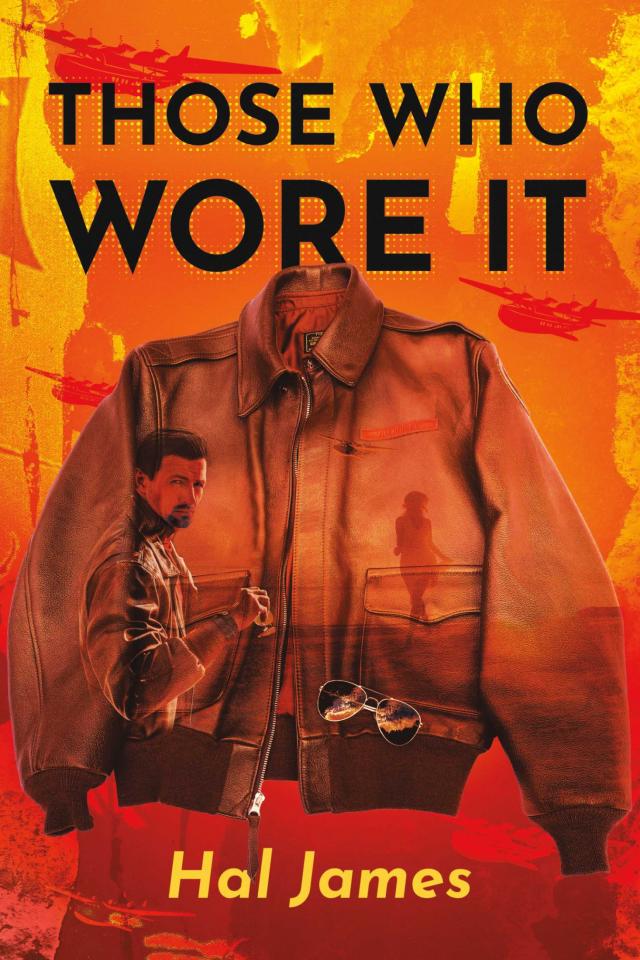
Those Who Wore It
Hal James
ISBN (Print Edition): 979-8-35091-458-0
ISBN (eBook Edition): 979-8-35091-459-7
© 2023. All rights reserved. No part of this publication may be reproduced, distributed, or transmitted in any form or by any means, including photocopying, recording, or other electronic or mechanical methods, without the prior written permission of the publisher, except in the case of brief quotations embodied in critical reviews and certain other noncommercial uses permitted by copyright law.
Table of Contents
Author’s Note
Prologue A Flight Jacket Comes to Life
Logbook Entry: 1 Flying Tigers
Logbook Entry: 2 A Remorseful Reunion
Logbook Entry: 3 Sad News Arrives
Logbook Entry: 4 A World at War
Logbook Entry: 5 Flying into Dark Skies
Logbook Entry: 6 First Solo Flight
Logbook Entry: 7 Not a Good Day
Logbook Entry: 8 Flying for the Company
Logbook Entry: 9 Fighting the Secret War
Logbook Entry: 10 Captured
Logbook Entry: 11 A Long Night
Logbook Entry: 12 What was Lost is Found
Logbook Entry: 13 A Pleasant Surprise
Logbook Entry: 14 Taking a Chance
Logbook Entry: 15 A Good Start
Logbook Entry: 16 Making Progress
Logbook Entry: 17 Unanticipated Complications
Logbook Entry: 18 A Dangerous Proposition
Logbook Entry: 19 A Plan is Hatched
Logbook Entry: 20 Renewing a Relationship
Logbook Entry: 21 A Change of Plans
Logbook Entry: 22 Ominous Developments
Logbook Entry: 23 Storm Rising
Logbook Entry: 24 Morning Comes
Logbook Entry: 25 “Surfers Rule, Dude”
Logbook Entry: 26 A Parting
Logbook Entry: 27 Back In-Country
Logbook Entry: 28 A New Beginning
Logbook Entry: 29 A Surprise Guest
Epilogue The Bond Between
Acknowledgments
About the Author
To my loving wife, Happy, who tucked in tight on my wing so many years ago. You are the wind that carries my heart. I will love you forever and beyond.
“Our chief item of costume in this strange new world was the familiar, much-faded, and much-loved leather jacket. We clung to them pathetically, for they were the last tangible evidence of a more carefree life.”
Fate Is The Hunter
By Ernest K. Gann
Author’s Note
This book is a work of fiction, and except for some well-known historical persons mentioned in the story, the story’s principal characters are fictional. They are not meant to portray any actual persons, either living or deceased.
The author uses the backdrop of certain real-world historical events and timelines to create a tale that traces events in the lives of the main characters as they come into possession of one extraordinary leather flight jacket, U.S. Army Air Corps, Type A-2.
The military jacket, Type A-2, is not fictional and was an actual issued article of the 1930s and early 1940s U.S. Army Air Corps pilot uniforms. The following extract from Wikipedia sources is included to give the reader a background of the origin and specifications for the manufacture of the Type A-2 Flying Jacket. The jacket is still an immensely popular style among civilian pilots today, and imitation versions are still manufactured in present times. Many of the original issue WWII-era jackets still survive in museum displays and with personal owners, many of whom still wear the jackets.
The Type A-2 flying jacket was adopted as standard issue by the U.S. Army Air Corps as the successor to the Type A-1 flying jacket on May 9, 1931, per specification number 94-3040. The U.S. Army Air Forces Class 13 Catalog listed the garment as “Jacket, Flying, Type A-2”. It describes the jacket’ s construction as “seal brown horsehide leather, knitted wristlets and waistband (skirt).” Broadly similar in construction to the A-1, it replaced the A-1’ s buttoned front and pocket flaps with a zipper and hidden snap fasteners (although the first three A-2 contracts retained the pocket buttons). The A-1’ s stand-up knitted collar, which buttoned closed, was supplanted in the A-2 by a shirt-style leather collar, with hidden snaps at the points and a hook-and-eye latch at the throat. Stitched-down shoulder straps were also added to the design. Sizes were listed as ranging in even numbers from 32 through 54.
Source: Wikipedia
I hope you enjoy reading this story as much as I enjoyed writing it. Thank you for the privilege of your time.
Prologue
A Flight Jacket Comes to Life
Chicago, Illinois
September 20, 1941, 2310 Hours
The dull yellow glow emanating from a single worktable lamp was the only intrusion of light within the darkened factory workroom. With the exception of the lone table that sat directly under the glowing light, the expansive shop floor with its rows and rows of sewing machines was devoid of any workers at this late hour. The musty air of the large shop area was punctuated with the smells of leather hides, coloring dyes, and machine oil.
The intermittent whirring of a single sewing machine pierced the silence as Anthony Giovanni huddled over his worktable, hands skillfully directing the leather along a path beneath the pulsing sewing needle. Anthony was an exceptionally skilled tailor. On this evening, he was taking his time as he carefully stitched the seams that would bind the military-style flyer jacket laid out across his sewing table. He had been sewing these military jackets ever since the J. A. Ludlow Leather Company had been awarded its first military contract in the early 1930s. Production runs had increased rapidly early in 1939 when the Army Air Corps had begun expanding its pilot training in anticipation of the United States’ entry into the war in Europe and Asia.
Anthony’s oldest grandson, now seventeen, had a dream to one day fly airplanes and was constantly pestering his parents to allow him to join the services as a military pilot. Because he very much loved his grandson and wanted to encourage the boy to follow his passion, Anthony had the idea of asking permission from his supervisor to allow him to make a special purchase of this flight jacket. He had saved a portion of each week’s wages for some time for this opportunity.
The military specifications for the A-2 flight jackets of that time called for horsehide as the principal material. While the great preponderance of the jackets was made from this type of leather, some were fabricated using goatskin, and some were manufactured from cowhide. Anthony would consider only the goatskin for his grandson’s special gift. The goatskin leather’s distinctive grain, supple feel, and proven durability marked the goatskin as a quality hide. The vegetable tanning methods left the hides somewhat stiff, and the colors varied greatly. Anthony had spent many hours meticulously digging into the hides bins to find just the right quality of leather, uniform in color and free of scars and other blemishes.
This A-2 flight jacket would not be just any production-run jacket—this would be a badge of extraordinary quality with a minimum of eight stitches to the inch, squared seams on the epaulets, symmetrically placed flap pockets, and the finest cotton lining. The jacket was very nearly complete. Before leaving, he carefully folded the jacket and hid it under some material beneath his worktable.
It was well after midnight when the old tailor switched off the lamp over his worktable and shuffled across the expansive factory workroom, heading toward the exit. It would be a short night since the Ludlow Company demanded all employees be at their workstations promptly at 7:30 each morning, but that would be of little consequence to Anthony since he was not sleeping very well then anyway.
Later that night, Anthony awoke abruptly. The pain in his chest caused him to gasp for air, and he could not move his left arm. As he rolled to his right side to try and rise from the bed, his consciousness began to fade, and he tumbled to the floor. Anthony Sebastiano died alone in the sparsely furnished apartment as the quiet darkness covered him.
The other workers barely took notice as the supervisor directed the new man to the open worktable in the corner of the factory floor. The supervisor was giving instructions and showing the new man where to find his materials when he uncovered the A-2 jacket that was neatly tucked into a space just under the old desk. Holding the jacket up, he allowed the folds to drop out while taking a closer look.
“Anthony must have been working on this just before he passed away,” he commented.
Holding the jacket, the supervisor said, “Now take a look at this, Cameron. A finer piece of workmanship than you will ever see. The man you are replacing was an artist, and this is a fine example of the quality we expect from all our workers here at Ludlow Company. I’ll personally pass this one on to the final inspection department.”
After getting his employee settled in, the supervisor moved across the factory floor with the newly discovered A-2 firmly in hand, but instead of heading in the direction of the final inspection room, he returned to his office at the far end of the shop area.
Logbook Entry: 1
Flying Tigers
Yunnan Province, China
November 23, 1941, 1100 Hours
Two American fighter pilots stood together beside a small pile of rocks serving as a crude marker that temporarily designated the northern boundary of the work area. The men silently surveyed what they hoped would soon become a serviceable airplane landing strip. At this point, the intended landing area barely resembled a roug h-hewn dirt road. The pilots were paying particular attention to the alignment of the airstrip with the planned landing and takeoff paths their attack fighters would have to follow along the narrow corridor of a valley that snaked between the hills.
One of the men, a burly Irishman by the name of Sean O’Loughlin, or “Irish,” as his comrades in the American Volunteer Group called him, pulled at the ends of his very full and very red handlebar mustache as he studied the scene. Forcing out an audible gravelly noise as he cleared his throat, a habit he had before relaying his opinion on the subject at hand, he observed, “For sure, these Chinese are hard workers, eh, Jimmy? I would guess maybe only another few days before we can try out some test landings. What say you, my friend?”
The other pilot, Jim Connally, did not answer right away as he considered his friend’s question while focusing his gaze on the far end of the proposed landing area. Pushing his brown Army Air Corps cap up slightly, he adjusted his sunglasses to afford himself a clearer view of the ongoing activities along the intended runway. The throngs of Chinese workers, a ragtag group that included men, women, and children, were hard at work clearing and compacting the rugged terrain along the length of the work area. Heavy machinery was in short supply these days, especially in this remote, southwestern part of China. Manual labor with crudely formed tools, mostly hewn from wood, was the order of the day.
Finally answering his friend and fellow pilot without diverting his attention from the frenzied activity in the distance, Jim replied, “Yeah, Irish, I would think that’s about right. Might be a little rough yet, but I would agree that we count on flight operations to start here sooner rather than later.”
Then, looking over at the big Irishman and shaking his head slightly, Jim continued. “I remain amazed at what these people can do without the aid of heavy equipment. They work like beavers. Never have I seen a runway appear so fast. At any rate, I expect the Old Man will be happy when we give him the news.”
“I suspect he will, my friend,” the Irishman replied, nodding in agreement. “You can trust these poor fellows know well that we’re their best hope to stop the Japos. Their country has been half overrun so far by a ruthless foreign invader, and they’ve no doubt heard the stories of what happens to their kind when the ‘Evil Empire’ moves into the neighborhood.”
The two pilots were part of the newly formed American Volunteer Group, or simply AVG, in keeping with the military’s prolific use of acronyms. The men of the AVG had adopted the Flying Tigers as their moniker and had even designed a special group patch for their squadron members to sew onto their flight jackets. Many of the AVG’s P-40 attack fighters were likewise adorned with associated artwork, such as red-and-white tiger jaws painted around the noses of the airplanes.
The AVG was officially incorporated as a part of the Republic of China Air Force, with assigned duties that included advising the Chinese military on the organization of air defenses while at the same time preparing the group’s aircrews to begin combat operations against the Japanese fighters and bombers that patrolled the skies over China, virtually without opposition. A former US Army Air Corps major by the name of Claire Chennault led the hodgepodge group of former US military pilots and mechanics who had volunteered to transfer into the AVG.
In contrast to the normally temperate climate of this southern region of Yunnan Province, a bitter cold front was sweeping across the area, and the stiff breeze blowing through the valley carried a penetrating chill that caused both of the American pilots to tuck their necks into the upturned collars of their newly issued A-2 flyer jackets. The two men had arrived at the construction site only two days earlier after making the arduous journey across the rugged hills with a Chinese Army truck convoy for escort. The stark surroundings they now found themselves in made them appreciate even the spartan tent city of their forward headquarters back in Kunming, the capital of Yunnan Province.
The pilots were best friends. Together they had resigned their Army Air Corps reserve officer commissions only four months earlier, immediately after their applications were accepted for flying duty with the AVG. The two friends were eager for their first aerial combat test against a real enemy. It was mid-November 1941, and they had been in Asia since early fall. Their in-country days and nights never varied from the relentless routine of classroom and aerial tactical flight training combined with a host of other military duties, all aimed at preparing them for aerial combat operations. There was a heightened expectation among the group pilots that they were nearing the commencement of actions against the Japanese threat.
The older of the two men, Irish, was a self-proclaimed “bachelor for life.” Two failed marriages may have contributed to his current mindset. Before leaving the States, his preparations consisted of throwing uniforms and extra underwear, not necessarily clean at the time, into a duffle bag. The brief packing activity was followed soon after by one last late evening drinking session with the “Never Go Home Gang” that frequented the officers’ club lounge at Hickam Field adjacent to Pearl Harbor.
Things had been slightly different for Sean’s comrade in arms, Jim Connally. Jim was married to Carolyn, an incredibly beautiful and devoted wife. She was the only daughter of a Texas oil tycoon. Jim was from a well-heeled, old-money New England family. Only six years before arriving in South China, he had been a free spirit with a wanderlust and zest for all the adventure he could cram into one life. Shunning the enticement of joining his father in the banking business, Jim had opted to pursue his dream of flying. The Army Air Corps seemed just the ticket to begin his quest. Jim and Carolyn’s stars crossed paths while he was completing his advanced flight training at Kelly Field near San Antonio, Texas. The first smile from the brown-eyed Lone Star beauty went straight to the center of Jim’s heart, and a short six months later, his bachelor days became history.
Jim turned his back to the brisk morning breeze while allowing himself a silent moment of reflection as his thoughts drifted back to Carolyn and their five-year-old son. Before his deployment to China, Jim’s last Army Air Corps assignment had been to Hawaii, and he had moved his family there. After Jim volunteered for the AVG, Jim and Carolyn had reasoned that it would be best for her and their son to remain in Honolulu in hopes that closer proximity to East Asia might make it easier for Jim to visit. Money was not a problem since his father had taken extensive care to ensure “proper financial investments” for his son and his son’s new family.
Returning from his moment of personal reflection, Jim reached a hand up and straightened his military flyer cap before turning to face his friend. Smiling as he looked over at the Irishman, Jim said, “Just before we left, I put in a request to the Old Man for a short leave. Word has it we’ll be mixing it up for real pretty soon, and I would for sure like to get back to see Carolyn and my son while I still can.”
Sean chuckled. “I wish you very good luck on that front, my friend. I suspect Chennault may be a little stingy with the leave these days. Seems like he’s getting a little antsier as our training intensity ramps up.”
Jim sighed. “Yeah, you’re probably right, but it’s worth a shot anyway. I received a cable from Johnny in the latest post packet. Said Pan Am has promoted him to a first officer billet and he’s been assigned to the Singapore Clipper.”
Sean nodded approvingly. “Hmm. Singapore Clipper, eh? I suppose that means he may be heading for our little part of the world soon enough.”
Jim brightened. “Right you are, my friend. I cabled the Pan Am Singapore offices to check the flight schedules. As it turns out, a clipper is scheduled for the end of this month. I took the chance to reserve a seat on the return flight back to Hawaii.”
The Irishman’s eyes grew wider with amazement as he continued to digest his friend’s revelations.
“I also sent a telegram to John to tell him you and I would move hell and earth to meet him at the Long Bar in Singapore for a kind of last hurrah before we take to the skies to start turning the tide of this war.” As he finished speaking, Jim gave the Irishman an expectant look.


