

Chronicles of ori, p.1
Chronicles of Ori, page 1


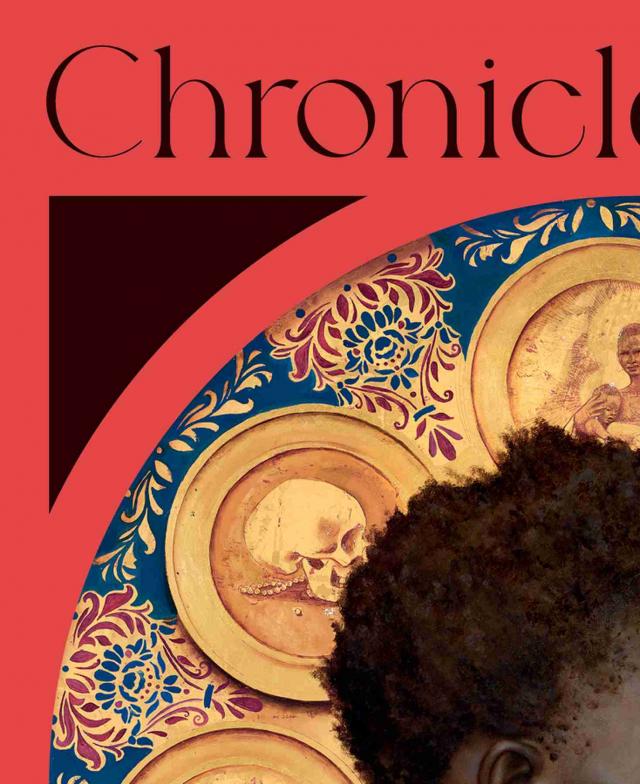
Chronicles of Ori
An African Epic
Harmonia Rosales
To Hilaria Rosales
(January 14, 1928–November 27, 2017)
Contents
Author’s Note
Oya’s Invitation
Book I
Creation
chapter 1:Ashé
chapter 2:Orirun
chapter 3:Obatala
chapter 4:Oah and Dada
chapter 5:Olokun
Book II
The Orishas
chapter 6:Orun
chapter 7:Yemayá and Aganju
chapter 8:Yemayá and Erinle
chapter 9:Eshu and Oshosi
chapter 10:Oshun
Book III
Lineage
chapter 11:East Kingdom
chapter 12:Lamuradu
chapter 13:Oduduwa
chapter 14:The Preaching of Oduduwa
Book IV
The Ogisos
chapter 15:The Golden Serpent
chapter 16:Taiwo
chapter 17:Khende
chapter 18:The Princess of Wågådu
Book V
Yorubaland
chapter 19:Legacy
chapter 20:Oranmiyan
chapter 21:Ayaba Moremi
chapter 22:The Kingdom of Igodomigodo
chapter 23:Oranmiyan’s Legacy
chapter 24:Oranmiyan’s Odyssey
Book VI
The Alaafin of OYO
chapter 25:Jakuta
chapter 26:Ajaka
chapter 27:Shango
chapter 28:Obba Nani
Book VII
The Land of Orirun
chapter 29:Jeggua
chapter 30:The Iron Kingdom
chapter 31:Oya
chapter 32:The Blood War
Book VIII
Eve
chapter 33:The Fall of the Orishas
chapter 34:Eve and the Lost Orishas
chapter 35:The White Lion
Book IX
Olokun’s Ocean
chapter 36:The Ascension of Yemayá
chapter 37:The Migration of the Gods
chapter 38:The Dock
Book X
The Children of ORI
chapter 39:The Golden Manuscript
chapter 40:The Strangler Figs
chapter 41:The War of the Gods
Epilogue
Characters
Glossary
Background and Sources
Acknowledgments
Image Credits
Author’s Note
“Cada cabeza es un mundo.” That well-known Spanish proverb was one of my Afro-Cuban father’s favorite sayings. I remember asking him what it meant, and he said, “Every mind is a world.” At the age of twelve, I took those words to refer to the powers of my budding imagination.
But as I grew older, I came to understand its fuller meaning: that each person carries within them a world shaped by their unique experiences, beliefs, and thoughts. Every mind is its own universe, intricate and distinct, even if we share the same reality.
When I finally grasped it, the proverb became one of my favorites, too. I use it as my artistic foundation. After all, isn’t this what art is—a perspective from and on a moment in history, whether captured in images, inked on pages, or spoken aloud? History itself is an ever-growing mosaic, each piece representing an individual story that adds something to the sweep of human experience. Recognizing that every voice, every perspective, has its unique place is crucial to seeing the entire masterpiece.
As you dive into this epic, you may encounter stories that feel familiar, or perhaps ones that depart from or challenge what you’ve heard before. Or this may be your first introduction to the myths of the Orishas, of Oduduwa, of Oranmiyan and Moremi, of Mama Onile, and many other mortals and gods. No matter where you’re coming from, I hope you see these stories as pieces of a broader narrative—my own and my father’s, but also African history, and even more so, human history.
Chronicles
of
Ori
Oya’s Invitation
I have been on this Earth since before the cultivation of the soil. Before life took root, flourished, and asserted control. The world belonged to me and my kind alone . . . and then came the soil.
When I was tasked with scattering the seeds of life across this unmarked canvas, I could not fathom the transformation that would ensue. The soil became the land, the birthplace of diversity.
Then the great flood separated mortals, scattering them far and wide. It split the world, creating two realms, the physical and the spiritual. The emergence of new deities ushered in an era of competition and rivalry, as each god vied for influence over the ever-expanding creation. Our world, once unified, was fractured yet again—each spiritual realm a reflection of the divided land below.
Walk alongside me, as mortals and gods once walked together, and let me tell you the history of the Orishas: of our rise, our battles, our fall, and our persistence. Through my words, we can relive the moments that defined us and witness the enduring fight that propels us forward.
— Orisha Oya
Book I
Creation
Chapter 1
Ashé
If you want to know the end, look at the beginning.
—African proverb
In the beginning, there was an endless void, an eternal darkness. The seeds of life lay dormant, awaiting the spark that would ignite the cosmic cycle of life and death.
From the dark emerged a force, as ancient and arcane as the universe itself. This self-birthed primordial being entered into existence. Its actions would set in motion transformations that would shape the fate of all who were to come.
The primordial being unleashed the earliest glimmers of light, like the blinks of fireflies. Stars burned bright and fierce, pulsing with tremendous energy, only to fade and perish in the cold darkness. From their ashes, new stars were born, giving rise to planets and entire galaxies, each a result of the endless creativity of the primordial being, the universe’s architect.
Like a serpent devouring its own tail, the universe now moved through endless cycles of birth, growth, and decay, each a variation on the one that came before. All of this was guided by the primordial being, who was undergoing transformation itself, shedding the past and reemerging into the promise of new beginnings.
A humble fragment takes its place in the grand design. Like a single drop of rain in Olokun’s eternal ocean, or a grain of sand in Olorun’s desert, this minute element awakens, embracing its role in the ever-shifting movement of the universe. And this is where our story begins . . .
* * *
Olodumare, the reincarnation of the primordial being, was a divine force in constant motion, free from the restrictions of form and boundaries. Drifting from one galaxy to another, he collected the minerals and microbial remnants of long-deceased planets.
Within the belly of his ethereal form, Olodumare bore the seeds of life, each a thing of pure possibility poised to be nurtured and reborn. He was like a cosmic gardener tending to the scattered vestiges of creations long past.
Yearning to understand the complexities of life, Olodumare ventured farther into the uncharted depths of the universe, fueled by an unquenchable desire to amass more seeds. As he navigated infinite galaxies, his journey brought him to the very brink of creation. It was there, in the farthest reaches, that he chanced upon a fellow primordial being, the alluring Odua.
Odua existed in the cold embrace of the void, her essence attuned to the many potent forces that governed the universe. Composed of pure hydrogen, she was a vision of transcendent luminosity, her form a veil of incandescent light shimmering in the dark. Odua sensed the approach of the wandering scavenger who would forever alter their collective existence. Unlike the restless Olodumare, she remained rooted, anchored to the place of her genesis. There was no need to wander, nor to scavenge, for she was both the beginning and the end. She was the womb from which all things emerge and to which all things return. She had been waiting patiently, her purpose clear and unwavering.
The instant their paths crossed, the pair of primordial beings felt an irresistible pull toward one another. Against the flickering stars, they danced in tandem, their energies destined to intertwine and transform each of them. Olodumare, the eternal seeker of life, discovered within Odua the catalyst for transformation, the divine spark that would kindle a new child of creation. As their destinies entwined, the universe lay still, anticipating the birth of something truly extraordinary.
Olodumare became enmeshed in Odua’s divine power, his own strength diminishing with each passing moment as he spiraled helplessly into her web. As Olodumare succumbed to immense compression, doubt shrouded his ecstasy. The darkness around them crackled to life with brilliant arcs of energy, their dazzling force weaving a barrier that appeared impervious. Odua constricted around Olodumare like a vise, compelling him to whirl wildly within the confines of her celestial cocoon.
At last, Olodumare could no longer bear the torment. With a cataclysmic explosion that reverberated through the void, he ruptured, scattering his very essence into the seemingly infinite abyss. His seeds of life were stripped from him by Odua. From the smoldering remains of this cosmic detonation, Earth clawed its way into existence, and time itself began.
The birth of this new world had taken a terrible toll on Olodumare. Without his seeds—his life’s work—the once-magnificent being was red
In time, Olodumare was able to gather himself whole again. In a desperate bid to reclaim his possessions, he sought to pierce Onile’s atmosphere, hoping to draw sustenance. But his attempts brought disaster, causing meteorite strikes that left a scarred landscape of craters and ash in their wake.
These collisions damaged the seeds of life on Earth, serving as a harsh lesson: Onile was fragile. And as Olodumare gazed upon what his desperation had wrought, he knew that he must find another way to restore his former power, or else risk the destruction of all the seeds he had collected.
Olodumare saw that he needed to divide what was left of his power in such a way that he would become small enough to enter Earth without harming her. In his final act of divine transformation, he fragmented himself into three mystical beings, each bestowed with a piece of his once-unfathomable power.
What remained of Olodumare was a deep cosmic silence. His once-overflowing essence was now scattered across the skies and rivers of Onile. Creation had drawn upon his divine soul, leaving him hollow; no joy, no sorrow, no love flowed within. Now he exists as a presence that watches without desire and listens without reaction, patiently awaiting the renewal of his cycle.
Chapter 2
Orirun
The Earth is a beehive; we all enter by the same door.
—African proverb
The three celestial beings that emerged from Olodumare were Eshu, Orunmila, and Obatala. They were the Irunmole, each embodying distinct elements of their creator’s power. Eshu was granted Olodumare’s restless desire to wander; Orunmila, his boundless wisdom gained from exploring the universe; and Obatala, the vast knowledge of the seeds he had sown.
The Irunmole pierced Earth’s atmosphere, racing through the clouds to an unknown world. Yet, as they set foot upon the fertile soil of Earth, their memories dissolved, leaving them with no knowledge of their celestial origins or divine purpose.
As they uncoiled from the deep imprint they left in the burned soil, their now-Earthly forms stood tall, their elongated limbs lending an air of elegance to their already regal presence. Their blue-black skin shimmered with the iridescence of a thousand galaxies, each delicate curve and contour of their bodies reflecting the ethereal beauty of the midnight skies above. Their eyes, deep and tempestuous, mirrored the fierce storms that raged in the skies. As they moved their arms and legs with fluid grace, they seemed to float like the very winds that had carried Olodumare across the universe, every gesture an attestation to the primordial being that had birthed them.
Awakening their senses to Onile’s realm, the Irunmole marveled at the garden of life in full bloom before them. The seeds Olodumare had once borne within his belly had been cultivated into a mosaic of colors and sounds.
As they explored the lush landscape, they were greeted by four Orishas, guardians of the blossoming seeds: Oya, who sent the wind that pollinates the seeds; Oko, who managed the soil’s fertility and the transformation of the seeds; Ogun, the keeper of the mineral, iron, that retains waters for the seeds; and Yemayá the nurturing protector of the seeds that lived on the surface of the land. The Orishas referred to the land they so affectionally cared for as Orirun.
The meeting of the sky guardians, the Irunmole, and the Earth guardians, the Orishas, should have been a momentous occasion. The Orishas too had come from Olodumare, pieces of his divine soul that escaped during his fragmentation. Yet, unlike the Orishas, the Irunmole had not yet awakened to the knowledge of their ashé, the vital force that granted them mastery over their respective domains.
The Orishas explained to the Irunmole the effects of passing through Earth’s atmosphere, which they called Mama Onile’s waters. Mama Onile was the ruler of the lands, and her waters had the power to wash the spirit and transform the soul.
From the Orishas, the Irunmole learned that it was their passage through Mama Onile’s waters that had cleansed them of their memories, leaving them lost. Stirred by an intense desire for purpose, the Irunmole embarked upon a quest to uncover their origins and awaken the slumbering ashé within.
Guided by the Orishas, the Irunmole ventured deep into Orirun’s jungle, in search of the oldest baobab tree, for in its core resided the soul of Mama Onile herself.
For days they traveled. With each step they took, the jungle sprang to life, rich hues of flora welcoming them. Colossal trees stood as stoic witnesses, their roots delving into the depths of time, while their branches sprawled across the skies with divine reach. The air was heavy with a scent strangely familiar to the Irunmole.
The Irunmole had to be careful about what they brushed up against, for they were not used to such intense stimulation and visions. With just a single touch, every living element revealed its entire story to them. Each leaf was a page in nature’s history, full of undiscovered knowledge. A broken branch showed the Irunmole a vision of a hungry predator chasing its prey. The aged bones of a long-dead creature told a story of a terrible death.
* * *
At last, the Irunmole, led by the Orishas, arrived at the ancient baobab tree, its wide trunk anchored to the soil as if it had existed before the land itself. The branches beamed with vitality as birds darted among them.
Mama Onile reigned supreme from her throne. At her feet unfurled a sprawl of life. The mountains bowed to her command, rivers danced to her heartbeat, and the jungles swayed to the swish of her hips. Nature itself blossomed under Mama Onile’s tender care.
Her hair was loc’d and cascaded to the floor. She had the deepest brown skin; it matched the soil from which she ruled. Except for her feet, every inch of her body was adorned in the finest diamonds and gold. She sat poised as though she were always anticipating esteemed guests. Veiled behind a gold beaded mask that concealed her face, she locked eyes on the Irunmole as they approached. She beckoned them to come closer so she could get a better look. They knelt before her, pleading with her to restore their memories.
Mama Onile complied, though she told them that their ashé came with terms. Her voice, although soft as the kiss of a breeze, carried unfathomable weight: “You descend from the sky above, seeking solace in my Earthly kingdom . . . know this, to reside here, you must understand and respect my sacred laws.”
Her first decree: “The gold that veins through my soil shall never be harvested. It is the material manifestation of our supreme creator, of Olodumare’s sacrifice, scattered across the lands as a reminder of him.”
Next, she addressed the balance between land and sea: “All creatures under my care may partake of the ocean’s bounty. Yet, let it be known, the giants of the deep waters are granted the same privilege as those on land. This reciprocity maintains the harmony between the rhythm of the waters and the pulse of the land. Assault these giants, and you will incite a war you cannot win, a tempest that will ravage both the land and all things on it.”


