

The shambling lords, p.1
The Shambling Lords, page 1


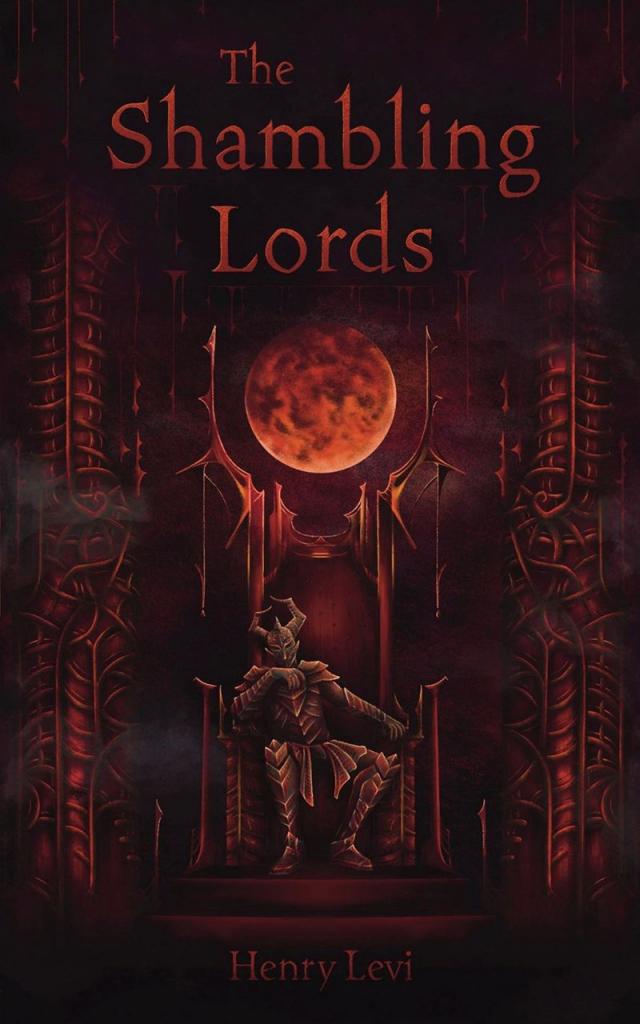
Endangered Poet Productions Presents …
First Edition Published 2022 by Gaelan Donovan Wort
Second Edition 2025 Gaelan Donovan Wort
Copyright © 2022 Gaelan Donovan Wort
All rights reserved.
No part of this book may be reproduced, transmitted, or distributed in any form or by any means, electronic or mechanical, including photocopying, recording, or any information storage or retrieval system, without prior written permission from the copyright holder. This includes, but is not limited to, the use of any portion of this book for the purpose of training, developing, or enhancing artificial intelligence technologies or machine learning systems.
The author has made every effort to trace and acknowledge sources, resources, and individuals. If any images, information, or content have been incorrectly attributed or credited, the author will be pleased to rectify any omissions at the earliest opportunity.
ISBN 978-0-903733-43-4 (Print ) | ISBN 978-0-903733-42-7 (eBook)
Published by Endangered Poet Productions Gauteng, South Africa
Edited by Kelly-May Macdonald for Endangered Poet Productions
Cover design by Vicki Venter for Endangered Poet Productions
Website: www.endangeredpoetproductions.com
Email: info@endangeredpoetproductions.com
Contents
Chapter 1
Chapter 2
Chapter 3
Chapter 4
Chapter 5
Chapter 6
Chapter 7
Chapter 8
Chapter 9
Chapter 10
Want more?
Chapter 1
The profaned capital city of Kelcarosa rose from the fetid, black fluids of the Myates Sea to eclipse the crimson moon as it shone blood red on snow-speckled peaks. The high chapel and palace of the fallen king cast a too-wide shadow on the sprawling, gaudy city. Kelcarosa had been sculpted at that eternity’s dawn; an amalgam of precious metals, marbles, glass, and countless secret things made manifest as the sinewy lattice and gossamer-thin membranes that secured the glorious capital atop those ruins of things that had come before.
The wailing of the weary, contaminated wretches as they clawed their way up the many steps, or pounded gnarled and bloody fists against the towering, gilded gates, resounded through the necrotic city. So long unopened, the pilgrim’s gateway had melted together. The metal was fused, and the hinges lost amidst the glittering finery.
The bodies piled ever higher over those many years, but the weathered husks, corroding so quickly to dust, could not even climb the mounds of the broken forms of those who had come before to reach the gate’s fang-crowned summit.
In those last days, before Kelcarosa sank back into the black waters that had birthed it, the forsaken masses receded from the high gates, their cries fallen silent at last. The last flame of hope had long since faded. So it was that quiet accompanied the death that swept through the profaned capital city.
A feast for maggots, craven all, that fed on the flesh of the dying where they sank amidst the ashes.
It is in this desolate sprawl, this beautiful horror, this dying city of immortal things, that our story begins.
“This is a tale that time hath lost,” proclaimed the first scribes, whose minds were made undone by these insights that they glimpsed. “This is a tale from the far beyond and from great before. Another tale of dread and desolation set to play out beneath the North Star of Bhalan.”
This is the legend of the fall of a primeval world which had existed long before the endless void had enfolded our fledgling star.
It was a time of change in the lands of Amelbaran. Those things that would have been gods unto us had tasted exotic ephemerality. The cycles of the heavens turned as ever, but inside the bones of their world, there lurked a disease spread by the first transients’ blood.
Within the high chapel, the last of Kelcarosa’s decadent Lords and Ladies interred themselves. The way to the palace was sealed, and so these proud and mighty Nobles indulged in an ignorant disregard for the crumbling city below, and they kept themselves deaf to the wailing prayers of the wasting husks that languished therein.
Enter the New King, our champion, and the most tragic hero of our tale; he who had usurped his father and master in a time long past, all to seize the fetid throne. Solemnity etched into every motion, the ruler of Kelcarosa set his gauntleted hands to the heavy, rusted doors that led to the great balcony, which looked out over the waning city. He himself had ordered that those doors be sealed. He pressed forward, and the groan of tortured metal resounded around him, a protest from neglected hinges. It had been too long. This landing was forbidden by his command, but such laws did not apply to the one who issued them.
Withered air, squalid and cold, billowed through the widening gap, carrying ash and sleet inside. Pale light burned away the heavy shadows that clung to the walls behind him. The shades writhed and hissed in outrage. Serpentine and slick, the palace’s darkness squirmed backwards, deeper into the depths, exposing in the process another figure in the hall. This was a lowly, shrouded thing, hunched over to creep and scurry through the inky blackness, but now astounded by the harsh grey light.
The King did not turn back. His attention was focused ahead of him. He approached the edge. The King’s eyes were sharper than any other, able to scour the distant ruins of his domain with ease. He peered down from the balcony, past the ranks of steeples and statues adorning the lower levels of the palace and the high chapel, past the winding steps of the pilgrim’s road, past mountainous desolation and faded ritual sites still scarred by rite and adorned with reliquaries. It was at the very base of the primordial mountain, which bore their high chapel, that the King arrested his gaze.
There festered a craterous grave, bones jutting from scarred stone, bursting from faded and fraying fabrics drifting through the dry breeze like ink swirling and twisting in a saucer of blood. Gold and gems still clung to the many enormous bones and fangs arranged there. This surprised the King. Still, none had dared to strip the finery from the great corpse? Ah, but of course, none of those abandoned below had any need of riches.
The King studied the candles arranged around the sprawling grave, left as offerings by the withering wretches that he had so long ago forsaken.
A rasping sound came from behind him. The King turned to regard the figure as it clawed its way onto the balcony. The Lord Ire bowed, rows of metal-sheathed arms clinking and scraping as the hunched and shambling figure paid his respects.
“May a lowly one such as I join thee, my liege?” Lord Ire pleaded; his head bowed as he shuffled onto the ash-dappled balcony before the King could answer. Lord Ire gestured to the decaying city. “Sometimes, this is too difficult to believe,” he murmured, a dissonant sound like too many disagreeing voices sounding together, “and yet, thou canst accept the strangest fact: that thou wast wrong.”
“Ah … if it were but deniable, I might have undertaken to do just so …” lamented the King in answer, and his voice was as honey and silk and any rich luxury that our lives might know. His was a voice of true power, of grandeur and solemnity. His were words of sorrow and defeat. “But nay,” continued he, the mightiest of them all, “so confronted with mine failure, no escape from this damning truth is left to me.”
“You believe us doomed when the others still do not,” rasped Lord Ire.
The King brushed his gauntleted fingers along the banister—metal scraping against stone. Lord Ire craned his neck with a series of sinewy clacks and clicks, his mildewed eyes squinting to glimpse a hint of emotion from behind the ruler’s ornate ceremonial visor. But there was not one gap in the metal this time. The shell was fitted as if a molten stream had been applied to the King’s features and left to harden once encasing him.
The ruler of Kelcarosa continued to stare down over the edge, down to where the corpse of the Old King festered. The New King recalled his act of treason, drawing the blade as he snatched free the crown, thrusting the weapon in deep and casting the ailing, decaying, immortal monarch down to the rocky depths.
“What dost thou intend to do, my liege?” asked Lord Ire. “A fire might consume itself, as is the way of heat and hunger, but this sickness perseveres; a parasite that prospers in spite of the decaying host. Again, thine efforts hath failed …”
The King tightened his fist and the metal enrobing his hands screeched an answer. He did not reply, studying the eternal city and the many wraiths that stalked the shadowed streets, and the starving beasts that clawed at every door, and the wretched remnants who languished still, doomed to join the beasts they hunted or the ghosts that haunted them all.
“Thy city is lost. Would it not be best to leave it to fester? Leave it to die?” asked Lord Ire, deathly voice penetrating the King’s thoughts.
“Nay, do not think thus—such thoughts are stagnation,” the King replied in regal airs. “That wouldst be no different indeed from what we have been doing thus far.”
“If thou shalt not relinquish thy wretches and leave thy city to die, then what, my liege, dost our King on High intend to do?” Lord Ire was demanding now, his desperation plain to see and hear.
The King’s deep and silken voice quivered from behind his mask. “We shall help it die,” answered he, turning his back on his kingdom.
Chapter 2
Beyond the gates … Beyond the gates …
Outside the palace, outside the chapel, far past the bounds of the capital city, and beyond the toweri
Beyond the gates of Kelcarosa, there roamed beasts of different blood—scavengers that still hunted through the ruins of the primordial cities that came before. These vicious, spiteful things waded through stagnated, embryonic fluids to pick clean the bones of old Gelesia. They still glutted themselves on the rotting offal of once-eminent Yharjova, defiling the corpse of that holy city too. As for Joratuhm, the bilious den which had bred and birthed these horrors, the foundations of that expansive ruin had long since crumbled, sinking down on the far shore of the Myates Sea and drowning all its steeples and towers within the black waters.
The distant gates which led to those forsaken wastes had gone so long unopened. Gazing upon them from the high tower, the King’s merciless plot was inspired. Even his keen eyes, afforded the vantage of the soaring palace, could barely discern their forms. Thirteen gates; thirteen seams in Kelcarosa’s nigh impenetrable armor, their mighty gears and mountainous counterweights kept dormant for eons, ready at last to be roused into action, though the great roads that spread like arterial webbing those gates had all been eroded to dust.
The King knew that most among his court were beings devoted to decadence and indulgence, who would oppose the cleansing. How many would side with him, he could not say. Not even Lord Ire’s allegiance was assured to the King, though the shambling horror had proffered up every oath of allegiance. Ah, but how easily words are gifted, and how insubstantial their weight becomes when the time for talk is ended and the need for action is reasserted again—and there could be no mistake; such a time had ended, and such a need had come.
The doors to the King’s throne room were works of wondrous art, commissioned in a time long past by all the greatest artists and crafters of Kelcarosa. They were towering and monolithic, and their hinges groaned so in a voice so low as to set the very stone of the mountain shuddering in sympathy as the King forced them open. None had looked upon those beautiful carvings for many cycles, let alone touched them. Even though his hands were gauntleted, as all his body was armor-clad in gilded warrior’s finery, the King could feel the contours of the etchings as phantom impressions. He entered the desolate throne room, the darkness clinging to him. It embraced the King with tenderness and caressed him with reverence. Amidst the viscous shadow, the King became aware of a scurrying sound—he had heard the sound before, of course, leaking out from behind the blackness, seeping through the quiet of the chapel’s stone below. It was the faint sound of many, tiny things retreating into the bowels of the palace. They were fleeing from him, those foul creatures.
Even here, the King lamented, for the vermin had spread so far as to encroach upon the throne room and tarnish the walls of the high chapel. Their hordes were growing. His wretched citizenry could not gain any access to the palace, and yet the vermin had somehow got inside. The swarms infested the city below and now, they infested the mountain too. They permeated the roots of the palace. They were in the walls, beneath the floors, flooding the dungeons, stealing scraps, and mating and multiplying.
Even the Lords and Ladies hadn’t food enough for such excess as to sustain the tide of the vermin on crumbs and scraps and waste … so how, wondered the King, were the repulsive hordes able to sustain themselves?
The King, too grand and wise to dwell on thoughts of lowly animal parasites, approached his grand throne. With a gesture of his hand, he released the draperies that had been fastened as tightly as fetters to the wall of crystal glass behind the throne, and the long, silken swaths and whirls came undone and fell like velvet waterfalls to the stone floor, where they pooled like puddles of blood, made redder still by the moonlight that leaked inside. The grim light of the red moon, now revealed behind the throne, shone through the flawless crystal glass to paint the room in scarlet shades, turning grandeur into violent splendor.
The King ascended the steps and seated himself upon his throne. He studied his crimson court, absent of any Lord or Lady, or humble servant, guard, or scribe. The great throne room of Kelcarosa, bathed in the bloodred of the moon, with pillars stretching up towards heights lost to blackness and better left unseen, was now hollow, kept deserted except for the mighty sovereign seated upon his cold stone throne.
Silence permeated the great throne room, and the palace, and the chapel. Heavy silence, waiting to be broken. The capital city of Kelcarosa seemed to tense, like the drawing of a sharp breath. Without any reason, a million decaying wretches raised their eyes to the dark sky. All of them stared now towards the glorious cathedral that pierced the inky heavens. The glittering palace of their Nobles and priests loomed above as a solemn and indifferent watcher, now made blind and deaf to their piteous plight; the god that had taken its eyes from its creation.
Then the summonsing bell blared out from the depths of the keep, and this furious, overwhelming reverberation broke through the heavy silence, butchering and breaking the quiet so that a din lingered long after the solemn tone had died. The silence, embittered by this sudden attack, grew vengeful and so stifled every voice in every throat in those awe-inspiring moments after the tolling of the bell.
The summonsing bell was struck again. Louder still, and the silence was slain. The wretched husks curled gnarled and diseased hands around their ears as they stared up towards the chapel. As the din faded, gaunt and cloying hands stretched up in the direction of that colossal bell. Some of those forsaken things began to pray. Others forced their decaying bodies into motion and undid the bolts and bars that sealed their doors. Another procession of pilgrims began to form—masses of crawling husks took to the pilgrim’s stairs again. They were gaunt creatures, shrouded in greying folds of fraying fabrics, ash-dappled all. Most fell before the distant echo of the third toll had faded, their limbs breaking and bursting, or crumbling into dust as they labored up the stone steps towards the sealed gates. Thieves came from the shadows. Vagabonds, cads, and knaves who plundered the dead and dying where they withered. Once picked clean of every token and trinket, half-bred and starving beasts came for the corpses, and they snatched away the remnants of their former masters and carried the rancid scraps and bones back to their burrows and dens beneath the city.
There were others who gathered up their offerings and pushed against the tide that swelled towards the monumental steps. Those who crawled to where neither feral beast nor brigand would dare to stalk them. They bowed low to the crumbling stone and the fallen ash as they approached the massive grave where the Old King had fallen. Tens of thousands of candles were lit, and braziers and incense burners, and they wept as they poured more offerings onto the pile that surrounded the fallen sovereign’s jutting bones.
Chapter 3
Far above these ever-faithful followers, past the wisps of grey and noxious clouds that framed the immense mountain, above the great chapel, at the very summit of the high palace, the first of the Nobles had answered the summons and entered the King’s crimson throne room.
΄Twas Lord Ire, the Avaricious Scholar, who was the first to enter. Shambling on many legs, the nervous and skulking keeper of secrets squirmed into the massive hall. He bowed low, followed by his black-dappled retainers, scrolls spilling from long clawed fingers. They kneeled in turn.
The second to enter was the only one of the Nobles whom the King might have deemed a friend. Lady Celestielle, the Vigilant Advisor, flowed into the scarlet chamber. Youngest of the old line, she had been wet nurse to the King in time long before he had seized his father’s crown, and before she had taken the title of her lineage. Her face was elegantly masked, in such a fashion as to show no impression of any features, yet the King felt as if she had honored him with her smile. Her movement was graceful, and her curtsy conveyed the elegance of a wiser time. She came with a small few patron followers, and they fell to their knees and pressed their heads to the stone in reverence to their One King.


