

Korean tales, p.1
Korean Tales, page 1


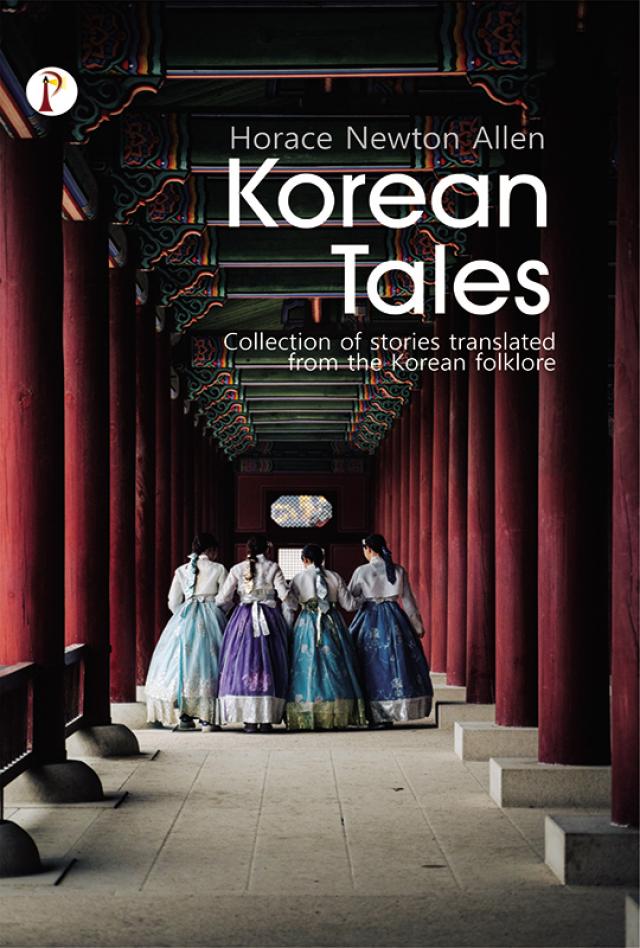
KOREAN TALES
* * *
A COLLECTION OF STORIES TRANSLATED
FROM THE KOREAN FOLKLORE
By
Horace Newton Allen
eISBN: 978-93-55460-31-8
© Publisher
Edition: 2022
Publisher: Pharos Books Private Limited
Plot-55, Main Mother Dairy Road,
Pandav Nagar, Delhi-110092, India
Phone: 011-40395855
WhatsApp : + 91 8368220032
E-mail: sales@pharosbooks.in
Website: www.pharosbooks.in
Facebook www.facebook.com/pharosbooks.in
TABLE OF CONTENTS
INTRODUCTORY
DESCRIPTIVE. SEOUL—THE CAPITAL
THE RABBIT, AND OTHER LEGENDS. STORIES OF BIRDS AND ANIMALS
THE ENCHANTED WINE-JUG; OR, WHY THE CAT AND DOG ARE ENEMIES
CHING YUH AND KYAIN OO. THE TRIALS OF TWO HEAVENLY LOVERS
HYUNG BO AND NAHL BO; OR, THE SWALLOW-KING’S REWARDS
CHUN YANG, THE FAITHFUL DANCING-GIRL WIFE
SIM CHUNG, THE DUTIFUL DAUGHTER
HONG KIL TONG; OR, THE ADVENTURES OF AN ABUSED BOY
PREFACE
Repeatedly, since returning to the United States, people have asked me, “Why don’t you write a book on Korea?” I have invariably replied that it was not necessary, and referred the inquirers to the large work of Dr. Griffis, entitled “Corea, the Hermit Kingdom,” which covers the subject in a charming manner.
My object in writing this book was to correct the erroneous impressions I have found somewhat prevalent—that the Koreans were a semi-savage people. And believing that the object could be accomplished best in displaying the thought, life, and habits of the people as portrayed in their native lore, I have made these translations, which, while they are so chosen as to cover various phases of life, are not to be considered as especially selected.
I also wished to have some means of answering the constant inquiries from all parts of the country concerning Korean life and characteristics.
People in Washington have asked me if Korea was an island in the Mediterranean; others have asked if Korea could be reached by rail from Europe; others have supposed that Korea was somewhere in the South Seas, with a climate that enabled the natives to dispense with clothing. I have therefore included two chapters, introductory and descriptive in character, concerning the subjects of the majority of such questions.
“Globe trotters,” in passing from Japan to North China, usually go by way of the Korean ports, now that a line of excellent Japanese steamships covers that route. These travellers see the somewhat barren coasts of Korea—left so, that outsiders might not be tempted to come to the then hermit country; perhaps they land at Chemulpoo (the port of the capital, thirty miles distant), and stroll through the rows of miserable, temporary huts, occupied by the stevedores, the pack-coolies, chair-bearers, and other transient scum, and then write a long article descriptive of Korea. As well might they describe America as seen among the slab shanties of one of the newest western railroad towns, for when the treaties were formed in 1882 not a house stood where Chemulpoo now stands, with its several thousand regular inhabitants and as many more transients.
H. N. ALLEN.
WASHINGTON, D. C., July 1, 1889.
INTRODUCTORY
Korea, Corea, or Chosen (morning calm) occupies the peninsula hanging down from Manchooria and Russian Siberia between China and Japan, and extending from the 33d to the 43d parallels of north latitude.
The area, including the outlying islands, is about one hundred thousand square miles. The population, according to the most reliable estimate, is a little more than sixteen millions. Yet, as the people live in cities, towns, and hamlets, the country does not seem to be thickly settled.
The climate varies much at the extremities of the peninsula, owing to the fact that the southern portion is somewhat affected by the warm southern currents that give Japan its tropical climate, but which are warded off from Korea proper by the Japanese islands. The climate of the central and northern provinces is much the same as that of the northern central United States, with fewer changes. The large river at the capital is not uncommonly frozen over for weeks at a time during the winter, so that heavy carts pass over on the ice. Ice is always preserved for general use in summer.
The country is decidedly mountainous, and well watered. Heavy timber abounds in the northeast. The valleys are very fertile and are well tilled, as the people are mainly devoted to agriculture.
The mineral resources have only been developed in a crude way, yet sufficiently to demonstrate the great wealth of the ore deposits. Especially is this true in reference to the gold mines.
The most pessimistic visitors to Korea are unstinted in their praise of the beautiful scenery, which is fully appreciated by the natives as well. From ancient times they have had guide-books setting forth the natural charms of particular localities; and excursions to distant places for the sole purpose of enjoying the views are a common occurrence.
The King rules as absolute monarch. He is assisted by the Prime-Minister and his two associates—the ministers of the Left and Right. Next to these come the heads of the six departments of Etiquette and Ceremonies, Finance, War, Public Works, Justice, and Registration, with the heads of the two new departments that have been added as the result of the opening up of foreign intercourse—the Foreign (or outside) Office, and the Home (or interior) Office. This body of officials forms the grand council of the King.
Each of the eight provinces is ruled by a governor, who has under him prefects, local magistrates, supervisors of hamlets, and petty officials, so that the whole scale makes a very complete system and affords no lack of officials.
There are several special officers appointed by the King, one of whom is the government inspector, whose duty it is to go about in disguise, learn the condition of the people, and ascertain if any magistrate abuses his office and oppresses the people unjustly. Any such he may bring to speedy justice.
The present Dynasty has existed 498 years. Being founded by a revolting general named Ye, it is known as the Ye Dynasty. The King’s name, however, is never used. He is almost sacred to his people. Those officials of sufficiently high rank to go in before him bow to the ground in his presence, and only speak when spoken to; then they use a highly honorific language only understood at court.
The revenues are paid in kind, hence the annual income of an official may consist of a certain quantity of rice, and other products, in addition to his money compensation. The King, also, has the whole revenue resulting from the sale of the ginseng, for which the country is noted. This forms his private purse.
The currency is the common copper cash, worth some twelve hundred to the Mexican dollar; though now that the new mint is in operation, copper, silver, and gold coins are being made. The old perforated cash will, however, be hard to supplant, owing to its convenience in small transactions.
Banks proper do not exist; though the government does a kind of banking business in granting orders on various provincial offices, so that a travelling official need not be burdened with much ready money. A number of large brokers at the capital assist in the government financial transactions.
All unoccupied land belongs to the King, but any man may take up a homestead, and, after tilling it and paying taxes on it for a period of three years, it becomes his own, and must be purchased should the government need it.
Deeds are given in the form of receipts and quit-claims by the seller. These may be registered with the local magistrate. Wills, as understood in western countries, are not executed; though a father wishing to provide especially for the children of his concubines may make a will, or statement, the proper execution of which devolves upon the eldest son.
Records of the births of males are kept, as are also records of deaths, but these are not always reliable. All males of fifteen years of age are registered at the Hang Sung Poo, or Department of Registration, which issues to them tablets bearing their name and address. Children are also generally provided with these tablets, to prevent their getting lost.
The people are well built and strong, as a rule. They are a loyal, contented race, not grasping, and rather too easy in disposition. They are intelligent and learn with great ease. Possessed of many characteristics in common with their neighbors, the Chinese and Japanese, they yet seem to have a personality indicative of a different parentage, which continually calls forth inquiry as to their origin. In some slight degree they resemble the aborigines of America, and it is believed that their ancestors came from the north:—the question opens up a fertile field for study. Their written records are said to date back three thousand years. Their traditional first king descended from heaven five thousand years ago. With a civilization of such age they might well be excused for so long barring their doors against the new civilization of the young nations of the West. While, as a matter of fact, the difference existing between the two is more one of degree than essence, perhaps more vices may be found in the civilization of the West than are known to this people. And, with a few exceptions, the virtues taught by the modern civilization have been practised for centuries behind the bars of isolation that shut in this self-satisfied people.
The people dress in imported cotton sheetings mostly, padding them well with cotton-wool for winter use, and using the plain bleached white, or dying the cloth a light shade of blue or green. Rice is the staple article of food in the central and southern provinces; wheat ente rs more largely into the diet of the northern people. Their cattle are as large and fine as may be found anywhere; the people eat much beef, and hides are a prominent article of export. Their houses are well built and comfortable; foreigners adapt them to their own use with little trouble. The houses are heated by means of a system of flues underneath the floor, which is made of large flagstone placed over the flues and well cemented; over all thick, strong, oil paper is placed, making a rich, dark, highly polished floor, through which no smoke can come, though it is always agreeably warm. The houses are all one story, built around a court, and several sets of buildings, each within a separate wall, usually make up a gentleman’s compound. The buildings are covered with a thick layer of earth and capped with tile laid on in graceful curves. This roof insures coolness in summer. The rooms are made almost air-tight by the plentiful use of paper on the walls outside and in, as well as for doors and windows.
There are three great classes in Korea: the nobility, the middle class, and the commoners. A commoner, not of the proscribed orders, may rise to nobility by successfully passing the competitive examinations. The officials are appointed from the noble classes.
The language is peculiar to the country, and while written official documents are done in the common character of China and Japan, the spoken language of neither of these people is understood in Korea. The native language of Korea possesses an alphabet and grammar, and is polysyllabic, thus resembling English more than it does Chinese.
In religious matters the Koreans are peculiar in that they may be said to be without a religion, properly speaking. Prior to the advent of the present dynasty, Buddhism reigned, but for 498 years it has been in such disfavor that no priest dare enter a walled city. They still maintain temples in the mountains, but exert but little if any influence. In morals the people are Confucianists, and their reverent devotion to their ancestors may serve in part as a religion. In times of distress they “pray to Heaven,” and seem really to be very devoutly inclined.
Christianity came into disfavor through the indiscretion of its early teachers. The distrust is slowly passing away now, and missionaries are openly employed in doing the educational work that must precede any successful attempt to secure the adoption of beliefs so radically different from all existing ideas.
Some of the results of the outside intercourse that has been indulged in for the past eight years may be mentioned. A maritime customs service, under the charge of American and European officers, is in very successful operation. So is a hospital, supported by the government and operated by American physicians, gratuitously furnished by the American Presbyterian Mission. The government supports a school for which American teachers are employed. American military officers have charge of the reorganization of the army and conduct a school for the purpose of instructing the young officers. A mint, machine-shops, powder-mills, silk filatures, an electric light, and a telegraph and cable line are some of the new institutions recently adopted and, as a rule, now in successful operation. Steamships have also been purchased more for the purpose of transporting tribute rice than as a nucleus for a navy. In regard to the relations existing between Korea and China the reader is respectfully referred to a paper delivered before the American Oriental Society by the Chinese scholar, W. W. Rockhill, U. S. Secretary of Legation at Pekin, and contained in Vol. III. of the Society’s publications for 1888. In his preface Mr. Rockhill says:
“The nature of Korea’s relations with China has for the last thirty years been a puzzle for Western nations. Were they—with the ambiguous utterance of the Chinese Government before them that ‘Korea, though a vassal and tributary state of China, was entirely independent so far as her government, religion, and intercourse with foreign States were concerned’—to consider it as an integral part of the Chinese Empire, or should they treat it as a sovereign state, enjoying absolute international rights?
“The problem was practically solved by the conclusion of the treaty between Japan, and later on the United States, and Korea, but this has not materially altered the nature of the relations existing for the last four centuries, at least between China and its so-called vassal. That China has, however, derived profit from the opening of Korea to the commerce of nations, there can be no doubt, for she, too, being at liberty to conclude treaties with Korea and open this new market to her merchants, has done so, like other nations, though she has chosen to call her treaty by the euphonious name of ‘commercial and trade regulations for the subjects of China and Korea’, and her diplomatic representative in Seoul, ‘Minister Resident for political and commercial affairs.’ What China’s relations with Korea were prior to the opening of the latter kingdom by the treaty of 1883, I propose to show in the following pages, taking as my authorities official Chinese publications and writings of men in official position.”
KOREAN TALES
DESCRIPTIVE
SEOUL—THE CAPITAL
As “Paris is France,” so Seoul may be said to be Korea, for it is the centre from which nearly every thing for the country either originates or is disseminated. Officers ruling over country districts usually have their “house in town,” and expect to spend a portion, at least, of their time within the walls of the capital. While some of the provincial capitals are said to contain more people and to be more celebrated for certain reasons, Seoul is the home of the King and the Mecca of his faithful subjects. A description of this city may, therefore, answer for all. The capital is a city of some 300,000 inhabitants, half of whom, perhaps, live in the extensive suburbs without the walls. It lies in a basin of granite sand, surrounded by high mountains and their projecting ridges, over which climbs the high, thick, encircling wall of masonry; pierced at convenient points by massive, pagoda-roofed gates, amply strong enough for defense against the weapons of war in use at the time of building this great relic of seclusion.
The city is traversed by broad avenues from which runs a perfect labyrinth of narrow streets. Originally none of these streets were less than twenty feet wide, and some of the avenues leading up to the imposing gates of the palaces are even now a good two hundred feet in width. But the streets have all been encroached upon by the little temporary thatched booths of the petty retail dealers, so that, with the exception of the approaches to the palaces, the line is broken, the streets made tortuous, and only here and there a broad open spot indicates the original width of the thoroughfare. Originally every street was furnished with its sewer—open in the smaller streets, while the avenues were drained by great covered sewers of stonework. Occasionally the proprietor of one of the little temporary booths would put a foundation under his structure, bridging over the sewer, until now the streets have in many cases become mere crooked alleys, and but for the bountiful rains, the excellent natural drainage, and the character of the soil, the mortality would be very great instead of being less than in ordinary American cities. No attempt is made towards street decoration, as that would attract the attention of thieves. The magnificent grounds of a nobleman, with their artificial lakes, flower gardens, water-worn pillars of ancient rock and quaintly twisted trees, may be enclosed by a row of tumble-down, smoke-begrimed servant-quarters that would never indicate the beauty to be found hidden within its forbidding exterior.
Travellers never seem to realize that a street in the East is apt to be but a “way” between two points, and as the usual Oriental odors greet their nostrils and their eyes rest on the dirty servants and their dirtier hovels, they at once denounce the whole town.
There is attraction enough, however, in a Korean street for any one who is in search of strange sights. Looking down one of the broad thoroughfares of Seoul from a point on the city wall, the sun’s rays, falling on the light-colored gowns of the pedestrians as they saunter along amid the bulls and ponies, produce a kaleidoscopic effect that is certainly charming. Passing down into the throng it will be seen to be made up mostly of men, with here and there a group of common women, each closely veiled with a bright green gown, made like the long outer garment of the men, and possessing little sleeves of crimson. This strange garment is never worn, but is always used as a covering for the fair (?) face. Tradition teaches that in ancient times, when wars were frequent, veils were discarded and these gowns were worn by the wives and sisters, that, in case of sudden call to arms, they could be given to their husbands and brothers to be worn to battle—hence the red sleeves, upon which the gory sword was to be wiped.


