

Dont let him in, p.1
Don't Let Him In, page 1


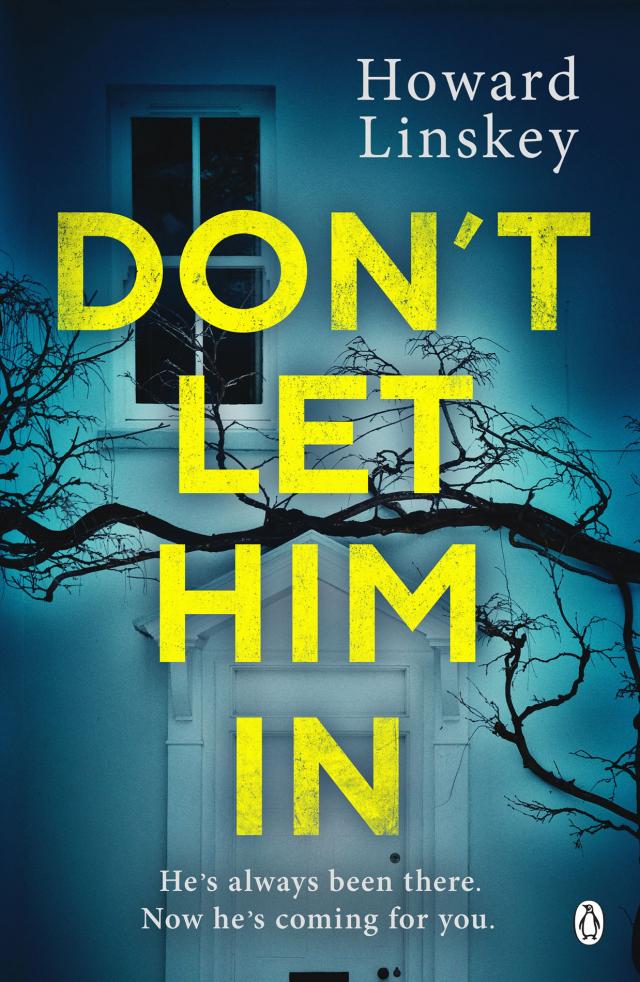
Howard Linskey
* * *
DON’T LET HIM IN
Contents
Chapter 1
Chapter 2
Chapter 3
Chapter 4
Chapter 5
Chapter 6
Chapter 7
Chapter 8
Chapter 9
Chapter 10
Chapter 11
Chapter 12
Chapter 13
Chapter 14
Chapter 15
Chapter 16
Chapter 17
Chapter 18
Chapter 19
Chapter 20
Chapter 21
Chapter 22
Chapter 23
Chapter 24
Chapter 25
Chapter 26
Chapter 27
Chapter 28
Chapter 29
Chapter 30
Chapter 31
Chapter 32
Chapter 33
Chapter 34
Chapter 35
Chapter 36
Chapter 37
Chapter 38
Chapter 39
Chapter 40
Chapter 41
Chapter 42
Chapter 43
Chapter 44
Chapter 45
Chapter 46
Acknowledgements
About the Author
Howard Linskey is the author of a series of crime novels set in the north-east, featuring detective Ian Bradshaw and journalists Tom Carney and Helen Norton. Originally from Ferryhill in County Durham, Howard now lives in Hertfordshire with his wife and daughter.
By the same author
The Drop
The Damage
The Dead
Hunting the Hangman
Ungentlemanly Warfare
No Name Lane
Behind Dead Eyes
The Search
The Chosen Ones
Alice Teale is Missing
For Alison and Erin with love
He has always been there.
No one has ever seen him.
Now he is watching you.
You’re next.
1
I’m watching you.
I’ve been doing it for a while now.
You’re not big on security, are you? There’s no lock on your back-garden gate. Just a latch. I tried it once during the daytime when there was no one around and it made a grating noise when two pieces of old metal scraped together, so I came back and oiled that for you. Now I can let myself in whenever I want without making a sound.
Your house is like most of the others in this town. Quite small and old, but the garden is perfect; it’s long and not overlooked by any neighbours, providing you and me with all the privacy we need, and there’s a tall fence at the back, with no other houses or flats behind it, just a hill. There are mature trees and bushes for me to stand behind. Perfect spots to observe you, unseen.
I could do without the wind chimes, though. Are you into all that feng shui nonsense or do you just like the sound they make? That metallic tinkling every time a breeze passes through them grates on me, and I have to make a real effort to blot it out but it’s worth it for the view. I take a step back and look up to watch as the bathroom light goes on and I get a charge of excitement from this stolen moment of intimacy between us. You shed your clothes matter-of-factly, not realizing you have an audience and I catch a glimpse of the outline of your body as you step into the shower. I can’t make out every detail through those frosted-glass windows but they are way less private than you imagine, particularly when it’s dark out here and the light is on in your bathroom. You should really put a blind up.
I watch intently as you rub shampoo into your hair, then let the water rinse it away and I get an uninterrupted view of your body as you face the window. I can make out those darker patches on your chest and, too late, I realize that a higher vantage point would have allowed me to see everything. I will watch from the hill next time.
You take your time. Is this deliberate? Do you know I am here? That’s not possible but I catch myself smiling at the notion. I know you’re careless with the back door. You only lock it when you are on your way up to bed. It’s probably unlocked now and I wonder what you would do if I came in? How would you feel if you stepped naked from the shower to find me standing there?
Would you scream?
Would your heart stop?
Would you want me?
I know it’s been a while since you’ve been with a man. Maybe I’m exactly what you need.
But there’s somewhere I have to be right now and it really cannot wait.
I’ll be back soon, though.
I feel as if I truly know you now and I’ve made up my mind.
You’re special.
You’re the one.
You’re next.
2
Costa Rica
The poor little sea turtles get confused. Newly hatched, they burst out of the sand, spot the man-made lights, then move inland towards them when they should be going out towards the sea, where they belong. This is fatal. They use up all their strength, while heading towards the mirage of the lights, thinking it’s the ocean. When the sea turtles finally run out of steam, they find themselves close to a main road illuminated by street lamps, neon restaurant signs and gaudy bar fronts. Exhausted, they die in their hundreds, not even lasting a day.
If it wasn’t for volunteers like Rebecca, none of them would make it. The sea turtles are cute little guys but they don’t have a clue. On their own, they perish. And there were so many of them, pushing with their tiny legs as they traversed the beach, struggling for every inch of progress across the sand yet taking themselves further away from their true destination with every kick. That’s when the volunteers stepped in. You had to pick them up, ever so gently, turn round and carry them back towards the sea.
It was a simple and rewarding task and Rebecca Cole was glad of it. She didn’t want to think about anything else apart from rescuing the sea turtles before she moved on again – to another place, another country – until her mind had cleared. Life here had a pleasing simplicity. She was barefoot, dressed in a T-shirt and shorts, her hair sun-bleached from months travelling in far warmer climes than Britain. Rebecca carried the ‘little dudes’, as the Australian surfer guy next to her kept calling them, one at a time back across yards of white sandy beach, then lowered them gently just before the shallows and watched with satisfaction as they first crawled then swam out to sea.
She waved at the latest one. ‘Good luck, mate,’ she told him. ‘I just saved your life. Don’t mention it,’ and the Aussie guy laughed at that. She turned and they locked eyes for a moment. He was cute and gave her the impression he liked what he’d seen and why not? Rebecca was tanned and had even lost weight from all the walking she had done on this trip. The Aussie guy had no idea how fucked up her life was, and Rebecca had no intention of enlightening him.
When guys asked her, she always gave them the same spiel about hitting her late twenties and wanting to quit the rat race for a while and kick back, resisting the temptation to add that she was trying to find herself, because as clichéd as it sounded, it was as authentic a description as any for her situation. In reality, she did feel lost.
Rebecca was in a mild enough mood for now, though, distracted by the sea turtles and their faulty internal satnavs, in no hurry to move on, taking each day at a time. She had barely thought about her own troubles today and that was unusual. Even when you supposedly left your worries thousands of miles behind you, you never did, not really. They stayed with you, like unwanted travel companions.
She felt lighter today than she had in a long time – but she should have known it wouldn’t last. It was Polly who came looking for her. She had befriended the other English girl on the bus from the airport, in that no-consequences way fellow travellers have of coming together on the road, before drifting apart later when they’ve moved on. It had been nice to have someone to walk around with, then drink and talk together till the early hours, before crashing at the hostel. But the look on Polly’s face provided few clues to the seriousness of the call Rebecca was about to take.
‘It’s your mum?’ She made it a question, as if she wasn’t sure that the woman on the other end of the line was actually telling the truth. ‘Calling from New Zealand?’ Again spoken as if she half expected Rebecca to answer, ‘Don’t be ridiculous.’
‘OK,’ was all she gave in reply, because Rebecca couldn’t be bothered to explain that her parents divorced years ago, and her mother was remarried and living in Auckland with her second husband. Rebecca walked unhurriedly across the sand at first, until she realized the call might be costing her mother more than a few dollars, so there could actually be a serious reason for it. Also, she thought, why not just hang up when you learn I’m not there? Why wait on the line while someone goes down to the beach to find me?
The bloke on the reception desk pointed to the phone in the lobby, which was out of its cradle and lying on the table waiting for her. She took it and said, ‘Mam?’
‘Oh, Rebecca,’ and that was all her mother managed before the tears came and Rebecca was left to repeatedly ask, ‘What’s happened? What’s wrong? What’s happened, Mam?’ Her Northumbrian accent broadened when she was stressed and it was always mam, not mum.
‘I’m sorry,’ her mother said between sobs as she tried to compose herself, ‘it’s taken me ages to track you down.’
‘I told you where I was staying,’ Rebecca protested, and her exasperation came through. She was about to remind her mother of the detailed email, with all her ports of call listed in case of emergency, but before she could her mother finally took a deep breath and calmed down just enough to say, ‘I’m sorry, Becky. It’s your father.’
‘Dad? What’s wrong with Dad?’
‘He’s gone, darling. He’s gone.’
3
Rebecca couldn’t imagine a stranger time or place in which to receive the news. Moments earlier, she had been on that beautiful beach with the other volunteers, helping to guide sea turtles back towards the ocean. Now she was standing in the foyer of the hostel, rigid with shock. Her father was dead.
Her mother tried to articulate the details, but it was too much for Rebecca to take in. On one level, she knew her mother obviously wasn’t making this up, so it had to be true and she would never see her dad again. Rebecca couldn’t tally this undeniable fact with the way that the world outside their phone call seemed to be carrying on normally, as if nothing at all had happened. Rebecca became acutely aware of everything around her, as if her senses, struggling to deal with this, were trying to blot the awful news out by overdosing her with other details. Her mother’s voice seemed fainter somehow and not because of the distance between them. The guy behind the reception desk was flirting with two girls in backpacks who were checking in and somewhere music was playing. It was a happy, life-affirming summer song she had heard in every bar and café for weeks. Rebecca realized that whenever she heard it again, it would always remind her of this moment.
‘How?’ she asked again weakly, her mouth bone dry.
Rebecca’s mother managed an explanation of sorts but it mainly comprised of how little she actually knew.
‘The police think it might have been his heart,’ she told Rebecca. ‘And he had a fall, I think.’
The police? Why were they involved?
There was going to be a post-mortem, her mother explained, and Rebecca couldn’t bear that thought. They were going to cut him open and the idea made her feel nauseous, even though he was already dead and she knew he couldn’t feel anything. She swayed slightly. It’s getting hotter in here, she thought. For some reason the hotel, with its blinds and ceiling fan, was hotter than outside, and she felt as if she was burning up.
‘Are you going to be all right?’
She looked towards the sound of a worried voice. It belonged to one of the girls who’d just checked in, her face a picture of concern, and her friend was also staring at her. Christ, what must she look like to prompt such a reaction from strangers? The guy behind the reception desk was frowning at her too but was that concern in his eyes or did he think Rebecca was just another drugged-up European about to collapse on his floor?
Rebecca didn’t want them to help her but she wasn’t going to be all right and she knew it.
A hastily purchased, last-minute flight took most of the rest of her money but Rebecca couldn’t stay in Costa Rica now. With her mother living ten thousand miles away, she was her father’s only remaining family. She couldn’t bear the thought of never seeing him again or missing his funeral. She had to get home.
It was a four-hour bus ride from the coast back to the capital, San José, then on to Juan Santamaría International Airport to catch the plane to London, which took a little over ten hours. She spent much of that time thinking about her father, and though she felt a great sadness at his loss it still didn’t feel quite real, as if this was all just a mistake somehow and he would be waiting for her when she returned, standing next to his old car at the railway station. He couldn’t really be gone.
Rebecca’s plane touched down at a rainy Gatwick Airport, which was at least ten degrees cooler than the tropical paradise she had left behind. She was tired and felt emotionally drained but still had a long way to go. Rebecca caught a train to St Pancras, to connect with a northbound service from Kings Cross to Newcastle, before waiting for a much smaller one to her home town of Eriston. The connecting train was, predictably, cancelled, and Rebecca had to hang around Newcastle Central waiting for the next one. She bought a tea in the little café on the main platform and read a newspaper while she waited. She hadn’t seen a single person reading a physical copy of a paper since her train had pulled out of Kings Cross. Everyone was on their phones or tablets instead, surfing promiscuously from site to site, not knowing and maybe not caring whether they were reading legitimate news or batshit conspiracy theories invented to suit someone’s political agenda. Her father, a former editor, would have been appalled. He’d been a newspaper man all his life and believed in their power to promote the truth. Rebecca had believed in that too once.
When it finally pulled apologetically into the station, the train to Eriston was small, old and decidedly rickety. It rattled along the ancient track and lurched quite violently as it went round corners, the driver applying his brakes when they were still some distance from each of the numerous stations scattered along the way between Newcastle and the Northumbrian coastline.
She looked out for the familiar landmark, which would signal that the end of her journey was close. The lighthouse stood proudly on the Point just outside Eriston – a promontory that jutted out from the coastline – a white sentinel that was long derelict but brought back fond memories for Rebecca whenever she saw it. Much of her childhood and teenage years had been spent there. Local children treated it like a castle to be played in and teenagers used to take it over in the evenings, before the place had been condemned as dangerous and fenced off. Now it reminded her of friends she had not seen in a long time and Alan, of course, her first boyfriend. She wondered if he would still be in Eriston after all this time. How would she react if she saw him again and how would he feel about her? Was any of that even important any more?
By the time she finally reached her home town, it was late, dark and there was hardly anyone left on the train, apart from a tiny handful of fellow passengers, late workers or weekday drinkers who wasted no time in heading home. Eriston had turned into a commuter town, its houses sold not to young local couples but city workers who were happy to turn a profit on a Quayside apartment in Newcastle and trade it in for walks on the coast with a dog, before bringing up their children by the seaside. Her father had accepted this as an inevitable consequence of the collapse of virtually every local business but had decried it nonetheless. ‘Everyone used to know everyone in Eriston,’ he’d remind her, during one of their periodic phone calls. ‘It’s not like that any more.’
Rebecca had planned to get a cab from the local firm, only to find the doors of its tiny premises by the station firmly shut. It was surely too early for them to be closed for the night and she was puzzled by this until she realized the closure was permanent. This local business, too, had failed.
With little option, Rebecca trudged out of the empty station, dragging her suitcase behind her on its wheels, one of which had worn down badly on her trip. Now it squeaked slightly, as if announcing her arrival, and she felt every bump in the road, making it more unwieldy. The journey was all uphill too; her father’s house lay on the high ground overlooking the town and coast, a view he had always cherished and a major factor in his decision to buy it in the first place. His house was one of the ‘Apostles’.
There was no one on the path she walked and no cars on the road either. The only signs of life came from lights in the windows of houses she passed, but their curtains were all drawn and she felt quite alone. It was starting to get colder too, thanks to the sea breeze, and one of Eriston’s regular mists was beginning to obscure her view of the road ahead. Great, she thought, perfect timing, but she kept going, hoping the exertion would warm her. As Rebecca walked, she wondered how it would feel to let herself into her father’s house for the first time without finding him there. Would she expect him to suddenly appear from an upstairs room and tell her off for not phoning, so he could pick her up from the station in his ancient Volvo, like he used to when she visited him for weekends? That was before her life became too busy and their time together less frequent, while she attempted to carve out a career as a newspaper journalist. Once again, she questioned why she had spent so much of her valuable time in a dying industry, destined to go the way of the mines and the steelworks.


