

The wolf of whindale, p.1
The Wolf of Whindale, page 1


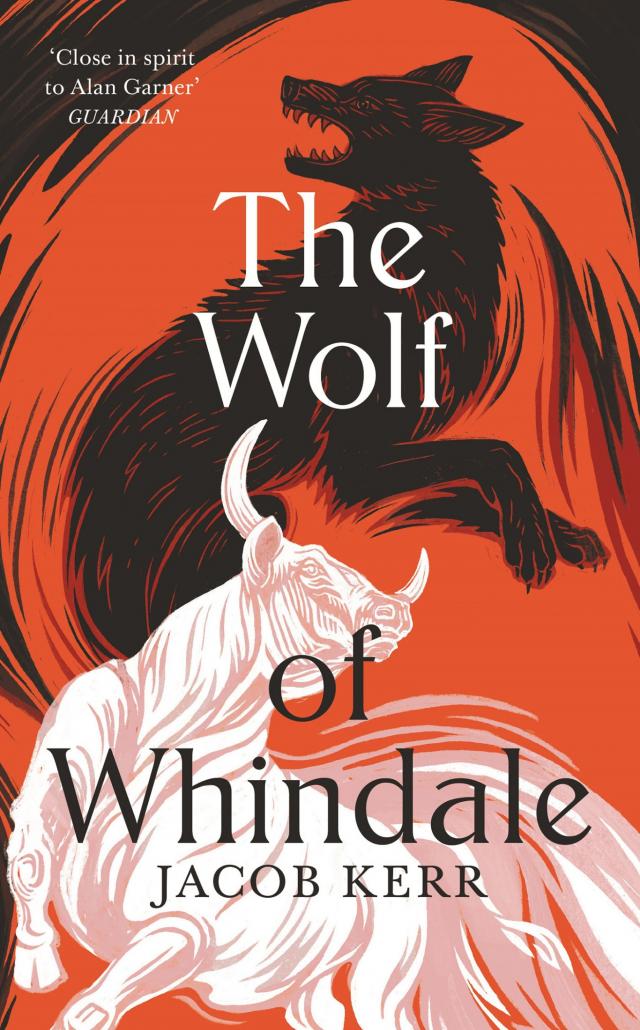
The Wolf of Whindale
Also by Jacob Kerr and available from Serpent’s Tail:
The Green Man of Eshwood Hall
The Wolf of Whindale
A Tale of Northalbion
Jacob Kerr
First published in Great Britain in 2025 by
Serpent’s Tail,
an imprint of Profile Books Ltd
29 Cloth Fair
London
EC1A 7JQ
www.serpentstail.com
Copyright © Jacob Kerr, 2025
Text design by Crow Books
1 3 5 7 9 10 8 6 4 2
The moral right of the author has been asserted.
All rights reserved. Without limiting the rights under copyright reserved above, no part of this publication may be reproduced, stored or introduced into a retrieval system, or transmitted, in any form or by any means (electronic, mechanical, photocopying, recording or otherwise), without the prior written permission of both the copyright owner and the publisher of this book.
A CIP catalogue record for this book is available from the British Library.
We make every effort to make sure our products are safe for the purpose for which they are intended. For more information check our website or contact Authorised Rep Compliance Ltd., Ground Floor, 71 Lower Baggot Street, Dublin, D02 P593, Ireland, www.arccompliance.com
ISBN 978 1 80081 1522
eISBN 978 1 80081 1546
The Wolf of Whindale
For Jeff
O, ye immortal gods! what is theogony?
O, thou too, mortal man! what is philanthropy?
O, world! which was and is, what is cosmogony?
Some people have accused me of misanthropy;
And yet I know no more than the mahogany
That forms this desk, of what they mean; lykanthropy
I comprehend; for, without transformation
Men become wolves on any slight occasion.
Byron, Don Juan, Canto IX
If I forget thee, O Jerusalem, let my right hand forget her cunning.
Psalm 137:5
Contents
Prologue: an extract from a lecture, ‘Mithras Sol Invictus: Mysteries Old and New’ […]
At Whindale Top
The Combination
The Scab and the Iron Devil
an extract: op. cit.
The Wolf of Whindale
The Pariah
At the Sill
At Brink House
The Tour
La Ghoul
The Prince and Poor Thomas
an extract: op. cit.
The Knack and the Shift
The Plan
an extract: op. cit.
The Prodigal
Prologue
an extract from a lecture, ‘Mithras Sol Invictus: Mysteries Old and New’, delivered by Dr Erasmus Wintergreen at the Hermetic Philosophy Library, Oldshield, 18 December 1916
Ladies and gentlemen, I was honoured to be asked here this evening to speak to you all about the mythology and folklore peculiar to Northalbion, and I was delighted when the librarian, Mr Thorne, asked if I might pay especial attention to the lore pertaining to Mithras, the Roman sun-god who was once – long ago, and not since the fourth century, so we have been told – worshipped here, in dedicated temples all along Trajan’s Wall. I accepted Mr Thorne’s invitation with eagerness and gratitude, and that I encountered a most unexpected difficulty in obliging him is no fault of his. But I am running ahead of myself, so let me begin by introducing our subject.
By the time the cult of Mithras took root in Northalbion, the Roman Empire had spread over much of the known world, from the Nile to the Rhine, from the Black Sea to the ground on which we meet today. As usual, the Romans had set about syncretically absorbing the gods of the local population into their own capacious system, and this is how they came to know of an entity that had inhabited the region known as Northalbion for as long as anyone remembered. What the local population called it has not been recorded, but the Romans called it Mithras, borrowing the name of a Persian god, – ‘Mitra’. Now, in the Avestan dialect of Old Iranian, means contract, agreement, treaty, oath, bargain. Terms would be agreed by shaking hands and swearing on Mitra’s name. In one tradition, Mitra was Ba’al’s twin brother, and just as Ba’al was the god of darkness and secrets, Mitra was sunlight and truth. The Roman Mithras, it was to be hoped, would retain the qualities associated with the good brother. But twins can be so difficult to tell apart! One twin may even pose as the other, if they have a mind to …
In any case, the Romans manufactured new rituals to worship this entity. Now, ladies and gentlemen, in my experience supernatural beings are rather like stray cats: so long as you keep feeding them, they will keep coming back. Soon enough, the entity answered to the name Mithras, or Sol Invictus Mithras, or variants thereof – though, as I say, none of these were its true name. The Romans declared the entity to be a mediator of the divine, sidereal and earthly realms, as well as a god of the intellect, and much else besides. They described it as having a body like a lion, wings like a bat and the face of a beautiful young man. They depicted it standing, with its right hand raised and its left hand lowered, for its first lesson was the first lesson of all occult systems: as above, so below. Mithras, they said, had one hand in the divine realm and one hand in the earthly realm. Mithras, they said, was the one who had shaken hands with the sun – and, like the sun, he saw all things and knew all things. Indeed, his followers believed that the sun had knelt before him, hence his title Sol Invictus. Mithras was the one who spun the great wheel of the zodiac.
But I find myself in a rather awkward position today, for I fear I have come here under a false pretence. When our illustrious librarian, Mr Thorne, so kindly invited me, it was to speak to you all about the mythology associated with Mithras – and yet it has come to my attention that Mithraic worship is not, in actuality, a matter of mythology or folklore at all. Rather, it is a matter of religion. You see, as I plan to demonstrate, Mithras has, in living memory, retained at least some of his worshippers. And, for all I know, he has them yet …
1 At Whindale Top
1845
Mr Playfair was dead – his body, found two days afore, had been torn to rags, the head separated from the trunk, ripped right off, and placed on Windy Top, keeping toot, high on the law, a lookout all compassed about with his hands and his feet and his guts. The state of it, the sheer violence of it, led some folk to put two and two together. Even then but, there were others who said no, there was no such thing as the Whindale Wolf. Even then but, there were others who said aye, there was such a thing indeed, but that it had never been known to attack a person – as far as anybody knew or could remember, it had only et a sheep chancetimes; and, that being the case, a body – that is, a human body – had maybes killed Mr Playfair and made it look like the work of the wolf, with the turning of him inside-out almost, and the rending of his various parts.
Mr Playfair, or what was left of him, had been found by Stephen Myerscough while he was rounding up the sheep he had grazing on the law. He’d run to Whindale and told the parish constable, who, since he had experience in catching rats but none in catching murderers, sent for a constable from Oldshield. Word got round fast – but, still, we’d not have heard tell of Playfair’s body being found if it hadn’t been for Mr Jobsworth. By day, you see, we’d be at work down the mine, and by night we’d be sleeping in our lodging shop, ten miles south-west over the moors from Whindale Town. We mostly never saw a soul but each other from Monday morning to Saturday afternoon, when we’d head back home to our villages. But the night afore, Mr Jobsworth, who was the consulting engineer for the Whindale Mining Company, had stopped by the lodging shop for to give us the news. So we learned why Playfair hadn’t turned up for work all week. Now we were back underground, but were getting nigh-on nowt done, for all we could think of was our old marra.
It was a terrible crime if murder it was, for Mr Playfair had a young boy of three – a bairn, really – young Thomas, and he’d be an orphan now, for his mam had died birthing him; and, besides that, Playfair was a well-liked man. Even I liked him, when it came to it. He was our steward, so to speak: our foreman in matters of combination, which is what you’d call union affairs, and his name was John Plover. I just called him Mr Playfair. And, while I’m at it, I should say, the consulting engineer’s name was James Dobsworth. I just called him Mr Jobsworth.
My name’s Caleb Malarkey. People have called me all manner of things.
There was six of us in our partnership, working this particular twenty-five-fathom stretch of the vein, and we usually worked in pairs: I was paired with Jack Roebuck (whom I called Mr Crow, because of the sound of his name, and also because of his jet black hair and beard: indeed, he was as hairy a fellow as ever I’d seen); and then George Henry (to whom I bequeathed no nickname) was paired with Zekiel Evans (whom I called Heavens-Evans, on account of his being such a staunch Primitive Methodist); and Mr Plover had been partnered with Lemuel Moughtin (whom I called Mr Muffin).
That day, as ever, we were at work, sixty fathoms deep, digging by candlelight. You cannot do that in a coal mine for the firedamp, but the fumes in a lead-mine are of a different nature and don’t ignite, though they do for your lungs in the end. When I say fumes, I don’t just mean the stench of tallow and the reek of the thunder-box, though that was bad enough – I also mean the dust, for it’s five to one a lead-miner’s apt to die of dust or the consumption afore he dies by
We were tight in our pairs, and in our partnership, and you might even say that we were tight with the agents and engineers and mine owners, for we shared a common dream: all the while we were digging, we were dreaming, you see, dreaming that we’d be lucky and fall in with rich ore. If that were to happen, we’d all be the richer for it, not just the mine owner, whoever that happened to be at the time, for our wages were tied to the value of the ore we dug. That was our bargain. We shared in the gamble, and we’d share in the rewards – or the misfortune, according to happenstance. But to work like that at keeping up a dream takes a toll on you. It breeds uncertainty and suspicion. The way we’d speak of the vein was testimony to this:
‘She’s frightened to climb yon hill, I tell you, and swins away to the sun side!’
‘Aye, deek at how she throws the north cheek up!’
To hear us on, you’d think we were engaged in capturing a wily beast, or guessing at a lover’s caprice, or rationalising the interventions of a moody god. The lead was like a force – a living thing, that is to say – and we’d call our waterfalls and waterways forces, too. We worked at the mercy of these forces, for we used waterwheels in our trade, so a drought could mean weeks off work, and torrential rain was just as bad. The water would ‘quit us out’, we’d say. But, really, everyone lives in a world of forces, regardless of whether they care to name them.
The grove – for that’s what we’d tend to call a lead-mine, a grove – was on the eastern flank of Windy Top. All of this is by the by, but, still, you should know it, so I’ll get you told afore I forget: a vein of lead runs vertical like a fluted curtain – as opposed to coal, which puddles horizontal – and this lead curtain is bottomless or, at the least, it’s deeper than man can delve. She was a strong vein at Windy Top, running east and west. Against her north cheek was a soft dowk, partly shivery, and fornenst it a cawk or spar about a yard wide, joined on the south by a strong rider three or four yards wide, the southernmost portion being mostly pearl spar or calc spar, in which lay ribs of ore four or five or six inches across. Sometimes, instead of being ribbed, the spar was flowered with ore, and all mixed up in the matrix of the vein there’d be zinc blende, copper and iron pyrites, and various species of what-have-you. And here and there the vein would form a sort of flat, and the pearl spar would flutter in amongst the riders towards the north cheek. She was bonny to look at.
At four-and-twenty, I was the youngest of us; hardly a bairn, you may say – but sometimes it matters that all your peers are your elders, as it can be like being the last-born of many brothers, which is to say it’s a condition you never altogether escape, howsoever long you live. To make the matter more apparent, it was the style then for a fellow to have long moustaches, and I could never grow mine. I affected a disdain for the fashion, which didn’t fool anybody. As George Henry liked to say, I still had my milk face. Anyway, a man’s youth is a strange quality that dies hard, and is apt to throw off freaks and flukes and sports long after it should have said its say. So it was with me, in any case, and in consequence I cannot speak with complete authority regarding my choices back then, for I was all but a different man entirely, having so little to regret and so much to dream of doing; whereas today those categories are transposed. And I can give you, besides that, another reason not to wholly believe what I have to tell you: to be young is often to be bored – you’ve no time for it later – and to be bored is to be capricious. Many’s the choice I made for really no better reason than I was eager to see whether I could set an action in motion, or upset a thing from progressing in its natural course. It seems to me now that there was often no more accountability in my behaviour than that of a kitten left alone with a ball of wool. Though, had you asked me at the time, I’d have given you, no doubt, all manner of hifalutin reasonings.
Anyways, I was young, and many around me were doing their best to tolerate it. Principally there was my mam and my sister, Mary, whom I called Mop. Now, I’ve no memory of what Mam was like afore Dad, as Mam put it, ‘buggered off back to Ireland’, but I think she must have been very different – less severe in her religion anyway, for by the time I got to know her she was as good and bitter a churchwoman as you could hope to meet. Even as a child, it seemed to me that she’d tied all the loose ends Dad left behind to the church, so, if you followed any one of the threads of her life for any distance, you’d find yourself back there afore you knew it. When I was a bairn I had no choice but to get caught up in it, singing the hymns with all my might and crying myself to sleep with fears of my imaginary sinfulness, but as I got older the hellfire burnt out, and I began to suspect I’d been fed on ashes, and my childish heart deceived.
Mop was different, or – no: by the time of our story she was as like Mam as a pea’s like a pea, but at one time she could have been different. Yes, things could have been different for Mop. I mind how, as a child, she had a passion for pear drops, and to this day the smell of a sweetie shop brings her back to me, as she was when me and her was thick as thieves. I made it a policy always to keep a poke of pear drops handy, so as to be sure to have something to bribe her with if the need suddenly arose. I hid them in the cavity of the tall clock, which seems a very obvious hidey-hole now that I think of it, but she never jealoused them. When Mam was raging at the wicked world and at Dad for having buggered off, and Mop was in mortal need of a treat, I’d tap her on the shoulder and say ‘Look what I found …’ and so things wouldn’t seem as bad for a spell. But I suppose there’s only so long you can hold the world at bay that way, and when she got to be twelve years old or so, she took a turn. She disdained fancy-work, and read nowt but the Bible. More and more, she would keep to herself, or cleave to Mam, and she put away childish things and wouldn’t play at marbles or jack-ball. In short, she came out against both pear drops and me, saying that I was tempting her, and that she would be good and reject them forthwith, for they were worldly things, and had a fulsome, vulgar smell, and so on and so forth, until I knew that she’d gone down the selfsame path as Mam, and had tied herself to the selfsame church, which only made me detest it all the more. As a consequence of Dad’s having buggered off, I was stuck supporting them – and they were stuck being supported by me, for the only work they were qualified to do was pick stones out of rich men’s land, which was hard labour and paid a pittance. In short, we were each other’s gaolers and each other’s prisoners, and there was no end to it in sight.
‘What’s the difference atween a wolf and a dog anyway?’ someone asked, of no one in particular, back in the gloom of the grove. We’d been thinking of Mr Playfair all the while. For weeks now, the Whindale Wolf had slunk and skulked in the peripherals of our waking thoughts, but now it was front and centre. Mr Crow took it upon himself to frame an answer, for he fancied himself a natural philosopher.
‘Well, first, there’s the size, of course. This isn’t such a great difference, speaking in general, but our particular wolf appears to be a creature of unusual proportions, a freak of nature. Mr Plover was no small man. Also, I’m told that the bite marks that our wolf leaves on the sheep it kills are bigger than those of any dog. So there’s that: there’s the size difference. And you cannot tame a wolf, neither: that’s the second great difference. A dog likes to be trained, to know his place in the order of things, but with a wolf, the training won’t take, and you’ll never can trust him …’
We let Mr Crow blether on for a bit, for it was pleasant to have a body to listen to while we worked, if there wasn’t a song being passed about, as often enough there was – though on no account is whistling allowed down a mine of any sort; it is with miners as it is with seamen, and for as mysterious a reason. Anyways, eventually, George Henry, who was an umbrageous and polrumptious sort, put it to Mr Crow that, for all his flannel, he knew no more about wolves than the rest of us, whereupon Crow fell to scratching his great black beard, as he did whenever he was put to the blush. Over bait we talked it out in the round, and this proved to be more effectual than any one of our attempts to speak authoritatively.


