

The nineteen a jack shep.., p.1
THE NINETEEN: A Jack Shepherd Novel (The Jack Shepherd Novels Book 6), page 1


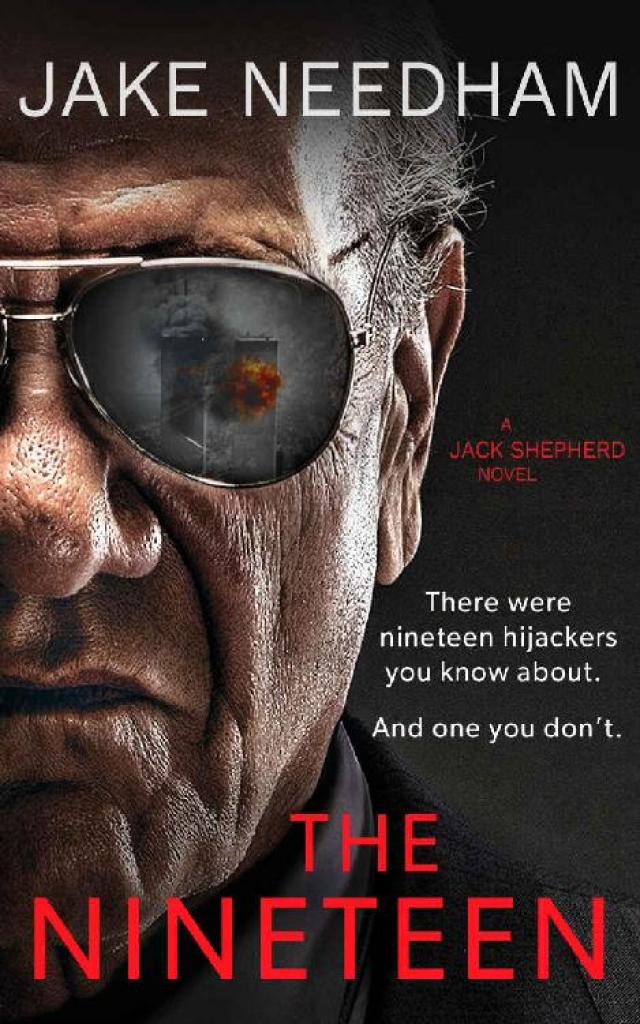
THERE WERE NINETEEN HIJACKERS
YOU KNOW ABOUT.
AND ONE YOU DON’T.
In January 2000, nearly a dozen of Osama bin Laden's most trusted lieutenants gathered secretly in Malaysia at, of all places, a luxurious condominium overlooking a Jack Nicklaus-designed golf course.
The purpose of this summit meeting of terrorists was to plan an attack on America, an attack the world would one day simply call 9/11.
When the meeting ended, some of the Al-Qaeda commanders returned to Afghanistan, but the rest went to Bangkok. Why did they go to Bangkok as soon as they set the plan for 9/11 into motion? No one knew. The CIA lost track of them.
THE NINETEEN is a novel about four Americans in Bangkok ⏤ Jack Shepherd, two local DEA men, and an FBI special agent at the American Embassy ⏤ who banded together in January 2000 to try to do what the CIA couldn’t. Find the Al-Qaeda commanders who were in the city and discover what they were planning.
They got close. Tantalizingly close. They just didn’t get quite close enough.
After the World Trade Center vanished in a cloud of fire and dust, they could only look at photographs of the smoldering ruins and realize that they might have stopped it all. They thought nothing could be worse than knowing they had failed.
And then they found out there was something worse.
There was something much worse.
WHAT THE CRITICS SAY
ABOUT JAKE NEEDHAM
“In his power to bring the street-level flavor of contemporary Asian cities to life, Jake Needham is Michael Connelly with steamed rice.” — The Bangkok Post
“Jake Needham’s the real deal. His characters are moral men and women struggling in an increasingly immoral world, his plotting is top-notch, and his writing is exquisitely fine. Highly, highly recommended.” — Brendan DuBois, New York Times #1 bestselling author with James Patterson of THE SUMMER HOUSE
“If there is a living writer whose work makes me think of the great Raymond Chandler, it’s Jake Needham. He’s a prose master in the same vein.” — James David Audlin, author of THE TRAIN
“Jake Needham is Asia’s most stylish and atmospheric writer of crime fiction.” — The Singapore Straits Times
“Tight and atmospheric, Needham’s novels are thrillers of the highest caliber, a perfect combination of suspense and wit.” — The Malaysia Star
“Needham writes so you can smell the spicy street food mingling with the traffic jams, the sweat, and the garbage.” — Libris Reviews
“Mr. Needham seems to know rather more than one ought about these things.” — The Wall Street Journal
“Needham certainly knows where a few bodies are buried.” — Asia Inc.
“For Mr. Needham, fiction is not just a good story, but an insight into a country’s soul.” — The Singapore New Paper
“Needham can lay claim to being Asia’s bestselling crime novelist.” — The Edge, Singapore
THE NINETEEN
THE JACK SHEPHERD NOVELS - BOOK 6
JAKE NEEDHAM
CONTENTS
I. BEFORE
Chapter 1
Chapter 2
Chapter 3
Chapter 4
Chapter 5
Chapter 6
Chapter 7
Chapter 8
Chapter 9
Chapter 10
Chapter 11
Chapter 12
Chapter 13
Chapter 14
Chapter 15
Chapter 16
Chapter 17
Chapter 18
Chapter 19
Chapter 20
Chapter 21
Chapter 22
Chapter 23
Chapter 24
Chapter 25
Chapter 26
Chapter 27
Chapter 28
Chapter 29
Chapter 30
Chapter 31
Chapter 32
Chapter 33
Chapter 34
Chapter 35
Chapter 36
Chapter 37
Chapter 38
Chapter 39
Chapter 40
Chapter 41
Chapter 42
Chapter 43
II. AFTER
Chapter 44
Chapter 45
III. NOW
Chapter 46
Chapter 47
A Note From The Author
A Preview
The Inspector Samuel Tay Novels
The Jack Shepherd Novels
The Big Mango
Meet Jake Needham
In memory of
Larry McMurtry,
Pulitzer Prize winning novelist,
Oscar winning screenwriter,
and college drinking pal.
Larry was my first writing teacher
and my first critic,
and his career advice was this:
“Needham, maybe you should go to law school.”
THE NINETEEN
PART 1
BEFORE
JANUARY - FEBRUARY 2000
The important thing to know about an assassination is not who fired the shot, but who paid for the bullet.
— Eric Ambler, A COFFIN FOR DIMITRIOS
ONE
Foreknowledge of human folly seldom saves us from its consequences. Herodotus warned us about that more than twenty-five hundred years ago, but we still don’t believe it.
As human beings, we hunt for information, search for explanations, and strive for answers. It's what we do. If only we can know more, we tell ourselves, we will understand what comes next. And if we understand what comes next, we can protect ourselves from harm.
Perhaps that is the greatest burden we carry as members of the human race. We cannot escape the conviction that we can fix the future if only we can find out what it holds.
That’s baloney, of course. There was a time when I knew what the future held. I even knew how terrible it was likely to be. Yet I could do nothing to prevent what happened.
It all came down to one moment, a moment when it could have gone one way, but it went another. That moment became a borderline across my life as well as across yours.
Although we do not know each other, we crossed that borderline together. And nothing since, for either of us, has ever been quite the same.
The story I am about to tell you is not intended to be a justification for my failure, and I’m certainly not seeking vindication. Let me be blunt here. I do not owe you an explanation and I am not asking your forgiveness. The only obligation I have to you now is to provide a factual account of the events that took us up to that borderline as well as the events that led us away from it again.
I will relate what happened exactly as I remember it, not as I now wish it might have been. I will make no excuses. I will leave the matter of judgment entirely up to you.
Okay, enough with the metaphysical bullshit. Let's get down to it.
My name is Jack Shepherd, and my tale begins here.
I was my first year teaching international business at Chulalongkorn University in Bangkok.
Sometimes I did a little consulting work on the side, too, mostly for banks and other financial institutions, but I had discovered that I liked teaching so I didn't do very much of it. Consulting work is lucrative, of course, but it's way too much like practicing law again.
Once upon a time, in a land far, far away, I was a lawyer who was well known in the world of international banking and finance, but I put that life behind me when I came to Bangkok. And I am happy for it to stay behind me.
A lot of people ask me how I came to be teaching in a Thai university almost no one outside of Thailand had ever heard of when I could be doing something significant back in America instead. Most of my interlocutors assumed I must have done something. Maybe it was simply a personal indiscretion, but perhaps I’d been connected with some sort of wrongdoing or even committed an actual crime. What other reason could there be for an American lawyer who was playing on the big stage suddenly to walk away from everything and flee halfway around the world?
Sorry, no. No indiscretion. No wrongdoing. And certainly no actual crime. There’s no there there, as Emily Dickinson observed in a rather different context.
I simply got up one day and decided it was time for something new. This is it. Changing the direction of your life is really very easy. You just do it.
Still, I confess the conjecture I occasionally hear about why I am in Bangkok is much too romantic for me simply to repudiate it unequivocally. I have learned instead to smile slightly, look vague, and let people think what they want.
Perhaps I have always secretly aspired to being seen as something of a rogue. Here in Thailand, that’s not necessarily a bad thing. This is a place where having a reputation with some dubious bits back in the shadows reminds people that there could be a badass lurking under your amiable exterior.
And it keeps them careful.
On the morning it all began for me, I went into the Starbucks on the ground floor of the Mah Boonkrong shopping center to pick up my daily cup of black coffee.
MBK, as it’s locally known, is a Bangkok landmark, a massive, eight-story pile of cracked and weathered concrete famous for the hundreds of small stalls on every floor selling knock-off fashions, copy watches, and every known brand of cell phone, including not a few whose provenance might be a touch sketchy. Personally, I wouldn't buy anything there except coffee, and I'm not even all that confident about the coffee.
When the girl behind the counter called out my name, I scooped up my cup and sipped at it while I took a leisurely stroll down Phayathai Road to the Chula campus.
No one in Bangkok calls Chulalongkorn University anything other than just Chula. The use of the diminutive is intended to express affection and pride at the presence here of Thailand’s century-and-a-half-old national university. At least I think it is. As with most words spoken in Thailand, the actual meaning is left a bit ambiguous. Thailand is a culture of equivocation and ambivalence, something with which I was becoming alarmingly comfortable for a man schooled in the preciseness of the law.
Chula occupies a large piece of prime real estate right in the middle of Bangkok. At the core of the sprawling campus is a complex of three- and four-story structures built in a whimsical architectural style that is unique to Thailand. Stacks of open, whitewashed balconies are wrapped with ornate balustrades and capped with sharp, multi-tiered peaked roofs tiled in geometric patterns of red and green embellished with elaborate gold ornamentation. The buildings look less like structures designed for the use of human beings than they do a child’s drawing of what heaven must look like.
Surrounding that collection of playful, exuberant structures is a mishmash of other buildings. They vary from contemporary-gone-wrong to a few that are downright belligerent. Every time I walk across the Chula campus, I feel like I’m in an outdoor museum displaying every style of architecture known to man. There are also samples of quite a few styles of architecture that should never have been known to anyone.
The Sasin Graduate School of Business where I am an assistant professor of international business occupies two buildings on the eastern edge of the campus. The first building is lovely and graceful. The second building is ugly and utilitarian.
My office is in the second building.
TWO
I took the elevator up to the sixth floor, fished out my key, and unlocked my office door. That was when I got my first surprise of the day, although it certainly wouldn’t be my last.
“I suppose there wouldn’t be any point in me asking how you got in here.”
“None whatsoever,” Pete Logan said. “I’m a law enforcement officer of the United States of America. I leap locked doors in a single bound.”
“I thought the phrase was leap tall buildings in a single bound and it was Superman who did that.”
“At your service.”
Pete Logan was the American Embassy’s resident FBI agent. In State Department speak, his title was legal attaché, and the common shorthand expression for his position was legat.
Legat always seemed to me to be a clunky word, like an acronym left over after everyone had forgotten what it stood for, but I thought the title of legal attaché was really wonderful. I knew the State Department hadn’t come up with it because it was wonderful at all, but mostly because it sounded a lot less threatening than FBI agent, and the State Department was a master of sounding unthreatening.
For me, the title of legal attaché conjured up visions of distinguished men in white tie and tails embellished with red silk sashes drifting around ornate ballrooms, glasses of vintage champagne in hand, talking in hushed tones with other distinguished men similarly dressed and similarly occupied. The reality, of course, is considerably less glamorous than that. Pete Logan slouched in a chair in my office, his stomach hanging over the flattened waistband of his wrinkled trousers and wearing a rumpled white shirt and nondescript tie that may or may not have been brown, was the living embodiment of that reality.
“I can see you’ve made yourself comfortable in my locked-up office.”
“I have.”
“Been waiting long?”
“Not long.”
“What’s going on, Pete?”
“It’s complicated.”
“Then I’m guessing I probably ought to sit down.”
“I would if I were you.”
I walked behind the desk and settled into my green leather swivel chair. I rocked back and forth a few times while I waited for Logan to tell me why he was there. The chair squeaked loudly in the silence.
I saw Logan’s eyes take in the Starbuck’s cup in my hand.
“You done with that?” Logan asked. “You want some more coffee?”
“It’s my office, Pete. If I want more coffee, I’ll get it.”
“You going to offer me some?” he asked.
“No.”
Pete didn’t argue and his eyes drifted away. He seemed to be studying something that was hanging slightly above my left ear.
“Okay,” he said after a minute or two. “Here it is. I need your help.”
Why was I not surprised?
“Is this personal or professional?” I asked.
“Entirely professional.”
“You’re saying the FBI wants to retain me as a consultant?”
“I don’t recall using the word retain.”
“Then I gather you want me to do some consulting work for the FBI for free.”
“You must be clairvoyant.”
“Why would I do that?”
“Because your country needs you?”
“My clients generally pay me for my advice, Pete. Besides, I’m pretty busy right now. I have a lot of clients already.”
“You’re not busy, and you only have a few clients.”
“Okay, maybe it's about a half dozen.”
“Not a half dozen. You have two clients. Exactly two. And one of them hasn’t paid you for four months.”
“How do you know all this?”
“I’m the FBI. I know everything.”
I nodded slightly, but I didn’t say anything. I just tilted back in my chair, made a rolling motion with my right forefinger, and waited.
“Here’s the deal,” Logan said. “I think Al-Qaeda is laundering money through Thailand. I want to find out how they’re doing it and what they’re doing it for, then stop them.”
“Oh, is that all? Maybe you'd like me to cure cancer at the same time?”
“A few days ago,” Pete continued, ignoring me just as I knew he would, “there was a kind of summit meeting of Al-Qaeda heavies outside Kuala Lumpur. We think the meeting had something to do with moving more money through Bangkok, but we have no idea how they’re doing it or what the money is for.”
“Why in the world would Al-Qaeda hold a meeting in Malaysia?”
“Malaysia is an Islamic country, which makes it an ideal place for our friends from the Middle East to gather. Malaysia doesn't require citizens of Saudi Arabia and the Gulf States to have a visa and a lot of people in their security services are quite relaxed about Islamic jihadists visiting the country.”
“How did you find out about all this?”


