

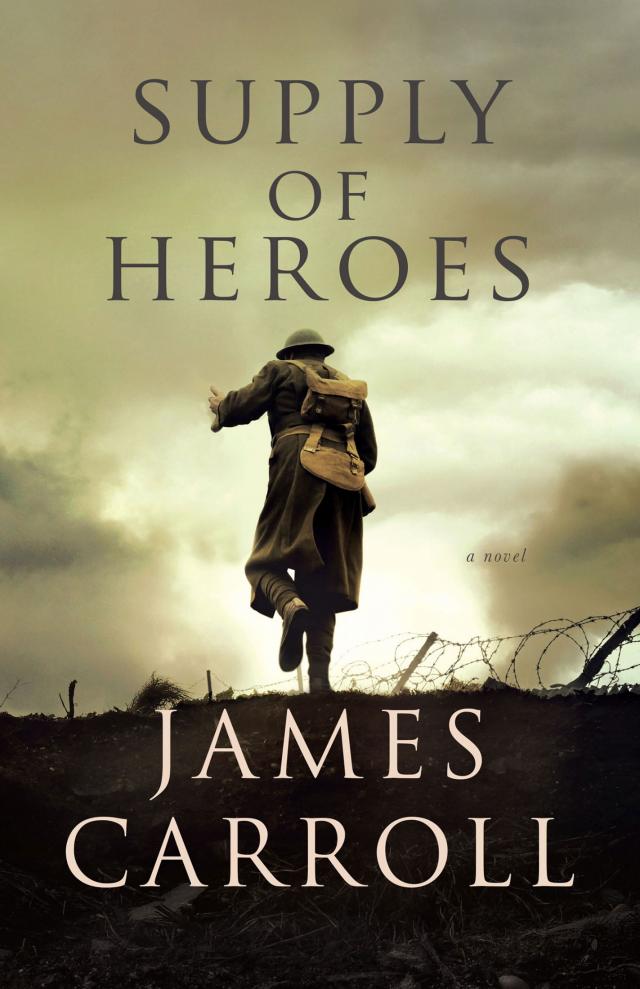
Supply of heroes, p.33
Supply of Heroes, page 33


A small silence fell between them.
Jane knew better than to ask the seemingly natural question: Doing what? She returned to the kitchen for her own tea. When she came back into the parlor, Curry had taken one of the two wooden-backed chairs in front of the smoldering turf fire, the only source of warmth. She sat in the other, curling her feet under her legs and pulling the sweater down to cover them. They sipped their tea in silence. When Curry lit a cigarette, Jane asked for one. His surprise showed, but he gave it to her and struck a match. When she bent over it to inhale the flame, her hair fell around her face, and for a moment it was all he could see of her, the downpour hiding her exquisite face the way his overstretched gray sweater hid the miracle of her body.
When she looked up at him, she said, “Thanks,” then sat back. Her eyes went to the fire. The smoke of their tobacco mingled with the musty smoke of the turf, a pungent burnt aroma that overpowered, to his regret, the acrid smell of sex.
“Whose is this place?”
“A friend of Pádraic’s. A Gaelic folktale man at the university in Dublin. He comes out here summers to listen to the Irish-speakers.” Curry paused, then added, “He’s a priest.”
Only at those words did Jane notice the crucifix on the wall above the fireplace. At that moment the writhing figure of Christ seemed grotesque to her. She had to remind herself that the corpus had become her symbol of life’s hard truth, of Ireland’s agony. But Christ’s nakedness called to mind Dan’s, which she preferred. It wasn’t torture she wanted, but consolation. She flicked her cigarette toward the fire and looked at Curry. His eyes had followed hers to the cross and remained on it. She said, “So no matter where we go, one of them is watching. God’s mother, God’s son; they’re a family of voyeurs.”
Dan bristled inwardly at her mild blasphemy, but he forced a laugh. “You said in Tralee you wanted to be seen.”
“Not in a priest’s bed.”
“But you aren’t with a priest.”
But at last he seemed like a priest to her, in the purity of his devotion. Did it matter that it was devotion not to a religion but to a nation? The gay ebullience she’d loved in him in those first days at the Abbey had given way to a fierce, politically motivated asceticism. She was herself the great exception, she saw, to the rigor of his single-mindedness. She assumed that he felt sullied, the way a married man would after such sexual passion with a woman not his wife. Or more to the point, the way a priest would. Well, Jane didn’t feel sullied, and if he had, for his own reason, to be guarded with her, she didn’t have to be guarded with him. “You seem distressed, Dan. I wonder why.”
He stared at the tip of his cigarette. “‘Distressed’? I wouldn’t think ‘distressed.’”
“What, then?”
“It’s common, isn’t it, for lovers to feel a certain”—what was the word he’d heard applied to this?—“tristesse?” He looked up, but away from her.
“With me, Dan, the tristesse just stopped.”
He couldn’t bring himself to look at her. Instead he fixed his gaze rigidly upon the glowing bricks of turf.
“What makes us different, do you think?” She had refused to push against such awkward feelings all her life, but this time she was going to push through them.
“History.”
“You think my history is unlike yours? I’d never been with a man before you.”
“I didn’t mean personal history, Jane.”
She answered sharply, “Are you thinking of Wolfe Tone, Dan? Or Oliver Cromwell? William of Orange? Or is it dear old Henry the Eighth? There comes a point when that history can be made to mean too much. What else does my being here like this mean but that you and I have reached that point?”
“But this isn’t a bubble of air, untouched by what surrounds us.”
“Enemies surround us, is that it? Why are these feelings of yours the result of what we’ve done together? You came inside me and touched me where no one has ever touched me before. But for you, instead of physical communion, our intimacy is the revelation of all that separates us. When we scrape away the glow, we see that even I’m your enemy. Is that it? Is that what you are feeling?”
“What I’m feeling is closer to you than I’ve ever felt to anyone.”
“Then what’s wrong?”
“I can’t put it into words.”
“You must. You simply must.”
Yes, he knew that. But the heavy silence had gripped him again, and for a long time he could not speak.
Jane never stopped looking at him. She would outlast his inhibition.
Finally he said, “I left Maynooth because I was terrified of being alone. To have been so at the mercy of such a fear fills me with shame. Everyone is alone. I know that now. At the Abbey Theatre I was surrounded with people who thought well of me, were even fond of me, but I felt more alone than ever. And what assuaged the pain of that, what took it away, really . . .” He looked at her now. What he was going to say would hurt her. “. . . was the feeling of being at one with my people. Don’t you see, Jane, the Cause is more than the Cause to me. It’s been my salvation. Communion, you said. Yes, that’s the feeling, but communion with my people. It’s what I was supposed to feel as a priest, but couldn’t. I feel it now, working for their freedom.”
Jane put her teacup on the floor and reached across to him, touching his arm. “But Dan, I told you. You don’t have to choose between me and your people anymore. I am one of them.”
“But you’re not, Jane.”
Now she did flinch. She withdrew her hand. “Because I’m a Protestant?”
“Yes.” A simple declaration, his affirmation glistened with its own purity.
And Jane was stunned, but not at all in the way she’d have expected to be. She knew the obvious arguments, how Protestants had played, and were playing now, central roles in Ireland’s great struggle—the litany of heroes ran from Tone to Parnell to her own father, to Maud Gonne and Constance Markievicz, to Casement himself. The important divisions were not religious—she could recite this line in her sleep—but economic. But Dan Curry knew all those arguments too. He’d been at the Abbey, after all, and knew Synge and Lady Gregory, Douglas Hyde and Oliver Gogarty. He was talking about something more fundamental, the bedrock reality that had yet to fully manifest itself but that would be clear to all in a short time. The oh-so-rational syllogisms—All Daughters of Ireland are Irish patriots. Some Protestants are Daughters of Ireland. Therefore some Protestants are Irish patriots—that should have made it seem absurd hadn’t yet and never would. He was talking about Catholic Ireland, Ireland Catholic, a Catholic nation for a Catholic people. He was saying its moment had finally come. And what stunned Jane was her visceral recognition, after all this time, that he was right.
Perhaps what made her know it was her own new experience that intense religious faith—and wasn’t this the secret that lay beyond the grasp of “reasonable” people who were indifferent to belief?—could make a crucial difference to one’s life. “Reasonable” people would never grasp that religion could be Ireland’s central problem because they could not imagine that religion could have first been Ireland’s main solution.
She said, “What I tried to explain before, Dan, is that when I lost you I felt completely set adrift. I was in England, but I discovered I wasn’t English. Not English in any way. My brother came home and I discovered that my ties with my family had somehow been cut. I went to Dublin looking for you, but you were gone, and I faced the truth that I was alone. Perhaps that’s what you did on leaving Maynooth, facing that aloneness. But you were ahead of me. You already had something I lacked. You had your faith. Well, now I have mine. I believe in God, Dan.” The statement was momentous to her, and having made it, she fell silent. The words reverberated in her.
Curry sensed that she’d stopped short, and he knew that her commitment—to him, to Ireland—required more. He said, “Will you become a Catholic, Jane?”
Not a demand or request. An invitation, rather, but also a test.
She nodded. “Yes.”
And Curry saw that, in her one word, her half of the pact was made. And what of his? He could make his commitment now only by telling her the truth. “Jane, I’m here to prepare for a German invasion on the beach below this cottage. It’s coming, in barely more than a month, the weekend of Easter. Collusion with Germany is what siding with Ireland and with Catholics has come to require. It’s terrible, but true.”
She didn’t flinch. “I know what’s required, Dan. And I’m prepared to be a part of it.”
He looked away from her, moved by her refusal to let barriers stand between them. The great obstacle that made their love impossible did not exist. Now the only obstacle was in him. He said quietly, “But you may not be prepared for everything. Being with me may involve something you’d rather keep your distance from.”
“You mean the Rising? I’m in it, Dan. What must I do to declare myself? What must I do to convince you? Is it distance you think I want?” She sensed his reluctance, and suddenly doubt filled her. Was any of this true? Her wanting to be a Catholic? Her wanting to be Irish? Her wanting to help bring about a free Irish nation? Or was it only that she wanted him? And wouldn’t that make her ridiculous now if what he wanted was all of that but her?
He said quietly, “No, I don’t mean the Rising. I mean my fear.”
When he looked at her, she saw that his eyes were brimming.
He said with bewilderment, “I’m afraid of you.”
“Why?” Her voice was a whisper.
“Because I love you, and I see now . . .” He stopped.
“. . . that I love you,” she said.
He nodded, full of an emotion that had gripped him his whole life, since the earliest gloom of the crowded rooms on Henrietta Street, where he’d fought through the chaos of a dozen howling or morose siblings for the scraps of his mother’s distracted fondness, then later for scraps only of bread. In those rooms he learned to be his defeated father’s son. It was his father’s emotion, this certainty that in the center of himself—where a woman’s love collects and from which hope and faith radiate and in which the resolute sense of self-worth quickens—there was a core of nothing. Curry’s pretense collapsed, and he saw the nothing, nothing, nothing from which, as a spoiled priest, posturing actor, and now solitary patriot, he had been in lifelong, headlong flight. He fell onto his knees before Jane and crushed his head into her lap. “I love you, Jane,” he repeated desperately, “I love you.”
She stroked his head, pressing him with what she had—her experience, her strength, and now, ironically, the faith she felt he’d given her. Believing in God, she understood, was how certain human beings believed in themselves. She was distressed at his pain, of course, but relieved too, for she understood that his reluctance had been reluctance to feel this anguish. Like the Irishman that he was, he had yielded to his emotion in courage and now was handing it over to her, his first gift. This was his virginity, she saw. How surprising that she should feel prepared to take it from him. That she welcomed his expression and could receive his fear made her feel as Irish as he was. She saw what she could do for him—make him see that if he was truly nothing, nothing, nothing, how could she love him so and why would she do anything now—whether for God or Ireland or not—for him?
When he came up, their faces were only inches apart. Jane tried to read his eyes for their hard, dark secrets. She had never before been so close to a man’s anguish; of course it frightened her. With her forefinger she traced the tearstain on his cheekbone, down to where it disappeared into his whiskers. She lowered her face to his, to kiss him. She welcomed it, despite the cold, when his hands went under the sweater. She expected that he would push it up to expose her, so that he could touch his face to her breasts. But instead he leaned against the soft, beaten wool, his hands pressed together at the small of her back. Instinctively she began to rock slightly. The small movement brought to mind her mother.
She tried to imagine her mother rocking her father in this way, him half kneeling, half leaning on her. But she knew her parents had never been together like this. Her father had never exposed such need, had never felt it. She said, “Let’s move to the bed, darling.”
It was a narrow bed, meant for one person. Jane pulled the sweater over her head and dropped it. She sat on the edge of the bed, drawing Dan close. He remained standing, unbuttoning his shirt. Jane worked at his trousers. For the first time, all self-consciousness left her, and she realized that he was submitting to her initiative. When he was standing naked before her, she pulled him down onto the bed.
Her legs opened and he pushed into her. His passion outran him, and he was afraid that he would come too quickly again. But no. As if their emotional turmoil bound them in a new way—they had made their commitment—she stayed with him perfectly throughout that carnal flight, that brief ecstasy of rescue, from all life’s grief.
“So you want to be a Catholic, eh?” He was up on his elbow, smiling down on her. His meaning was clear enough: she’d have to learn a Catholic’s distaste for sex. She had the heavy brown blanket pulled to her chin, but out of cold, not modesty.
“Blatantly,” she said and laughed. “And I shall require you to be my sponsor.”
He shook his head vigorously. “That’s a canonical impediment.”
“What?”
“You’ve a lot to learn, my love. A canonical impediment. If I was to be your baptismal sponsor, I wouldn’t be permitted to marry you.”
“Why?” Jane had to stifle a native repugnance. He was making light of it, but she’d been taught to regard such legalism as the surest sign of the religion’s morbidity.
Curry shrugged. “Spiritual consanguinity.”
“What rubbish.”
“Get used to it, darling.”
Curry’s gloating seemed inappropriate to Jane. He should have been embarrassed. “But what does that mean? Spiritual what?”
“Consanguinity. I’d be like your brother.”
An unfortunate reference, it shocked them both. Jane faced away. “I hope not.”
“Where is he, anyway? Back at the Front?”
Jane shook her head. “He’s at home.”
“In London?”
“No, Cragside. With my father. Pamela and the children are there as well.”
“How can that be? He’s an officer. It’s been four months.” Curry felt a visceral alarm. It shocked him to realize that he hadn’t asked her this before, that she hadn’t told him. “Why is he at Cragside?”
“Apparently he’s unwell, after what he went through.”
Curry sat up, indifferent to the chill air on his naked torso. “He was well enough in London. I saw him. He was perfectly well.”
“I thought he was too, but . . .”
“But what? What haven’t you told me?”
Jane had yet to admit this to herself. How could she have admitted it to him? Her refusal to confront the fact shamed her as much as the fact itself did. “I think he’s after you.”
“And when you learned that, you were . . . ?
“It’s what changed me. It changed everything.” Her mind was full of that scene: Douglas, in his brilliant uniform, coming at her with his riding crop. “He called me your whore.”
Curry wanted to turn away from her, but how could he? He sensed at once the danger Tyrrell represented to him and to the entire plan. He should have put aside everything else to consider it. But put aside Jane? Her devastation overwhelmed him. He put his hand on her shoulder. “The bastard,” he said.
Jane turned her head aside, tears spilling onto the pillow. When Curry touched her face, turning it back to him, she said, “I’m not your whore, am I?”
“You’re going to be my wife, if I have my way.” When he embraced her, she clung to him. His consolation meant everything to her, as hers had to him. The circle of their need was now complete.
But Curry’s mind returned to Tyrrell—Tyrrell in the west of Ireland, pretending to be unwell. He knew he should report this to Pearse; it was the very link Pearse had warned him of. But Pearse would make him obey his own vow never to see Jane again, as if she were the threat. Pearse, of course, would see the way in which she was. He would remove Curry and abandon his plan for the German landing, devising another. Dan Curry, the spoiled priest, would be a spoiled patriot.
No. He would do what Jane had done: squeeze his eyes shut against the uncertain power of Douglas Tyrrell. Jane had promised Dan he’d never have to choose again between her and Ireland, but she was wrong. As he held her, his face in her hair, he knew he’d blurted out the truth that first time. Ireland was nothing to him, compared to her.
It was raining when they left the cottage early the next morning. Jane was returning to Dublin. Even in the weather, Curry paused in front of his automobile to point in the direction of the finger-thin strand, the long peninsula poking into Tralee Bay. The landing at half tide; a brilliant plan and a perfect place for it.
Curry’s cottage was on the narrow plateau along which the Fenit road ran. The plateau was halfway up the broad hill that sloped back from the bay. On top of the hill, huddled by a trinity of huge boulders that once might have marked a Druid holy place, Douglas Tyrrell followed through his field glasses the direction of Curry’s arm. Tyrrell saw the beach. He surveyed the waters of the rain-shrouded bay, which even in that downpour, protected as it was by mammoth Dingle, was flat calm, as if ready, waiting like the bay between the legs of a willing lover.
He turned his binoculars on Jane just as she took Curry’s hand to climb into the motorcar. He had hoped to read her face, but he never saw it. It was just as well.
Curry cranked the motor efficiently, then climbed in beside her. Tyrrell followed the car, as it headed off toward Fenit and Tralee, until it disappeared.
Jane knew better than to ask the seemingly natural question: Doing what? She returned to the kitchen for her own tea. When she came back into the parlor, Curry had taken one of the two wooden-backed chairs in front of the smoldering turf fire, the only source of warmth. She sat in the other, curling her feet under her legs and pulling the sweater down to cover them. They sipped their tea in silence. When Curry lit a cigarette, Jane asked for one. His surprise showed, but he gave it to her and struck a match. When she bent over it to inhale the flame, her hair fell around her face, and for a moment it was all he could see of her, the downpour hiding her exquisite face the way his overstretched gray sweater hid the miracle of her body.
When she looked up at him, she said, “Thanks,” then sat back. Her eyes went to the fire. The smoke of their tobacco mingled with the musty smoke of the turf, a pungent burnt aroma that overpowered, to his regret, the acrid smell of sex.
“Whose is this place?”
“A friend of Pádraic’s. A Gaelic folktale man at the university in Dublin. He comes out here summers to listen to the Irish-speakers.” Curry paused, then added, “He’s a priest.”
Only at those words did Jane notice the crucifix on the wall above the fireplace. At that moment the writhing figure of Christ seemed grotesque to her. She had to remind herself that the corpus had become her symbol of life’s hard truth, of Ireland’s agony. But Christ’s nakedness called to mind Dan’s, which she preferred. It wasn’t torture she wanted, but consolation. She flicked her cigarette toward the fire and looked at Curry. His eyes had followed hers to the cross and remained on it. She said, “So no matter where we go, one of them is watching. God’s mother, God’s son; they’re a family of voyeurs.”
Dan bristled inwardly at her mild blasphemy, but he forced a laugh. “You said in Tralee you wanted to be seen.”
“Not in a priest’s bed.”
“But you aren’t with a priest.”
But at last he seemed like a priest to her, in the purity of his devotion. Did it matter that it was devotion not to a religion but to a nation? The gay ebullience she’d loved in him in those first days at the Abbey had given way to a fierce, politically motivated asceticism. She was herself the great exception, she saw, to the rigor of his single-mindedness. She assumed that he felt sullied, the way a married man would after such sexual passion with a woman not his wife. Or more to the point, the way a priest would. Well, Jane didn’t feel sullied, and if he had, for his own reason, to be guarded with her, she didn’t have to be guarded with him. “You seem distressed, Dan. I wonder why.”
He stared at the tip of his cigarette. “‘Distressed’? I wouldn’t think ‘distressed.’”
“What, then?”
“It’s common, isn’t it, for lovers to feel a certain”—what was the word he’d heard applied to this?—“tristesse?” He looked up, but away from her.
“With me, Dan, the tristesse just stopped.”
He couldn’t bring himself to look at her. Instead he fixed his gaze rigidly upon the glowing bricks of turf.
“What makes us different, do you think?” She had refused to push against such awkward feelings all her life, but this time she was going to push through them.
“History.”
“You think my history is unlike yours? I’d never been with a man before you.”
“I didn’t mean personal history, Jane.”
She answered sharply, “Are you thinking of Wolfe Tone, Dan? Or Oliver Cromwell? William of Orange? Or is it dear old Henry the Eighth? There comes a point when that history can be made to mean too much. What else does my being here like this mean but that you and I have reached that point?”
“But this isn’t a bubble of air, untouched by what surrounds us.”
“Enemies surround us, is that it? Why are these feelings of yours the result of what we’ve done together? You came inside me and touched me where no one has ever touched me before. But for you, instead of physical communion, our intimacy is the revelation of all that separates us. When we scrape away the glow, we see that even I’m your enemy. Is that it? Is that what you are feeling?”
“What I’m feeling is closer to you than I’ve ever felt to anyone.”
“Then what’s wrong?”
“I can’t put it into words.”
“You must. You simply must.”
Yes, he knew that. But the heavy silence had gripped him again, and for a long time he could not speak.
Jane never stopped looking at him. She would outlast his inhibition.
Finally he said, “I left Maynooth because I was terrified of being alone. To have been so at the mercy of such a fear fills me with shame. Everyone is alone. I know that now. At the Abbey Theatre I was surrounded with people who thought well of me, were even fond of me, but I felt more alone than ever. And what assuaged the pain of that, what took it away, really . . .” He looked at her now. What he was going to say would hurt her. “. . . was the feeling of being at one with my people. Don’t you see, Jane, the Cause is more than the Cause to me. It’s been my salvation. Communion, you said. Yes, that’s the feeling, but communion with my people. It’s what I was supposed to feel as a priest, but couldn’t. I feel it now, working for their freedom.”
Jane put her teacup on the floor and reached across to him, touching his arm. “But Dan, I told you. You don’t have to choose between me and your people anymore. I am one of them.”
“But you’re not, Jane.”
Now she did flinch. She withdrew her hand. “Because I’m a Protestant?”
“Yes.” A simple declaration, his affirmation glistened with its own purity.
And Jane was stunned, but not at all in the way she’d have expected to be. She knew the obvious arguments, how Protestants had played, and were playing now, central roles in Ireland’s great struggle—the litany of heroes ran from Tone to Parnell to her own father, to Maud Gonne and Constance Markievicz, to Casement himself. The important divisions were not religious—she could recite this line in her sleep—but economic. But Dan Curry knew all those arguments too. He’d been at the Abbey, after all, and knew Synge and Lady Gregory, Douglas Hyde and Oliver Gogarty. He was talking about something more fundamental, the bedrock reality that had yet to fully manifest itself but that would be clear to all in a short time. The oh-so-rational syllogisms—All Daughters of Ireland are Irish patriots. Some Protestants are Daughters of Ireland. Therefore some Protestants are Irish patriots—that should have made it seem absurd hadn’t yet and never would. He was talking about Catholic Ireland, Ireland Catholic, a Catholic nation for a Catholic people. He was saying its moment had finally come. And what stunned Jane was her visceral recognition, after all this time, that he was right.
Perhaps what made her know it was her own new experience that intense religious faith—and wasn’t this the secret that lay beyond the grasp of “reasonable” people who were indifferent to belief?—could make a crucial difference to one’s life. “Reasonable” people would never grasp that religion could be Ireland’s central problem because they could not imagine that religion could have first been Ireland’s main solution.
She said, “What I tried to explain before, Dan, is that when I lost you I felt completely set adrift. I was in England, but I discovered I wasn’t English. Not English in any way. My brother came home and I discovered that my ties with my family had somehow been cut. I went to Dublin looking for you, but you were gone, and I faced the truth that I was alone. Perhaps that’s what you did on leaving Maynooth, facing that aloneness. But you were ahead of me. You already had something I lacked. You had your faith. Well, now I have mine. I believe in God, Dan.” The statement was momentous to her, and having made it, she fell silent. The words reverberated in her.
Curry sensed that she’d stopped short, and he knew that her commitment—to him, to Ireland—required more. He said, “Will you become a Catholic, Jane?”
Not a demand or request. An invitation, rather, but also a test.
She nodded. “Yes.”
And Curry saw that, in her one word, her half of the pact was made. And what of his? He could make his commitment now only by telling her the truth. “Jane, I’m here to prepare for a German invasion on the beach below this cottage. It’s coming, in barely more than a month, the weekend of Easter. Collusion with Germany is what siding with Ireland and with Catholics has come to require. It’s terrible, but true.”
She didn’t flinch. “I know what’s required, Dan. And I’m prepared to be a part of it.”
He looked away from her, moved by her refusal to let barriers stand between them. The great obstacle that made their love impossible did not exist. Now the only obstacle was in him. He said quietly, “But you may not be prepared for everything. Being with me may involve something you’d rather keep your distance from.”
“You mean the Rising? I’m in it, Dan. What must I do to declare myself? What must I do to convince you? Is it distance you think I want?” She sensed his reluctance, and suddenly doubt filled her. Was any of this true? Her wanting to be a Catholic? Her wanting to be Irish? Her wanting to help bring about a free Irish nation? Or was it only that she wanted him? And wouldn’t that make her ridiculous now if what he wanted was all of that but her?
He said quietly, “No, I don’t mean the Rising. I mean my fear.”
When he looked at her, she saw that his eyes were brimming.
He said with bewilderment, “I’m afraid of you.”
“Why?” Her voice was a whisper.
“Because I love you, and I see now . . .” He stopped.
“. . . that I love you,” she said.
He nodded, full of an emotion that had gripped him his whole life, since the earliest gloom of the crowded rooms on Henrietta Street, where he’d fought through the chaos of a dozen howling or morose siblings for the scraps of his mother’s distracted fondness, then later for scraps only of bread. In those rooms he learned to be his defeated father’s son. It was his father’s emotion, this certainty that in the center of himself—where a woman’s love collects and from which hope and faith radiate and in which the resolute sense of self-worth quickens—there was a core of nothing. Curry’s pretense collapsed, and he saw the nothing, nothing, nothing from which, as a spoiled priest, posturing actor, and now solitary patriot, he had been in lifelong, headlong flight. He fell onto his knees before Jane and crushed his head into her lap. “I love you, Jane,” he repeated desperately, “I love you.”
She stroked his head, pressing him with what she had—her experience, her strength, and now, ironically, the faith she felt he’d given her. Believing in God, she understood, was how certain human beings believed in themselves. She was distressed at his pain, of course, but relieved too, for she understood that his reluctance had been reluctance to feel this anguish. Like the Irishman that he was, he had yielded to his emotion in courage and now was handing it over to her, his first gift. This was his virginity, she saw. How surprising that she should feel prepared to take it from him. That she welcomed his expression and could receive his fear made her feel as Irish as he was. She saw what she could do for him—make him see that if he was truly nothing, nothing, nothing, how could she love him so and why would she do anything now—whether for God or Ireland or not—for him?
When he came up, their faces were only inches apart. Jane tried to read his eyes for their hard, dark secrets. She had never before been so close to a man’s anguish; of course it frightened her. With her forefinger she traced the tearstain on his cheekbone, down to where it disappeared into his whiskers. She lowered her face to his, to kiss him. She welcomed it, despite the cold, when his hands went under the sweater. She expected that he would push it up to expose her, so that he could touch his face to her breasts. But instead he leaned against the soft, beaten wool, his hands pressed together at the small of her back. Instinctively she began to rock slightly. The small movement brought to mind her mother.
She tried to imagine her mother rocking her father in this way, him half kneeling, half leaning on her. But she knew her parents had never been together like this. Her father had never exposed such need, had never felt it. She said, “Let’s move to the bed, darling.”
It was a narrow bed, meant for one person. Jane pulled the sweater over her head and dropped it. She sat on the edge of the bed, drawing Dan close. He remained standing, unbuttoning his shirt. Jane worked at his trousers. For the first time, all self-consciousness left her, and she realized that he was submitting to her initiative. When he was standing naked before her, she pulled him down onto the bed.
Her legs opened and he pushed into her. His passion outran him, and he was afraid that he would come too quickly again. But no. As if their emotional turmoil bound them in a new way—they had made their commitment—she stayed with him perfectly throughout that carnal flight, that brief ecstasy of rescue, from all life’s grief.
“So you want to be a Catholic, eh?” He was up on his elbow, smiling down on her. His meaning was clear enough: she’d have to learn a Catholic’s distaste for sex. She had the heavy brown blanket pulled to her chin, but out of cold, not modesty.
“Blatantly,” she said and laughed. “And I shall require you to be my sponsor.”
He shook his head vigorously. “That’s a canonical impediment.”
“What?”
“You’ve a lot to learn, my love. A canonical impediment. If I was to be your baptismal sponsor, I wouldn’t be permitted to marry you.”
“Why?” Jane had to stifle a native repugnance. He was making light of it, but she’d been taught to regard such legalism as the surest sign of the religion’s morbidity.
Curry shrugged. “Spiritual consanguinity.”
“What rubbish.”
“Get used to it, darling.”
Curry’s gloating seemed inappropriate to Jane. He should have been embarrassed. “But what does that mean? Spiritual what?”
“Consanguinity. I’d be like your brother.”
An unfortunate reference, it shocked them both. Jane faced away. “I hope not.”
“Where is he, anyway? Back at the Front?”
Jane shook her head. “He’s at home.”
“In London?”
“No, Cragside. With my father. Pamela and the children are there as well.”
“How can that be? He’s an officer. It’s been four months.” Curry felt a visceral alarm. It shocked him to realize that he hadn’t asked her this before, that she hadn’t told him. “Why is he at Cragside?”
“Apparently he’s unwell, after what he went through.”
Curry sat up, indifferent to the chill air on his naked torso. “He was well enough in London. I saw him. He was perfectly well.”
“I thought he was too, but . . .”
“But what? What haven’t you told me?”
Jane had yet to admit this to herself. How could she have admitted it to him? Her refusal to confront the fact shamed her as much as the fact itself did. “I think he’s after you.”
“And when you learned that, you were . . . ?
“It’s what changed me. It changed everything.” Her mind was full of that scene: Douglas, in his brilliant uniform, coming at her with his riding crop. “He called me your whore.”
Curry wanted to turn away from her, but how could he? He sensed at once the danger Tyrrell represented to him and to the entire plan. He should have put aside everything else to consider it. But put aside Jane? Her devastation overwhelmed him. He put his hand on her shoulder. “The bastard,” he said.
Jane turned her head aside, tears spilling onto the pillow. When Curry touched her face, turning it back to him, she said, “I’m not your whore, am I?”
“You’re going to be my wife, if I have my way.” When he embraced her, she clung to him. His consolation meant everything to her, as hers had to him. The circle of their need was now complete.
But Curry’s mind returned to Tyrrell—Tyrrell in the west of Ireland, pretending to be unwell. He knew he should report this to Pearse; it was the very link Pearse had warned him of. But Pearse would make him obey his own vow never to see Jane again, as if she were the threat. Pearse, of course, would see the way in which she was. He would remove Curry and abandon his plan for the German landing, devising another. Dan Curry, the spoiled priest, would be a spoiled patriot.
No. He would do what Jane had done: squeeze his eyes shut against the uncertain power of Douglas Tyrrell. Jane had promised Dan he’d never have to choose again between her and Ireland, but she was wrong. As he held her, his face in her hair, he knew he’d blurted out the truth that first time. Ireland was nothing to him, compared to her.
It was raining when they left the cottage early the next morning. Jane was returning to Dublin. Even in the weather, Curry paused in front of his automobile to point in the direction of the finger-thin strand, the long peninsula poking into Tralee Bay. The landing at half tide; a brilliant plan and a perfect place for it.
Curry’s cottage was on the narrow plateau along which the Fenit road ran. The plateau was halfway up the broad hill that sloped back from the bay. On top of the hill, huddled by a trinity of huge boulders that once might have marked a Druid holy place, Douglas Tyrrell followed through his field glasses the direction of Curry’s arm. Tyrrell saw the beach. He surveyed the waters of the rain-shrouded bay, which even in that downpour, protected as it was by mammoth Dingle, was flat calm, as if ready, waiting like the bay between the legs of a willing lover.
He turned his binoculars on Jane just as she took Curry’s hand to climb into the motorcar. He had hoped to read her face, but he never saw it. It was just as well.
Curry cranked the motor efficiently, then climbed in beside her. Tyrrell followed the car, as it headed off toward Fenit and Tralee, until it disappeared.


