

Buster keaton, p.5
Buster Keaton, page 5
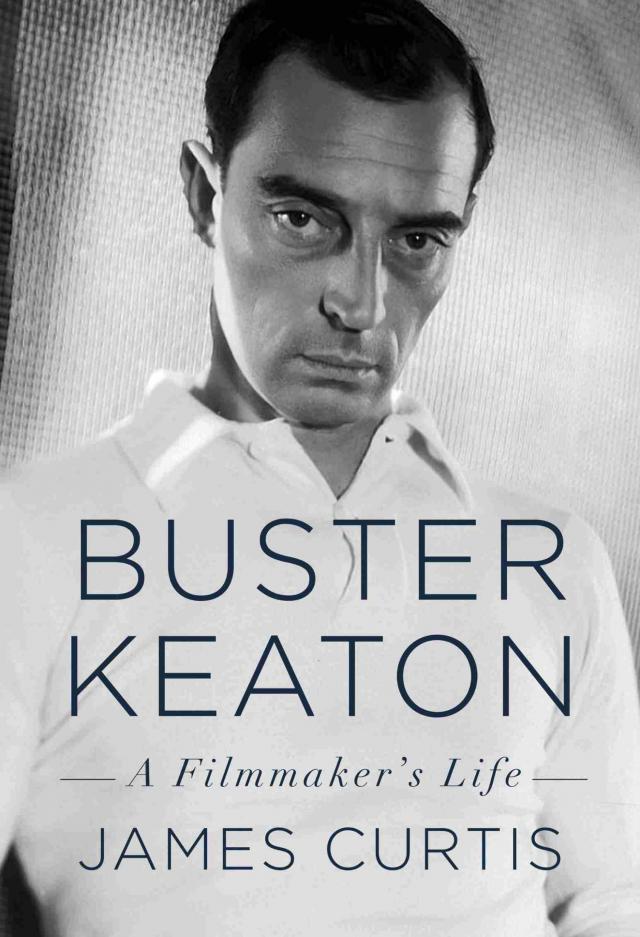


“They say, ‘Open the show,’ we open it,” Buster said. “It’s going to hurt the other acts a lot more than us. A wild laughing act, and the next four turns look lousy. The big boys didn’t give a damn—let ’em look lousy, let ’em quit. The word went down the line: ‘Make it tough on all those babies.’ ”
In Los Angeles, the Times lumped the O’Meers, the De Courcys, and the Keatons together in its notice, approving of the former two while dismissing the latter—who were advertised as “grotesque comedy acrobats-dancers”—as merely living up to their billing. The reviewer for the rival Los Angeles Herald thought the entire program, with the exception of the O’Meers and the De Courcys, “barely up to the standard.” Monroe, Mack, and Lawrence, he judged, overworked the mother-in-law “monstrosity” terribly. “Tommy Baker, billed as an original monologist and parody singer, forgot to unpack his originality last night and his voice takes a circuitous route via his nose.” Even Buster, who had truly come into his own on the Orpheum tour, failed to impress. “The smallest Keaton’s precocity would be interesting if it were not so iterative,” the man sniffed, echoing Epes Sargent’s judgment of six months earlier. But if anything, Buster’s place in the act had actually grown in the interim.
Beginning in Omaha and continuing down through California, the Keatons were paid weekly in gold, which, after expenses, went into the family grouch bag, a purse made of chamois that Myra dangled from a string around her neck and kept hidden under her dress. As it filled with ten- and twenty-dollar gold pieces—the Keatons were getting $225 a week—the bag grew so heavy she was forced to buy a money belt.[*3]
“The best American plan hotels, where we stopped, charged only $1.25 per day per person for room and board,” Buster detailed, “which came to $26.25 a week for all three of us. All of our other living expenses, including tips, Pop’s beer, and other modest luxuries ran no more than fifty dollars a week, and traveling expenses averaged thirty dollars a week. So Mom was stashing away almost $120 a week.” By the end of the Keatons’ abbreviated Orpheum tour, he estimated she was carrying about $1,600 in gold on her ninety-pound frame.
* * *
—
In its earliest days, the act known as The Three Keatons was broadly acrobatic, “eccentric” in the sense that Joe Keaton lacked formal training and formulated the bizarre things he did onstage through trial and error. Buster’s role was to ape the old man’s actions, a pint-size doppelgänger bent on heckling and bedeviling him.
“I just watched what he did,” Buster once said, “and then did the same thing.”
This early photo expertly encapsulates what audiences could expect from “The Man with the Table,” Buster gleefully laying waste to his father’s acrobatic turn while Myra looks on in horror. “What makes you so small?” Joe demanded. “I was raised on condensed milk,” came the boy’s reply.
In May 1901, when he had been with the act eight months, the youngest Keaton was described in one of Joe’s trade ads as “absolutely the funniest imitating and talking comedian of modern times,” suggesting the acrobatics the boy engaged in were a small part of the total package.
“You’d call it pantomime,” Buster acknowledged, “although my father kept talkin’ all the time. He never said the same thing twice. He just tried to convince the audience that there was only one way to bring up children and that was to make ’em mind. Be gentle and kind to them, but make them mind. By that time I’d knocked both of his feet out from under him with a broom or something—the chase was on again.”
Myra would sing “Tobie, I Kind o’ Likes You” and Joe would verbally admonish the boy, but physical action between the two was likely limited to a roll across the stage as a climactic stunt, the boy obviously skilled and unhurt as he made his exit.
“All little boys like to be rough-housed by their fathers,” Buster said in his autobiography. “They are also natural tumblers and acrobats. Because I was also a born hambone, I ignored any bumps or bruises I may have got at first on hearing audiences gasp, laugh, and applaud.”
Over the fall of 1901, as the mocks and insults grew more pointed, the comic violence, particularly along the Orpheum trail, appears to have become more pronounced. “On the stage during his father’s vaudeville turn, Buster struts around, cutting up all sorts of fascinating pranks and keeping the house in roars of laughter.” In November, Joe described the act as “all action and laughs” and the press began to take notice. At first came the observations that were Buster’s lines not so good he’d be in for a spanking. Then at the end of the year at the Hopkins Theatre in Chicago: “Of the children in this week’s bill, ‘Buster’ Keaton is the cleverest. He wears exaggerated shoes, red whiskers and other ‘accessories’ in the makeup that the Ancient Order of Hibernians egged in New York, but this boy is a born comedian, and if his father does not kill him some day while tossing him about the stage he will be another Jeff De Angelis.[*4] ‘You are very short,’ his father says to him. ‘Yes, and if I were not, you would be when payday comes,’ he answers, which is doubtless true.”
To facilitate the grace with which Joe threw Buster around, he had a suitcase handle sewn into the back of the boy’s costume, an innovation he once said came from the act’s first appearance as a threesome at Tony Pastor’s.
“I could take crazy falls without hurting myself,” Buster said, “simply because I had learned the trick so early in life that body control became pure instinct with me. If I never broke a bone on the stage, it is because I always avoided taking the impact of a fall on the back of my head, the base of my spine, on my elbows or my knees. That’s how bones are broken. You also bruise only if you do not know as I do which muscles to tighten, which ones to relax.”
He had the added advantage of a costume shrewdly designed to absorb the shock of a hard landing. “You see this pad in my trousers?” he asked a skeptical reporter from the Cleveland Plain Dealer. “Well, that’s usually where I land. Now lift that coat. Pretty hard to get a bruise through that, don’t you think?”
Although Buster enjoyed mixing it up with his father, he soon noticed that when he flashed a big smile the audience didn’t laugh as much. “Some other comedians can get away with laughing at their own gags,” he said. “Not me.”
He adopted expressions of sadness and bewilderment, even deadpan, but tried never to let on that his twice-daily forays onstage were actually a form of play. “If something tickled me and I started to grin,” he said, “the old man would hiss, ‘Face! Face!’ That meant freeze the puss. The longer I held it, why, if we got a laugh, the blank pan or the puzzled puss would double it.” The Keatons were such a riveting act that when the old theater adjoining the Hopkins caught fire on the night of December 28, pouring smoke into the auditorium, the audience of nearly two thousand remained seated as Joe, Myra, and Buster continued onstage, filing out in an orderly manner only when prompted to do so.
The Keatons entered the year 1902 with bookings in Tennessee and Kentucky, Joe deliberately limiting their time in New York to the friendly management of Tony Pastor, whose longtime business manager, Henry Sanderson, ran interference with the Gerry Society. Joe retired “The Man with the Table” as the formal title of the act, opting instead for the more inclusive “Fun and Nonsense.” The Keatons played Wilmington, New Haven, Rochester, Syracuse. They laid off the month of May in Perry, then worked the summer parks—St. Joseph, Grand Rapids, Toledo, Columbus.[*5]
It was a year spent almost entirely out from under the authority of the Gerry Society, and when they returned to New York in September, it was again to Pastor’s, and again with a wary eye cast for officers of the NYSPCC.
“Most of the Gerry Society agents were known by the theater managers, which made it fairly simple to delete my act when one of them came snooping,” said actress-comedienne Elsie Janis, who, as Little Elsie, a gifted mimic, made her New York debut at the age of eight. “At the Monday matinee, they were usually in evidence. I would do the ‘Gerry’ version of my act [which included no singing or dancing]. They would approve and go away. Then, at every performance I would step a little further across the line of restrictions.”
With his father’s relentless promotion, Buster began to get a taste of what stardom was like. While the Keatons were touring with the Jessie Harcourt Comedy Company, Joe hit on the idea of hosting a matinee reception at every stop, with Buster inviting the children in the audience onstage after the performance and offering each one a handshake and a candy bar.
These were dutifully covered in the local press, and Joe sent accounts to the Clipper and the Dramatic Mirror in which Buster invariably “took the town by storm” and “carried off the honors.” The result on a practical level was that the Harcourts broke three matinee house records in as many weeks.
When the Keatons finished with the Harcourt Company in December 1902, they embarked on a tour of the B. F. Keith circuit, commencing with Keith’s Union Square on December 15. It was, for all practical purposes, the same act the Keatons had been playing out of town in direct defiance of the Gerry Society. “A man, a woman, and a little boy (Buster) who is pretty near the whole act, and does some very fair acrobatic comedy work,” house manager E. F. Rogers wrote in his opening-day assessment, “the laughs coming almost entirely from the little fellow, who is really very clever….They have eliminated much of the talking that they used to do and the act is now very good.” The act, according to the Dramatic Mirror, “went with a rush, and the Keatons began their tour of the Keith circuit in the ‘two-a-day class’ with a decided boom.”
To underscore Buster’s place as a singular attraction—and help put him out of reach of the Gerries—Joe splurged on a quarter-page display ad in the December 20 issue of the Clipper, laying the words “comedy” and “comedian” on thick: “BUSTER is not a midget performer [as some managements liked to advertise him], but a revelation in eccentric juvenile talent properly directed to produce the lasting comedy effects. The most unique character in vaudeville. A miniature comedian who presents irresistible comedy, with gigantic effects, making the ladies hold their sides, and the men, too.” He signed off by listing all the bookings they had through the end of April, showing March as open but soon to be filled by time on the Proctor circuit.
The Keatons eluded any enforcement action on the part of the Gerries and completed the week at Union Square, only to get caught when they slipped back into town in January for another stand at Tony Pastor’s. Auditing an evening performance, a Gerry officer yanked Buster from the bill, forcing Joe and Myra to cobble something together without him.
“The Three Keatons are only two this week, for Buster is out of the turn,” Epes Sargent noted in the Thursday edition of the Telegraph. “They do not do very well, for the youngster’s absence appears to disarrange their plans and they seem to be somewhat at sea. They have done better than this in a double act, and have played with more apparent humor than they now display. An act of this sort is largely dependent upon the amount of spirit with which the work is done, and the fact that Buster is temporarily out of the turn should not be permitted to deaden the act.”
“Well,” said Joe, recalling the matter in a 1904 interview with the Portland Daily Advertiser, “Buster was sore. He wanted to be with us, and kicked like a good one because he couldn’t. He came up to me and said: ‘Daddy, I want to go out and sell papers, do something. Give me some old clothes and some papers and I will get out in the cold like the other newsboys. When night comes I will curl up on some doorstep and let a policeman find me. He will take me before the judge who will ask me who I am. I will tell him I am Buster Keaton and was kicked out of Pastor’s because I was earning a living and helping my parents. Then they’ll send me back.’ I didn’t let Buster do this because the weather was too cold, but if it had been warmer I would have just for the fun of it.”
The Three Keatons moved on to Washington, where at Chase’s (the home of “polite” vaudeville in the nation’s capital) they shared the bill with family friends Jack Norworth and contralto Louise Dresser, as well as a renowned European act called Lockhart’s Performing Elephants. Freed from the oversight of the Gerry Society, Buster arranged to borrow one of Sam Lockhart’s animals, which, when closing in one, was positioned directly behind the first drop. As Buster announced, “My next impression, that of an elephant turning around,” Lockhart would give the cue, bringing forth an earsplitting roar that had the folks in the fifty-cent seats jumping out of their skins. As they left town, Joe filed copy for a defiant ad in the January 31 issue of the Clipper:
LOST—One week in three years, so let us feel gay.
FOUND—This week at Buffalo with a man named Shea.
The charismatic Mike Shea had opened Shea’s Garden Theatre, Buffalo’s first vaudeville house, in 1898 and added Shea’s Toronto to his holdings the following year. In September 1902, he wrote Joe Keaton offering two weeks’ work at $150 per, a simple hundred-mile jump connecting the two venues. Joe was eager for earlier time and pressed for it, but Shea, one of vaudeville’s most respected impresarios, coordinated and booked his showplaces well in advance and held firm to the weeks of January 26 and February 2, 1903. The footlights in Buffalo were still gas jets, Buster would remember, and the place in Toronto, formerly a dime museum, was an upstairs affair.
The Keatons arranged stops in Cleveland, Rochester, Detroit, and Pittsburgh as Joe made plans to fulfill a March booking at Proctor’s 23rd Street. On March 20, he appeared at the NYSPCC offices to complete the application for consent, with Superintendent E. Charles Hoffmeister witnessing his signature after Superintendent E. Fellows Jenkins refused. Jenkins, in fact, told Joe that he would object to the child’s appearance. “They filed a complaint that he was made black and blue by being thrown around,” Joe said. “He was taken off. The members of the Gerry Society said if the mayor would examine him he would find the boy covered with bruises.”
No application was made for the Keatons’ subsequent booking at Proctor’s 125th Street, where they were advertised for the week of March 30, 1903. That evening, a Gerry officer attended the performance and saw no minors at any time during the performance. “The child Joseph (Buster) Keaton, 9 yrs. of age, did not appear.” The next day, March 31, Joe Keaton left notice with the NYSPCC that application would be made directly to Mayor Seth Low’s office on Thursday, April 2, at noon. “Buster,” said Joe, “went before the mayor and the mayor looked him over. ‘Why he is just as free from hurts as one of my own boys,’ was the way he put it.[*6] ‘I will have to give you a special license.’ ”
In the mayor’s presence, Joe solemnly pledged that Buster would do only verbal comedy—no singing, dancing, or acrobatics. He was doubtless sincere when it came to the singing and dancing part, since such musical interludes could easily be cut. As for acrobatics, Joe maintained that what Buster did onstage was the work of a skilled comedian—and that comedy, of course, went entirely unmentioned in the penal code. “The law,” Buster commented, “didn’t say a word about taking me by the nape of the neck and throwing me through a piece of scenery.”
The records of the NYSPCC show that Buster was approved for the three remaining days of the Keatons’ stand at Proctor’s, a total of six performances. On the last day of the engagement, Joe permitted himself a bit of gloating at the expense of the Gerries. “Have you seen Buster, the most talked of Comedian in Vaudeville, at Proctor’s 125th St., NY, this week?” his ad in the Clipper inquired. “O, fudge, daddy fixed it with the judge.” They left town immediately thereafter to rejoin the Harcourt Comedy Company, spending the month of April in places like Lewiston and Bangor. (“Buster is the kid that makes the people LAUF. Like Quaker Oats, leaves a smile that won’t come off.”) But ahead lay another tour of the Keith circuit that would pull them back to New York City and the jurisdiction of the Gerry Society. Seeking a truce with Superintendent Jenkins, Joe uncharacteristically humbled himself.
“We wish to thank you for the kind considerations for the last two New York engagements,” he wrote. “And I trust I have kept with in the boundary lines of the conditions of the permit. which was issued to us. This engagement ment a great deal to us. As the little fellow was the life and foundation of our performance. and with out him. The act was weakened materially and as the Manager of the Proctor Circuit said in a recent letter to me, I don’t care to play the act, unless Buster is working in it. Again I wish to thank you for the extreme kindness on your part. We have one more New York engagement to fill at Keiths Union Sq. N.Y. Can I apply to you for application in the usual way? Or shall I proceed to the justice of the piece. I merely ask this. as we will be out of town the week previous and will haft to trust this matter entirely with the resident Manager of the Keith Theatre. Any information you can give me will be thankfully received.”
Jenkins was unmoved: “In reply to yours of the 8th, it is not the duty of the Society to make out applications for persons desiring consents to perform children. It has done so as an act of favor to the theatrical proprietors and managers of performances. When this favor has been abused it withdraws this courtesy. This was your case. You deliberately violated the law as well as the Mayor’s consent given you for a performance, which did not permit your child to do the acts that he did upon the stage. This Society would respectfully state to those who apply to it that it would be necessary hereafter for you to make your own applications conforming to the law, and the Society will act thereupon hereafter as it deems just and wise. It does not at the present time intend to recede from that position.”


