A little unsteadily into.., p.1
A Little Unsteadily into Light, page 1


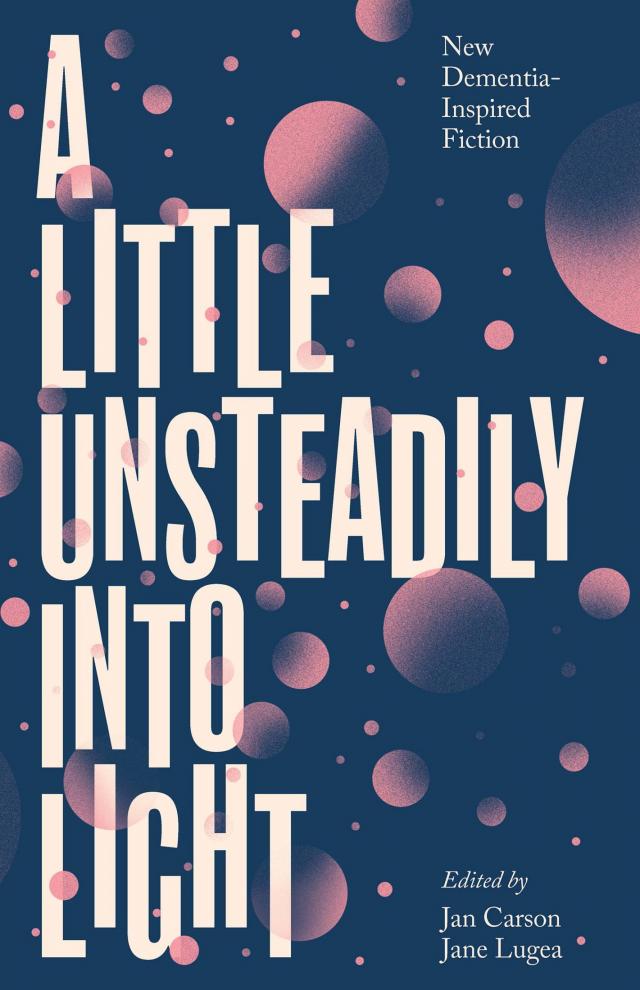
A LITTLE UNSTEADILY INTO LIGHT
First published in 2022 by
New Island Books
Glenshesk House
10 Richview Office Park
Clonskeagh
Dublin D14 V8C4
Republic of Ireland
www.newisland.ie
Compilation and Introduction © Jan Carson, 2022
Compilation and Afterword © Jane Lugea, 2022
Individual stories © Respective authors, 2022
The rights of Jan Carson and Jane Lugea to be identified as the editors of this work have been asserted in accordance with the provisions of the Copyright and Related Rights Act, 2000.
Paperback ISBN: 978-1-84840-861-6
eBook ISBN: 978-1-84840-862-3
All rights reserved. The material in this publication is protected by copyright law. Except as may be permitted by law, no part of the material may be reproduced (including by storage in a retrieval system) or transmitted in any form or by any means; adapted; rented or lent without the written permission of the copyright owners.
The epigraph is quoted from Erwin Mortier’s Stammered Songbook: A Mother’s Book of Hours, translated from the Dutch by Paul Vincent (2015) and is reproduced by kind permission of Pushkin Press.
British Library Cataloguing in Publication Data. A CIP catalogue record for this book is available from the British Library.
Set in 11.5 on 14.2 pt Adobe Caslon Pro
New Island Books is a member of Publishing Ireland
Contents
Introduction
Jan Carson
This Small Giddy life
Nuala O’Connor
Downbeat
Chris Wright
People Who Want History Want History
Naomi Krüger
The Three Strangers
Suad Aldarra
A New Day, Tomorrow
Henrietta McKervey
What, You Egg
Elaine Feeney
Our Dear Ladies Have Outnumbered Us
Jan Carson
Heatwave
Oona Frawley
The Portal
Caleb Klaces
Fingerpost
Mary Morrissy
Immurement
Sinéad Gleeson
Sound Distraction
Anna Jean Hughes
Coming and Going
Paul McVeigh
My Way Home
Caleb Azumah Nelson
Afterword
Jane Lugea
Acknowledgements
Contributors’ Biographies
A human being is difficult poetry, which you must be able to listen to without always demanding clarification.
— Erwin Mortier
Introduction
Jan Carson
I was in my early twenties when my nana was diagnosed with dementia. She was the grandparent I was closest to. It wasn’t just time spent together. In a family bent towards engineering and mathematics, Nana was my only fellow creative. She knitted the most incredible sweaters, making patterns up in her head. She sang and baked and played piano. She was deeply invested in the local community. Nana was the sort of person who didn’t need to seek out stories. Stories seemed to cleave to her. As a fledgling writer I felt deeply at ease in her presence, chatting as we tootled about in her Mini Metro, or reading on her sofa while she played piano in the dining room.
It took almost a decade to lose my nana. At times this felt like a gradual erosion. The dementia slowly pared her back until she was barely recognisable; a much smaller woman, in every sense. There was a great deal of sadness in this journey but also moments of clarity, honesty and even joy. We laughed a lot. I had not anticipated laughter. However, subsequent experiences with dementia have taught me that humour can often be found in the odd situations it pitches you into. Dementia – much like life itself – isn’t simple or easily defined. It’s a muddle of competing emotions: the good, the bad and the ugly, often experienced simultaneously.
When Nana moved from her home to a residential care facility, she lost access to her beloved piano for the first time in seventy years of daily playing. The deprivation hit her hard. I could empathise. I knew I’d desperately miss reading and writing if these comforting practices were suddenly snatched away from me. It seemed like an unnecessary cruelty. Even now, nearly fifteen years into facilitating arts activities with older people, I still think about Nana and her absent piano each time I begin a new project. Every workshop is a fresh reminder that creativity and personal expression are part of what make us human. Everyone, including those living with dementia, has the right to access these experiences. Nana was my first significant encounter with dementia. I’ve had dozens, if not hundreds, since. Each has shaped me as both a writer and a human being. I’ve been challenged, frustrated, inspired and frequently humbled by the people I’ve met along the way.
There’s a strong chance that you’ve been similarly impacted by dementia if you’ve chosen to pick up this book. I’m conscious that these stories may bring to mind a friend or family member who has dementia, or who you have lost to dementia. You may be living with dementia yourself. These stories will resonate on different levels depending upon your experience of the disease. There’s no right or wrong reaction. We writers are just grateful for your consideration and time. Dementia is an umbrella term. It covers a wide range of diseases and conditions linked to memory impairment, difficulties with cognition and social ability. Each person living with a dementia will experience a unique set of symptoms and circumstances. No two dementia experiences are the same. Each fictional account of dementia in this book is equally unique. As you read the stories collected together in this anthology you may recognise situations and symptoms you’re familiar with. You may also encounter a version of dementia radically different from the one you’ve experienced yourself. As the editor, I’ve actively sought out stories which explore a wide and eclectic range of dementia experiences. I wanted to reflect the full story of how dementia is impacting society.
It’s almost impossible to estimate the true extent of dementia, however the Alzheimer’s Society estimates that about 900,000 people in the UK have dementia at present. They expect this to rise to over 1 million by 2025. Whether you’re a carer or family member, a neighbour, work colleague or friend, or you’re living with dementia yourself, it’s likely that the illness has already touched you or may soon become a significant part of your life. There are many reasons why dementia seems to be on the increase. A rise in life expectancy, better diagnosis rates and ongoing work to dispel stigma are all contributing factors. Dementia is not a new illness but society is slowly becoming more dementia aware. Organisations like Dementia NI and the Alzheimer’s Society, which offer support and carry out vital research, have been active in promoting informed and positive messages about dementia. As a result, people living with dementia are much more empowered, vocal and visible than in the past. Though much work is still to be done in Ireland and the UK, and there are still some countries where people living with dementia are routinely hidden away or institutionalised, the practice of shaming or ignoring those living with dementia is thankfully on the decline.
These days, dementia is a topical subject, not least in the arts. Almost all the TV soaps have now included major storylines exploring dementia. Recent films like Still Alice and The Father have also tackled the subject, often to great critical acclaim. A contemporary explosion of memoir and non-fiction books shows there’s not just an interest but also a market for writing which explores the reality of a dementia diagnosis. I’d thoroughly recommend reading some of these books. I’ve been particularly impressed with non-fiction works in translation by writers like Annie Ernaux, Arno Geiger and Erwin Mortier, who has kindly given us the beautiful epigraph for this collection.
My own particular world is prose fiction – the reading, writing and dissecting of stories – and it’s fair to say there’s been a similar boom in dementia fiction over the last twenty years. In the last decade, all the major fiction prize lists have included novels like Avni Doshi’s Burnt Sugar and Emma Healey’s Elizabeth is Missing which explore the dementia experience. Pre-millennial prose writers occasionally included a character living with a dementia-like illness. Rarely was the condition named as such and, with a few notable exceptions, there were almost no novels entirely focused on dementia. Post-millennial writers appear much keener to consciously explore dementia in their fiction. This trend, though not without its problems, seems ripe for celebration and further study. It’s heartening to see a growing number of academics around the world currently researching how dementia is depicted in contemporary writing, and constantly adding to the body of robust critical work on this important subject. Many of these academics have contributed to the collation of this anthology and I’m extremely grateful for their help.
I am not an academic. I’m a writer and arts practitioner. However, I jumped at the chance to join the ranks of academia for a couple of years. In early 2020, as the world geared up for a global pandemic, a small team of academics from Queen’s University, Belfast began a research project funded by the Arts and Humanities Research Council, working with carers, trainee social workers, readers and people living with dementia to investigate how dementia is depicted in the words and thoughts of characters from contemporary novels. As a practising writer I was invited to join this project. My role was to ensure our research had a meaningful impact on the wider community. I took part in r eading groups, discussing our ten key texts. I facilitated workshops for emerging writers who wished to wrestle with the ethics and practicalities of writing about dementia. I helped to run a first-of-its-kind symposium, bringing together academics, writers, support organisations and, most importantly, people living with dementia. We shared stories, frustrations and ideas. We discussed how to write well about dementia. It felt like the beginning of an incredibly significant conversation. I learnt an enormous amount in two short days.
Over the course of the project, I also read approximately one hundred fictional accounts of dementia. I read novels, stories and plays from across the world. I read books for children and young adults, crime fiction, magical realism, graphic novels, science fiction, literary fiction, romance and just about every other genre in existence. Some of the writing was truly brilliant and included deftly drawn characters whose dementia served to make them more believable and interesting. Some of the books I read were dire. They recycled tired tropes and lazy clichés. Some writers appeared to have done absolutely no research and as a result had written books which were at best factually inaccurate and at worst, downright dangerous. While it was encouraging to see more writers engaging with dementia, it was abundantly clear there was still room for improvement. I soon realised there was a distinct lack of diversity in the dementia novels and short stories which have so far emerged. This anthology of newly commissioned short stories is a small attempt to redress the existing balance of dementia fiction. The fourteen established and emerging writers included here have personal experience of the illness. They’ve brought their own diverse backgrounds to their writing. They’ve spent time in workshops discussing the ethics and practicalities of writing dementia. They’ve carried out significant research. In short, they’ve done their best to faithfully capture a lived experience which, though close, remains outside themselves. I believe that dementia offers the fiction writer a rare opportunity: a chance to think imaginatively and ethically about how we tell an other’s story.
The question of appropriation currently looms large over literature. Who owns a story? Can a story be owned? Is it wrong to write about something you have no lived experience of? In the past, when a writer’s creative integrity was questioned, they could simply cite the notion that fiction was ‘just making stuff up’ and from this, somewhat wobbly, platform continue to write from the perspective of whatever ethnicity, gender, class or sexual identity took their fancy, inventing experiences they were ignorant of. Thankfully most contemporary writers are much more aware of the harm and hurt which can be caused by the wilful or crass appropriation of someone else’s story. However, there are still those occasions when writers find themselves drawn to another’s stories which, for myriad reasons, have yet to be told, or moments when they’ll wish to populate a novel with characters which aren’t simply identikit versions of themselves. On such occasions an empathetic, ethical and creative understanding of how to write the unlived experience could provide a framework for avoiding the pitfalls commonly associated with appropriation.
There is a growing number of writers living with dementia who’ve written their own memoirs or collaborated to write in partnership. I’d recommend Wendy Mitchell’s incredible books, written in partnership with Anna Wharton, and the work of Living Words UK who run bespoke writing projects for people with dementia. However, many people living with dementia will struggle to create a comprehensive and coherent narrative of their experience, particularly during the later stages of the illness. In compiling this anthology we’ve done our best to help the fiction writers we’ve included balance careful research with deep respect as they write about lives they have not lived, and experiences they’ve only been party to. A certain degree of careful appropriation is deemed necessary here, for if writers aren’t willing to imagine the lived experience of dementia, many of these stories will never be told. The implications could be catastrophic. There’s already a great deal of ignorance and fear surrounding dementia. Fear can keep people from seeking an early diagnosis and consequently rob them of the help and treatments available. The more dementia is represented diversely and honestly in the arts and media, the more the illness will be normalised and the less stigma those living with it will have to endure.
And yet, the writer’s primary job is not to educate. The writers selected for this anthology had no remit to produce helpful, educational information, designed to help the reader better understand dementia. Fiction writers are first and foremost storytellers, lovers of language and makers of art. The commitment to telling a really good story has to override every other pressing agenda. All a writer of fiction is required to do is captivate and suspend disbelief. The fourteen pieces included in the anthology are, above all else, brilliant stories. They just happen to touch upon different aspects of dementia. They aren’t bound by the need to put a positive or educational spin on the subject. A writer walks a fine line when fictionalising any big issue, be it dementia, the climate crisis or the latest scandal in Hollywood. The narrative is in constant tension with the desire to inform and interrogate. The writer’s a bit like a lion tamer, holding the issue at bay in the corner so it isn’t allowed to overwhelm the story, rendering it overly didactic, which is to say, a terrible read.
I’ve learnt the hard way that the trick to approaching a real-life issue like dementia from a fictional slant is to invest in great characters. Characters who are charged with depth and nuance. Characters who feel so real, the writer can simply take a back seat, allowing them to tell their own story in their own voice. If a character is simply a poorly developed mechanism for advancing the plot, the story itself will lack appeal and believability. In my reading research, I came across several examples of paint-by-numbers stock characters whose dementia felt like a rather obvious vehicle for adding an extra layer of confusion within a crime fiction plot or messing around with time and alternative realities in science fiction and magical realism. This isn’t just bad dementia fiction. It’s bad fiction full stop. Most great stories begin and end with interesting, complex and well-developed characters.
In this collection you’ll meet intriguing characters you’ll want to spend time with. You’ll feel sympathetic and occasionally maddened and keen to discover more about their lives. You’ll let these characters lead you into strange and sometimes difficult places because they are infinitely believable. If you’re not careful, you might even forget for a moment that they and their stories are not real. Much has been written about the importance of fostering empathy in order to understand conditions like dementia. Extensive reading has taught me that an emphasis on character is perhaps the most essential facet of great dementia fiction. While an infographic or magazine ad can impart information, there’s nothing like losing yourself in a character’s world to begin the process of appreciating what a lived experience of dementia might feel like.
There is an increasing awareness of the need to offer people living with dementia support and community, often through peer-led groups. However, Wendy Mitchell, the writer and dementia activist, writes in her brilliant book, What I Wish People Knew About Dementia, ‘In an ideal world, there wouldn’t be any need for these niche groups. We only really have peer support groups because society won’t make the adjustments that would allow us to integrate.’ Much work still needs to be done but programmes like the Alzheimer’s Society’s fantastic dementia-friendly training scheme and other local and national-level projects have sought to make it easier for people living with dementia to integrate into our communities in a natural, inclusive way. If widespread understanding of dementia increases and prevailing stigmas continue to be challenged, there’s no reason why the future won’t see a decrease in specialised dementia-focused groups and a bent towards more comprehensive integration where existing services and activities become welcoming, inclusive environments so people with dementia can participate and contribute alongside their neighbours and peers.