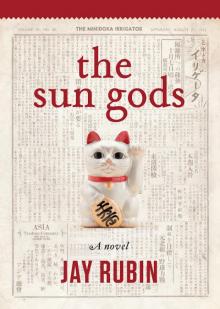
The penguin book of japa.., p.1
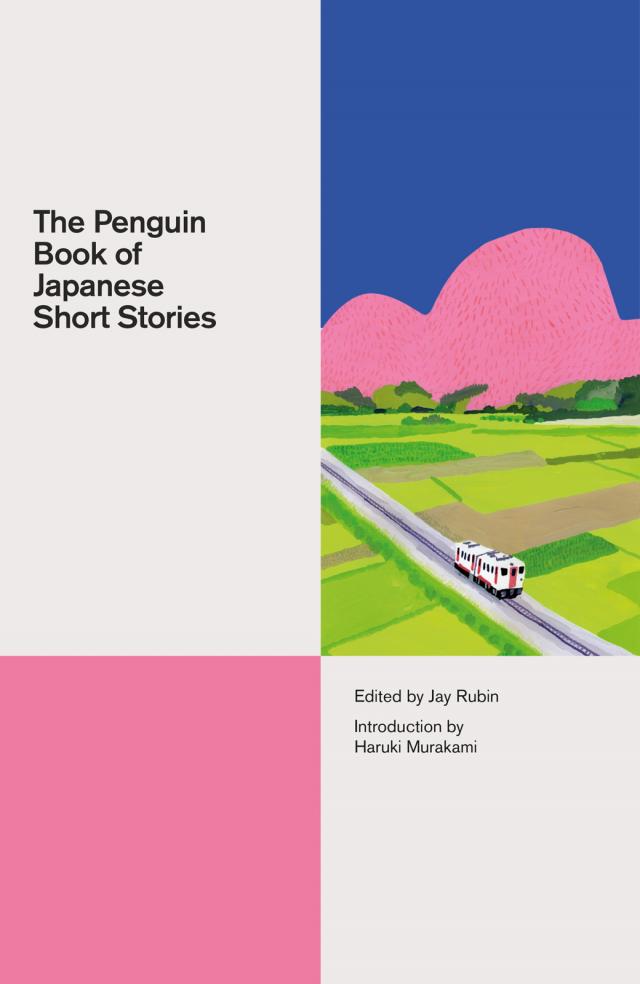
The Penguin Book of Japanese Short Stories, page 1


Contents
Editorial Note by Jay Rubin
Note on Japanese Name Order and Pronunciation
Introduction by Murakami Haruki
JAPAN AND THE WEST
TANIZAKI JUN’ICHIRŌ
The Story of Tomoda and Matsunaga
Translated by Paul Warham
NAGAI KAFŪ
Behind the Prison
Translated by Jay Rubin
NATSUME SŌSEKI
Sanshirō
Translated by Jay Rubin
LOYAL WARRIORS
MORI ŌGAI
The Last Testament of Okitsu Yagoemon
Translated by Richard Bowring
MISHIMA YUKIO
Patriotism
Translated by Geoffrey W. Sargent
MEN AND WOMEN
TSUSHIMA YŪKO
Flames
Translated by Geraldine Harcourt
KŌNO TAEKO
In the Box
Translated by Jay Rubin
NAKAGAMI KENJI
Remaining Flowers
Translated by Eve Zimmerman
YOSHIMOTO BANANA
Bee Honey
Translated by Michael Emmerich
OHBA MINAKO
The Smile of a Mountain Witch
Translated by Noriko Mizuta
ENCHI FUMIKO
A Bond for Two Lifetimes – Gleanings
Translated by Phyllis Birnbaum
NATURE AND MEMORY
ABE AKIRA
Peaches
Translated by Jay Rubin
OGAWA YŌKO
The Tale of the House of Physics
Translated by Ted Goossen
KUNIKIDA DOPPO
Unforgettable People
Translated by Jay Rubin
MURAKAMI HARUKI
The 1963/1982 Girl from Ipanema
Translated by Jay Rubin
SHIBATA MOTOYUKI
Cambridge Circus
Translated by Jay Rubin
MODERN LIFE AND OTHER NONSENSE
UNO KŌJI
Closet LLB
Translated by Jay Rubin
GENJI KEITA
Mr English
Translated by Jay Rubin
BETSUYAKU MINORU
Factory Town
Translated by Royall Tyler
KAWAKAMI MIEKO
Dreams of Love, Etc.
Translated by Hitomi Yoshio
HOSHI SHIN’ICHI
Shoulder-Top Secretary
Translated by Jay Rubin
DREAD
AKUTAGAWA RYŪNOSUKE
Hell Screen
Translated by Jay Rubin
SAWANISHI YŪTEN
Filling Up with Sugar
Translated by Jay Rubin
UCHIDA HYAKKEN
Kudan
Translated by Rachel DiNitto
DISASTERS, NATURAL AND MAN-MADE
The Great Kantō Earthquake, 1923
AKUTAGAWA RYŪNOSUKE
The Great Earthquake and General Kim
Translated by Jay Rubin
The Atomic Bombings, 1945
ŌTA YŌKO
Hiroshima, City of Doom
Translated by Richard H. Minear
SEIRAI YŪICHI
Insects
Translated by Paul Warham
Post-War Japan
KAWABATA YASUNARI
The Silver Fifty-Sen Pieces
Translated by Lane Dunlop
NOSAKA AKIYUKI
American Hijiki
Translated by Jay Rubin
HOSHINO TOMOYUKI
Pink
Translated by Brian Bergstrom
The Kobe Earthquake, 1995
MURAKAMI HARUKI
UFO in Kushiro
Translated by Jay Rubin
The Tōhoku Earthquake, Tsunami and Nuclear Meltdown, 2011
SAEKI KAZUMI
Weather-Watching Hill
Translated by David Boyd
MATSUDA AOKO
Planting
Translated by Angus Turvill
SATŌ YŪYA
Same as Always
Translated by Rachel DiNitto
Notes
Further Reading
Glossary
Acknowledgements
Follow Penguin
Editorial Note
Most nationally defined literary anthologies are arranged chronologically, perhaps on the assumption that they will be read primarily in college courses, where the anthology is meant to comprise a pocket history of the nation’s literature over a predetermined period. This book is designed more for general readers who are looking for a good read when they open the book and don’t much care how Japanese literature may have developed in the period covered, which in this case can be loosely termed the modern period. The arrangement is intended to suggest the general tone or subject matter of the story groups, so that someone hoping to be amused will turn to something under the heading ‘Modern Life and Other Nonsense’ rather than ‘Dread’ or ‘Nature and Memory’ or ‘Disasters, Natural and Man-Made’.
The last-named group does have a chronological arrangement, however, illustrating how Japanese writers have reacted to some of the worst disasters in the modern period, but it can be read in any order. I can imagine readers who wish to know more about Japan’s unique experience of nuclear weapons heading straight for the two stories about the atomic bombings, in which I would call attention to the second story, ‘Insects’, set in the culturally distinctive city of Nagasaki, which tends to be overshadowed by Hiroshima’s position as the first victim of such American ingenuity.
The following list, based on the original form of each piece, is provided for those wishing to read the stories in chronological order:
Kunikida Doppo, ‘Unforgettable People’ (1898)
Natsume Sōseki, Sanshirō, Chapter 1 (1908)
Nagai Kafū, ‘Behind the Prison’ (1909)
Mori Ōgai, ‘The Last Testament of Okitsu Yagoemon’ (1912)
Akutagawa Ryūnosuke, ‘Hell Screen’ (1918)
Uno Kōji, ‘Closet LLB’ (1918)
Uchida Hyakken, ‘Kudan’ (1921)
Akutagawa Ryūnosuke, ‘General Kim’ (1924)
Tanizaki Jun’ichirō, The Story of Tomoda and Matsunaga (1926)
Akutagawa Ryūnosuke, ‘The Great Earthquake’ (1927)
Kawabata Yasunari, ‘The Silver Fifty-Sen Pieces’ (1946)
Ōta Yōko, ‘Hiroshima, City of Doom’, chapter from City of Corpses (1948)
Genji Keita, ‘Mr English’ (1951)
Enchi Fumiko, ‘A Bond for Two Lifetimes – Gleanings’ (1957)
Hoshi Shin’ichi, ‘Shoulder-Top Secretary’ (1961)
Mishima Yukio, ‘Patriotism’ (1961)
Nosaka Akiyuki, ‘American Hijiki’ (1967)
Abe Akira, ‘Peaches’ (1972)
Betsuyaku Minoru, ‘Factory Town’ (1973)
Ohba Minako, ‘The Smile of a Mountain Witch’ (1976)
Kōno Taeko, ‘In the Box’ (1977)
Tsushima Yūko, ‘Flames’ (1979)
Murakami Haruki, ‘The 1963/1982 Girl from Ipanema’ (1982)
Nakagami Kenji, ‘Remaining Flowers’ (1988)
Murakami Haruki, ‘UFO in Kushiro’ (1999)
Yoshimoto Banana, ‘Bee Honey’ (2000)
Seirai Yūichi, ‘Insects’ (2005)
Ogawa Yōko, ‘The Tale of the House of Physics’ (2010)
Shibata Motoyuki, ‘Cambridge Circus’ (2010)
Kawakami Mieko, ‘Dreams of Love, Etc.’ (2011)
Matsuda Aoko, ‘Planting’ (2011)
Satō Yūya, ‘Same as Always’ (2012)
Sawanishi Yūten, ‘Filling Up with Sugar’ (2013)
Hoshino Tomoyuki, ‘Pink’ (2014)
Saeki Kazumi, ‘Weather-Watching Hill’ (2014)
All of the above are independent stories except the excerpts from Sōseki, Ōta and the 1927 Akutagawa. Sōseki wrote many short stories, but none that reflects the scale and intensity of his novels. Chapter 1 of his 1908 novel Sanshirō comes close to being a self-contained story while suggesting the author’s grasp of his time and society. The novel City of Corpses, from which ‘Hiroshima, City of Doom’ is taken, overshadows Ōta’s other work and stands as the foremost literary documentation of the bombing of Hiroshima. One segment from an episodic story of Akutagawa’s is used here as a preface to his bloodthirsty tale ‘General Kim’, inspired by the 1923 earthquake.
Tanizaki’s novella of 1926, The Story of Tomoda and Matsunaga, may seem out of place in a book of short stories, but its hyperbolical alternating condemnation and celebration of both Japanese and Western culture demanded inclusion. Having first encountered it during my study of pre-war literary censorship in 1984, I had hoped to introduce it to the English-speaking world in this collection, but now readers have two means of access to this startling work, as noted in Further Reading.
One potential drawback to compiling a historical anthology of a nation’s literature is that the editor is likely to feel obligated to include certain works or writers because of their generally recognized ‘importance’ in the developmental scheme of things without regard to his/her own personal response to the work. The reader of this collection can be assured that all the works here have been chosen because the editor has been unable to forget them, in some cases for decades, or has found them forming a knot in the solar plexus or inspiring a laugh or a pang of sorrow each time they have come spontaneously to mind over the years.
The poet Alan Shapiro reminds us of Eugenio Montale’s phrase ‘the second life of poetry’ in characterizing the interplay of life and literature.1 Especially when choosing more nearly contemporary works, I have asked colleagues to send me stories they felt compelled to translate because they have found them reverberating in their own lives. Kunikida Doppo may be seen as the father of the modern Japanese short story, but he is included here primarily because I have found his ‘lone figure on the sunlit beach’ to be one of my own ‘Unforgettable People’ since I first encountered it in 1965.
I have many people to thank for their help in the long, fulfilling process of compiling this anthology, many of whom doubled as both advisers and actively involved translators: Paul Warham, Richard Bowring, Geraldine Harcourt, Eve Zimmerman, Michael Emmerich, Noriko Mizuta, Phyllis Birnbaum, Ted Goossen, Royall Tyler, Hitomi Yoshio, Rachel DiNitto, Richard Minear, Brian Bergstrom, David Boyd and Angus Turvill. I picked many other brains along the way, most notably those of Motoyuki Shibata, Howard Hibbett, Davinder Bhowmik, Ted Mack and Ted Woolsey. Maeda Shōsaku devoted endless hours to comparing the translations with the originals, as he has done since he first wrote to me in 2007. I literally can’t thank him enough. Simon Winder made working with Penguin a delight again, Maria Bedford kept some indispensable gears spinning, and Kate Parker made the editorial process more epiphanic than I had hoped it would be. In his thorough, informative introduction, Murakami Haruki has gracefully acceded to his role as elder spokesman for modern Japanese literature. My thanks to him. And thanks to my wife, Rakuko, for always being there.
No anthology can include everything. The reader is referred to Further Reading for some of the excellent collections that are available.
Jay Rubin
Note
1. Alan Shapiro, In Praise of the Impure (Evanston, IL: Northwestern University Press, 1993), p. 13.
Note on Japanese Name Order and Pronunciation
Unless otherwise indicated, all Japanese names that appear from the Contents onwards are written in the Japanese order, surname first. The writer of the Introduction is known in Japan as Murakami Haruki. His name has been given in the Western order on the cover and title page because of its greater familiarity in the West. Following Japanese practice, the four writers in this volume with traditional literary sobriquets – Doppo, Sōseki, Kafū and Ōgai – are referred to by those rather than by their surnames.
Below are some guidelines for pronouncing Japanese names and terms.
Every a is long, as in ‘father’, e is pronounced as in ‘bed’ and i sounds like ‘ee’. Three-syllable names tend to have a stress on the first syllable. Thus ‘Natsume’ is pronounced ‘NAH-tsoo-meh’, ‘Taeko’ is ‘TAH-eh-ko’ and ‘Aoko’ is ‘AH-o-ko’. Two-syllable names are evenly stressed, hence ‘Uno’ is pronounced ‘oo-no’.
Macrons have been included to indicate long syllables but have been eliminated from the place names Tōkyō, Kyōto, Ōsaka, Kōbe and Kyūshū, and from familiar words such as ‘shōji’ and ‘Shintō’. Following the practice in past English publications, Ohba Minako’s surname is spelled ‘Ohba’ rather than ‘Ōba’, whereas the long o appears with the standard macron in ‘Ōgai’ and ‘Ōta’.
Apostrophes have been used to indicate syllable breaks in the names ‘Jun’ichirō’ (rather than ‘Ju-ni-chi-rō’) and ‘Shin’ichi’ (rather than ‘Shi-ni-chi’).
Introduction
From Seppuku to Meltdown
I once heard the story that when jazz drummer Buddy Rich was being admitted to a hospital, the nurse at the front desk asked him if he had any allergies. ‘Only to country and western music,’ he replied. In my case, my only allergy is to Japan’s so-called ‘I novel’ – the form of autobiographical writing that has been at the forefront of Japan’s modern fiction since the turn of the twentieth century.
To tell the truth, from my teens to my early twenties, I read hardly any Japanese fiction. And for a long while I was convinced that, with a few exceptions, early modern and contemporary Japanese literature was simply boring. There were many reasons for this, but foremost among them may be that the novels and stories we were assigned to read in school were pretty bad. My ‘I-novel allergy’ was also quite strong back then (these days, to be sure, it has become less intense), and since you can’t hope either to make your way through or to understand modern Japanese literature if you’re going to avoid its constitutional predisposition to producing ‘I novels’, I made a conscious effort while young to avoid going anywhere near Japanese literature.
Reading is, of course, a supremely personal – even selfish – activity. Each person consumes reading matter in accordance with his or her own likes and dislikes, which no one else can pronounce simply to be right or wrong, proper or warped. People have an innate right to read the books they want to read and avoid the books they don’t want to read. It is one of the few precious liberties granted to us in this largely unfree world (though, to be sure, many situations arise that complicate the matter).
At the same time, however, viewed in purely dietary terms, a balanced intake of information and knowledge plays an important role in the formation of a person’s intellect and character, and though no one has the right to criticize me for having spent a lifetime consuming books in my own lopsided way, I can’t help feeling that it’s nothing to be proud of. Having become a Japanese novelist (once and for all), I may have something of a problem on my hands in saying that I know hardly anything about Japanese fiction – which is a little different from Buddy Rich saying he doesn’t listen to country and western music.
This is why, after passing the age of thirty, I made an effort to read as much Japanese fiction as I could. Thanks to this I discovered quite a number of truly interesting works later in life but recall very few from those impressionable teen years I spent in the 1960s. At the urging of friends, I read several works by Ōe Kenzaburō (b. 1935), who was the young people’s hero in those days. I remember having read classic figures such as Akutagawa Ryūnosuke (1892–1927) and Natsume Sōseki (1867–1916) back then, but I was never able to warm to such supposedly representative Japanese literary giants as Shiga Naoya (1883–1971), Kawabata Yasunari (1899–1972) or Mishima Yukio (1925–70). For some reason I can’t put my finger on, I was never able to keep myself immersed in their style. I’d often give up partway through a work and toss it aside. They and I were probably just temperamentally incompatible; unfortunately, it seems, they were not ‘novelists for me’. I don’t mean to call into question, of course, their talent or the importance of their works. What should be called into question, I strongly suspect, is my own lack of understanding.
Speaking personally, then, I learned practically nothing about novelistic technique from my Japanese predecessors. I had to discover on my own how one goes about writing fiction. This was probably a good thing in the sense that I didn’t have a lot of baggage to carry with me.
I was thirty when I debuted as an author, and almost forty years have shot by in the meantime (hard as that is to believe), but I confess that, with only a few exceptions, I have not kept close tabs on young authors who have followed me into the literary world. This is not to say that I have been avoiding their works or have no interest in them, just that I have been narrowly focused, heart and soul, on doing what I want to do rather than making the effort to read and learn from other people’s writings.
James Joyce said something to the effect that imagination is memory, and he was absolutely right. Our memories (the wellspring of imagination) take shape while we are young, and once we pass a certain age, it’s rare for them to undergo any major change.
All of this may add up to nothing more than a long-winded excuse for why I know so little (or next to nothing) about modern and contemporary Japanese fiction. I hope I have made myself clear on that point. And if I’m not mistaken, I would guess that most readers of this book of English translations know as little about modern and contemporary Japanese fiction as I do (or nothing at all). At least in my approach here, I’d like to go on that assumption.
Which is why, in this introduction, I am not standing a step above you as your guide to Japanese literature but taking a position on the same level as you so that together we can think about how best to approach this anthology. Let’s just say that you are being guided through a foreign town by someone who lives in the country and speaks the language but who doesn’t know that much about the geography or history.