

Pay me in flesh, p.1
Pay Me in Flesh, page 1
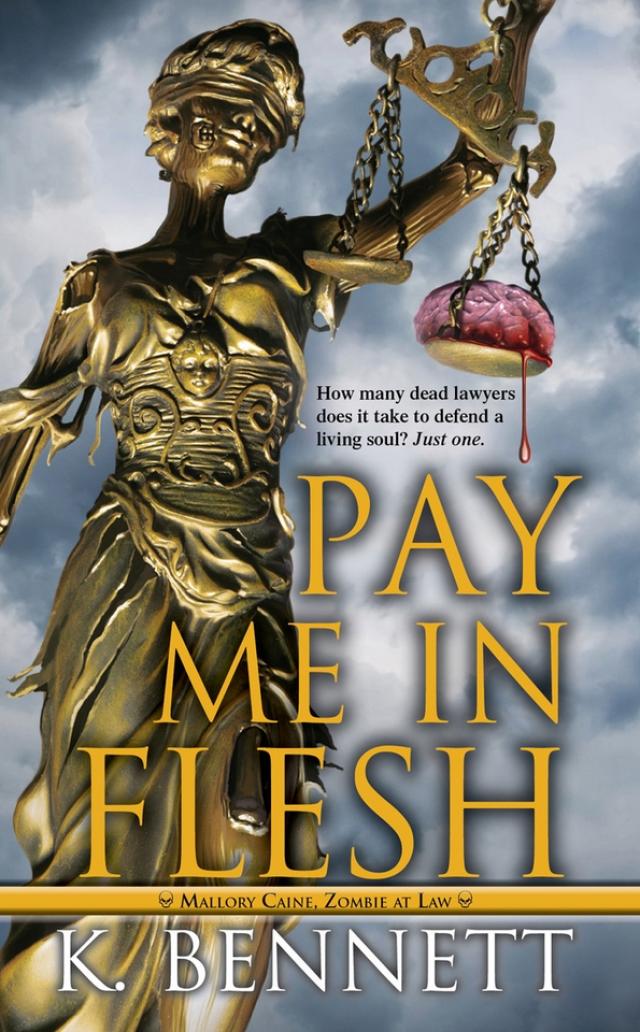


PAY ME IN FLESH
K. BENNETT
PINNACLE BOOKS
Kensington Publishing Corp.
www.kensingtonbooks.com
All copyrighted material within is Attributor Protected.
Table of Contents
Title Page
PART I
CHAPTER 1
CHAPTER 2
CHAPTER 3
CHAPTER 4
CHAPTER 5
CHAPTER 6
CHAPTER 7
CHAPTER 8
CHAPTER 9
CHAPTER 10
CHAPTER 11
CHAPTER 12
CHAPTER 13
CHAPTER 14
CHAPTER 15
CHAPTER 16
CHAPTER 17
CHAPTER 18
CHAPTER 19
CHAPTER 20
CHAPTER 21
CHAPTER 22
CHAPTER 23
CHAPTER 24
CHAPTER 25
CHAPTER 26
PART II
CHAPTER 27
CHAPTER 28
CHAPTER 29
CHAPTER 30
CHAPTER 31
CHAPTER 32
CHAPTER 33
CHAPTER 34
CHAPTER 35
CHAPTER 36
CHAPTER 37
CHAPTER 38
CHAPTER 39
CHAPTER 40
CHAPTER 41
CHAPTER 42
CHAPTER 43
Copyright Page
PART I
Perhaps there is no life after death . . . there’s just Los Angeles.
––Rick Anderson
CHAPTER 1
“Ms. Caine, I am troubled.”
Judge Dixon Darnell leaned back in his chair, put his feet on the desk in his chambers. “I didn’t like having to hold you in contempt, but you really left me little choice.”
“Would it help if I said sorry?”
“It might.”
“Sorry,” I said, even though I wasn’t. Darnell had refused to let me introduce evidence of a cop’s previous altercation with a client just like mine. Then he made me go ahead with the closing arguments. Even though this was a little DUI to him, it was a real case with a real client to me. And I’d talked some junk at the bench about it. Boom. Contempt and three hundred bones.
“I’ve been watching you closely this whole trial. May I make an observation?”
“You’re holding the cards, Judge. Three hundred of them.” If I didn’t pay the fine, I was going to the clink. “I’m not going to pony up this extortion.”
“You seem different,” the judge said. “Harder somehow. You appeared in my court, what, a little over a year ago? You were okay then, but now you’ve got a chip on your shoulder. Have you been going through anything in your personal life?”
Besides being a zombie? Other than being raised from the dead and going on an all-flesh diet? “Not really,” I said.
He cleared his throat. Darnell was a big man, in an overfed Teamster sort of way. He was balding on top, his steel wool hair buzzed around the sides. “As you know I am on the committee overseeing the substance abuse section of the Bar.”
“There’s a lot of substance abuse in a lot of bars.”
He didn’t smile. “You wouldn’t be needing some help in that area, would you?”
“Judge—”
“I mean it, Ms. Cane. I want to help, I do. But you’ve had your bra in a twist this entire week.”
“What did you just say to me?”
“Relax, there’s no one who can hear us.” He eyed me like an entomologist studying a rare species of Claptrap. Then he got up and came around to the front of the desk. He parked his ample fundament on the desk edge, his substantial gut at eye-level.
“Would you mind addressing me face to face?” he said.
“What?”
“Stand, please.”
I wanted to take a chunk out of him. Wanted to feast on judge breast right then and there, and I was gripping the arms of the chair hard to keep from diving in. Eating a judge in his own chambers would not look good on the old legal record.
I stood, if only to keep my mind off dinner.
Judge Darnell grabbed my shoulders, pulled me to him, and planted his fleshy lips on mine.
I jerked away. “Hey!”
“I can do things for you,” he said.
“Judge—”
“If you do things for me.”
“I don’t work that way.”
He pawed at me again. I spun away.
“I can also make life hell,” he said.
“Now look, Judge, you don’t want to do this.”
“Oh, but I do.”
“This isn’t 1964. What kind of stuff do you think you can pull here?”
“I think you’re beautiful,” he said. “And dangerous. I’m dangerous, too. Think of what we could do together.”
Gack! I did not want to think that, unless it meant him willingly removing his head so I could eat his brain.
“Judge, do you want this story getting out? Because I’m this close.”
Darnell sighed deeply. Shook his head. “No one will believe you. I just slapped you with contempt. They’ll say you’re making this up.”
I looked at him and wanted to consume every bit of him above the waist. “You are one sick meal,” I said.
“What?”
“Male. One sick male.”
“Think very carefully about what you say to me.”
“Give me a second. Okay. You are one sick male.”
“I tried to help you. Just remember that.” He punched a button on his desk phone. A moment later the door opened and his courtroom bailiff came in.
“Lockup,” Judge Darnell said.
Practicing law in L.A. is hard. Especially if you’re dead.
I was murdered a year ago. The cops don’t know who did it. I’ve been trying to find out ever since.
Then someone brought me back to life. I don’t know who that was, either, but I have to find him. Or her. Because if I don’t, my soul, wherever it is now, goes to hell. If I’m killed as a zombie, that’s what happens, as far as I’ve been able to determine.
Which is a drag, because now I have to eat flesh to stay alive. Human flesh. Especially brains.
That can be hard on my fellow citizens.
On top of all that I have to make a living.
I defend people accused of crimes.
Like my current client, the pirate musician John “Captain Blarney” Matthews. Who was accused of DUI. And who hadn’t paid me yet.
I was busting my hump for him in court, but Darnell was against me all the way. Now I knew why.
Which is how I got jammed in the lockup in the courthouse. Me. In the spot where I usually came to visit my own clients before they came into court.
I was pacing around, fuming, practicing some of my street defense moves, when someone came to the grated window and called my name.
I went to the door and my jaw almost hit the ground. Literally. I put my hand under my chin. Sometimes the old jaw muscles loosen. Undead sinews are not the best in town.
“Aaron! What the—”
“Mallory, this so isn’t you,” Aaron Argula said.
“Why are you even here?”
“I’m back in town. Working for the DA.” Aaron’s hair was thick and black, his eyes acetylene blue. I had fallen into those eyes back in law school, in a big way. It didn’t hurt that a face to die for sat on top of the broad shoulders of a former defensive back for Cal.
“But I mean what are you doing back here, at the lockup?” I said.
“I heard out in the hallway the judge held you in contempt,” Aaron said. “Still ticking people off, huh?”
When I didn’t answer, Aaron said, “What do you say we get out of here and go have a civilized drink?”
“Um, Aaron, you may have noticed I’m incarcerated.”
“A perversion of justice soon to be remedied.” He turned.
“Hey, where you going?”
“To pay your fine,” he said.
“No! I can’t have you—”
“It’s the least I can do for an old friend,” he said, and sped off down the corridor.
Half an hour later we were having martinis at Noé, the bar at the Omni Hotel on Olive Street. I like the classic—Beefeater up with two olives. I can barely taste it on my undead tongue, but it does penetrate the suspended animation of my brain.
It also keeps the Voice at bay on lonely nights. But more of the Voice later.
Aaron’s a vodka man. We sat outside, a stone’s throw from the orange-and-black control house of Angels Flight.
Aaron slipped a cigar out of the inner pocket of his coat. “You mind?”
“Be my guest,” I said. “When did you pick up that habit?”
“Up north, searching for my inner Churchill.” He unwrapped the cigar and snipped the end with a little cutter. I had to admire his technique. He lit the cigar with a lighter that shot out its stream of flame. “I can’t get over how you look,” he said. “You seem, I don’t know, healthier somehow.”
I almost snorted an olive out my nose. “And so,” I said, cutting to the chase, “why’d you dump me?”
That stopped his easy charm. I took a leisurely sip of my martini and let him squirm. Making people squirm on the witness stand is one of the things I do best. I like to practice it in the outside world, too.
Aaron Argula was two years older than my thirty-five years. He was a third y ear and I was a One-L when we met at USC Law. He was editor-in-chief of the Law Review. The year before he’d won the school’s Moot Court competition. That’s where the entire second year class engages in a mock Supreme Court case, in teams of two. The final round is two teams arguing before three sitting justices—two from California, and one from a federal bench.
The year Aaron won it the federal jurist happened to be Antonin Scalia of the United States Supreme Court.
That was before I got to SC, but they were still talking about it when I did. They said Scalia ripped into Aaron and Aaron ripped right back.
Oh, how I wish I could have been there.
Tall Aaron, with his chiseled features, against the Sicilian-blooded, squat Scalia.
Two sharp minds grinding it out.
Scalia was so impressed he offered Aaron a clerkship after school, which he turned down to work in L.A.
Aaron set his sights on me one day at the law school’s cookout just before the Notre Dame game at the Coliseum.
I was toast. Crushed like the Fighting Irish were later in the day. Over burgers and beer, Aaron Argula slipped my heart out of my chest and quietly put it in his back pocket.
When he traded that heart in for another, I was devastated. Almost died when he moved to San Francisco, to join a big firm there. I’d had no serious boyfriend since.
Finally Aaron said, “There’s no easy answer. I was a little confused.”
“Not too confused for that little tootsie at Scadden, Arps,” I said.
“Did you just say tootsie?”
“I’m sorry. I meant bimbo.”
“Mallory, she was not a bimbo or a tootsie. She also wasn’t you.”
I was disturbed by my reaction to that. I realized I still wanted him. That ticked me off. It was as if he’d never left.
But he had, and now there was one thing different, and it was bound to put a crimp in our relationship—I wanted to eat him.
Aaron said, “I want to be friends again, maybe see you sometime. Maybe dinner.”
“That’s not a good idea.”
“Why not?”
“It just isn’t.”
“Give me one reason why.”
“Okay. I’m on a special diet. I have to eat at home.”
He blinked a couple of times. “You’re kidding, right?”
“No.”
“You mean you don’t go out to eat?”
“Well, sometimes, but I have to pick my spots, and anyway, why would I go out with you again, Aaron? After what you did?”
He sighed. “Can you at least let me explain?”
“No.”
“Why not?”
“Because I’m not interested. We had our time, that’s over. There’s no reason we can’t be civil to each other, though.”
“Mallory, I must have been nuts.”
He gave me a look and I started to feel it, a vibration of desire. But then another one began to well up. One that made me wonder what his lips would taste like if I chewed them off.
“Yes,” I said, “you must have been. And now that you’re back, I wish you well. Thanks for getting me out of the clink.”
I stood.
“Is that it?” he said.
“That’s it.” It had to be. I had to get away before I made a fool of myself one way or another.
“Mallory, please. Don’t go yet.”
“I have to,” I said. “I just do.”
“Can I call you?”
I didn’t answer. I walked across the plaza pathway, past Angels Flight and headed down the concrete stairs to Hill Street. I had to get back to my office. I had to think. I was still in trial, still under a contempt citation, still on the bad side of a sexually harassing judge. I couldn’t think about Aaron Argula. Not yet anyway.
I knew what it would mean if I did start thinking about him. Complications. They happen a lot more often when you’re a zombie.
Because sometimes those you kill can make life really thorny for you. I was about to find that out.
CHAPTER 2
My office is on Broadway, between Third and Fourth, on the second floor of a retrofitted two-story that dates back to World War II. It’s just above a tobacco and novelties shop. The tobacco is cheap and the novelties are mostly for laughs.
There’s no name on the store, so I just call it the Smoke ’n Joke.
Just inside the doors is a building directory with two names on it—mine and Nikolas Papadoukis, the world’s shortest insurance investigator. A glass door with a buzzer alarm system that doesn’t work gets you into the hallway where you can take an elevator (with an eighty-five percent success rate) or the stairs to the second floor.
The manager of the building also runs the Smoke ’n Joke. Her name is Lolita Maria Sofia Consuelo Hidalgo. I call her LoGo. She’s about seventy years old and was once the hottest singer on this strip of L.A., back in the 1960s when the Million Dollar Theater, half a block away, was the happening Latino venue. She did two shows a night at the Dollar, and opened for Tito Puente in 1968.
LoGo caught me going in.
“Rent,” she said, sitting on her stool by the whoopee cushion display.
“Spent,” I said.
“Not so funny. You owe two months.” LoGo has let herself go. She’s three hundred pounds if she’s an ounce. If you look real hard you can see, encased in adipose tissue, the torchy vixen from Mexico City who once set hearts aflame downtown.
“Lo, I’m finishing up a case and am bound to get paid.”
“I hope. I like you, but the boss, you know, he like to get paid.”
“Don’t we all.”
I took the stairs, unlocked my office door. I went to the window. My view looks out over this distinctly Latino corridor, with its cut-rate retail spots, Mexican food stands, and shadows of history. A hundred years ago this was a place to see and be seen in L.A. Swanks from Bunker Hill and Angeleno Heights would dress up and ride down here—in horse and carriage or that new gas-powered thing—for a high-class night on the town.
Now it’s pretty much the low end of commerce in the city, but the price is right for leasing office space.
If I look left out my window I can see the Bradbury Building, the classiest structure left from the golden age of downtown. Its redbrick exterior, officially unveiled in 1893, still looks classic, if you can ignore the Subway sandwich sign stuck on the front.
Continue up Broadway and you pass the L.A. Times building, sure to be a dinosaur someday soon, and you eventually get to the Foltz criminal courts building. It was named for the first licensed female attorney in California.
I sometimes wonder if they’ll name a building after me someday, the first zombie criminal lawyer in the city. Maybe it’ll be a mausoleum.
The phone on my desk rang. I picked up. “Mallory Caine.”
“Miss Caine, I need a lawyer right away.” An older woman’s voice.
“Who am I talking to?”
“My name is Etta Johnson.”
“All right,” I said. “What’s the trouble?”
“It’s my granddaughter. I found this number in her book. It says here, in her handwriting, if she ever gets into trouble, this is the number to call.”
“What is your granddaughter’s name?”
“Traci Ann Johnson.”
I lost breath. I knew Traci Ann Johnson from the street. “What happened?”
“The police are here,” the woman said. “They say they’re going to arrest my Traci Ann.”
“What for?”
In a whisper, the woman said, “Murder.”
“They haven’t arrested her yet?”
“They don’t know what to do. I said they can’t do anything until I talk to a lawyer. They’re just standing around looking at each other right now.”
“Let me talk to Traci Ann.”
“That just it. She can’t come to the phone. That’s why I need you to come over here.”
“Is she all right?”
Pause. “That all depends on what you mean by all right.”
“Well, has she been injured?” I asked.
“Not exactly. I wish you could come down here so I can explain it.”
“Suppose you tell me where Traci Ann is.” I was getting a little annoyed by this runaround. I wanted to help Traci Ann, of course, but I didn’t want to go driving around L.A. without knowing what I was heading into.
“All right,” the woman said. Dropping her voice to barely audible, she added, “She’s in her coffin.”


