

Murder at capri cottage, p.1
Murder at Capri Cottage, page 1


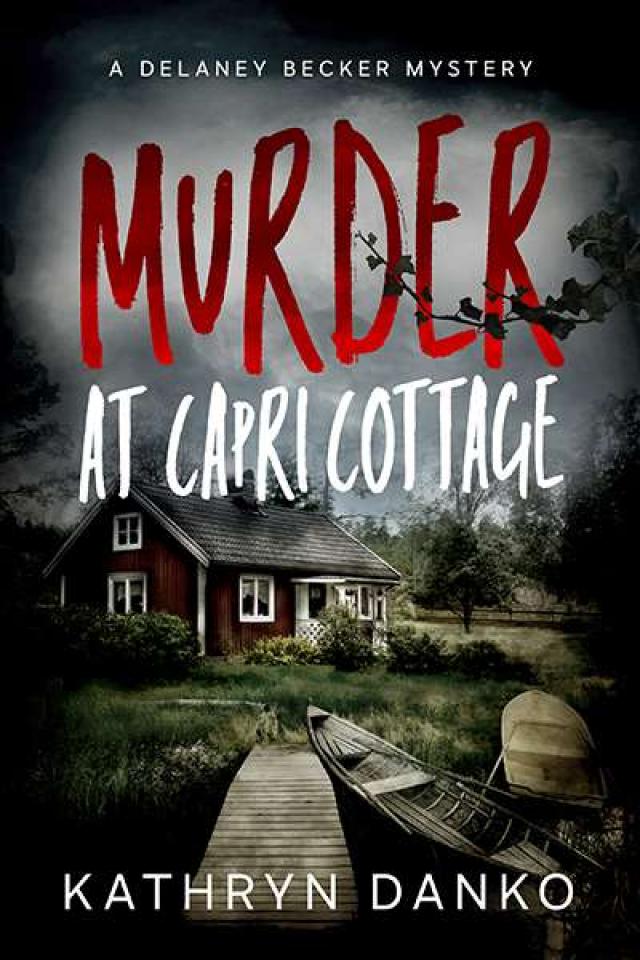
Murder at Capri Cottage
Kathryn Danko
Copyright 2023 Andiamo Press LLC
For Mama, always
Grazie!
Grazie means "thank you" in Italian.
Most authors put the acknowledgement page at the end. I wanted to start with gratitude, since this book would never have been written without all of the support and love of so many people.
To Readers:
Thank you for buying my first book. I know books aren’t cheap, and trying a novel from a new author is a bit of a risk. I hope you enjoy it.
The best gift you can give an author is a review. Please take a minute to post your rating to Amazon or Goodreads or send me an email (kathryn@kathryndanko.com) with your comments.
__________
Kathryn’s Team:
I was in Corporate America a long time, and my success was due, in large part, to the wonderful teams I had working with me throughout the years. When I became a writer, I thought creating a book was more of a one woman show. Boy, was I wrong.
Champions like Natasha Sass, my Stella Sprint group, my husband, Pro, and my Mama kept me going on those days I looked out the window from my desk and wanted to be outside, digging in the dirt, instead of fighting with words and sentences. Grazie.
My beta-readers also made me a better writer. Their feedback was invaluable. Thank you to Mama Diana Danko, Karen Cremeans, Don Cook, Tia Pfeiffer, Tracy Morris, Connie Dixon, Cassidy Meyer, and Carol Hill.
Donnella Luger, my editor, was tireless in her review of my manuscript. I’m very grateful for her patience with my many questions and her expert editing skills. Also, a big thank you to my book cover designer, Elizabeth Mackey. It looks fabulous.
Chapter one
I hated her the moment I saw her. I hated myself more.
I could tell she was a hooker, call girl, whore, whatever you want to call her profession. She didn’t look cheap or used up yet, and I could feel my dick get hard. She had dark brown hair, nearly touching her ass, emerald green eyes, and, although her body was on the tall and lanky side, she had big tits. I couldn’t take my eyes off her, and I lost my bet because I was distracted.
I mentally told myself to STOP…STOP…STOP! I had been a “good boy” for such a long time. I had a reputation to keep up. I could NOT get reeled in by a hooker.
She stared into my eyes and I felt another tug. Whores. Did they know the affect they had on men? Did they care? Did they understand the destruction they could cause? It made me angry. I knew what hookers could do to a family.
It made me want to lash out at her. Verbally. Physically. It made me want to kill her.
Chapter two
“I have information about a murder.” Alyssa said.
Becker almost dropped the phone. “Excuse me?”
“I said, I have information about a murder.”
“A murder, huh?” Chief of Police Delaney Becker sighed, loud enough so her sister could hear it. “This…nonsense is why you’ve been blowing up my phone?”
“It’s not nonsense. It’s a real situation and I need your help.”
“I haven’t heard from you in, what, twelve years? And instead of an apology for what you did, I get to hear one of your fictional stories?” Becker heard the hardness and sarcasm in her voice, and mentally kicked herself. Knock it off. Stay calm.
“Laney, I’m not making this up. After all we’ve been through, do you think I would give you another reason to hate me?”
Becker didn’t answer. Alyssa had a point.
“Laney, are you still there?”
“Yes, but not for long.”
“Please! Five minutes.” Alyssa’s words came out in a rush. “Do you remember Miss Nellie Mae?”
Becker searched her mind for her dusty file on Miss Nellie Mae. She remembered her as a kind woman who traded books back and forth with her sister. She passed away three or so years ago, nearly a centenarian at the time.
“I do, and as I recall, she died a few years back. She murdered someone?”
Alyssa snorted. “No, no, no. She gave me a book about a murder and I’m convinced it’s based on a true story.”
“Oh brother. This is getting better and better…Wait, Miss Nellie Mae’s been gone for a while. Why didn’t you contact anyone in law enforcement earlier?”
“I just found the book in my moving boxes and read it last week. I’ve been calling you ever since.”
Becker rubbed her brow, an anxiety reliever. Alyssa had left her at least a dozen messages, and Becker hadn’t bothered to listen to them, predicting a shit show. She shouldn’t have answered the phone now, either. Ugh.
“This conversation is absurd,” Becker said. “How you can conclude a murder happened based on a book is beyond me.”
“It was very realistic! I’ve read hundreds of crime-thrillers. Believe me, Laney, this one is different. It feels…authentic.”
Becker walked in the door of the police station, shaking her head at her sister’s drivel. “Authors write convincingly about killers every day and most of them wouldn’t hurt a gnat. Besides, there’s no crime in Celestino Village, let alone murder.”
“That you know of.” Alyssa said. “It could happen.”
Once inside of the station, Becker smelled the old bones of the building, musty and moldy, and the faint scent of dog. She smiled at a few of her officers on the way to her office and settled into her chair.
“Doubtful.” Becker fiddled with her computer mouse. “For grins and giggles, though, I’ll play along…If there was a murder years ago, why would the killer write a book that could potentially expose him or her? And, at the risk of getting caught, why would he or she stay in the area? It makes no sense.”
“I don’t have all the answers but I’m convinced he’s a local and lives here.”
“Amazing.” Becker could hear the sarcasm in her voice again. “You’re in town less than a week and you’ve identified a murderer among us. Channel 22 will be thrilled to air your first story as the Crime Beat reporter. That is, unless you’ve fabricated the whole thing.”
Alyssa’s voice was sharp. “I told you, Laney, I’m not making this up.”
“Uh huh. I need to run. I’m working on some…court paperwork,” Becker said, a bold-faced lie. It wasn’t easy for her to fib, but if her sister could do it, so could she.
***
Maynard Egger, former chief of police, used his booming voice as a substitute for a knock on the door.
“Becker, do you have a minute?”
She startled in her office chair and wiped the impatience off her face before answering. “Sure, Chief, what brings you into town?”
He scowled at her and sat down across the desk. “Do I need a reason? I still live here, you know. I’m retired, not dead. Besides, I put you in your job, Missy, and I’m here to make sure you don’t screw up.”
Becker knew his random visits had little to do with her performance, and a lot to do with feeding his inflated ego and protecting his legacy. He fast-tracked her to become chief three years ago, and as long as Becker made him look good, he left her alone. At the first hint of potential embarrassment, however, Chief Egger swaggered into town to rescue her with his unsolicited advice.
Becker decided to ignore his abrasive comments, partially out of respect, but mostly because his temper tantrums were legendary. A wrong word could trigger a scream fest from the former cop.
“How can I possibly screw up, Chief? You taught me well! And I still reference my Egger Bible when I need it.” She picked up a notebook from her desk and waved it at him, stroking his ego. He gave her an indulgent smile.
Chief Egger was there for a reason; she looked out the window and waited him out. A girl with a yellow balloon walked past, holding her mother’s hand, smiling up at the sun.
“I heard Alyssa has crawled back to Maryland. Have you seen her or talked to her?”
There it was. “Actually, she called me this morning. We talked for a few minutes.”
“What about?”
Becker bit back her first answer: none of your business. Instead, she answered, “Quick conversation. She told me she’s back in town and working at Channel 22. I knew this already, of course. Mama and several other people scrambled to tell me day she showed up. It was big news, as you can imagine.”
“Take my word for it, Missy. That girl is all drama and you don’t need to get sucked in.”
Becker nodded. She wondered what Chief Egger would say about Alyssa’s book story.
“You’ve got a fine reputation as chief and you don’t want to mess that up by being distracted. You’ve got too much on your plate.”
“You’re right about avoiding her and her drama. About my plate...I could use your counsel.”
“Shoot.” Maynard leaned forward in his chair, face relaxed, almost kindly, his mentor persona front and center. He rested his arms on Becker’s desk.
“I don’t feel like I’ve accomplished much lately. There’s not been a lot going on. With the exception of the senior prank…”
Chief Egger interrupted. “You mean the high school kids dumped detergent in the fountain again?”
Becker continued, “Yes, it’s apparently an annual event. And the Brunello kid took credit.” They both nodded. “Anyway, what I was going to say is things have been so quiet…” Becker paused and looked into Chief Egger’s blue eyes. “Did you ever get bored as Chief?”
“Maybe a little bit, a few years before I retired. When I was your a
Becker felt the need to defend herself. “We both know I’m not lazy.” Chief Egger shrugged. “And of course being Chief is a big responsibility. But some days it’s so…mundane. So…ordinary.”
Chief Egger was silent, his head cocked to the side.
“I mean, did you ever wish for…big city crime when you were Chief?” Oh, Becker, what a question to ask Chief Egger, of all people, she thought. You sound ridiculous. He’s not going to understand you want to do something important and make a real difference.
“Jesus, Becker, what a stupid thing to ask.” Chief Egger stood up and stuck his finger in Becker’s face. “Of course not. The village is safe and sleepy. Why would you want to ruin that with a rape or a murder?” His voice got louder and aggressive. “Get your head out of your ass, be a leader, and stop talking this kind of bullshit.”
He stormed out of Becker’s office. Becker leaned back in her chair, eyes unfocused, thinking what an idiot she was.
Officer Guido Tucci knocked on her open door a few minutes later. A long-term police officer, he was one of Becker’s favorite employees. He was impeccably dressed; uniform pressed, shoes shined, badge gleaming on his shirt, his black leather belt and gun holster buffed. His close-cropped black hair was slicked back, his teeth pearly white, and his nails manicured. Becker looked down at her wrinkled shirt and felt a small pang of jealousy.
“Hey, Chief. All okay? I heard Chief Egger yelling.”
Becker rubbed her brow, nerves in her gut still jumpy. “I’m good, Guido. I should know by now what topics to avoid with him.”
“Should I list them for you? It might take hours.” They chuckled. “All kidding aside, I rarely had discussions with him when he was running the department. He was a solid cop and I learned a lot from him, but the outbursts weren’t my thing.”
Becker nodded. “I agree. I never would have made it as chief without his support. As far as his communication style, I decided long ago I wanted to interact with people differently.”
“And you have, Chief. The officers respect your leadership, you get along with most people, and you are fair and consistent.”
“I sound like a Labrador.”
Guido smiled. “That’s not a bad thing. It’s better than being an uncontrollable mongrel like Egger.”
***
Becker smelled Kevin before she saw him. “Geez, Kevin. You smell like marsh gas.”
The lovable mutt stood in the doorway of her office with his leash in his mouth. Becker made eye contact with his button eyes, the color of melted chocolate. She bent down and stroked his white, wiry hair, and smiled at the random tufts pointing this way and that. His pink tongue licked her nose and then he farted.
Becker shook her head. Kevin had flatulence, but that wasn’t the worst of his issues; he desperately needed training for manners and obedience. Yesterday, he attempted to hump Miss Sophie, a prized canine owned by Betsy Cavello, president of the concerned citizens group. Mumbling about what a horrible representative Kevin was of the police force, and the need for him to find a new home, Betsy grabbed Miss Sophie and huffed away.
Becker’s gut churned at the thought of losing Kevin; he was her first dog and one of her best friends. She had always wanted a canine companion; as a child, she substituted hamsters and guinea pigs for a wet nose and wriggly body because of Mama’s allergies. And even though she hadn’t planned to adopt Kevin, here he was, with his boundless energy and quirky personality.
And quirky he was. He avoided leaves on the ground and walked around them. He nodded his head to rock music. The one that made her laugh the most, however, was when he hunted for drinking straws. The dog had a fetish, obsession, fixation—whatever you wanted to call it—for paper or plastic straws, especially the red ones, which he gave to the town mascot. Other dogs pursued birds, sticks or random piles of cat shit. Not Kevin.
Becker attached Kevin’s leash to his harness and walked out of the police station. Three steps into their walk, Kevin was already on the prowl for straws. They took the sidewalk around the circle, past the faux Rialto Bridge, a scaled-down replica of the one in Venice, Italy. It was a bridge over a brick path, not a grand canal. It was a place where pigeons sat out of the sun and teenagers hid to smoke cigarettes. Like Becker’s gun, it was ornamental.
Next to the bridge sat around fountain, the size of an eight-person hot tub, its’ cement cherubs dancing in and around the fountain. A group of senior citizens, most of them residents of a 55+ community just outside of town, sat on the edge talking heatedly about the absence of water. Becker saw her nemesis and groaned.
“Chief Becker! A word!” Johnny Hudson yelled in her direction, even though she was less than eight feet away.
She nodded to the small group, some familiar faces, some not. In addition to Johnny Hudson, she recognized Joey Vito.
Joey said, “Beautiful day for a walk! Good to see you!” He gave her a bright smile.
Johnny glared at her, arms crossed, foot tapping on the ground. “Chief, we have a complaint.”
“How can I help?” Patience, Becker told herself. The guy is eighty-four years old. Be kind.
“We don’t know who came up with the utterly asinine idea to drain the fountain and put in these Kindness Rocks, but we’re not the least bit happy about it.” Johnny said.
“The Crime Steppers made the decision.”
Joey gave Becker another of his famous toothy smiles. “Not to get off the subject, but I’ve never understood the name of that group.”
“Not now, Joey,” Johnny growled.
Becker took the opportunity to annoy Johnny. “I can shed light on that for you, Joey. Ten, or maybe it’s closer to fifteen years ago, two widowers found trash all over their lawns and decided to do something about it by forming a concerned citizen’s group. Over Bloody Marys, they decided on the name ‘Crime Stoppers’ but accidentally printed 500 posters that invited the town to a ‘Crime Steppers’ meeting. The name stuck.”
Johnny interrupted Joey’s “thank you” to Becker. “I hope we’re done with the history lesson, he said. “We want to make an age discrimination complaint.”
Becker saw surprise and discomfort on the wrinkled faces surrounding her. The group shuffled feet and mumbled. An older man, dressed in a suit and fedora, poked Johnny with his cane. A few walked away.
Joey gave Johnny the side-eye and said, “We didn’t talk about this. I thought we wanted to voice our concerns about the dry fountain.”
Becker said, “It’s okay, Joey. I’m happy to address the complaint. Johnny, age discrimination is when you single out people over the age of forty, and treat them differently. We’re shutting down the fountain temporarily for all citizens.”
“Well, be that as it may, I am filing a complaint with the state about it.”
Becker gritted her teeth. She doubted Johnny gave a hoot about the Kindness Rocks; he was likely mad his favorite foot soaking spot was going to be closed for the duration. He and his cronies made it a habit to soothe their arthritic joints in the fountain, a habit she and other town residents thought was, well--unsanitary. Politeness aside, it was damned gross.
“Do what you have to do, Johnny. I’m late for an appointment. Enjoy your day, everyone.”
Past the fountain sat the Shanty, the town diner famous for their muskrat dinner, when in season, and an award-winning fried chicken platter that produced a satisfied belly and a mound full of greasy napkins. Becker ducked in for a quick Maryland crab cake sandwich and iced tea. Gia, the owner and sometimes waitress when short of help, was a constant source of all things gossip in the village and, with her squishy, pillow like body, was the best hugger in town, although Becker didn’t give or accept many hugs. She had a tough reputation to protect, professionalism and all of that.
“Chief Becker, would you like a piece of pie for dessert?”
“I couldn’t possibly fit anything else in my belly.”
Gia smiled. “I understand your sister is back in town.”
The grapevine in Celestino Village was large and unruly.
“She is.”


