

Kick the latch, p.1
Kick the Latch, page 1


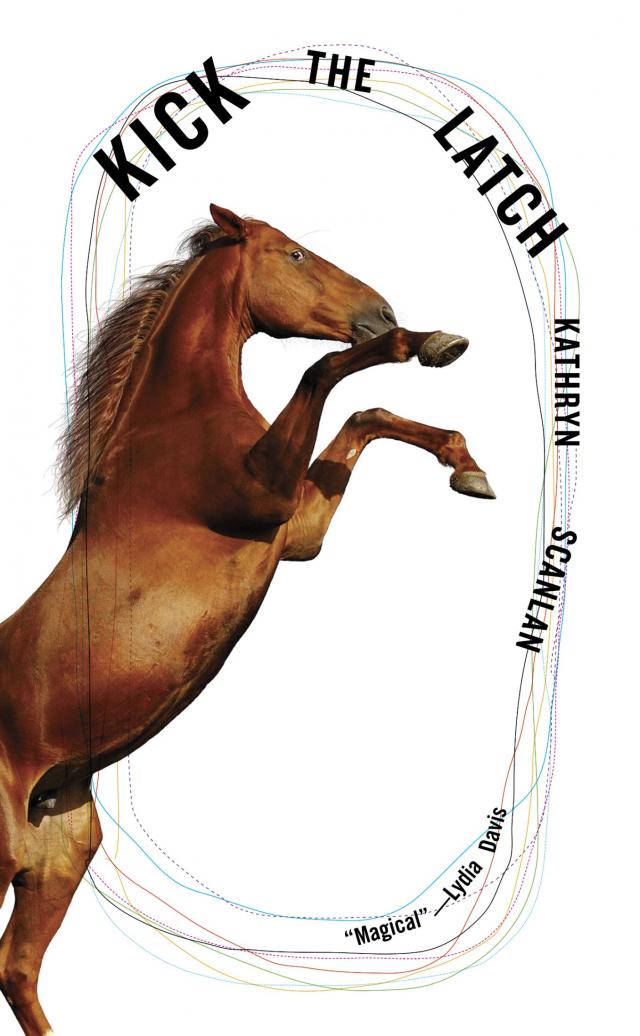
KICK THE LATCH
Copyright © 2022 by Kathryn Scanlan
All rights reserved. Except for brief passages quoted in a newspaper, magazine, radio, television, or website review, no part of this book may be reproduced in any form or by any means, electronic or mechanical, including photocopying and recording, or by any information storage and retrieval system, without permission in writing from the Publisher.
Published by arrangement with the author and her agent Harriet Moore, David Higham Agency, London
Author’s Note
Thank you to Teresa Scanlan, George Scanlan, Caleb Lyons, Harriet Moore, Barbara Epler, Brittany Dennison, and New Directions for their support in the creation and publication of this book. Thank you to Emily Stokes and the Paris Review for publishing an excerpt in the Spring 2022 issue. And to Sonia—thank you for the conversations.
First published as a New Directions Paperbook (NDP1540) in 2022
Manufactured in the United States of America
Design by Erik Rieselbach
Library of Congress Cataloging-in-Publication Data
Names: Scanlan, Kathryn, 1980– author.
Title: Kick the latch / Kathryn Scanlan.
Description: First edition. | New York : New Directions Books, 2022. |
Identifiers: LCCN 2022018693 | ISBN 9780811232005 (paperback) | ISBN 9780811232012 (ebook)
Subjects: LCGFT: Novels.
Classification: LCC PS3619.C263 K53 2022 | DDC 813/.6—dc23/eng/20220420
LC record available at https://lccn.loc.gov/2022018693
New Directions Books are published for James Laughlin
by New Directions Publishing Corporation
80 Eighth Avenue, New York 10011
to Sonia
ONE
SOLID PLASTER
I was born October 1st, 1962. I was born in Dixon City, Iowa. I was born with a dislocated hip. The doctor said I’d never walk. My mom said, Oh no, there’s got to be something. So they put me in solid plaster from my chest down, with just a little spot for my mom to put a diaper. I was in there five months. Then I went to two casts on my legs with a bar in between with these special shoes. Ended up I could walk. I attribute that to Dr. Johnson. My mom always said, Well, if it wasn’t for Dr. Johnson.
THE OLD MAN
We lived in a poor part of town but we had the greatest entertainment. We had the goldfish ponds, we had Motorcycle Hill, we had the dump and Bicycle Jenny. We made rafts for the creek. We lived off the land.
Down the street was a family who’d moved off the reservation — grandfather and kids and grandkids. The grandkids were our age and we spent a lot of time with them. The grandfather liked to tell me about his religion, his beliefs. I loved his stories and his tales. I called him Grandpa.
The old man — he was very well loved but he liked to drink. His daughter and her husband locked him out of the house when he got drunk. I’d say, Grandpa can stay with us — I’ll sleep in my sister’s room so Grandpa can have mine. So the old man would stay in my room and he’d go home when he sobered up.
His daughter and her husband didn’t like Grandpa to drink but they drank, too. They’d drink and get into fights and their kids would come over and we’d call the police. We’d watch out the bedroom window when the police came and hauled them off in handcuffs. The husband was carted away on a stretcher once for stab wounds.
IT WASN’T HIS FAULT
When I was six we got a big dog, but the dog kept wrapping his legs around me and taking my pants off in the front yard. It wasn’t his fault — he wasn’t fixed and I was the right height.
A week later my mom sent the dog back to the man who gave it to us. I cried like crazy when I came home and the dog was gone.
Then my uncle knew a man getting rid of a Shetland pony, but it was a stallion. Uncle borrowed a trailer anyway and brought the stallion pony to our house. We lived in a cheap rental with a rickety little white picket fence. We tied the pony to a concrete block in the front yard where there was plenty of grass to eat.
One day some girls rode by on their mares and the stallion pony started hollering his mating demand. I grabbed his halter but he kicked me against the side of the house. My mom picked up the concrete block to stop him but instead she went skidding down the road behind him — asphalt skiing. Finally a driver pulled over to help and they dragged the pony home together. My mom was scraped and bumped and black and blue all over.
The pony went away right after that.
MILK BONES
The neighbor girl who was my age, Regina — we lived on dog biscuits, Milk Bones. We ate slices of bread from the bag.
No one was there in the morning when I got ready for school. I’d put on my mom’s red lipstick and her dresses and her high-heeled shoes.
In first grade, eight girls had me up against the lockers, saying, Punch her, punch her! I didn’t want to fight, but when one of them came at me I kicked off my heels and let her have it.
They took us to the principal’s office and later my mom showed up. There were scratches on the girl’s face and she had a black eye. I thought they would put me in prison. My mom said, Are those my shoes?
BICYCLE JENNY
Before her husband died and her house burned down, Bicycle Jenny worked at Crocker’s, the slaughtering plant. What was left of her house was a scorched concrete hole in the ground. That’s where she lived.
She rode a bicycle with a little cart on the back for carrying sacks of oatmeal from town. She’d stop by our house on the way because we had a lot of dandelion greens in our yard. She’d pick them and cook them up.
She wore men’s shirts, bright red lipstick, bright red rouge. Her face was real weathered, wind-burnt. She wasn’t very big but she was kind of stocky. In summer she wore a kerchief on her head and in winter she wore wool hats, a hood, layers on layers, big men’s coats, men’s warm boots.
She was the best gardener. Dr. Cheltington and some others in the rich neighborhood hired her to do their grounds work. She could make anything grow and those yards were gorgeous because of her.
If she came into your house, you’d still smell her a day later. When the weather was warm she bathed in the creek or ponds, but in winter she reeked. Most of the boys in the neighborhood, the first naked woman they seen was Bicycle Jenny taking a bath in the goldfish ponds.
She had a lot of dogs — little yipping chihuahuas — and a chicken wire fence to keep them in. I’m talking sixty, seventy chihuahuas without stretching it a bit. She always said she had a hundred.
When we saw her head off to town, we’d go over there. We’d get through the fence and past the dogs and walk around looking at things. She had clothespins and wire hanging from trees. Down in her hole in the ground was an old-fashioned bathtub and a little cast-iron camp stove. She had test tubes with rubber stoppers, little blue bottles, jars of jellies she made from her raspberry bushes. She had some bright red berries, too. Someone said they were probably poison.
Bicycle Jenny had the go-ahead, anytime she needed water, to come into our house and get it. She’d fill her cream cans in our sink and carry them back on her wagon. When it was snowy she used a sled.
If our parents were home we weren’t afraid of her, but if she showed up when they were gone, we were. My sister and I would see her coming and hide under the bed. We’d wait and listen for the front door to open.
She talked to herself while she filled up at the sink. Her voice was high, cracked, eerie like a witch’s. She had her big men’s work gloves, her hat and her other hat, and she’d usually have some chihuahuas stuffed in her coat.
Bicycle Jenny would say, Look what I’ve got, and she’d pull them out of her shirt pocket. She kept the puppies in little strawberry baskets.
One summer a stray cat turned up at our house and had babies. There was a sickly little orange one with a head that wobbled back and forth. When it was just off the titty I showed it to Bicycle Jenny and said, Look at my little kitten, there’s something wrong with its head. She said, Let me take her, see what I can do.
I thought, We’ll never see that kitten again. I kind of forgot about it. I guess I had other cats. I don’t remember worrying about it or wondering. I don’t know how much time went by — maybe a few weeks. But then Bicycle Jenny showed up when I was lying out in the hammock and said, Somebody wants to see you.
I don’t know what she did, I don’t know how she kept her little dogs from killing it, but the cat was fine and its head no longer shook. She didn’t swap kittens — this cat was orange with three distinct white marks. No two cats have the same markings.
A few months later, my sister and I were raking leaves with our mom when an ambulance went by, then cop cars. There wasn’t much traffic on our street and we were nosy — we ran over there. We heard screaming and crying and dogs barking. There was a whole string of emergency personnel. They said she wasn’t taking care of herself. People can’t live like that, they said. It took several large men to get her into the ambulance. The dogs were running everywhere, getting chased with long-handled nets. We were screaming and crying, too.
They hauled her off to a home at Comstock, Iowa. I always wanted to go up to Comstock to see her. She lived at the home a long time. She was close to a hundred years old when she died. I still have the newspaper clipping with her obituary. My mom kept it in a scrapbook. Her name was Marla Weaver. She was original ly from Chesterfield, I believe.
Down in her hole in the ground were piles and piles of blankets and sleeping bags for Bicycle Jenny. But those dogs — chihuahuas are little thin-haired things — how’d they not freeze in the winter? I didn’t think nothing of it when I was a kid but I’m thinking of it now — how’d the dogs survive?
If somebody told me this story, I’d definitely say, You’re fucking nuts. Chihuahuas? In a hole? In the wintertime, in a bathtub? In Iowa?
TWO
THE JOCKEY
At school, everyone wondered what you wanted to do when you grew up. I said I wanted to be a jockey, riding racehorses. The teachers were concerned. But jockeys are small, and I was getting tall. People told me, Put books on your head, you won’t grow. So I’d be walking around with books. I stacked the heaviest ones I could find.
My parents took us to the racetrack in Jackson on weekends. My dad would go inside to gamble and my mom’d wait outside with my sister and me. We’d lean on the rail and watch them run.
THERE WAS NOTHING ELSE
Well what do you want for Christmas and what do you want for your birthday and what is it you would like, as a treat?
A horse!
We had no permission, no money, but my sister and I rode our bicycles to all the neighbors’ houses to ask: Do you have any horses for sale or do you know of any place we could keep a horse or do you know anyone who does have a horse for sale and if so how much?
Keith Baxter owned a stable in Dixon City where you could rent a horse by the hour. The first time my mom took me there, Baxter put me on a giant horse named Joe. I said, I want to ride that one instead — and I pointed at a little horse off by himself in the corral. Baxter said, If you can’t ride Joe you sure as heck ain’t gonna ride Rowdy.
BANG!
Rowdy was a little mustang out of Black River, North Dakota — a paint, brown and white, just beautiful. We had a connection. He was always my pick to ride.
Melvyn Abernathy was a well-known trick rider in Dixon City with a team of palominos. What Melvyn did was drive out to Black River and round up a bunch of wild horses from the range and load them into his trailer. Melvyn brought Rowdy home.
When Melvyn tried to work with the horse, Rowdy kept getting loose — Melvyn’s fences were too short — so he sold him to Keith Baxter. But Rowdy wasn’t popular at Baxter’s either — he unseated everyone who tried to ride him. I fell off plenty of times but I got right back on.
You see the old pictures of the cowboy and the dog — they look like they’re asleep — and the horse is plodding along. Rowdy wasn’t like that. As soon as he thought you weren’t paying attention — bang! you’d be on the ground. He was nervous and quick. He’d spook. He was sensitive. It was his heritage.
I HAD MY SPILLS
He was a small horse, so I didn’t have far to fall. First I rode him in Baxter’s big arena. I’d fall off and get back on and Baxter would be shaking his head. Then one day Baxter said, Okay, you can go down the road now. I’d ride with a group of people from the stable in ditches along the highway. Cars with loud mufflers went by and Rowdy unseated me. Pheasants popped up from the brush and I got unseated.
Rowdy’d unseat me and run back to Baxter’s, but when I got tired of walking three miles to the stable or riding double on another gal’s horse, I learned how to stay on. I paid attention to his twitching ears and the feel of his body. When he tensed up, I talked to him. I couldn’t afford a saddle so I rode bareback, which strengthens your legs and gives you balance.
Anytime I mowed grass or did jobs around the house, my folks forked over the dollar so I could ride Rowdy. If I had no money I’d go just to brush him and talk to him.
Once, on my birthday, I got to rent him for five hours straight. We packed a little lunch, the horse and I did, and went out to the pasture to run around. Rowdy kneeled in the grass and I jumped off. He pawed in the crick and rolled in the water. We ate our treats and napped in the shade of a big tree.
MY PAINT HORSE
One day Keith Baxter said, You know, I’m going to sell that horse. He said he’d sell him for a hundred dollars.
I ran home and cleaned the house, trying to suck up big-time before my mom got off work. She worked really hard and my dad worked really hard — he was a Korea War vet. They paid seventy-five dollars a month to rent the house we lived in.
My mom said, Ask your father. My dad said, In a week you’ll be sick of him — you’ll be chasing boys instead.
Then my mom asked Gary Goldberg what he thought. Gary was a great horseman with a stable in Storyville, a few miles away. If it was too hot or the flies were bad, Gary’d refuse to rent you a horse, whereas Keith Baxter was happy to take your money. To my mom, Gary Goldberg said, I don’t think it’s a good idea.
A week later I was riding Rowdy, crying — I thought it was the last time I’d see him. Baxter and my mom were watching me from the side of the corral. Then Baxter cupped his hand around his mouth and yelled, Well, what do you think of your new horse?
After that there were boarding bills to pay — we kept him at Keith’s — and feed and tack and vet bills, too. My mom, she sacrificed a lot of her own little life so that I — I had to get the horse.
KIND OF FUNNY, A REAL CLOWN, AN ORNERY SON OF A BUCK
Any chance I had I was headed to Baxter’s. We’d get out of class early in a blizzard and I was on my way in the snow. Five miles out — I rode my bike until somebody stole it. Then I walked or hitched a ride with other people from the stable.
The school would call my mom and tell her I was missing. She knew to check Baxter’s first. There I’d be on my paint horse, riding down the road with a big smile on my face.
If I was in a good mood, Rowdy might test me. If I was in a hurry, he wouldn’t let me catch him. He taught me trust. He taught me not to trust too much. I learned to be a little leery.
The other girls at the stable could use the hose on their horses but I had to give Rowdy a sponge bath with a five-gallon bucket of water. He never got used to the hose — it sounded like a snake.
My horse could tell if I was having a bad day. If I was sitting in the stall or out in the pasture crying, he’d nudge me with his head until I started laughing. If I was riding him and thought, I want to go a little faster, he’d go a little faster. He was always looking at me — and I’d be looking back at him.
If your parents don’t get along, if they argue, if there’s an abuse situation, you’ve got your horse. When things were bad I’d go to the horse and the horse would always make it better. That’s why I always say my horse raised me.
THREE
A LITTLE WIND-UP CLOCK
When I was sixteen I wrote letters to horse trainers and racetracks. I got their names and addresses from the racing programs I’d collected. I told them I would work for room and board to learn the ropes.
I got a call from an outfit in Denton, Iowa — BT Beauregard, Buford Beauregard and his brother Lester. They had three thoroughbreds and a quarter horse. I lived with them on their farm all summer while school was out — Bud and Lester and their friend Riley Walker from Tindall.
I learned how to run bandages and how to put a mud knot in a horse’s tail. I learned to massage their legs to get the blood going.
I had a little wind-up clock. When they said to rub each leg for five minutes, I had my clock to make sure I did.
I had a favorite horse — Buckin’ Bones was his name. Oh, I loved that horse. I loved all my horses. I spent the day always with the horses. Everybody called me Bones.
SHORT-IRON
I learned to gallop around the cornfields. There was always pheasants or deer jumping up to spook the thoroughbreds. I was riding short-iron, jockey-style. You use a light little saddle with a flat cantle and you stand in your irons — it takes the weight off the horse’s back and puts it over his loin and shoulders. You use long reins and tie them — you make a special cross. Lester’s daughter taught me how to make my cross and to keep my shoulders right, my back straight. You think about balance and control and you go easy on their mouths — you use a ring bit or snaffle bit, kind bits, not severe.


