Breakfast of Champions

Breakfast of Champions

Kurt Vonnegut

Science Fiction

*Breakfast of Champions,* is vintage Vonnegut. One of his favorite characters, aging writer Kilgore Trout, finds to his horror that a Midwest car dealer is taking his fiction as truth. The result is murderously funny satire as Vonnegut looks at war, sex, racism, success, politics, and pollution in America and reminds us how to see the truth. *From the Trade Paperback edition.*
Read online
  • 7 670
Galápagos

Galápagos

Kurt Vonnegut

Science Fiction

**Galápagos** takes the reader back one million years, to A.D. 1986. A simple vacation cruise suddenly becomes an evolutionary journey. Thanks to an apocalypse, a small group of survivors stranded on the Galápagos Islands are about to become the progenitors of a brave, new, and totally different human race. In this inimitable novel, America’s master satirist looks at our world and shows us all that is sadly, madly awry–and all that is worth saving.
Read online
  • 273
The Sirens of Titan

The Sirens of Titan

Kurt Vonnegut

Science Fiction

The Sirens of Titan is an outrageous romp through space, time, and morality. The richest, most depraved man on Earth, Malachi Constant, is offered a chance to take a space journey to distant worlds with a beautiful woman at his side. Of course there's a catch to the invitation—and a prophetic vision about the purpose of human life that only Vonnegut has the courage to tell.
Read online
  • 810
Slapstick or Lonesome No More!

Slapstick or Lonesome No More!

Kurt Vonnegut

Science Fiction

**Slapstick **presents an apocalyptic vision as seen through the eyes of the current King of Manhattan (and last President of the United States), a wickedly irreverent look at the all-too-possible results of today’s follies. But even the end of life-as-we-know-it is transformed by Kurt Vonnegut’s pen into hilarious farce—a final slapstick that may be the Almighty’s joke on us all. *From the Trade Paperback edition.*
Read online
  • 1 203
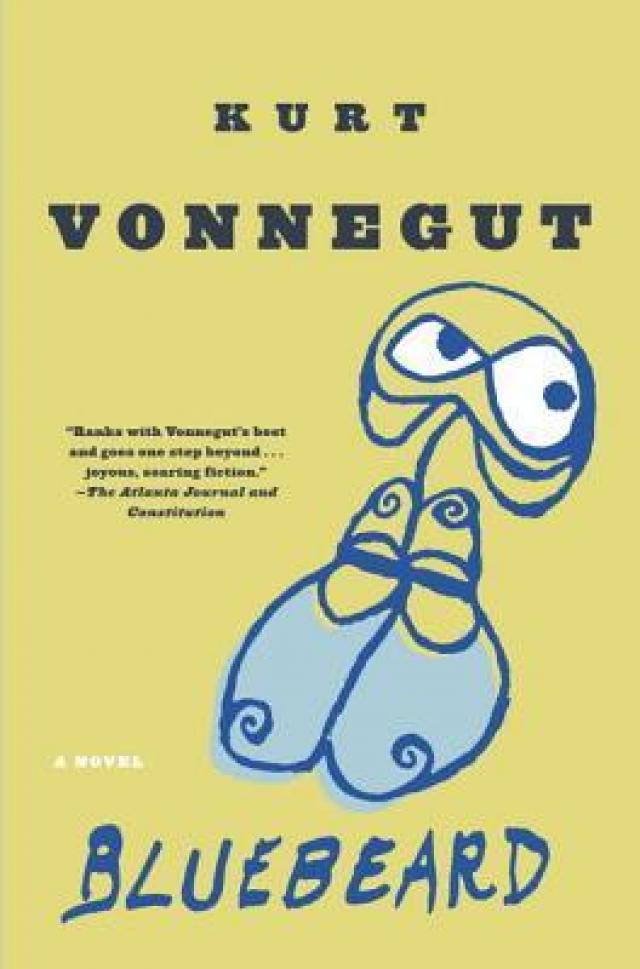
Bluebeard

Bluebeard

Kurt Vonnegut

Science Fiction

Broad humor and bitter irony collide in this fictional autobiography of Rabo Karabekian, who, at age seventy-one, wants to be left alone on his Long Island estate with the secret he has locked inside his potato barn. But then a voluptuous young widow badgers Rabo into telling his life story—and Vonnegut in turn tells us the plain, heart-hammering truth about man’s careless fancy to create or destroy what he loves. *From the Trade Paperback edition.*
Read online
  • 619
Slaughterhouse-Five

Slaughterhouse-Five

Kurt Vonnegut

Science Fiction

Kurt Vonnegut's absurdist classic *Slaughterhouse-Five* introduces us to Billy Pilgrim, a man who becomes unstuck in time after he is abducted by aliens from the planet Tralfamadore. In a plot-scrambling display of virtuosity, we follow Pilgrim simultaneously through all phases of his life, concentrating on his (and Vonnegut's) shattering experience as an American prisoner of war who witnesses the firebombing of Dresden. Don't let the ease of reading fool you - Vonnegut's isn't a conventional, or simple, novel. He writes, "There are almost no characters in this story, and almost no dramatic confrontations, because most of the people in it are so sick, and so much the listless playthings of enormous forces. One of the main effects of war, after all, is that people are discouraged from being characters." *Slaughterhouse-Five* is not only Vonnegut's most powerful book, it is also as important as any written since 1945. Like *Catch- 22*, it fashions the author's experiences in the Second World War into an eloquent and deeply funny plea against butchery in the service of authority. *Slaughterhouse-Five* boasts the same imagination, humanity, and gleeful appreciation of the absurd found in Vonnegut's other works, but the book's basis in rock-hard, tragic fact gives it a unique poignancy - and humor.
Read online
  • 7 943
Welcome to the Monkey House

Welcome to the Monkey House

Kurt Vonnegut

Science Fiction

**Welcome to the Monkey House** is a collection of Kurt Vonnegut’s shorter works. Originally printed in publications as diverse as *The Magazine of Fantasy and Science Fiction* and* The Atlantic Monthly*, these superb stories share Vonnegut’s audacious sense of humor and extraordinary range of creative vision. *From the Trade Paperback edition.*
Read online
  • 491


A Man Without a Country

A Man Without a Country

Kurt Vonnegut

Science Fiction

A Man Without a Country is Kurt Vonnegut's hilariously funny and razor-sharp look at life ("If I die--God forbid--I would like to go to heaven to ask somebody in charge up there, 'Hey, what was the good news and what was the bad news?"), art ("To practice any art, no matter how well or badly, is a way to make your soul grow. So do it."), politics ("I asked former Yankees pitcher Jim Bouton what he thought of our great victory over Iraq and he said, 'Mohammed Ali versus Mr. Rogers.'"), and the condition of the soul of America today ("What has happened to us?"). Based on short essays and speeches composed over the last five years and plentifully illustrated with artwork by the author throughout, A Man Without a Country gives us Vonnegut both speaking out with indignation and writing tenderly to his fellow Americans, sometimes joking, at other times hopeless, always searching.
Read online
  • 1 163
Mother Night

Mother Night

Kurt Vonnegut

Science Fiction

**Mother Night** is a daring challenge to our moral sense. American Howard W. Campbell, Jr., a spy during World War II, is now on trial in Israel as a Nazi war criminal. But is he really guilty? In this brilliant book rife with true gallows humor, Vonnegut turns black and white into a chilling shade of gray with a verdict that will haunt us all.
Read online
  • 284
2BR02B

2BR02B

Kurt Vonnegut

Science Fiction

The setting is a society in which aging has been cured, individuals have indefinite lifespans, and population control is used to limit the population of the United States to forty million. This is maintained through a combination of infanticide and government-assisted suicide - in short, in order for someone to be born, someone must first volunteer to die. As a result, births are few and far between, and deaths occur primarily by accident. Everything was perfectly swell. There were no prisons, no slums, no insane asylums, no cripples, no poverty, no wars. All diseases were conquered. So was old age. Death, barring accidents, was an adventure for volunteers. Never, never, never -- not even in medieval Holland nor old Japan -- had a garden been more formal, been better tended. Every plant had all the loam, light, water, air and nourishment it could use. A hospital orderly came down the corridor, and looked in at the mural and the muralist. "Looks so real," he said, "I can practically imagine I'm standing in the middle of it." "What makes you think you're not in it?" said the painter. He gave a satiric smile. "It's called 'The Happy Garden of Life, ' you know."
Read online
  • 955
Cat's Cradle

Cat's Cradle

Kurt Vonnegut

Science Fiction

**Cat’s Cradle** is Kurt Vonnegut’s satirical commentary on modern man and his madness. An apocalyptic tale of this planet’s ultimate fate, it features a midget as the protagonist, a complete, original theology created by a calypso singer, and a vision of the future that is at once blackly fatalistic and hilariously funny. A book that left an indelible mark on an entire generation of readers, **Cat’s Cradle** is one of the twentieth century’s most important works—and Vonnegut at his very best. *From the Trade Paperback edition.*
Read online
  • 6 274
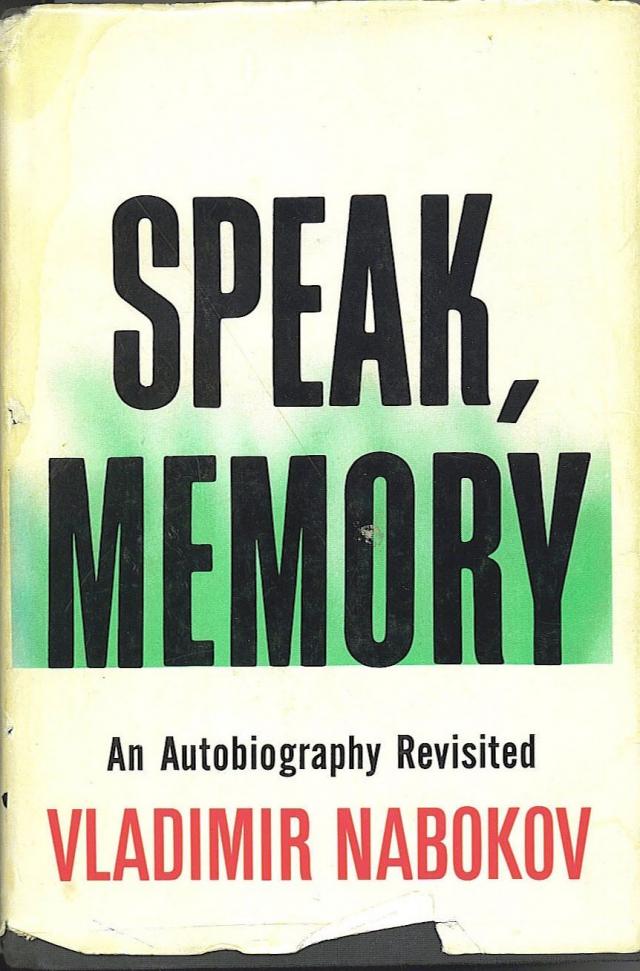
Speak, Memory

Speak, Memory

Vladimir Nabokov

Fiction / Poetry

Speak, Memory, first published in 1951 as **Conclusive Evidence** and then assiduously revised in 1966, is an elegant and rich evocation of Nabokov's life and times, even as it offers incisive insights into his major works, including **Lolita**, **Pnin**, **Despair**, **The Gift**, **The Real Life of Sebastian Knigh**t, and **The Defense**.   *From the Trade Paperback edition.*
Read online
  • 582
Despair

Despair

Vladimir Nabokov

Fiction / Poetry

Self-satisfied, delighting in the many fascinating quirks of his own personality, Hermann Hermann is perhaps not to be taken too seriously. But then a chance meeting with a man he believes to be his double reveals a frightening 'split' in Hermann's nature. With shattering immediacy, Nabokov takes us into a deranged world, one full of an impudent, startling humour, dominated by the egotistical and scornful figure of a murderer who thinks himself an artist. ** ### Review He did us all an honour by electing to use, and transform, our language. Anthony Burgess Nabokov can move you to laughter in the way that masters can - to laughter that is near to tears. The Guardian ### Language Notes Text: English, Russian (translation)
Read online
  • 1 100
The Luzhin Defense

The Luzhin Defense

Vladimir Nabokov

Fiction / Poetry

Nabokov’s third novel, The Luzhin Defense, is a chilling story of obsession and madness. As a young boy, Luzhin was unattractive, distracted, withdrawn, sullen — an enigma to his parents and an object of ridicule to his classmates. He takes up chess as a refuge from the anxiety of his everyday life. His talent is prodigious and he rises to the rank of grandmaster — but at a cost: in Luzhin’s obsessive mind, the game of chess gradually supplants reality. His own world falls apart during a crucial championship match, when the intricate defense he has devised withers under his opponent’s unexpected and unpredictable lines of assault. One of the twentieth century’s master prose stylists, Vladimir Nabokov was born in St. Petersburg in 1899. He studied French and Russian literature at Trinity College, Cambridge, then lived in Berlin and Paris, where he launched a brilliant literary career. In 1940, he moved to the United States and achieved renown as a novelist, poet, critic, and translator. He taught literature at Wellesley, Stanford, Cornell, and Harvard. In 1961, he moved to Montreux, Switzerland, where he died in 1977. “[Nabokov is] the supreme master.” — The New York Times Book Review **
Read online
  • 524
Pale Fire

Pale Fire

Vladimir Nabokov

Fiction / Poetry

In Pale Fire Nabokov offers a cornucopia of deceptive pleasures: a 999-line poem by the reclusive genius John Shade; an adoring foreword and commentary by Shade's self-styled Boswell, Dr. Charles Kinbote; a darkly comic novel of suspense, literary idolatry and one-upmanship, and political intrigue.
Read online
  • 427
183