The Surprising Adventures of Baron Munchausen

The Surprising Adventures of Baron Munchausen

Rudolf Erich Raspe

Literature & Fiction / Science / Nonfiction

How is this book unique? Font adjustments & biography included Unabridged (100% Original content) Illustrated About The Surprising Adventures of Baron Munchausen by Rudolf Erich Raspe A certain eighteenth-century German noble ventured abroad for military service and returned with a series of amusingly outrageous stories. Baron Munchausen\'s astounding feats included riding cannonballs, traveling to the Moon, and pulling himself out of a bog by his own hair. Listeners delighted in hearing about these unlikely adventures, and in 1785, the stories were collected and published as Baron Munchausen\'s Narrative of his Marvellous Travels and Campaigns in Russia. By the nineteenth century, the tales had undergone expansions and transformations by several notable authors and had been translated into many languages. A figure as colorful as the Baron naturally appeals to the artistic imagination, and he has been depicted in numerous works of art. His definitive visual image, however, belongs to Gustave Doré. Famed for his engravings of scenes from the Bible, the Divine Comedy, Don Quixote, and other literary classics, Doré created theatrical illustrations of the Baron\'s escapades that perfectly re-create the stories\' picaresque humor.
Read online
  • 430
The Man That Corrupted Hadleyburg

The Man That Corrupted Hadleyburg

Mark Twain

Literature & Fiction / Short Stories / Biographies & Memoirs

It was many years ago. Hadleyburg was the most honest and upright town in all the region round about. It had kept that reputation unsmirched during three generations, and was prouder of it than of any other of its possessions. It was so proud of it, and so anxious to insure its perpetuation, that it began to teach the principles of honest dealing to its babies in the cradle, and made the like teachings the staple of their culture thenceforward through all the years devoted to their education. Also, throughout the formative years temptations were kept out of the way of the young people, so that their honesty could have every chance to harden and solidify, and become a part of their very bone. The neighbouring towns were jealous of this honourable supremacy, and affected to sneer at Hadleyburg\'s pride in it and call it vanity; but all the same they were obliged to acknowledge that Hadleyburg was in reality an incorruptible town; and if pressed they would also acknowledge that the mere fact that a young man hailed from Hadleyburg was all the recommendation he needed when he went forth from his natal town to seek for responsible employment.
Read online
  • 417
Sketches New and Old

Sketches New and Old

Mark Twain

Literature & Fiction / Short Stories / Biographies & Memoirs

Sketches New and Old is a compilation of fictional stories written by Mark Twain. Among them is "A Ghost Story". In each story, one can catch a great sense of Twain\'s humor and creativity. These classic sketches from Twain are no longer than 10 minutes each, but all show his quick-witted humor in response to the events of the day. A real storyteller can make a great story out of anything, even the most trivial occurrence. Composed between 1863 and 1875, the 63 often outrageous sketches in Sketches, New and Old contain, for instance, a piece about the difficulty of getting a pocket watch repaired properly; complaints about barbers and office bores; and satirical comments on bureaucrats, courts of law, the profession of journalism, the claims of science, and the workings of government. In Mark Twain\'s hands, all these potentially dry and dull topics bristle with vitality and interest. "What fascinates Twain," Lee Smith writes in her introduction, is how people "react to the things that happen to them." Twain "lets them speak in their own voices by and large, in a chorus ranging from high-flown oratory to the plain speech of working people.... It seems generally true that the more elevated the speech, the likelier that person is to be an idiot; words of wisdom and common sense are invariably voiced by the common man" - or woman. "The most profound and moving sketch in this whole collection" Smith writes, is one "told by a freed slave." The candid, ironic, playful, and petulant sketches in this volume are indispensable to our understanding of a harried genius during 13 quite amazing years.
Read online
  • 574
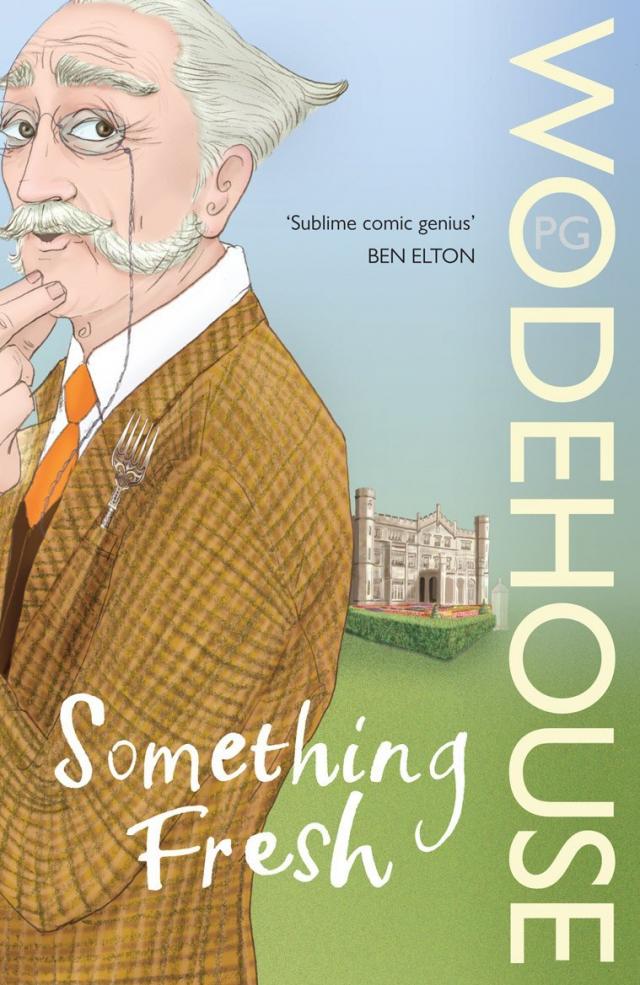
Something New

Something New

P. G. Wodehouse

Fiction / Humor / Music

The sunshine of a fair Spring morning fell graciously on London town. Out in Piccadilly its heartening warmth seemed to infuse into traffic and pedestrians alike a novel jauntiness, so that bus drivers jested and even the lips of chauffeurs uncurled into not unkindly smiles. Policemen whistled at their posts—clerks, on their way to work; beggars approached the task of trying to persuade perfect strangers to bear the burden of their maintenance with that optimistic vim which makes all the difference. It was one of those happy mornings. At nine o\'clock precisely the door of Number Seven Arundell Street, Leicester Square, opened and a young man stepped out.
Read online
  • 588


History of Tom Jones, a Foundling

History of Tom Jones, a Foundling

Henry Fielding

Classics / Fiction / Literature

The History of Tom Jones, a Foundling, often known simply as Tom Jones, is a comic novel by the English playwright and novelist Henry Fielding. The novel is both a Bildungsroman and a picaresque novel. First published on 28 February 1749 in London, Tom Jones is among the earliest English prose works describable as a novel, and is the earliest novel mentioned by W. Somerset Maugham in his 1948 book Great Novelists and Their Novels among the ten best novels of the world. Totaling 346,747 words, it is divided into 18 smaller books, each preceded by a discursive chapter, often on topics unrelated to the book itself. It is dedicated to George Lyttleton. Though lengthy, the novel is highly organised; S. T. Coleridge argued that it has one of the "three most perfect plots ever planned". Although critic Samuel Johnson took exception to Fielding\'s "robust distinctions between right and wrong", it became a best seller, with four editions being published in its first year alone. Tom Jones is generally regarded as Fielding\'s greatest book, and as a very influential English novel.
Read online
  • 689
Dead Souls

Dead Souls

Nikolai Vasilevich Gogol

Nikolai Vasilevich Gogol

A stranger arrives in a Russian backwater community with a bizarre proposition for the local landowners: cash for their "dead souls," the serfs who have died in their service and for whom they must continue to pay taxes until the next census. The landowner receives a payment and a relief of his tax burden, and the stranger receives — what? Gogol\'s comic masterpiece offers the answer in a vast and satirical painting of the Russian panorama, as it traces the path and encounters of its mysterious protagonist, Pavel Ivanovich Chichikov, in pursuit of his dubious scheme.The plot of Dead Souls is reputed to have been inspired by an actual episode related to the author by his friend, the poet Pushkin. Although intended as a three-part novel, only the first part and a few fragments of a draft of the second part exist; Gogol completed and destroyed the second part, and died in the course of his ascetic preparations for writing the third. Some readers consider his novel a realistic portrait of nineteenth-century Russia; others regard it as a work of great symbolism, proclaiming the trickster Chichikov an accurate image of commercial travelers the world over, whose success rests less upon their actual wares than on their grasp of human nature and powers of persuasion. Among the greatest nineteenth-century Russian novels, Dead Souls continues to inspire twenty-first century authors and readers.
Read online
  • 935
A Tramp Abroad

A Tramp Abroad

Mark Twain

Literature & Fiction / Short Stories / Biographies & Memoirs

A Tramp Abroad is a work of travel literature, including a mixture of autobiography and fictional events, by American author Mark Twain, published in 1880. The book details a journey by the author, with his friend Harris (a character created for the book, and based on his closest friend, Joseph Twichell), through central and southern Europe. While the stated goal of the journey is to walk most of the way, the men find themselves using other forms of transport as they traverse the continent. The book is the third of Mark Twain\'s five travel books and is often thought to be an unofficial sequel to the first one, The Innocents Abroad. As the two men make their way through Germany, the Alps, and Italy, they encounter situations made all the more humorous by their reactions to them. The narrator (Twain) plays the part of the American tourist of the time, believing that he understands all that he sees, but in reality understanding none of it.
Read online
  • 775
The Man Upstairs and Other Stories

The Man Upstairs and Other Stories

P. G. Wodehouse

Fiction / Humor / Music

Sir Pelham Grenville Wodehouse, (15 October 1881 – 14 February 1975) was an English writer whose body of work includes novels, collections of short stories, and musical theatre. Wodehouse enjoyed enormous popular success during a career of more than seventy years and his prolific writings continue to be widely read. Despite the political and social upheavals that occurred during his life, much of which was spent in France and the United States, Wodehouse\'s main canvas remained that of pre-war English upper-class society, reflecting his birth, education, and youthful writing career. An acknowledged master of English prose, Wodehouse has been admired both by contemporaries such as Hilaire Belloc, Evelyn Waugh and Rudyard Kipling and by modern writers such as Douglas Adams, Salman Rushdie, Zadie Smith and Terry Pratchett. Journalist and writer Christopher Hitchens commented, "... there is not, and never will be anything to touch him." Best known today for his short stories, Wodehouse was also a playwright and lyricist who was part author and writer of 15 plays and of 250 lyrics for some 30 musical comedies, many of them produced in collaboration with Jerome Kern and Guy Bolton. He worked with Cole Porter on the musical Anything Goes (1934), wrote the lyrics for the hit song "Bill" in Kern\'s Show Boat (1927), wrote lyrics to Sigmund Romberg\'s music for the Gershwin – Romberg musical Rosalie (1928), and collaborated with Rudolf Friml on a musical version of The Three Musketeers (1928).
Read online
  • 1 034
Right Ho, Jeeves

Right Ho, Jeeves

P. G. Wodehouse

Fiction / Humor / Music

Right Ho, Jeeves is a novel by P. G. Wodehouse, the second full-length novel featuring the popular characters Jeeves and Bertie Wooster, after Thank You, Jeeves. It also features a host of other recurring Wodehouse characters, and is mostly set at Brinkley Court, the home of Bertie\'s Aunt Dahlia. It was first published in the United Kingdom on October 5, 1934 by Herbert Jenkins, London, and in the United States on October 15, 1934 by Little, Brown and Company, Boston, under the title Brinkley Manor. Before being published as a book, it had been sold to the Saturday Evening Post, in which it appeared in serial form from December 23, 1933 to January 27, 1934, and in England in Grand Magazine from April to September 1934. Wodehouse had already started planning this sequel while working on Thank You, Jeeves.
Read online
  • 1 517
My Man Jeeves

My Man Jeeves

P. G. Wodehouse

Fiction / Humor / Music

My Man Jeeves is a collection of short stories by P. G. Wodehouse, first published in the UK in May 1919 by George Newnes. Of the eight stories in the collection, half feature the popular characters Jeeves and Bertie Wooster, while the others concern Reggie Pepper, an early prototype for Wooster.
Read online
  • 328
The Pickwick Papers

The Pickwick Papers

Charles Dickens

Fiction

\'One of my life\'s greatest tragedies is to have already read Pickwick Papers - I can\'t go back and read it for the first time\' Fernando PessoaFew first novels have created as much popular excitement as The Pickwick Papers - a comic masterpiece that catapulted its twenty-four-year-old author to immediate fame. Readers were captivated by the adventures of the poet Snodgrass, the lover Tupman, the sportsman Winkle and, above all, by that quintessentially English Quixote, Mr Pickwick, and his cockney Sancho Panza, Sam Weller. From the hallowed turf of Dingley Dell Cricket Club to the unholy fracas of the Eatanswill election, via the Fleet debtors\' prison, characters and incidents spring to life from Dickens\'s pen, to form an enduringly popular work of ebullient humour and literary invention. This edition is based on the first volume edition of 1837, and includes the original illustrations. In his introduction, Mark Wormald discusses the genesis of The Pickwick Papers and the emergence of its central characters. For more than seventy years, Penguin has been the leading publisher of classic literature in the English-speaking world. With more than 1,700 titles, Penguin Classics represents a global bookshelf of the best works throughout history and across genres and disciplines. Readers trust the series to provide authoritative texts enhanced by introductions and notes by distinguished scholars and contemporary authors, as well as up-to-date translations by award-winning translators.
Read online
  • 348
183