

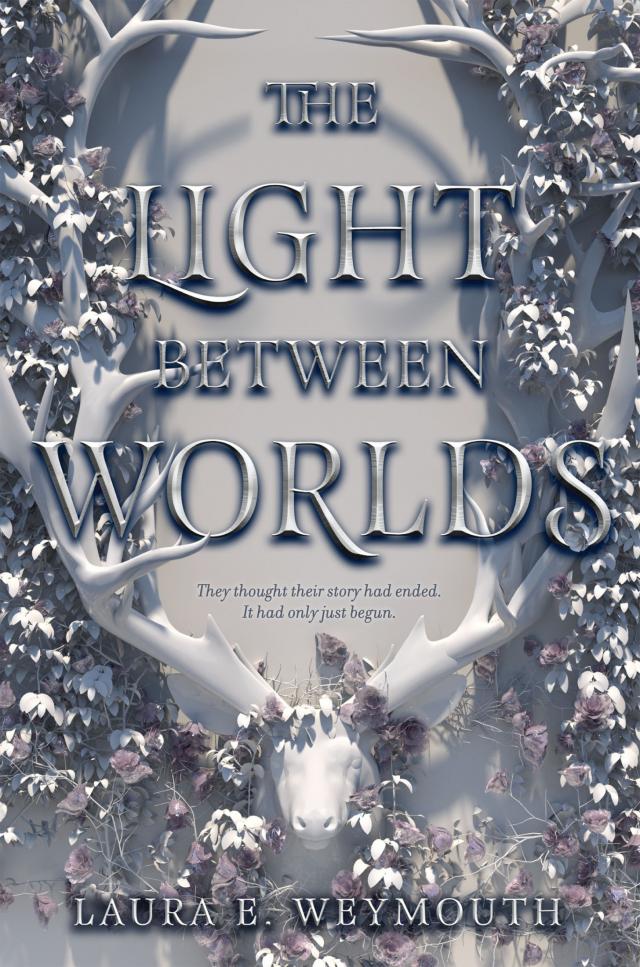
The light between worlds, p.1
The Light Between Worlds, page 1


Dedication
For all the lost girls—
may you find your way home.
Contents
Cover
Title Page
Dedication
Evelyn: September 1949
Chapter 1
Chapter 2
Chapter 3
Chapter 4
Chapter 5
Chapter 6
Chapter 7
Chapter 8
Chapter 9
Chapter 10
Chapter 11
Chapter 12
Chapter 13
Chapter 14
Chapter 15
Chapter 16
Chapter 17
Chapter 18
Chapter 19
Chapter 20
Chapter 21
Chapter 22
Chapter 23
Chapter 24
Chapter 25
Chapter 26
Chapter 27
Chapter 28
Chapter 29
Chapter 30
Chapter 31
Chapter 32
Chapter 33
Philippa: February 1950
Chapter 34
Chapter 35
Chapter 36
Chapter 37
Chapter 38
Chapter 39
Chapter 40
Chapter 41
Chapter 42
Chapter 43
Chapter 44
Chapter 45
Chapter 46
Chapter 47
Chapter 48
Chapter 49
Chapter 50
Chapter 51
Chapter 52
Chapter 53
Chapter 54
Chapter 55
Chapter 56
Chapter 57
Chapter 58
Chapter 59
Chapter 60
Chapter 61
Chapter 62
Chapter 63
Chapter 64
Acknowledgments
Resources in Order of Appearance
About the Author
Praise
Books by Laura E. Weymouth
Back Ad
Copyright
About the Publisher
Evelyn
September 1949
1
WE’RE BURYING OLD NICK IN THE BACK GARDEN. IT’S JUST Jamie and me, and it’s raining, and I know he’s worried because of the way he stands, head bowed, shoulders tense.
“You can cry, Ev,” he says, and takes my hand in his own. No one’s held my hand in such a long time, and I nearly do cry at that, because he’s always so kind to me. But if I’ve learned anything in life, it’s to choke back tears and smile.
Jamie won’t meet my eyes. Instead he glares at the freshly dug earth and kicks a clod of it with one foot. The soil hits up against the corrugated iron side of our Anderson shelter, a leftover from the war, and Jamie winces. I heard him and Philippa ask Mum and Dad about having it removed once, on an evening when they thought I was caught up in a book. My brother and sister are always having worried conferences behind my back, even though I’m sixteen and only two years younger than Phil. They fuss over me worse than our parents ever have, but in spite of their best efforts the shelter removal scheme never came to pass. Planted over with daisies now, it still crouches at the garden’s far end, reminding me of what once was.
I manage the smile I don’t quite feel, and I think that worries my brother more than anything else. It worries him more than the fact that the family dog is gone—one of the last creatures who remembered me as I was before the shelling, when I was a child, and untouched by war. It worries him more, even, than the knowledge that next week, he’s heading back to university. With Jamie at school and Philippa off in America, I’ll be truly alone. For years, the three of us were never far apart, him down the road studying at St. Joseph’s and Philippa across the hallway in our girls’ school dormitory. Now it’ll be just me, Evelyn Hapwell, a girl caught between two worlds and left, at last, to her own devices.
I know the secret fear my smile wakes in Jamie and Phil, a worry they will never acknowledge, not to each other, not even to themselves. It frightens them to see me smile through pain because it means I refuse to give up. And my brother and sister have resigned themselves to a fate I won’t accept. They’ve written the end of our shared history—been broken by the weight of a conclusion they see as inevitable. Cracks run through them; fault lines, breakages, places where they’ve shattered just a little.
And they worry because I will not, cannot, be anything but whole. They think one day I’ll break, too, and that I’ll go off like a bomb because I’ve refused to let my breaking happen bit by bit. Maybe so. But every morning I wake up and watch the sun rise and listen to the birds sing and know that I will not let today be that day. My story hasn’t ended yet.
Jamie’s words still hang on the air as his warm fingers grasp my own. He looks at me and I look at him.
“I’m not crying till I get home,” I say. The words are a prayer, a promise, and they burn my tongue with the heat of faith they require.
“Oh, Ev,” Jamie mutters, and stumps back up to the house with his shoulders bent.
What he doesn’t see, what he and Philippa never see, is that when my words burn, they leave ashes on my lips.
Hope doesn’t make parting less bitter.
It doesn’t lessen the sting of loss.
It is, in itself, a sort of pain, but one I would break without.
“Have you got everything you need for school, Ev?” Mum asks at breakfast. She and Dad and Jamie say nothing about Old Nick. All their words are careful, mouthed like razor blades that might cut me if they’re not spoken just so. They needn’t bother. I’ve never been as frail as they think.
“I’ve just got to pick up more socks,” I say around a bite of toast. “But I’m all packed, so we can stop for more on the way to the station.”
Mum sighs. “The rate at which you children go through clothes—it’s a mercy clothing rationing’s ended.”
“I’ll drive Ev to the station,” Jamie volunteers. I sip my tea suspiciously. He ought to be up to college already—he’s got a scholarship studying the law at Christ Church in Oxford. When I give him a hard stare, he won’t meet my eyes. He knows that I know he should be elsewhere. I don’t like this. I don’t like being handled as if I’m made of spun glass just because a dog who followed me in from the streets died three days before term. Just because Philippa’s flown off to America for school and the entirety of the Atlantic now lies between us.
At least no one knows it’s my fault she’s gone. The sighs and sympathy and gentle treatment would be even worse if they did.
Mum and Dad exchange a look. They were pressed from the same mold, both ordinary and brown-haired with worry-lined faces, like two fretful bookends. They hardly need speak to understand each other. I wish I could decode the meaning of Dad’s raised eyebrow and the quirk of Mum’s mouth that serves as a conversation between them.
“That’s good, thank you, James,” Dad says to my brother before reaching across the table and pressing something into my hand. “In case you want anything on the train, love.”
It’s a crisp five-pound note and I swallow hard. Kindness always threatens to undo me, and my parents can’t afford this. It’s not much, but we’ve never been rich and they’ve put everything into working for a future for Philippa and Jamie and me. I’ve watched them make quiet sacrifices for years to scrape together the money for expensive schools, the sort of places they think will open doorways.
I wish I wanted to open the sort of doorway they’re thinking of. I wish I wanted to go somewhere other than home, to be someone other than who I was.
I take the note, because I can hardly say I love you but I am as I am and I will never be who you want me to be, at least not over the breakfast table when my suitcase is sitting by the door and we’ll part ways in less than an hour.
Instead, I tuck the money into the pocket of my school skirt and smile. “Thanks, Dad. You’re a brick.”
The words come out light and normal, and a bit of the worry fades from my parents’ faces. Jamie frowns down at his eggs, but keeps his counsel.
When I’m meant to be looking my room over to make sure I haven’t forgotten anything, I steal back out to the garden. I only have a moment, otherwise I’ll be missed, but I plod through the rain and past poor Old Nick’s grave. Then I lower myself down into the bomb shelter’s musty half-light.
The splintered, moth-eaten cots that once crammed the shelter’s interior are gone. It’s just an empty metal shell that smells vaguely of earth and rust. I press my forehead to one aluminum wall and shut my eyes, trying to fill myself with radiant Woodlands light. Light from a far world. Light from a place of myth and wonder.
“Five and a half years,” I whisper to the dank, uncaring air. “That’s how long it’s been since you sent us back. Have I not waited long enough to come home? I swear to you, Cervus, if you cut me, I bleed Woodlander’s blood. My heart beats with a Woodlander’s pulse.”
There’s no answer, of course. There never is. The rain drums steadily on, and I hurry back to the house.
Before long, it’s time to go. Mum and Dad kiss me goodbye at the door, and I climb into Jamie’s car. It always takes me by surprise that Jamie has a car. We spent so long traveling on horseback or on foot that it gives me an odd, unearthly feeling when I climb into the passenger seat and he compet ently shifts gears.
For the most part we drive in silence, but I don’t mind. None of us Hapwells have ever felt the need to fill the air with pointless chatter. We stop once, and I get my socks, and then Jamie pulls to a halt in front of the station.
“You going to be alright, Ev?” he asks while lifting my bags out of the boot. There’s uncertainty in his eyes, a pleading note in his voice. He wants me to be alright. I want him to be, too, though neither of us knows how that should look for the other.
But I know what could make a start for him.
“Of course.” I smile brightly, an ordinary girl with her ordinary brother, being dropped off for a term at school. He hugs me a little too tight, and ducks back into the car as if he can’t bear to stay, or to see me walk into the station alone.
It’s only once he’s gone that I let my smile slip and fall.
I pace the platform restlessly. I’ve never faced the journey back to school without him or Philippa at my side, but it’s past time I stood on my own, no matter the depth of the regrets I carry.
The emptiness of the bunker haunts me still. Five and a half years since we last cowered in its dark interior, listening for the low growl of approaching planes or the muffled reverberation of nearby bomb strikes. Five and a half years since something inexplicable happened in the midst of all that darkness and waiting and fear. The truth haunts my brother and sister, too, I know. Poor darling Jamie, who works so hard and never quite feels he’s doing enough. Poor lovely Philippa, off in America, running from our past.
As for me, I refuse to be pitied. I refuse to be anyone but who I’ve always been: Evelyn Hapwell, teller of truths and walker of worlds, friend of the Woodlands and enemy of tyrants, beloved of Cervus, the Guardian of the Great Wood.
The words Cervus once spoke to me are emblazoned on my bones, writ large across every inch of my skin.
A Woodlands heart always finds its way home.
Your words, Cervus, not mine. No matter how many years pass, I plan to hold you to them.
2
THIS IS HOW AN AIR RAID BEGINS: IN THE DEAD OF night, with silence and normalcy shattered by the wail of a siren.
It’s February 1944, and London has been under fire for over a month. If there’d been anywhere else to send us for our half-term holiday now the shelling’s started up again, Mum and Dad would have kept us out of the city. This time, though, they weren’t able to find us a place.
I’ve been through drills before, and we’ve spent more time in London than most children. But we were away for the Blitz at the beginning of the war, shuffled off to distant cousins and friends of friends who were willing to house us when school was out. It’s the idea of us going to strangers that Dad and Mum don’t like, so we’ve never truly been evacuees, just schoolchildren who go somewhere other than home for holidays. When things were calmer over the last two years, we were even allowed back to London for a week.
None of the drills have prepared me for this, though—for the banshee cry of the air raid sirens that works itself up to an insistent scream. I roll out of bed and Philippa’s already on her feet across from me, white-faced but holding out a hand. I grab on to it as if it’s a lifeline, and we meet Jamie in the hall.
We’ve been taught well by our parents, and carried their instructions with us through every drill at school: Look out for your siblings. Keep together whatever happens. Wait for no one else.
Not even Mum and Dad.
So we hurry out through the back door and into the garden, where the cold wet grass nips at our feet. It’s strange, being out-of-doors so late at night. Shadows loom long and make our postage-stamp lawn and frost-covered shrubs seem eerily unfamiliar. Jamie helps Philippa and me down into the shelter and stands at the entrance, staring back to the house with hunched shoulders and one foot tapping. Philippa wraps a damp blanket around me and we sit side by side, shivering in the cold.
The siren wails on. Somewhere in the distance, bombs begin to fall.
“Do you see them?” Philippa asks anxiously. Jamie shakes his head.
“No, I—wait.” His voice cracks with relief. “There’s Dad.”
Our father looks in at the entrance, and everything’s suddenly a little less dreadful than it was before. Until he frowns and looks at Jamie. “Didn’t your mum come out?”
Before Jamie can answer, Dad sprints back across the lawn. The dull blast of explosions is growing louder, closer. I gnaw on my lower lip and Jamie joins Philippa and me. We put our arms around each other and wait, and I would give anything to be away from here—to leave the dark and danger and fear behind.
“Where are—?” Philippa asks, choking with worry. But a bomb falls so close that it drowns out her last word and shakes the walls of our small shelter.
“Anywhere but here,” I whisper. Philippa pulls me close, as if her very presence can shield me from harm. Squeezing my eyes shut, I will away the present, picturing somewhere calm, somewhere peaceful—a haven of silence and golden light. “Anywhere but here. Anywhere but here.”
And then, silence. The dark in the shelter grows, till I can make out nothing but my brother’s and sister’s pale faces.
After a moment a sound begins. It’s neither air raid siren nor bombshell. Ringing through the air, it’s low and insistent, halfway between the bellow of a bull and the bugle of an elk. It pulls at my blood and bones until I want to crawl out of my own skin to answer it. Jamie, Phil, and I stare at each other, wide-eyed.
“Hold on to me,” Jamie orders, panic lacing his words. We join hands and I can barely breathe, I’m so afraid. Under that fear, though, there’s something new and unexpected—anticipation.
The call grows louder and louder until at last light explodes around us. I blink and squint, eyes watering, sure I’ll see only rubble and devastation when my vision clears. But the light stays constant, unlike the flash and sizzle of shelling. It resolves into afternoon sunshine and my heart leaps to find that, impossibly, we’re standing in a wood.
After the confines of the bunker everything in me sings to be surrounded by sun and trees and good clean air. There’s a pungent green smell all about, and a riot of birdsong undercut by the sound of running water. Wind lifts the hair from my forehead, and it’s not a bitter February blast but a soft spring breeze.
Jamie and Philippa glance at each other, wide-eyed as a pair of ghosts.
“Did we—” Philippa begins, and Jamie shrugs.
Ahead of us a tall and regal shape steps from between the trees. It’s a stag, his hide the color of autumn leaves, a thick red ruff of fur around his broad shoulders. He wears his branching antlers like a crown.
Instinctively, Philippa pushes me behind her, but I pull away. There is something about this place—about the earth beneath my feet and the branches above my head and the stag stepping toward us and the wild rightness of it all. A moment ago, I was afraid and broken, and now I feel as if the splintered pieces within me have begun knitting back together.
Walking forward, I meet the stag before a tumbledown, moss-covered boulder.
“Hello,” I say quietly. “I’m Evelyn.”
In answer, the creature steps forward. He lowers his great head and presses his velvet muzzle to my cheek. I feel a whuff of hot air that smells of grass and leaves and wildflowers. When he speaks, it’s a heart-deep rumble that comes up from his chest and there’s a fierce joy in his strange voice.
“Little one. Welcome to the Woodlands.”
“This can’t be happening,” I hear Philippa mutter to Jamie behind me. “Either we’re dead or there’s been some sort of gas attack, something new that causes delusions.”
“I don’t know.” Jamie sounds torn. “It looks real enough, Philippa.”
“But it can’t be. And even if it is, what about Mum and Dad? What’s happened to them? They’re still back in the middle of all that shelling.”
I feel a pang of regret at Philippa’s words. But the stag fixes his fathomless dark eyes on me and for the first time that I can recall I am struck by a sudden and unshakable impression that all shall be well.
Anywhere but here, I said. Somehow, I’ve got my wish.
“If we really have gone—someplace else—and they find us missing from the shelter, they’ll think the worst. Jamie, it’ll break their hearts.” Though I don’t look back, I know Philippa’s near tears. I can hear it in her voice.


