The fall of waterstone, p.1
The Fall of Waterstone, page 1


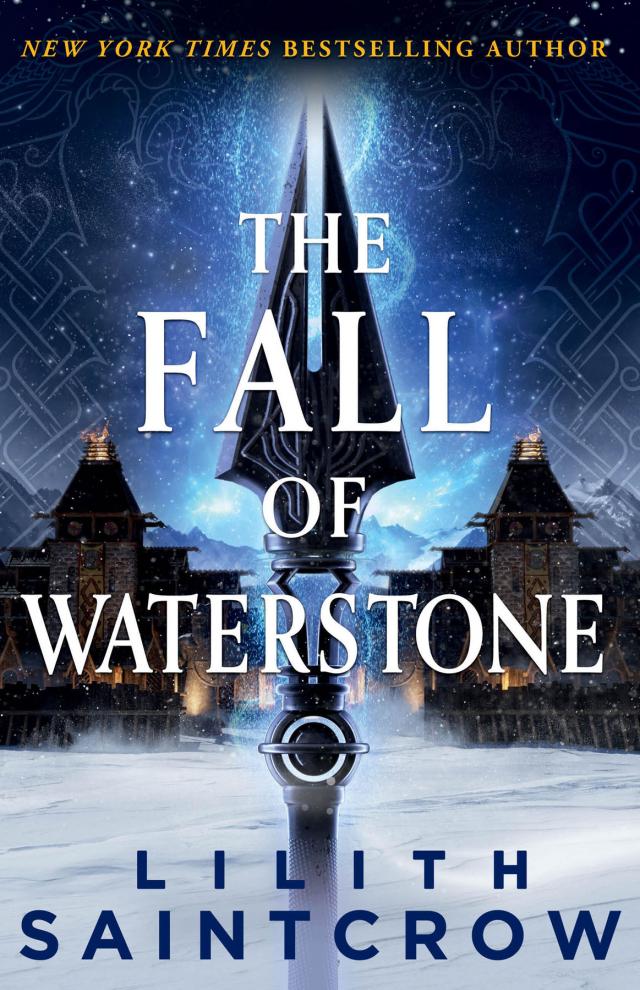
This book is a work of fiction. Names, characters, places, and incidents are the product of the author’s imagination or are used fictitiously. Any resemblance to actual events, locales, or persons, living or dead, is coincidental.
Copyright © 2024 by Lilith Saintcrow
Excerpt from Doom of the Elder copyright © 2024 by Lilith Saintcrow
Excerpt from Song of the Huntress copyright © 2024 by Lucy Hounsom
Cover design by Lisa Marie Pompilio
Cover illustration by Mike Heath | Magnus Creative
Cover copyright © 2024 by Hachette Book Group, Inc.
Map by Tim Paul
Hachette Book Group supports the right to free expression and the value of copyright. The purpose of copyright is to encourage writers and artists to produce the creative works that enrich our culture.
The scanning, uploading, and distribution of this book without permission is a theft of the author’s intellectual property. If you would like permission to use material from the book (other than for review purposes), please contact permissions@hbgusa.com. Thank you for your support of the author’s rights.
Orbit
Hachette Book Group
1290 Avenue of the Americas
New York, NY 10104
orbitbooks.net
First Edition: June 2024
Orbit is an imprint of Hachette Book Group.
The Orbit name and logo are registered trademarks of Little, Brown Book Group Limited.
The publisher is not responsible for websites (or their content) that are not owned by the publisher.
The Hachette Speakers Bureau provides a wide range of authors for speaking events. To find out more, go to hachettespeakersbureau.com or email HachetteSpeakers@hbgusa.com.
Orbit books may be purchased in bulk for business, educational, or promotional use. For information, please contact your local bookseller or the Hachette Book Group Special Markets Department at special.markets@hbgusa.com.
Library of Congress Cataloging-in-Publication Data
Names: Saintcrow, Lilith, author.
Title: The fall of Waterstone / Lilith Saintcrow.
Description: First Edition. | New York, NY : Orbit, 2024. | Series: Black Land’s Bane ; book 2
Identifiers: LCCN 2023046869 | ISBN 9780316440530 (trade paperback) | ISBN 9780316440639 (ebook)
Subjects: LCGFT: Fantasy fiction. | Novels.
Classification: LCC PS3619.A3984 F35 2024 | DDC 892.—dc23/eng/20231010
LC record available at https://lccn.loc.gov/2023046869
ISBNs: 9780316440530 (trade paperback), 9780316440639 (ebook)
E3-20240503-JV-NF-ORI
Contents
Cover
Title Page
Copyright
Dedication
Map
Epigraph
Part One: Waterstone Caged Creatures
A Change, at Least
Waterstone
A Brazen Voice
Even upon the Scales
Mortal Envy, Sharper Teeth
Capable or Not
Too Often Fearless
Amusing Insults
Taeron’s Tower
Full of Danger
Three in Succession
Useful, Not Trust
Part Two: The River Race Current, Skill, and Seidhr
Such a Prize
Stay Where Unwanted
Every Effort to His Cause
Through the Oar-Paces
No Other Outcome
Swiftwing, Leaflight
Whip-Tip, Whisper
Nor Men
Victory and Weariness
The Council of Laeliquaende
Hand in Hand
Orange Stars at Twilight
Part Three: City Betrayed Small Trinkets
A Cloak and a Casket
Haugr and Lich
Shieldmaid’s Rage
Goldspear, Broken
Naciel’s Run
Another Doom
Certain Signs
Part Four: To Dorael Regret My Hope
Laggards from the Fire
A Lamp of Belief
Lithielle’s Jewel
Seeing, Understanding
A Patient Beast
Made for This
Careful Use
Not Far Enough
A Single Bone
An Empty Steading
Uncanny Before
Imaginary Offense
Upon the Threshold
Know, Not Tell
Speak of a Friend
Woad, Earned
A Second Shadow
Flow and Flame
See the Curse
Only Mortal
Name in Battle
Somewhat Late
Acknowledgments
Discover More
Extras Meet the Author
A Preview of Doom of the Elder
A Preview of Song of the Huntress
Also by Lilith Saintcrow
Praise for Lilith Saintcrow
For those who travel far.
Explore book giveaways, sneak peeks, deals, and more.
Tap here to learn more.
And through the drifts the snowy clifts
Did send a dismal sheen:
Nor shapes of men nor beasts we ken—
The ice was all between.
—Samuel Taylor Coleridge
Several problems have tormented the translator of this tale; many a term in the Old Tongue or the southron dialects holds nuance not easily explained in other languages. The reader’s patience is humbly solicited. Any error is unintentional, any inaccuracy likewise.
May the Blessed smile upon both reader and scholar alike, knowing there is neither insult nor injury meant.
PART ONE
WATERSTONE
Caged Creatures
Thus did the folk of the High-helm pass swift and silent, over tree-crowned hill and through murmuring valley, until they reached the place shown unto their king. The first stones of Laeliquaende were laid with joy, and as the white towers rose Taeron’s people sang. Even so close to the Enemy’s land the music flowed unceasing, until the day doom arrived in the form least suspected…
—Gaemirwen of Dorael, Concerning the Lost Kingdoms
At least they did not throw us in a pit,” ruddy-haired Arneior snarled, tapping a disdainful fingertip against the bars. The slim metal pillars were light, even decorative—for the Elder make no thing without attention to the most pleasingly efficient shape for its function—and their powdery surfaces were utterly impervious. Even had we some implement to cut through, where on earth would we go? “Though that would be easier to escape.”
No freeborn creature likes to be caged, and a shieldmaid less than most.
I sat upon the cell’s shelf-bed, which now bore a thin cushion of wondrous softness and blankets of surprising warmth. The guards were not impolite, though regarding us with a great deal of curiosity. They were Elder, had presumably seen mortals enough in their time… and yet.
There was nothing else to do, so I combed my hair with surpassing slowness. As well as bedlinen and small necessaries, the politely inquisitive guards had also brought my mother’s second-largest trunk, hauled this far north by what seidhr I could not tell—and it did not seem they had searched its interior, at least.
The appearance of our luggage bespoke some graciousness upon the part of our hosts, and further intimated the men of Naras might not be finding their own confinement overly difficult. Our prison was amply sized, contained a water-room, and once the sun left the sky a soft glow remained in shell-shaped patterns painted upon the wall, dying gently as we readied ourselves for sleep.
I tried to discern the seidhr in such a wonder by laying a fingertip against luminescent stone, but it granted no illumination other than the physical. In fact, the meat inside my skull, usually so painfully active, was hard-pressed to find a solution to any quandary. Even twisting my hair into braids starred with red coral beads—all of Dun Rithell’s supply until traders brought more upriver in summer—did not help.
To make matters worse, I still occasionally shivered with the cold of our passage across the Glass, not to mention the memory of a snow-hag and a great lich, attempting the healing of Eol of Naras, the final terrible effort to reach this hidden city where Aeredh said some great Elder weapon lay waiting for my use. The shocks lingered in my flesh, echoes not fading as an ordinary nightmare but acquiring new and terrible resonance whenever I shut my eyes.
My shieldmaid’s attention was wholly taken with peering down the stone hall, testing the bars at intervals, listening intently for any sign of our guards, and performing what practice she could within the barred room’s confines. Her spear was too long for the space, but those women taken by the Black-Wingéd Ones may fight with anything to hand—even sand, and grass—so she performed the stretches and quick movements of unarmed battle assiduously every rising and dusk, and when the sun reached its apex as well.
I was content to sit and brood, to consume what liquid victuals the Elder brought us, and to attempt some manner of contemplation, so far as I could through the clamor vying with strange humming distraction inside my head.
“Solveig?” Arn half-turned, regarding me narrowly. Her hazel eyes were hot as banked coals, and normally I would have said something to ameliorate her temper.
There seemed little which could accomplish such a mighty feat at the moment, though. “I am trying to think,” I repeated, for perhaps the fifth time that day. My throat was dry, though a graceful silver ewer and two gemmed chalices rested upon a small table carved, like the rest of this room, from pure rock. It was akin to the dverger-crafted halls of Redhill, except the stonework of the Elder seems more grown than shaped.
Inside the jug was a version of what Aeredh and his Elder friends called winterwine, that memory-flavored drink filling as meat and bread, though not nearly quite so satisfying to the teeth.
“Oh, aye.” My shieldmaid did not mock me, though ’twas a near thing. “What good is that, though? We must do something.”
“I find there is little to be done at the moment, small one.” The name carried no little affection—I barely reach her shoulder, despite my father’s brawn and my mother’s tall slenderness. Even Astrid held more height, and she the youngest of Eril and Gwendelint’s children.
The image returned once more—our riverbank home under the shadow of Tarnarya reduced to a shattered, smoking skeleton, strewn with baked, shrunken corpses. If I sought sleep, sooner or later I dreamed of it; if I closed my eyes and attempted to still my thoughts in the way of a volva the vision thrust itself upon my inner eye. I could not tell if it were a true sending, a foretelling, or merely my own fears given deadly strength by passage so close to the terrible shadowed peaks of the Black Land.
The Marukhennor is hung about with gloom that eats hope, pouring despair into all living things. We had passed near indeed to those sawtooth masses of frost-choked stone, and even our leader had seemed prey to bleak imaginings in their shadow.
At the winter solstice, being concerned wholly with my own problems, I had been certain the Enemy was merely a tale of past danger to frighten children with. Our journey had not consumed more than a few moonturns, and yet I felt as old as some of the Elder are said to be. They do not die as the Secondborn do, those favored first children of the Allmother, though they hold that we mortals are her favorites, given the greatest gifts of any beings.
I cannot tell the truth of such an assertion, even now.
That morning, awakened from a fitful broken doze—I did not toss or turn, since Arneior slept upon the edge of the shelf-bed, closer to the door as befit a shieldmaid with a charge to protect—and not only clean but warm as I never thought to be again after the last terrible part of our trek, I had no energy for such philosophical matters.
The red coral did not help, though it is said to keep its wearer from being led into a bog. My favorite scentwood-and-horn comb, miraculously unbroken, lay in my lap; heartsblood-red wool, the second-finest dress I had, probably appeared drab to our Elder captors. It took far more concentration than usual to twist my hair properly, and I often gazed at my hands or comb as if I had forgotten how to use them.
“Nevertheless.” Arneior was not willing to admit any defeat, or even uncertainty. Battle or protection were her duties, negotiating with and winning over our new captors should have been mine.
There was no purchase upon that cliff, for all the spike-helmed Elder guards were courteous enough—when they spoke at all. Aeredh had promised to return when he could, but would he be allowed after parley with the Elder king whose lands we had reached? One did not build a hidden city in order to look kindly upon visitors; perhaps our guide and leader had been placed in a cell of his own after attempting diplomacy.
Four days since our arrival, all told, Arneior chafing more and more at inactivity when she was not performing the forms of weaponless combat or examining the contours of our quarters for any weakness, and I? I sat slothful, staring at the fall of light in the stone hallway, rousing myself barely enough to take some nourishment or wander to the water-room when the need arose.
Perhaps I could have tried harder to befriend the guards. Blond Floringaeld appeared daily as the sun reached his highest point, passing naught but greetings through the bars along with our daily repast. No information did that captain grant a lowly pair of Secondborn women.
I had not even enough wit to attempt a riddle or some other manner of enticement, letting my shieldmaid meet him with stiff politesse instead.
“Do not rattle the bars.” I was hoarse as if I had been screaming, and my head ached. “Please.”
Arn spread her slim capable hands. “I doubt I could shift them. Even the Wingéd Ones are silent; this is a curst place, and us dragged here by Northerners.” The last word was not obscene, but her tone almost managed to make it so. “False are they, claiming weregild where instead your brother did them a service, and now look. These Elder will probably keep us here until we die. ’Tis no more than an eyeblink to them.”
I almost winced at hearing my own fear given voice, and examined my comb afresh. My braids were done; now I had to fill the rest of the day with something before I could lie down once more and seek elusive sleep.
Some volva you are, the soft terrible voice of self-loathing whispered. A wisewoman may send her subtle selves free of any confinement; all it takes is will and concentration. Yet I lacked both at the moment, and I could not tell if my weakness stemmed from the strain of our travels or another, less wholesome direction.
“We are as nightjars to them, dashed upon rocks.” The words startled me. They were not mine but Tarit of Redhill’s, and now I wondered if I should have insisted on going to Dorael, where yet another Elder king reigned.
Perhaps we would have ended in a barred cell there, too. Even Lady Hajithe’s son had been loath to accompany us southward. The deep, inarguable certainty that I would never return to Dun Rithell taunted me, along with the vision of my home blasted by some unspeakable attack. The orukhar of the Enemy were fierce indeed. My father and his fellow warriors might hold those back for a time, yet the liches, not to mention other foul things…
Those were an altogether different matter. And here I lingered, trammeled in an Elder hutch like a rabbit in an osier cage, waiting for the sharp knife or the sacrificial fire.
“Sol.” Arneior’s shadow blotted out the light from the hall. She rested her fingertips upon my chin, tipping my face up like a dish. “You are not well.”
“Well enough.” If I admitted any weakness, what would my shieldmaid have to lean upon? She trusted me to know what seidhr to perform, my weirding ways more than adequate at home.
Ever since we left that haven, I had failed miserably in every way that counted.
She might have said more, but a soft sound interrupted us with far more efficacy than shout or clamor. When you are locked in a silent prison, every footfall is as a festival drum.
My shieldmaid whirled, darting for the end of the bed, and had her spear to hand in a trice. Every time the guards arrived she was armed, and it would have been comforting if I could have readied some manner of seidhr as well.
I could not. It was midday. And we had visitors.
A Change, at Least
Great choking fumes rose from torn earth where the eldest son of the Allmother ended his flight, and shrouded his new home in shadow. His servants fear the great eye of day no less than their dread lord and perhaps it is their misery which provides fuel for the brooding dark; the Black Land is vast, but in the end no more than a prison cell.
—Faeron One-hand, The Nature of the Black Land
Floringaeld was not merely a captain, but the head of Waterstone’s royal guard. With a spiked helm tucked under his arm, his fine green cloak draped over bright silvergold armor, and his long golden hair, he would have been accounted more than handsome enough in Dun Rithell even though he bore no beard. It was strange that the Northerners and Elder did not grow such a crop upon their cheeks and chin; one would have thought that the cold would induce them to the measure in self-defense.
He halted at the other side of the bars, and he was not alone. Of course, even while exchanging pleasantries through our cage-door he was usually accompanied by at least two other Elder—as if my shieldmaid and I were mighty enough hostages to need such caution—but this time, his companions were familiar figures.
Aeredh son of Aerith no longer wore the black garb Secondborn lords in the North preferred. Instead, the Crownless of Nithraen appeared in clothing of Elder make and style, with the particular grace of Laeliquaende. Soft is their fabric, and wondrous light even when woven for warmth; trews and a long velvet tunic more closely resembling a robe, both near a young birch’s bark in hue, suited him rather well.