Portrait with death, p.1
Portrait with Death, page 1
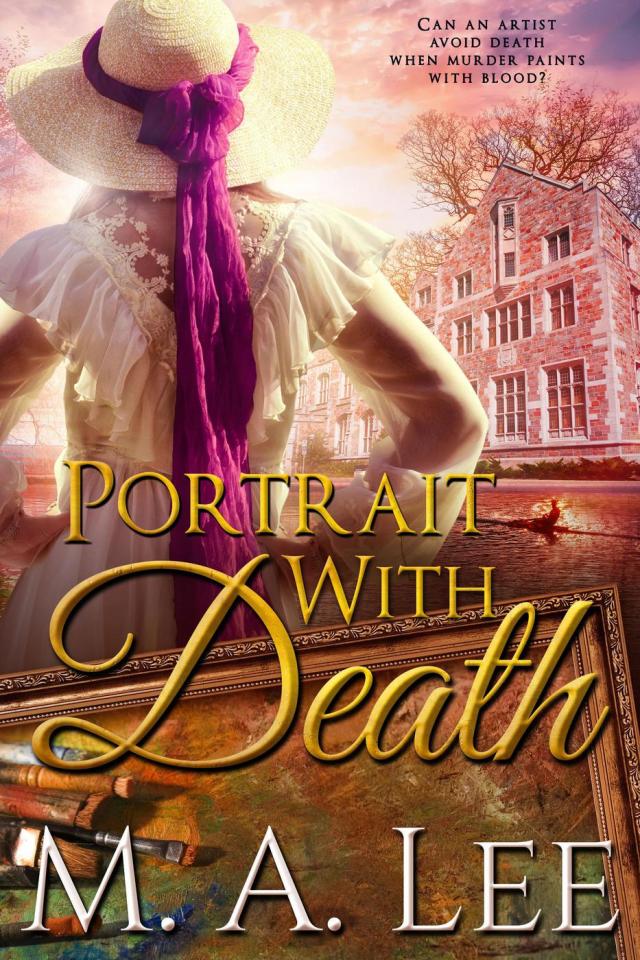


Portrait with Death
Into Death ~ 3
by
M. A. Lee
Portrait with Death
Copyright © 2021 Emily R. Dunn /
Doing Business as M. A. Lee & Writers’ Ink
First electronic publishing rights: July 2021
All rights are reserved.
No part of this book may be used or reproduced in any manner whatsoever without written permission, except in the case of brief quotations embodied in critical articles and reviews. The unauthorized reproduction or distribution of this copyrighted work is illegal. No part of this book may be scanned, uploaded, or distributed via the Internet or any other means, electronic or print, without the author’s or Writers’ Ink permission.
NOTE FROM THE AUTHOR
This book is a work of fiction. The names, characters, places, and incidents are products of the writer’s imagination or have been used fictitiously and are not to be construed as real. Any resemblance to persons, living or dead, actual events, locale or organizations is entirely coincidental. The author does not have any control over and does not assume any responsibility for third-party websites or their content.
Published in the United States of America
Cover Illustration by Deranged Doctor Design
www.writersinkbooks.com
winkbooks@aol.com
Joy comes with the Dawn
Historical Mysteries from M.A. Lee
Hearts in Hazard
Regency Mysteries with a Dash of Romance
A Game of Secrets
A Game of Spies
A Game of Hearts
The Dangers of Secrets
The Dangers for Spies
The Dangers to Hearts
The Key to Secrets
The Key for Spies
The Key with Hearts
The Hazard of Secrets
The Hazard for Spies
The Hazard with Hearts
Isabella Newcombe’s Into Death
Digging into Death
Christmas with Death
Portrait with Death
Table of Contents
Portrait with Death
Historical Mysteries from M.A. Lee
Chapter 1
Wednesday, 31 January 1920
Thursday, 5 February 1920
Chapter 2
Friday, 27 February
Chapter 3
Friday Evening, 27 February
Saturday Morning, 28 February
Chapter 4
Saturday Mid-Morning
Chapter 5
Saturday Mid-Morning
Saturday Afternoon
Chapter 6
Saturday evening
Chapter 7
Sunday Morning, 29 February 1920
Chapter 8
Sunday Afternoon
Chapter 9
Sunday Afternoon
Chapter 10
Sunday Evening
Chapter 11
Monday Morning, 1 March 1920
Chapter 12
Monday Morning
Chapter 13
Monday Noon
Chapter 14
Monday
Chapter 15
Monday
Chapter 16
Monday Afternoon
Chapter 17
Monday Afternoon
Chapter 18
Monday, Late Afternoon
Chapter 19
Monday, Late Afternoon
Chapter 20
Monday Evening
Chapter 21
Tuesday Morning
Chapter 22
Tuesday Morning
Chapter 23
Tuesday, Mid-Morning
Tuesday Late Morning
Tuesday Noon
Chapter 24
Tuesday
Chapter 25
Tuesday
Chapter 26
Tuesday into Wednesday
Epilogue
End of March
10 April 1920
Thanks!
Free Novella
Hearts in Hazard by M.A. Lee
Isabella Newcombe’s Into Death Series
Nonfiction by M.A. Lee
Pen Names of M.A. Lee
Can an artist avoid death when murder paints with blood?
Chapter 1
Wednesday, 31 January 1920
The train whistle blew. Steam clouded the grimy platform. People rushed past, laden with parcels that hadn’t gone to freight. Others sauntered along the platform, through the vapor wafting from beneath the engine. Small clutches of people lingered, saying goodbye.
Madoc hoisted his tightly-packed canvas duffle over his shoulder. He gave a shake of his head, to get his black hair out of his eyes. In the months since they’d met, his hair had grown. Isabella thought he had a personal goal to rid himself of anything like the military cut forced on him for years.
The conductor called for boarding, and tears flooded Isabella’s eyes. He was leaving. Now. Not weeks, not days. Now. She wouldn’t see him for months.
He touched her cheek. “None of that, Bella.”
“I wish I were traveling with you, Madoc.”
“Not yet. Only two and a half months. Then I will count the days until your ship arrives in Calcutta.”
“Seventy-six days, during which I work madly to finish an oil painting and store what we won’t need in that box room that Gawen’s offering, then I count the days. And try to finish the illustrations for his articles. He hasn’t written the last two yet.”
“You’ll come up with something he can use. You also have those pen-and-ink drawings for Tony Carstairs. London sites.”
“I have no worries about the drawings for Tony, but I’m running out of artifacts for your brother.” She fretted over the drawings because she dared not fret about his leaving. Married a month, and Madoc was heading to a faraway place. “Madoc, must you work your passage on this cargo ship? I can take a smaller berth or share with someone.”
“I need to stay active on this voyage.” He had rejected all her ideas for his travel to India, every idea she’d advanced over the past month of their marriage. “Captain Harvey is a cousin of one of my former soldiers. And working my passage will keep me busy. I’ll fall into my bunk every night, too worn out to miss you, love.”
Isabella clutched his arm. Nightmares no longer plagued him nightly, but they still occurred at odd times, for odd reasons. He’d been demobbed for over a year now. He wouldn’t want his new shipmates to know he had any weakness. Madoc made friends easily; he’d win them over—but they would be cautious if nightmares were their introduction to him.
“Besides,” he added, “I’m not certain what living arrangements Mr. Tredennit has set up in Calcutta. We won’t cross to Australia until July. Our summer is their winter.”
“An upside-down world.”
“A shake-up of your normal world. It will affect your art.” He flicked the golden end of her braided hair. “I’ll write letters or send a cable from every port until we reach Calcutta.”
The conductor called again.
Madoc bussed her lips with the briefest caress, risking censure for that public affection. Then he was gone, climbing into his compartment. He dropped the window to lean out.
She wanted to climb into that compartment with him.
The train engine groaned then began to pull, wheels squealing on the tracks before they caught and tugged. A man bumped her. A boy dashed between her and the train. When she steadied, the passenger cars were rolling, taking Madoc farther and farther away, faster and faster. He waved. She blew him a kiss. He stretched as if catching it, carried his closed fist to his lips. Then the vapor swirled, the train gained more speed and left the station, heading into the rain and away from her.
She yanked out a handkerchief and blotted her wet cheeks.
“Very touching,” said a wry voice behind her. “Shall we have tea before we start back? I know a shop a few streets from the station. They have clotted cream fresh from the countryside.”
“Cecilia,” Madoc’s brother Gawen said to his new wife, in a sigh rather than a quelling tone. “We planned to have tea at home.”
Gawen and Cecilia had insisted on joining them on the platform, partly to see Madoc off, partly to give Isabella support.
The two brothers were tight-knit. Gawen also hadn’t liked his younger brother working his passage to India and then to Australia. He understood the reason. He posed his arguments. Madoc hadn’t listened to him or to Isabella.
Cecilia had insisted on coming to the station for Isabella’s sake. She was intent on bolstering her friend. Isabella hadn’t moaned to anyone about Madoc’s leaving, yet Cess sensed her dismay. She’d tried dozens of distractions in the past fortnight. She had many more planned for the brief days before Isabella left to paint that portrait.
She didn’t begrudge the commission for the portrait. It would bring money, a lot of money, money to give her and Madoc a good emergency fund when they set up home in Australia. His job there would take months. Nor was the portrait the chief reason that she had to wait before taking ship to join him. That was the lack of a berth. With the war over and all countries in harmony imposed by treaty, their citizens had eagerly returned to traveling. The first affordable berth that Isabella could book wasn’t until April.
Seventy-six days from now.
An oil portrait. Six illustrations for Gawen, based on her remaining sketches from Crete and two artifacts. Ten pen-and-ink drawings for Ton y Carstairs. Watercolor landscapes. Surely those will fill my empty hours without Madoc?
Cecilia pointed at the railway clock visible on the platform. “It’s a half-hour to lunch. Let’s eat at a tea shop then go on to St. George’s. Gawen, you do need talk to Isabella about your last two articles, and she can see the artifacts that you’ve picked for illustrations. Then she shall come to the flat for dinner.”
“No, I must call a rain check for dinner. I must finish my packing. I want everything almost out of the Kirkgardie Street flat before Filly Malvaise moves into your old room. I still have boxes and boxes.”
“I still want you to stay with us.” Cecilia looped a hand through Isabella’s elbow. Her other hand hooking on her new husband’s arm, she steered them off the platform and to the stairs. People coming down the steps had to venture to the side.
“I will not, Cess. You and Gawen married last weekend. You need time alone together.”
“We’ll have time when you leave.”
They emerged onto the street and into a cold rain that spat ice. Isabella popped up her umbrella while Gawen managed one for Cess and him. Cess turned and spoke, but the street traffic drowned her words. Isabella nodded anyway and followed them like a well-trained puppy.
Funny. Last summer I had to fend for myself, and I’ll be alone again when I travel to Upper Wellsford for the portrait. Not completely alone, though. Far from her, Madoc was still her husband, and Cess and Gawen were family.
London looked grey and dingy and dreary. Weeks in the countryside as spring emerged would be much better than cooped up in the congested city.
She hoped Madoc found a friend on ship. He’ll make friends quickly. He’ll find out their destination and their jobs on board and draw out their life stories.
That didn’t reassure her.
His ability to talk easily to strangers, to manage an unknown crew of workers, and to know work that needed to be done even without a prep for it: those traits had impressed Michael Tredennit. The older man had offered Madoc this chance. The new job had excellent pay and compensation for travel and an opportunity for advancement.
I’m happy for him. I am. I just wish—.
“Isabella, what do you think?”
She came to the present with a jolt and realized they’d passed Gawen’s roadster. “Sorry, I was wool-gathering. What did you ask?”
Cess exchanged a knowing look with Gawen then indicated the tea shop across the street. Brightly lit windows offered comfort from the elements. Ice pellets spattered her umbrella. The tea shop’s sunny interior, revealed above the bright blue café curtains, promised warmth and welcome. Cecilia launched into a description of a large luncheon.
Isabella listened to little of it. “Of course. Whatever fits with your plans.”
She tried to be less distracted as they lunched. The food was excellent and warming. The waitress allowed them to linger. Gawen talked of the last cataloging for the artifacts brought from Crete. Cecilia brimmed with plans for her columns for Modern Woman and how her work fit so easily into Gawen’s life. She tried a discussion of the new direction in the spring fashion magazines, but Isabella refused to engage in that conversation.
Then Cess began planning visits to four different couturiers, with Isabella needed for quick sketches.
“When are you planning to visit these fashion houses?”
“Next week.”
“You forget. I’m leaving for the Midlands in three weeks. I have packing. I have Gawen’s illustrations and those drawings for Tony. I can’t sketch countless models for you.”
“Your trip is a month away.”
“Not really. You will want these sketches to be magazine-perfect, won’t you?”
“Of course. Just like you do for Gawen.”
“That’s not enough time. Cess. It’s not. Not with everything else I must do.”
“Can you not delay your journey? Start the portrait at the end of February? Or in mid-March? Please! A few extra days only.”
Isabella cut into the luscious tiramisu, its aroma of coffee and chocolate promising delight. “I shall be at the outer edge of my timeline as it is. I dare not take extra days, or I’ll interfere with completing my commission. I won’t delay boarding ship.” She smiled at her friend, trying to take the sting out of her stubborn stance. “Let me talk to Tony. He may know of a young artist willing to do your fashion sketches.”
“Whoever it is,” she said glumly, “will want pay for their time.”
“Were you not going to pay me?” At Cess’s startled look, Isabella laughed.
“I fully intended to pay you, Isabella.”
“The hole gets deeper,” Gawen murmured then hid a smile behind his coffee cup while Cecilia blustered about payment.
The afternoon passed as planned. The ice turned back into rain.
When Isabella called a cab to take her back to the Kirkgardie flat, Cecilia waited with her in the entrance. “Do talk to your Mr. Carstairs. Give him my new address. Will we see you this weekend?”
“With a lorry in tow. I hope to have several boxes packed, ready for storage.”
“Stay for dinner. I’d have you visit us every night for dinner before you leave for Upper Slaughter.”
Isabella chuckled at the name. “Upper Wellsford. Next to Lower Wellsford. It has its own rail spur.”
“Upper Slaughter,” Cess declared firmly. “I predict that your curiosity will be slaughtered within three days of your arrival in that sleepy hamlet. You don’t have to stay there the whole time, do you? You can visit us. Every weekend.”
“Perhaps not that often. Oil paint sometimes has a mind of its own. I’ll ring you if I wish to visit.”
“How will you cart that monstrous canvas to Upper Slaughter? Why did the dowager want it nearly life-size?”
“He’s her only living grandson and heir to the barony. I’m making a very nice commission, Cess. The canvas and my easel should arrive before I do.”
“Oh, bother. That’s the cab man. You can manage everything else? If you need anything—.”
“I’ll see you several times before I go. And I will ask for help if I need it.”
“I feel as if my sole fledgling chick is flying the nest. I’ll miss you, Isabella.”
“I’ll write daily, Mother.”
“Oh, you!”
In this day of bright lipstick, they air-kissed. Like a posh Bright Young Thing, Isabella thought as she ran down the steps and slid into the cab.
She understood Cess’ strange feeling of loss. It had started for her when a gunshot nearly killed Cess. Madoc’s ocean voyage tripled the feeling of deprivation. Life’s changes weren’t always a blessing.
Cess had no one beyond their little circle. As the youngest daughter of Viscount Salton, she had had a wide circle of acquaintances. Yet she hadn’t had friends who became closer than family until the fraught events of last October. The viscount had threatened to cut ties when Cess wanted to marry Gawen. They had married. Maybe the viscount hadn’t followed through with his threat.
Isabella was just as alone. She had only an aunt for bloodkin, but that worthy remained in the States. Her marriage to Madoc had barely renewed the feeling of family before his imminent departure loomed. Cecilia and Gawen were her only friends on this side of the Atlantic, and soon Isabella would depart and enter another world where she knew virtually no one.
The cab trundled away, bouncing over pavement that needed repair, the rain pelting the windows and blurring everything around.
Or maybe that was the tears in her eyes.
. ~ . ~ . ~ .
Thursday, 5 February 1920
Flick Sherborne perched on a corner of Alicia Osterley’s littered desk and watched as her friend examined the photographic prints she had handed over as soon as she entered.
Blinking owlishly behind the thick round glasses that gave her the nickname of Owl, Alicia closely examined several of the prints. She hadn’t commented when Flick had presented her the courier envelope. She merely unwound the string and drew out the prints, spreading them on her desk to see the full range.
That’s how Flick knew Alicia would rise in the editing world. Already she had the behavior of Alan Rettleston, managing editor of the London Daily. No one had taught Owl the editing job; she came full-fledged with the knowledge. Cold logic about the facts, critical objectivity to judge the audience, emotional reaction held last, after all decisions.