

Her almost perfect husba.., p.1
Her Almost Perfect Husband, page 1


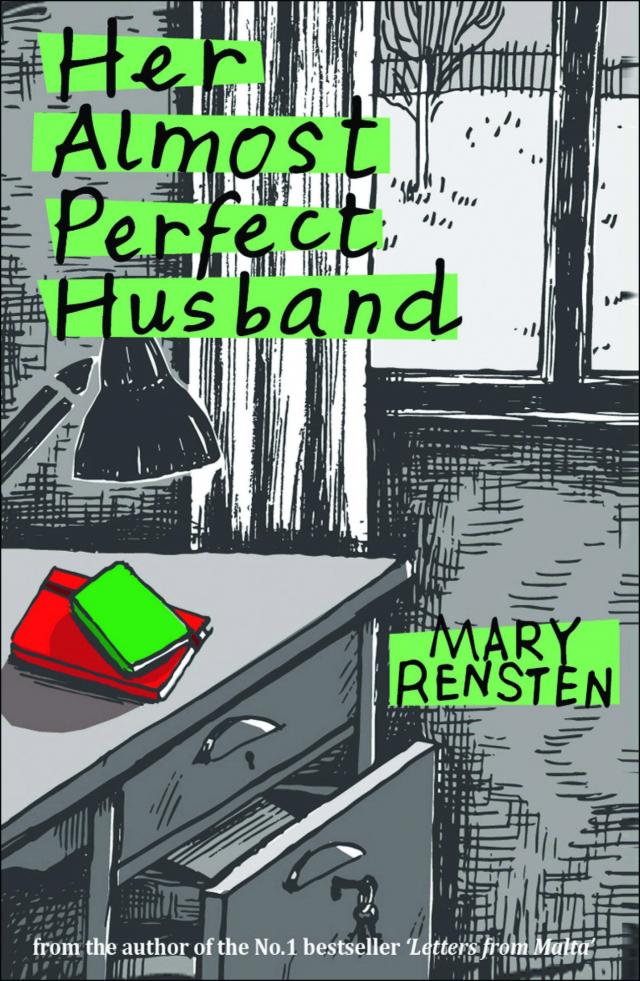
HER ALMOST PERFECT HUSBAND
Mary Rensten
SCRIPTORA
Published in Great Britain 2021 by
SCRIPTORA
25 Summerhill Road
London N15 4HF
in association with SWWJ
(Society of Women Writers & Journalists)
www.swwj.co.uk
©. Mary Rensten 2021
All rights reserved. No part of this publication may be produced or transmitted in any form without the prior permission of the publisher.
This is a work of fiction. Any resemblance between the fictional characters and actual persons, living or dead, iscoincidental.
ISBN: 978-0-9500591-5-0
Printed and bound by Witley Press Hunstanton PE36 6AD
www. witleypress.co.uk
For my lovely and loving family
My thanks to them, and to my Book Group and
SWWJ friends, especially Martin, for their helpful comments and encouragement. Thank you also to Jasmine for her patience and Ben, Michael and Chris for their technical help
Cover design: Jasmine Lapper-Goodrum
.
Mary Rensten is a novelist, playwright and award-winning journalist. She is a Vice-President and Fellow of SWWJ (Society of Women Writers & Journalists) and a member of the Writers Guild of Great Britain.
Born in Leicestershire, she spent her childhood in Jamaica, returning to England in 1946 to audition for a place at RADA. After drama school she trained as a teacher and wrote plays for her pupils. In the 1970s, having settled in Hertfordshire with her husband Ivor, and brought up their three children, she combined teaching with free-lance journalism. Drama came to the fore again in the 1980s with acclaimed productions of her plays for adults in London’s fringe theatres and at the Edinburgh Festival. Her first novel, Letters from Malta, published by Corazon Books in 2015, became an international bestseller.
Inspired by the wonderful Diana Athill, who was still being published in her nineties, Mary is now writing her fourth novel, Still Waters, a crime story set on a Scottish loch.
www.swwj.co.uk @MaryRensten
ALSO BY MARY RENSTEN
Novels
Letters from Malta
A Handful of Straw
Plays
The Skip
Knowing Constance Spry
Village Day
The Popping of The Grand Balloon
The Eagle of The Ninth (adapted from Rosemary Sutcliffe's book)
My Very First Antique
On A Par
A Common Woman
The Yellow Wallpaper(adapted from Charlotte Perkins Gilman's book)
No Fixed Abode
Mrs. Pepys
Dear Mr. Kennedy
No Problem
Away on Business
The Devil Is A Cat
Non-fiction
Hertfordshire Brasses
CHAPTER ONE
Bernie Silver’s mother was a lovely woman. She would have been happy to have Emma as a daughter-in-law, but Emma had married Andrew Raven, Bernie’s best friend; clever, ambitious Andrew. It wasn’t that Bernie didn’t love her; he did. ‘It wouldn’t be right, though,’ her sister Constance had said. Constance was seven years older than Emma; she knew what was right and what was not, and marrying someone brought up in another faith was not a good idea.
Emma had been married now to Andrew for twenty-six years; their son, Jacob, was twenty-one. On the whole, she was content. Never ecstatic, never miserable, just … ‘I’m beige,’ she’d said to Constance one day when she came to lunch. ‘Good,’ her sister had replied, ‘beige doesn’t clash with anything.’ Emma had smiled gently, and turned away to put the finishing touches to the salad – lettuce, tomato, cucumber, spring onions. Emma had considered adding olives and herbs and chunks of feta cheese, but she knew Constance would be pointedly careful not to put them on her plate.
Bernie’s mother, in her apricot kitchen in Chigwell, made superb salads, bursting with all manner of exotic ingredients. Emma and Andrew often ate at her house; Emma came home to Pengate her mind filled with exciting culinary ideas. ‘Be bold,’ Rose Silver had said on one occasion, ‘put in anything you like; make it colourful and fun! You should have fun with food.’
Now Bernie’s mother was dead, and there would be no more of those lovely, daring meals. Rose Silver had died on a January Tuesday, and she was being buried the next day. Emma and Andrew were going to the funeral.
It was Emma’s first Jewish funeral. Although she had been warned – ‘You won’t be able to sit with Andrew, you know,’ Constance told her. ‘It’s not done for men and women to sit together on these occasions’ – Emma was shocked at the bleakness of the ceremony, the sparseness, the lack of colour, of beauty, of … yes, love, it seemed to her. It was a ritual, performed by only the men, which must somehow be ‘got through’. It could have been anybody in that coffin, under that unadorned black pall. Anybody, not a vibrant, beautiful, loving woman. The ceremony over – it was all in Hebrew, which, as far as she knew, no one in Bernie’s family spoke – everyone trooped out, following the coffin on a trolley, to the graveyard beyond the chapel, and Rose’s body was placed in the ground, in a cemetery where not a single flower relieved the ubiquitous greys of the headstones. ‘It’s their way,’ Constance said. ‘It goes back to the desert. Flowers wouldn’t survive a day, if you could get them, so for goodness sake don’t take any!’ ‘I know,’ Emma had said, thinking she could do with some desert warmth as the chill January wind attacked her ears, ‘but Rose did so love flowers.’ ‘It’s not how it’s done, and it’s not your place to rock the boat.’
Emma stood, her hand in Andrew’s – they were not segregated here – some way back from the chief mourners, and looked across at Bernie. Tears streamed down his cheeks.
‘Oh, Andrew, look at him.’ She wanted to go to him, put her arms around him.
‘He’ll be all right. Get through this and I’ll take him for a beer.’
‘But …?’
‘I don’t mean now. Come on, we must go to the house.’
The drive to Chigwell, winding up through the bare woodland of Epping Forest, took less than half an hour. Emma wished it was longer; now warm again, she stared out at the stark beauty of the leafless birches, their silvery bark catching the last of the afternoon sun.
Hesitantly she asked, ‘What do we do, when we get there?’
‘I don’t know, I’ve never been to a Jewish … thing after a funeral.’
‘You must have some idea; hasn’t Bernie told you?’
‘No. Why would he?’ He paused. ‘We eat, we drink, we talk.’
‘Oh, is that it? Just like any sort of …’
‘They sit on stools.’
‘What?’
‘The family.’
‘There is no family. No brother, no sister.’
‘Cousins, maybe! I don’t know. You know what funerals are like, everybody comes, only this is … Jewish families sit on low stools.’
‘Why? Why low stools?’
‘I don’t know why! Oh Emma, for goodness sake! They sit on stools, or sometimes they’re chairs … and don’t ask me why they’re low; it probably goes back hundreds of years … and you shake hands and speak to them.’
‘Offer condolences, you mean?’
‘Yes! And you also say “Long life”.’
‘See. You do know.’
‘Yes, but not from Bernie.’
‘Andrew, what’s wrong?’ Emma reached out her hand, put it gently on Andrew’s arm. He shook it off. ‘Why are you so grumpy?’
‘D’you want me to be laughing?’ Flicking his head round he glared at her. His eyes back on the road, he said, gently now, ‘We’ve just buried Bernie’s mother. I’ve known her all my life. Well, best part of.’
‘Yes, of course. Sorry.’
They had met, Andrew and Bernie, in 1981, at the start of Andrew’s first year at Cambridge. Intent on joining as many of the university societies as he could, Andrew had briefly considered signing up for the opera group. Orchestral music yes, he liked some of that … but opera? Sung in Italian and German. He didn’t want to look a fool. He’d think about it; maybe next year when he’d got the hang of this place, this very different sort of life. For now, there were other music societies he could join. Jazz. His dad had liked jazz; it was one of the few good things he remembered about him. Jazz was smart, but not difficult to appreciate. You could listen to jazz, tap your foot, and look as if you understood it; you couldn’t, he thought, do that with opera. Then, passing an open window in his college, he heard a voice bellowing a tune he recognised, from a television advertisement; he couldn’t make out the words, it didn’t sound like English; they weren’t, he felt sure, advertising anything. It was just a beautiful melody, even sung in this raucous way, against an orchestral background; without the irritating slogan he found it strangely moving. Noel Coward had said something about the power of cheap music; this wasn’t cheap, this was … he didn’t know what it was, but it was affecting him, in a very odd sort of way. As he explained to |Emma later, it felt significant, important, worthwhile … something he had to make his own. On an impulse Andrew had tracked down the source of the sound, two floors up. The solo singing had stopped, but he could still hear the orchestra, now with a chorus of female voices. Gingerly he knocked on the door. There was no response. The singing started again, tuneful, resonating, powerful, not the rough voice he’d heard before. Something was happening t
‘Yes?’
‘The music,’ Andrew said, as suavely as he could. ‘Know the tune, can’t think what it is.’
‘Nessun dorma. Puccini.’
‘Ah. Yes. Of course,’ Andrew said, none the wiser. ‘It’s … it’s lovely.’
‘Lovely? It’s magnificent! Stupendous! Everything an aria ought to be!’
‘Yes. Quite so.’
The redhead stared at him hard, then shook his head.
‘You don’t know what I’m talking about, do you?’
Andrew hesitated. He’d been wrong-footed here, no doubt about it. Normally he would bluff it out; he was good at that, and it nearly always worked. This time, for some reason he couldn’t fathom, he knew it wouldn’t. Besides it was the music that had drawn him here … and he did want to know more about it. Nessun dorma. He could go to the library, maybe get a record or a tape, but …
‘No, I don’t.’ A slight pause; he had to say more. ‘I know I should, but …’
‘Why should you? Come on in, listen to the whole thing.’
‘The whole thing?’
‘The opera, man, the opera! Turandot, surely you … No, you don’t, do you? Oh, this is glorious; I have a convert! Come in, sit yourself down. Beer? Tea? Whisky? Wine?’
‘Er …’ What went with opera? ‘Wine … if you have a bottle open.’
‘Good man. If I haven’t I’ll open one. Red or white? Best be red, I haven’t got a fridge in here.’
Thirty-four years ago, and, now in their early fifties, they were still the closest of friends. And business partners, too.
Emma didn’t know what to call the function they were going to – a wake, a reception, a bun fight? No not that; heavens, no! – and she didn’t want to ask Andrew, he was in such a funny mood. She hoped it wouldn’t last long. In all the years she had known Bernie and his mother she had only ever met one other member of the family, Jackie Thomas, Bernie’s cousin, and the only reason she and Andrew had met her was because she had married ‘out’. ‘I’m the black sheep of the family,’ she had said when they were introduced. ‘I’m welcome in Aunty Rose’s house but nowhere else.’ Emma was pleased to see that Jackie was here today.
‘Emma, it’s lovely to see you.’
As they hugged one another, Emma saw over her shoulder the disapproving looks they were getting; with her free hand she smoothed down her russet-brown hair and drew back. Jackie followed her gaze. ‘Oh, don’t mind them; it’s not you they’re looking at it, it’s me.’ Emma smiled weakly. ‘You’ve not heard?’
‘No. What?’
‘Philip and I have split up; we’re divorcing. And I’m ditching his name; going back to Shapiro.’
‘Oh no, I’m sorry; I didn’t know.’
‘Don’t be, I’m not. For once my family were right. And now I’m allowed back in,’ she added sourly. ‘There’s no need to look like that, Emma, it was good while it lasted. Well, part of the time. You are so lucky, you know, finding the perfect man.’
‘I wouldn’t say he’s perfect.’ Emma laughed gently. ‘He’s …’
‘He’s everything you could want a husband to be. He’s kindly, thoughtful, looks after you … and he’s still so very good-looking!’ Emma smiled. ‘Those gorgeous cheek-bones!’
‘You sound like my sister; she’s forever telling me how fortunate I am to have such a wonderful man.’
‘Well, you are. And what’s more, you can trust him, which you couldn’t say for …’
‘Oh, Jackie, was that why you …?’
‘Yes, and it had happened more than once. Oh God, yes.’ She sighed. ‘Maybe it’s us, a family thing, you know? Bernie, that didn’t last; his parents, my parents. You make the most of your Andrew, he’s a gem. I expect he’ll miss Rose.’
‘Oh, he will. So will I.’
‘Look after Bernie, you two, won’t you.’
‘Of course. We always have. And he’s looked after us.’ And if it wasn’t for my sister, I might have been Bernie’s wife; and these people regarding me so fiercely could have been my in-laws.
‘Time to go, I think.’ Andrew tapped Emma on the shoulder.
‘Oh, but … I’ve not spoken to anyone, not really, just Jackie. I’ve not offered my condolences …’
‘I have, for both of us.’ Andrew took her arm. ‘Come on, Emma, it’s for the best.’
‘Andrew’s right. The aunts have seen you with me; they won’t appreciate anything you say.’
‘And you’ll probably say the wrong thing, too.’ Andrew said, huffily. ‘Let’s go.’
‘All right, I’m coming. Don’t drag me! Andrew, please.’
‘Sorry.’ He let go her arm. ‘We’re a … we’re a bit of an embarrassment.’ He whispered the word.
‘Yes, I can see that.’ Andrew did not like to be embarrassed. ‘But I’m not going without speaking to Bernie!’
‘All right. Do that, and then we’re leaving.’
‘Jackie, I’ll call you. It’s been good seeing you, and I’d like us to get together again. You, me, and my perfect husband!’ She felt relaxed with Jackie; she brought out Emma’s seldom seen flippant side.
Jackie smiled. ‘I’d like that. Find one for me, will you?’
‘Oh, I doubt I’ll find another one like him.’ Emma, smiling, looked round at Andrew. ‘A quick word with Bernie … and I’ll join you.’ Sharply she turned away; Andrew had not been amused. She threaded herself through the tightly-packed gathering until she found Bernie, leaning over an armchair, deep in conversation with a very old man. Not wanting to interrupt, but determined to speak to Bernie, she pulled gently at his sleeve.
He turned round. ‘Emma.’ That lovely smile in his eyes, even now, today.
‘We’re going.’
‘I know. Thank you so much for being here. Come here.’ His arms enfolded her. She laid her head against his chest. What did it matter if they were all looking; she was his partner’s wife, for goodness sake; and Rose had loved her.
‘How could I not come,’ she whispered. ‘Dear Bernie.’ She drew herself out of his embrace. ‘Take care.’ Her eyes full of tears, she stretched out her hand, squeezed Bernie’s fingers in hers. ‘See you soon.’ Quickly she let go of his hand, turned away, made for the open door into the hallway.
All the way along the road from The Wake Arms and down through the forest Emma was silent. A glance at Andrew’s face as they pulled out of the drive of Rose’s house had told Emma that her husband was not in a mood for conversation. There’d been a lot of these moods lately, too many of them. Andrew – how well the name Raven suited him: glossy blue-black hair, dark eyes and brooding Mr. Darcy looks – had always been the ‘strong, silent type’; it was something Emma loved about him, but these moods were different, worrying; it was as if Andrew’s mind – soul, maybe? – was not there, with her. She had tried getting him to talk about whatever it was that was troubling him. ‘There is nothing troubling me. So shut up, will you. Please,’ and he’d gone out and banged the door. Five minutes later he was back, taking her in his arms, apologising. ‘It’s a headache, that’s all.’ ‘You need new specs.’ ‘I don’t. There’s nothing wrong with my eyes!’ ‘I didn’t say there was anything wrong, I just thought it would be a good idea if you had them checked, that’s all. Because sometimes …’ ‘Yes, yes, all right, I’ll do it.’ ‘Promise?’ ‘Yes, I promise!’ but of course he didn’t see the optician, and the headaches went away … or did they? This new, strange Andrew wasn’t going to tell her, and she had felt she couldn’t ask.
But now, she would. ‘Have you got another of those headaches?’
‘What?’
‘I just wondered if …’
‘No, I haven’t got a headache!’ he barked.
‘Oh. Well, has something has upset you. Was it something Bernie said to you?’ She rushed on. ‘You looked so serious, so worried, just now, waiting by the car …’
‘For God’s sake, Emma, what is the matter with you! Bernie’s lovely mother has died and …’


