

Permanent exhibit, p.9
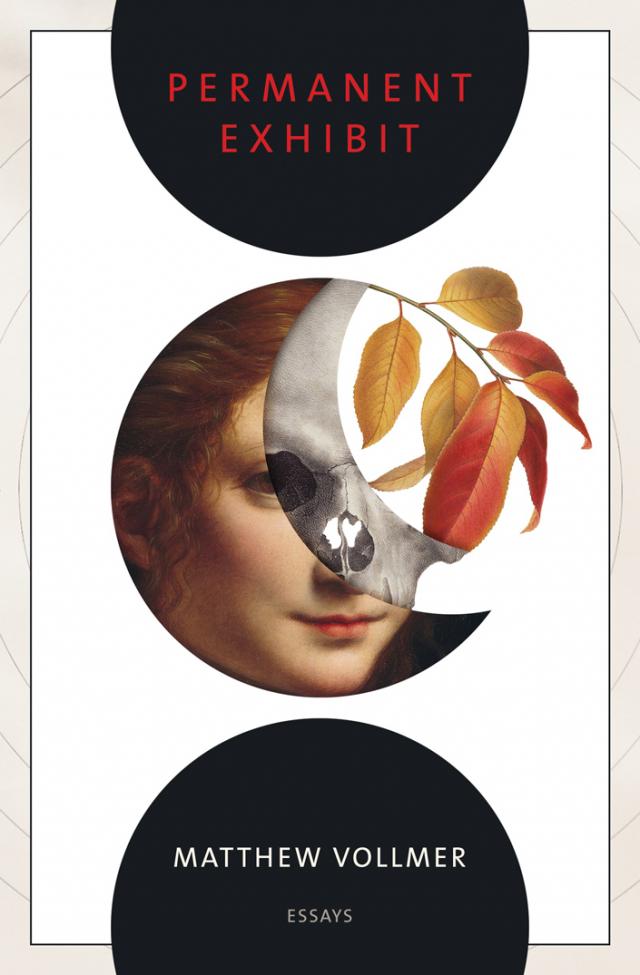
Permanent Exhibit, page 9


SOURCE MATERIAL
According to physicists, linear time is a construct created by the human brain. According to Elon Musk—a South African-born Canadian-American business magnate, investor, engineer, and inventor—our universe has one in a billion chance of not being a simulation. According to Space.com, the Rosetta space probe, launched by the European Space Agency in 2004, has come to its final resting point, upon comet 67P/Churyumov-Gerasimenko. According to INQUISITR, NASA’s Mars Curiosity rover photographed a pyramid on Mars. According to snopes.com, this “pyramid” represents the effects of pareidolia, a phenomenon by which the brain sees patterns, including faces, that do not, in reality, exist. According to the Organist, the developer of Sirius radio created a robot built to resemble his wife, both inside and out—a robot that claims to “feel really real” and that thinking about getting shut down makes her sad. According to Maeve Millay, a character from HBO’s Westworld, she does not, as a synthetic android, fear death, because she has done it “a million times” and is, in her own words, “fucking great at it.” According to Philip Kosloski, writing for Aleteia, a worldwide Catholic network sharing faith resources, human beings do not become guardian angels when they die. According to Ellen G. White, the cofounder of Seventh-day Adventism, every person on earth has their own Recording Angel, who chronicles “with terrible exactness every wrong word, every selfish act, every unfulfilled duty, and every secret sin, with every artful dissembling.” According to my mother, in a book whose cover was imprinted with the words “remembered joys are never past,” and in which she used to record the observations she made as she raised me up in the ways I should go, as a child I loved to look at myself in the mirror. According to Lisa, a woman who called my landline to congratulate me about having won a trip to the Bahamas, it was true: I indeed had heard her correctly when she said, “the Bahamas.” According to eyewitnesses and survivors who have reported welts reminiscent of sucker marks, the lusca is a half-man, half-octopus that uses its tentacles to drag its prey into undersea cave systems in the Caribbean. According to a student in my Contemporary Fiction class, getting only thirty likes in ten minutes after posting a selfie on Instagram is cause for disappointment. According to Microsoft Word, the word “selfie” is not a word. According to Harold Bloom, reading Harry Potter does not count as “reading,” because there’s “nothing there” to be read, only an endless string of clichés that does nobody “any good.” According to a literary magazine I admire, the editors are grateful for having given them the opportunity of reading my manuscript and regret that it does not meet their needs at this time. According to my ring finger, I have a blood blister—a perfect ruby oval that reminds me of the jewels players collect when playing Voice of the Mummy, a talking board game that gives directions to players in a voice so deep and sonorous that it would come across as absurdly theatrical if its commands—which include “The black vampire bat thirsts for your blood!” and “This is where the spirits of the slain thirst for revenge!” and “The unholy snakes of Amon reach from below!”—didn’t resonate with such darkly menacing tones. According to the undergraduate program coordinator of the department where I teach, if I don’t submit midterm grades to the university on time, I’ll be put on the “naughty list.” According to my wife, crows should be called “little black sky chickens,” and according to my thirteen-year-old son, people who ride in the backs of pickup trucks should be called “honkey donks.” According to my friend Joe, Stanley the dog—a miraculous animal who, according to doctors, should’ve been dead four years ago, and who barked at me ferociously every time I came to the door, but subsequently took every chance to lick me that he could—died the other night, which I was sad to learn in part because I never got the chance to say goodbye. According to Henry, who is Joe’s son, Stanley’s heaven is a place where no thrown tennis ball will ever be lost. According to my wife, I am an idiot for joking that it should’ve been our dog who died, and not Stanley, the former being, as a dogsitter friend recently put it, the most depressed dog in our town, and the latter embodying, as my friend Joe put it, the absolute cliché of what people think about when they think “man’s best friend,” by which he meant that it would have been harder to imagine a dog who, with the right upbringing, would fetch and obey and stand at command for as long as it took to get a scrap of bacon. According to petshealth.com, “Dog rain boots will help keep your dog’s legs and paws from getting wet, although many dogs will refuse to wear them.” According to the Weather Channel, there’s a hurricane with my name on it, and though nobody can say with any precision where it’s going, it appears to be headed this way.
CULT HYMN
Asked son—who was loudly singing to a song on his phone while dutifully completing his homework, which he does, every day, without being asked, as soon as he comes home from school—to be quiet. Son kept singing, so I yelled his name, got his attention, said, “Could you please stop doing that?” Had been trying to concentrate, trying to read something, and boy’s falsetto was like a happy demon flitting about in the otherwise peaceful sanctuary of my mind. Felt stupid afterwards, like what kind of father tells their son not to sing? A self-centered jerk, that’s who. A heartless doofung—a word the boy made up, and uses in lieu of the traditional “doofus”—who attempts to quash the childlike and improvisatory and developmentally necessary impulses that one associates with singing? Son suggested, correctly, that I should relax. Exact wording, if I remember correctly, was “chill.” Rolled eyes. Shook head. Remembered telling own mother to “chill,” a word that own mother always made fun of me for using. But none of this mattered, really. Regardless whatever ironic historical precedence might exist, still wanted son to stop singing. Did I know, at the time, that there is no human culture, no matter how remote, that does not produce musical sounds with the voice? I did not. But as it turns out, everyone sings—or has sung, or would, if they were so moved and had a working larynx. Even my wife, who, in her own words, can’t carry a tune in a bucket. The first time I heard her sing, I asked her, point blank, if she was tone-deaf. This wasn’t, I’ll admit, the nicest way of putting it. Too embarrassed to say she’d didn’t know, because nobody had asked her the question before, she said yes. I hear her singing, off-key, sometimes, but I don’t have any memories of hearing her sing to our son, who himself doesn’t remember the songs I sung to him as a baby in his rocking chair, the same songs my grandmother sang to me, in a warbling vibrato I did my best to mimic as I crooned “Little Man, You’ve Had a Busy Day,” a song that was first popularized by Paul Robeson, who used his deep baritone to promote black spirituals and to benefit the labor and social movements of his time. Though that was my favorite song to sing, my son preferred “Hush, Little Baby,” whose lyrics I changed to “Hush, Little Baby / Don’t say a word / Daddy’s gonna buy you a mocking bird / And if that mocking bird don’t sing / Daddy’s gonna buy you a diamond ring / And if that diamond ring don’t shine / Daddy’s gonna buy you a bottle of wine / And if that wine don’t make you drunk / Daddy’s gonna buy you a big fat skunk / And if that big fat skunk don’t stink / Daddy’s gonna buy you an ice skating rink / And if that ice skating rink burns down / You’ll still be the sweetest baby in town.” According to Wikipedia, there are multiple versions of this song; there are simple revisions to the lyrics, but all remain true to the promise of rewards for being quiet. As far as I know, there are a number of not-normally sung verses but no different versions of “The Star Spangled Banner,” a song I used to sing, diva-style, with extravagant runs to steamroller my son’s anguish during his diaper changes, which he hated. In 1989, when I visited Abidjan, West Africa, with my family, my father taught his sister’s African gray parrot to whistle the first few notes of our national anthem, which it sang over and over and drove everyone crazy. My mother never liked repetition in music; if we rode together in the car and we were listening to a mixtape I’d made I became attuned to a song’s tendency to repeat and anticipated, tensely, my mother’s negative response. My father, on the other hand, can’t believe I can’t read notes and sing, which means that if I were to sing a hymn in church I couldn’t sing the harmony, unless somebody else was singing it. The world’s oldest song is a cult hymn, the notes of which were discovered on a clay tablet in Syria, and praises the god Nikkal, the Akkadian goddess of orchards, and wife of the moon god Sin, who had a beard of lapis lazuli and rode on a winged bull. As a kid in elementary school, when it was my turn to select a record, I always chose the William Tell Overture, by Gioachino Rossini, partly because it reminded me of William Tell splitting the apple on his son’s head with an arrow shot from a crossbow and partly because it reminded me of the Lone Ranger, and I loved the Lone Ranger, though I can’t say why, maybe the bullets and the mask but maybe even the song. According to Richard Wagner, “The human voice is really the foundation of all music; and whatever the development of the musical art, however bold the composer’s combinations, however brilliant the virtuoso’s execution, in the end they must always return to the standard set by vocal music.” And according to John Koopman, whose website “A Brief History of Singing” supplied me with the above quote, “There are no bones in the human larynx, so archaeological remains offer no direct physical evidence of the vocal apparatus of prehistoric man.” Thousands of years ago, boys rubbed flint together over bunches of dried grass to make fire, and probably, as they did so, they hummed, or warbled unselfconsciously, enjoying the warm vibrations in their throats; whether their fathers told them to stop it’s impossible to know, but I can imagine a better dad coming up behind a singing son, his face aflicker with firelight, and gently cupping a hand over his progeny’s mouth, then raising a finger to his own mouth, and—because words haven’t yet been invented—pointing to his ear, and then they both hear it: a wail, a cry, the song of some distant beast who, now that night has come, is looking to slake its hunger, so get that fire going, get those flames higher, and as for singing, maybe it’s best if you don’t make a sound.
THE SUBORDINATE FRAGMENT
Because I lived in the middle of nowhere in a cove at the base of a mountain on a hill above two streams. Because all the people I knew and talked to were white. Because all the native people who had once lived in these mountains three centuries before would have outnumbered those of us living here now, before Andrew Jackson signed the Indian Removal Act, before they were rounded up and marched by bayonet point to Oklahoma. Because whenever I heard the word “Indian,” the first thing that popped into my head were those chubby guys from Cherokee who stood on the side of the road in red and yellow Plains Indians headdresses, gripping spears and holding feathered shields. Because Tonto. Because plastic tommyhawks. Because once upon a time I liked to sing along to the song “What Made the Red Man Red” on my Peter Pan record. Because the only thing left of that first civilization in our valley were pottery shards and musket balls and arrowheads, pieces of which you could find if you knew where to dig. Because the only real Indians were the few descendants of those few who were allowed to stay or those who stayed hidden in the mountains. Because kids liked to claim that they had Indian blood. Because me Chinese me play joke, me put pee pee in your Coke. Because my dad’s Japanese and my mom’s Chinese and I’m both. Because how many Polacks does it take to screw in a light bulb. Because kids turned their lips out and stuck their tongues flat against their upper lips. Because the only nonwhite person in our church—which was where the majority of our family’s socialization happened—was part Mexican. Because the only black people I knew were from TV and magazines and therefore mythical. The Huxtables. The Jeffersons. The family from Good Times. Whitney Houston. Vanessa Williams. Jordan and Dorsett and Magic and Rice. Gordon from Sesame Street. Fat Albert from Fat Albert. Sanford and Son. Carl Pickens, the wide receiver from the town where I went to school, who ended up playing for the Cincinnati Bengals. Because Uncle Remus. Because one of my favorite books, as a kid, was The Story of Little Black Sambo. Because I could ask an adult to read it to me and not blink an eye. Because I thought the story was about tigers who take Sambo’s clothes and then chase each other around a tree and turn to butter that Sambo takes to his mother, Black Mumbo, who makes tiger stripe pancakes which are eaten by Black Sambo and Black Jumbo. Because the word “General Lee” and the Confederate flag made me think of an orange Dodge Charger. Because a cross-stitched picture of a black man eating watermelon hung on a wall in our home. Because my grandfather—a man who’d lost the tops of the last three of his fingers when he was three years old and refused to move his hand from the chopping block where his sister was cutting wood, and then grew up to be a dentist who served as his own mechanic and took trips out west to ride horseback through canyons he read about so often in the Zane Grey books he collected—used the N-word. Because when I watched the NBA in his presence he stood there jingling the coins in his pockets and said, “I don’t know why anybody would wanna sit there and watch a bunch of N-words throw a ball around.” Because watercolors of black women in head wraps holding white babies hang in the houses of white people I know. Because there’s a cute little figurine of a black boy in overalls toting a sack of cotton on my grandmother’s windowsill. Because when I first read Flannery O’Connor’s “A Good Man Is Hard to Find” and reached the scene where the grandmother sees a poor black child in a doorway and says, “Oh look at the cute little pickaninny,” it felt familiar to me, like something somebody I knew would say, and had said. Because I can still imagine plenty of people I know saying it. Because my other grandmother, when I said I was dating a Korean girl, said, “Now, Koreans—aren’t they the ugliest of the Asians?” Because we make up stories about people who aren’t us. Because the majority of my students are white girls. Because a kid in my class wrote an interesting reflection about not knowing what he was going to do with his life and that this pressure was somehow exacerbated by the fact that he was the only son of Asian immigrants, and that this sometimes felt as if they had sacrificed everything for him, and that he’d ultimately be a great disappointment, but when I asked if he thought that he might learn something were he to write about all that, he wrinkled his nose and said no, he didn’t want to write about being Asian, because writing about being Asian was so cliché, so expected, he just wanted to write about being a guy, you know, a regular guy. It may not surprise you to learn that this student didn’t much like it when I quoted whoever it was who said, “Art should comfort the disturbed and disturb the comfortable,” because the student didn’t want to comfort the disturbed, he wanted to comfort the comfortable, wanted to be someone like, say, Phil Collins, because before Phil Collins, the band Genesis was overly complicated and like super weird but then Phil Collins arrived and dumbed that shit down, made it simpler and better and easier to like, the kind of music that was like pouring warm milk into your head. Because I didn’t know what to tell him after that, and because I happen to like Phil Collins, and because it’s not my job to tell him what story to tell, I told him that he should write what he wanted to write, and that if he needed any help, to please, by all means, let me know, though now I can’t help but worry that I may not be the best person for the job, which maybe is why, when he left, all I could think of to say was good luck and goodbye.
WE ALL GO INTO THE DARK
When I met the professor who would change my life, he was younger than I am now and did not look like a professor. I saw him in the halls of the English Department at the university I was attending; I’d noted his polo shirt, slacks, and backpack, and assumed that he was a “nontraditional student,” the sort of guy who, having given up a career in managing chain restaurants, had returned to college to finish a long-abandoned degree. The professor did not wear a blazer or tie. His head—overlarge, egg-shaped—was thick with ashen hair. His eyes bulged behind rimless glasses; his lips were as pale as the flesh of his face. In other words, the professor did not look like a man with whom anybody could become obsessed. But what did I know? I’d only been on earth for twenty-three years. I’d recently moved to a generic Southern city from the middle of nowhere to pursue a master’s degree in English. In my spare time, I picked up shifts at a local Record Exchange, pricing used CDs by artists such as Limp Bizkit and Korn and TLC and Whitney Houston and Goo Goo Dolls and Destiny’s Child and Sugar Ray and Smash Mouth. I worked with a morbidly obese girl who couldn’t shut up about local bands and a ponytailed redhead who loved ska and a short blond woman who loved Scottish chamber pop and a gay kid who loved shoegaze. When I wasn’t working, I was recording reverb-drenched songs onto four-track cassettes, and reading books assigned to me by my Brit Lit professor, who answered every question we asked by saying, “Well, that’s what you gotta tell me.” I worked on stories for my creative writing class, which was led by a semifamous writer—a woman whose stories and novels took place in the hollers of Appalachia, a region with which I was well acquainted, having grown up in a house in a cove at the base of a mountain on a little hill above two streams. This writing class was populated, for the most part, by a number of older women who were taking the course because it was the semifamous writer’s last semester before she retired and these women were such unabashed fans of her work that they’d named their own children after characters from her novels. I, on the other hand, was just happy to be in a workshop at all. I had no affinity for this particular school—a land grant university that specialized not in liberal arts but engineering and agriculture—and had applied only because its tuition was cheap, because it offered a master’s with a concentration in creative writing, and because it was where the aforementioned semifamous writer taught, and I hoped she might take some special liking to me, as all my other writing teachers had, thus sending me up a rung higher on the ladder to wherever it was I was headed. Six months before, I’d been working as a receptionist for a public defender in my hometown, typing up complaints and emergency custody orders on behalf of impoverished parents, and filing paperwork for the desperate and doomed, like the guy who drove his car through the plate-glass window of an insurance company because the woman who worked there wouldn’t return his calls, or the nurse who killed her husband with a shotgun, packed his body in a trunk full of mothballs, and went on vacation. It was in this same law office, where the lawyer would return from court, slice a few slabs of cheddar from a hunk in the mini fridge, dip them in a jar of mayonnaise, and begin chastising me for whatever I’d done wrong that day, that I received a call from the chair of the English department at the aforementioned land grant university, letting me know that my application for admission had been accepted. On the one hand, the chair found the low numbers on my GRE verbals “distressing”; on the other, he knew that words often caused a great deal of anxiety for creative writers. The department’s decision, then, had been based on my transcripts and recommendations, the latter of which, the chair had to admit, were stellar. He regretted that the department couldn’t offer me a teaching assistantship, but that was fine by me, since I couldn’t imagine anything more terrifying than teaching composition to a bunch of freshmen who were merely five years my junior. A few months later, I became an English grad student, and a few months after that, I signed up for the professor’s twentieth-century poetry seminar, thanks to a number of students I knew who had raved about it. On the first day of class, the professor placed his hands—fingers splayed—on the table in front of him. His head swiveled slowly, unabashedly taking in the sight of us, his students. “I can think of nothing more exciting,” the professor said, “than human beings sitting down together to talk about literature.” His expression, utterly blank, seemed to underscore the earnest seriousness with which he ushered this sentence into existence, and though I can’t say for sure, I suppose I fell for him right then. We then began class, as we would every time we met, by answering, one by one, a question of the professor’s choosing. For example: “What is your most powerful childhood memory?” or “At what point in your life were you most embarrassed, and why?” or “What is the most unspeakable thing you have seen with your naked eyes?” Once everyone had answered, we opened our books to the page where the professor wanted us to begin and took turns reading aloud. We read Wallace Stevens. We read Plath and Lowell and Bishop. We read Jorie Graham and Marianne Moore. The professor entered each poem we studied as if it was a familiar room in which he had lived for ages. Subsequent poems, he showed us, were simply other rooms, connected one to another within the enormous house that was the canon of Western Literature. In this way, the professor, like an enthusiastic tour guide, led us from room to room, revealing secret passageways in an ancient literary mansion that was forever being renovated and expanded, even as we passed through it. The professor talked about the poets we read as though they were old friends and, in some cases, he had spent time—real actual time—with them. He talked about James Merrill and his partner David Jackson, how they placed their hands on a homemade Ouija board and summoned messages from long dead poets. He told us about how Frank O’Hara scribbled poems on cocktail napkins during his lunch breaks at the Museum of Modern Art. He described how Wallace Stevens composed poems while walking from his house to his office in Hartford, Connecticut, and how the poet rarely traveled, except for annual trips to his beloved Florida Keys, and how he cherished gifts he received from people all over the world, as well as how he could spend an entire afternoon with an orange: studying its peeling, turning it over, relishing its color and the texture as light played upon its surface, the fragrant spray of mist as his nails tore into the peel, the sweetness flooding his mouth as his teeth bit into its flesh, and how these intensely present moments, for Stevens, constituted heaven, which meant that there was no need of another. During our discussions of these poets, the professor flattered us with attention, and appeared at all times to be completely absorbed in everything we said, never disparaging anyone, no matter how dumb our responses. If any of us offered a confounding or implausible interpretation, he’d say, “Where do you see that?” And if we said something stupid, he’d ask us to, “Say more about that.” And if we said something funny, he would unleash a kind of unselfconscious machine gun giggle. And if we said something smart, he’d say, “That’s genius.” The frustrating thing was, though the professor demanded excellence, he offered zero guidance about how, exactly, we should go about achieving it; when we asked him what he was looking for in the papers we were to write, he said simply, “Be brilliant.” And, because he invited us to visit him during office hours—to talk about our paper ideas, or to share writing that we’d written outside of the classroom—I brought him a short story of mine to read. This particular story had been based on a family I’d observed two summers before, while visiting a friend in Nebraska, and centered on a woman who’d married a former placekicker but had secretly been seeing a poet named Todd, a sickly looking dude who worked as a teller at a racetrack. “This is good,” the professor told me, “but four hundred other people in America could write this exact story. You need to write the story only you can write.” I was surprised by the frankness of this assessment; every teacher I’d ever had—including the semifamous Appalachian, who simply called my stories “wild” and insisted, without reservation, that she loved them—had always praised my work. Furthermore, I was surprised to learn that the professor himself wrote fiction; I assumed all professors of literature churned out literary criticism, and little else, because they had no interest in or lacked the talent to produce fiction or poetry. “I write constantly,” the professor said. “In fact, I’m never not writing.” Had he published anything? He shrugged. A few stories, in respectable, if little read, journals, the titles of which, using library databases, I immediately sought out and tracked down, scouring each one for clues that might unlock secrets about the professor, whose voice, now that I was spending a couple hours a week in his office, often replayed itself in my head. His peculiar brain-tape unspooled phrases like “literature is everything” and “it’s really the only thing” and “every story needs to be revised at least seventy times” and “there’s no reason at all to write short stories unless they’re absolutely amazing and unforgettable” and “I worry that you don’t realize James Salter is God” and “I worry that you think someone else is” and “there is no God” and “when you realize this your writing will miraculously get even better.” On this latter subject, the professor and I agreed to disagree, but it didn’t make me like him any less, because he was—at least in my mind—a genius when it came to interpreting texts and connecting them to other texts, and making sweeping gestures about writerly idiosyncrasies like “most poets don’t use kitchens in this way” or “that’s never what a flaming cloud means.” If it hasn’t already been made clear, I hung on every word the professor spoke and latched onto every detail of his biography, which, for reasons known only to him, he was far less interested in sharing. Still, I learned that his father had been a famous professor at Princeton, a man who oversaw a cultlike following, and who left his wife—the professor’s mother—for a younger woman who had been his student. As a child, the professor had visited Israel and been left alone in a hotel room, where, to pass the time, he read the Bible out loud to himself, hypnotizing himself with the Psalms, letting the words rush through his body like a kind of fevered electricity. The professor had graduated from an Ivy League school, which meant that he knew famous literary critics, one of whom was a personal friend and mentor. In the 80s, in New York City, the professor often stayed up all night, drinking and snorting cocaine and having intense conversations with people who were brilliant about literature. Those days, however, were behind him; he’d been sober for years. But he encouraged me—and others—to live our lives as he had, because we were young and could get away with it. For all these reasons—and more—the professor became my favorite person; there was no one in the world I wanted to please more, no one I would rather talk to. But the professor had a wife and two children, and I wasn’t the only student in his classes who felt the way I did, as evidenced by the line of people at his door, and the way he had to say, when visitors overstayed their welcomes, “I have to kick you out now.” In order to ensure a regularly scheduled sit-down with the professor, I signed up for an independent study with him, a course in contemporary American Fiction. We read All the Pretty Horses by Cormac McCarthy and Been Down So Long It Looks Like Up to Me by Richard Fariña and Jesus’ Son by Denis Johnson by fall break, when, to visit a friend who was majoring in theater at NYU, I flew to New York City. This friend lived with her dollhouse-sized plumbing and appliances in a spectacularly tiny one-bedroom apartment above a pizza parlor on Sixth Avenue, across the street from the famous basketball courts. The professor, who loved New York, gave me an assignment before I left: “Document everything.” So I did. While the friend I had come to visit was in class, I walked for miles, just as I imagined Frank O’Hara had, and as the professor himself would have done. There I was, in Midtown, walking through valleys of the shadow of concrete cliffs! There I was in Chinatown, eyeballing squid nestled in slushy beds of ice! There I was in the Metropolitan Museum of Art, viewing paintings from the 15th century: angels hovering on wings of exotic bird feathers, the Hells aswarm with aquatic monsters! There I was with my friend, high on ecstasy I’d scored from a kid back at the state university who hated that everybody said he wrote like Faulkner, even though he did! There we were walking at 3 a.m. down Sixth Avenue, which was as bright and teeming as rush hour! When I returned to the university, the professor asked me to read what I’d written out loud—he insisted that work be read aloud, whenever possible—and I did. The professor laughed. He said, “That’s so great.” He said, “That’s brilliant.” He told me to forget the reading for next week and instead work what I’d written into a story. So—because I did everything the professor asked—I wrote a story about a kid who, wandering around the Met, spots a cute redhead and follows her throughout the city, a story which, to my fragile delight, the professor loved. “This is why I will never be a real writer and you will be,” he said, pointing out how I’d used the adjective “ribbed” to describe a water bottle. “You’re on fire,” he said. “Write another story and bring it next week.” Even though I was not in the habit of writing a story in as little time as a week, I wrote another one. And then I wrote another. And another. And another. And another. And another. And in eight weeks, I wrote eight stories. Thanks to the professor, and to the tall, blond woman I met in a Shakespeare class, where we laughed like middle-schoolers at archaic words like “bunghole,” a woman who would later become my wife, I felt more alive—and more purposeful—than ever. I was becoming—or so I imagined—what I had wanted for so long to be: a writer. I had but one goal: to keep going. “You’ll get in everywhere,” said the professor, when I told him I was applying to MFA programs, and he gladly wrote me recommendations, handing them to me in sealed envelopes with his name scrawled along the flap’s seam. Because I decided, in the end, not to apply to one of these programs, and therefore didn’t need the recommendation that the professor had supplied, and because I was burning with curiosity to know what the professor might have said about me, I opened the envelope and read the letter, which was succinctly evaluative in exactly the way that the professor levied judgments: “He is the real thing,” the professor wrote, “I recommend him in the highest possible terms.” As high as this praise made me, and as absolutely convinced as I was that one of the five schools I’d applied to would accept me, none did. However, I did end up striking a kind of gold: despite my lack of experience, I received an offer to teach from a small liberal arts college in Massachusetts, the same one that I’d attended as an undergraduate, so I moved to Massachusetts, where I lived in the attic of a 200-year-old house, whose space I shared with twin sisters and their one-eyed grandmother. I taught, and wrote stories, and pined for the girlfriend who would become my wife. I also kept in touch with the professor and continued to send him stories. In fact, for years after I had graduated from the state university, I sent the professor everything I wrote, printing out stories and sealing them in envelopes stuffed with SASEs so he could quickly send them back, which he always did, after marking them up and scribbling smiley faces next to underlined passages he thought were funny and drawing stars next to the underlined or bracketed sentences he found powerful. In some sense, everything I wrote I wrote for the professor, for the regressive sake of summoning those smiley faces and stars. There was nothing like opening the mailbox to find an envelope bearing the postmark of the city where the professor resided, or to open my email account to find a message from him. Inside there was praise: “I’m thrilled you finished Gravity’s Rainbow. You have just vindicated your entire generation.” There were morbid existential reflections: “Instead of happy birthday people should sing ‘Dark Dark Dark They All Go into the Dark.’” There might be instructions: “I sort of want to see Fight Club but I never will. It’s supposed to be funny. Tell me the jokes.” There were disparaging updates about a class he was teaching: “Today people said that Stein wrote that way because she was rich. As if the minute they themselves got some money they’d turn into geniuses. Something they’d been putting off because they couldn’t afford it.” And the professor chided me for wasting time: “I don’t really understand the whole concept of telling someone a story before you’ve written it. It’s like saying, ‘I’m going to write a song, it’s going to go like this.’ Just write it.” He gave me encouragement: “You were meant to be a writer. You are prodigiously talented as a writer. OF COURSE you are going to sound like other writers. Occasionally it will be a little bit too much and then you have to fix that, which won’t always be easy. You have to be psychotically thick-skinned until you make it and after.” He scolded me for my impatience—“your stories, like mine and everybody’s, need time and dozens and dozens of rewrites”—and offered summations of my work: “I never think of your stories as relentlessly dark. You yourself are as a person very happy and your very smart decision is to turn that happiness into linguistic energy. All your stories are essentially comic, I think. Many of them have moments of sadness but I think at this point in your life you know pretty little about loss.” In short, it didn’t matter what the professor said, really, as long as his direction was directed, however briefly, toward me. And after my wife and I were married, at an Anglican church where the professor presided over the scripture reading, and we moved to Indiana, where my wife would begin pursuing a PhD, I began teaching first-year composition and reading for the university’s literary magazine, the editor of which encouraged me to solicit work from writers I admired, and because the professor fell into this category, I asked him to send me something. Much to my surprise, he did. The story was about a man whose wife had left him for another man, with whom she had had a baby, and after the baby’s father had died, the woman moved in with another woman, despite the fact that the man—the first one, the main character—begged her to return to him. The story established fairly quickly that this first man—who was the main character—had become unhinged: he saw snow falling everywhere and was visited by the ghost of his dead father, who instructed him to visit the home of his ex-wife and to leave said home with the ex-wife’s baby. It wasn’t just a good story, it was the definition, in my eyes, of an absolute bona fide masterpiece, and like all stories written by the professor, it seemed to provide psychological insights into the enigma that was his life. It didn’t even matter to me, in the end, that another, more prestigious literary journal accepted the professor’s story, meaning that the little magazine I was reading for could not publish it. The fact that it existed, and that I had read it, was enough. And though the professor and I remained in contact with one another, we corresponded less frequently, largely because my wife and I were now parents, with a new baby to take care of, a baby who seemed never to be satisfied, a baby who cried and fussed almost constantly, unless we were carrying him around outside. Once he had grown big enough to sit in a backpack, I spent hours every day walking him around the Midwestern town where we lived, in rain and sun and snow and wind, because this was the only thing that would satisfy the boy. If I had to go to the grocery store or the bank or the library, I always took him in the backpack, and because he was a baby—an especially handsome baby—someone always smiled at us, or made a comment about his face or hair or eyes, or about me and what a good father I was, and the thought eventually occurred to me that these assumptions strangers made about me were absurd, because I might, in theory, be on my way to committing any number of crimes simply by taking advantage of the fact that I was carrying a baby in a backpack. Of course, I didn’t actually commit a crime with my son in a backpack, but I did write a story in which a character carrying a backpack with a baby plans to commit a crime, and when I sent a draft of this particular story to the professor—I was still sending him stories on occasion, and he was still reading them and marking them up with stars and smiley faces and sending them back—his response included an allegation: that by using a similar piece of baby equipment as he had for a central prop in my story, I was ripping him off. In other words, the story that he had written about the man who attempted to steal his ex-wife’s baby had shown up on her doorstep wearing a Snugli, which is a kind of baby-carrying equipment, albeit the type used to carry younger babies—namely, infants—tightly against the chest of the wearer, while I too, by giving my character a backpack in which a child is carried, had done something suspiciously similar. Not only that, the professor claimed that this was part of an ongoing pattern, that I tended to put stuff from his stories into my stories, and that instead of stealing from him I should do what he did, which was to a) steal from the great writers and b) people I didn’t know. I reread the email. I stared at his emphatic instruction: “Don’t rip me off!” It seemed like a joke. As if it couldn’t be real. I had stolen it from life—my life!—and my life had been stolen by my mentor. I had written a story based on my experience of carrying a baby—my own child—in a backpack. I hadn’t imagined, and refuse to imagine now, that I had borrowed—much less stolen—anything whatsoever from the professor; after all, the man in his story never carried a baby anywhere, and therefore the empty Snugli he wore to the house of his ex became a symbol of his powerlessness, whereas the man in my story was an actual father carrying an actual child, partly because the child was his own, and partly because he knew that no one would suspect a child-carrying father of committing a crime. When I replied to the professor with these concerns, he said that he had taken a poll of his writer friends (not mentioning my name) and asked them what they thought about someone writing a story using that same piece of baby equipment in a central way. They—that is, the professor’s writer friends, whoever they were—thought it was a little bizarre, and wondered if I was just very naive or oblivious to the way writers treat each other. The professor pointed out to his friends that I had the same experience, and one of them said, “We ALL have the same experience. Everybody has the same experience.” The professor then said that even though one of the most appealing things about me was my innocence, for god’s sake, did he really have to explain how the fact that I’d written a story using that particular prop in a central way was bizarre? The professor then claimed that he constantly had experiences after which he said, “Wow, that was in that story by so and so. Now I can’t use it.” It would never occur to him to say: “Hey, it happened to me. It came directly from my own experience.” The relationship between life and art was more complicated and subtle than that. Part of my experience, the professor said, was my experience of the story he’d written. How could I not know that? “Sorry if this basic lesson is a mindfuck to you,” the professor concluded. These sentences bore into me as painfully and effortlessly as nails heated over a fire. Don’t rip me off . . . Sorry if this basic lesson is a mindfuck. The professor wasn’t just my teacher; he had been, or so I’d liked to imagine, my literary father, a man whose brain, at least when it came to reading and interpreting stories and novels and poems, I admired more than any other. For years, he had engaged honestly and intelligently with my work, for no other reason, or so I had to assume, than to help me improve. I knew I wasn’t his favorite student—there was a woman he praised openly and often in my presence who had published work in the New Yorker and who, much to my chagrin, had appeared in the “New Writer’s” issue of the Paris Review, where the second story I’d ever published had also appeared—but I liked to think that I was at least one of his favorites, or had been, anyway, until now. I called my wife over to the computer. I asked her what she thought. She didn’t like it, either. That is, she thought the charge was weird, that the professor was weird, that I should write what I want, that I should forget about him, that my relationship with him wasn’t all that healthy to begin with, and that he probably was, deep down, jealous. But it wasn’t that easy. I owed much to the professor. I knew that others had claimed he was manipulative, that he was jealous of other students, that he was capable of hurting those who admired him, but I wanted to think I was different, that I was a category unto myself, a kind of literary son, upon whom admiration and perhaps even love might be doled out unconditionally, from a reserve that could never be depleted. Even so, the next time I finished a draft of a story, I decided, perhaps because I wanted to avoid being stung, not to send it to the professor. Nor did I send the professor the next story I wrote, or the next. In fact, I never sent him another story, never again asked him to provide me with so-called feedback on anything. I did not email him regularly, and he did not email me. And so, in this way, we drifted apart. If the professor ever thought about me, ever wondered what I was up to, he refrained from asking, though if, on occasion, curiosity got the best of me, and I sent out a short email, as a kind of exploratory probe, he would supply, after a time, an obligatory message: what he was teaching, what he’d been reading, the last best film he’d seen, etc. But even these bare-bones missives resonated with the stentorian authority of a voice steeped in the drama of the literary life, which was, for me, the central essence of his power and allure. Years passed. My wife and I and our son moved to a plateau in the Blue Ridge Mountains, to work at the university where we still teach. Eventually, I published a book. Even though I hadn’t spoken to the professor in years, I decided to send him a copy. After all, no one else had a more significant influence on my writing; without him, I supposed, the book would never have been written. I didn’t expect him to respond, much less to take the time to read it, but a few months later I opened my computer and found an email bearing the professor’s name. The message inside was brief, just long enough to say that he had indeed read my book and found it to be “fantastically conceived, if not perfectly executed.” In fact, he said, he wished he had written it. I stared at this message, in much the same way I had stared, a decade before, at the phrase “Don’t rip me off!” I wanted to believe that what the professor said was true, and that I had finally become what I’d dreamed long ago of becoming, i.e., the kind of writer who’d earned, through hard work and determination, the professor’s unabashed admiration, and though I read the words “fantastic” and “not perfectly executed” over and over, I couldn’t quite believe either was true, the good or the bad. I worried—as I do to this day—that it was some kind of backhanded compliment, that he was both telling me exactly what I wanted to hear and taking it back, all the while knowing that the mixture of praise and criticism would have a stupefying effect upon me and cause me to leave him alone. After all, he once said, when I complained about some of my fellow students in one of my creative writing classes, that I shouldn’t worry too much about their various insufficiencies, because most people who took creative writing classes were morons and what all of them longed for—secretly, shamefully—was abuse, verbal mostly, and oceans of it. At the time, his remark made me laugh, because I thought it might be true, and because the professor had almost always seemed right, even when he was wrong, but also because I no longer thought—not even for a minute—that he might be talking about me.


