

Relations, p.1
Relations, page 1


Contents
Cover
Title Page
Introduction
Nanyuman by Ayesha Harruna Attah
so long and Fuji-san by Mogolodi Bond
The Body Is More than a Landfill and Less than All That I Am by Sarah Uheida
To the woman who accused me of breastfeeding the madam’s child and By Any Other Name by Phillippa Yaa de Villiers
Ezouga and Post Mortem by Bahia Mahmud H. Awah
Daughter of a Bedouin Chief by Miral al-Tahawy
God’s Plan by Boakyewaa Glover
Her Sweetie, Her Sugarcane by Natasha Omokhodion-Kalulu Banda
Krifé by Chiké Frankie Edozien
Queens and Sleeping Beauty (of Borehamwood) and Waterstones and Ode to a Discarded Face Mask and Denouement by Dami Ajayi
Finding Descartes by Reem Gaafar
Fulbright by Rémy Ngamije
Dirty Money by Kim Coleman Foote
The Killmonger Doctrine of Color and Humanity by Joe Robert Cole
Churai by Fatima Camara
[Coolitude: ce balisier-mirador] by Khal Torabully
This Tangible Thing by Yejide Kilanko
In a Yellow Dress with Red Flowers by Lillian Akampurira Aujo
A Honey-Headed Child by Nana Nyarko Boateng
Napoleão by Conceição Lima
Atat by Arao Ameny
Sontem and Në na’a mpúrí haalo and En la puerta primavera by Recaredo Silebo Boturu
Lagos Wives Club by Vanessa Walters
I Am Lost! by Richard Ali A Mutu K
Poor Men Have Too Much Ego by Edwige-Renée Dro
Sundays in Nairobi by Jacquelynn Kerubo
Mbuya Baines by Makanaka Mavengere
The Swagger Stick Man of June Fifteen by Chuma Nwokolo
The Heart of the Father by Enuma Okoro
Trophy by Nana Ekua Brew-Hammond
Célebrons la culture by Salma Khalil
Word maker. by Ayi Renaud Dossavi-Alipoeh
Contributors
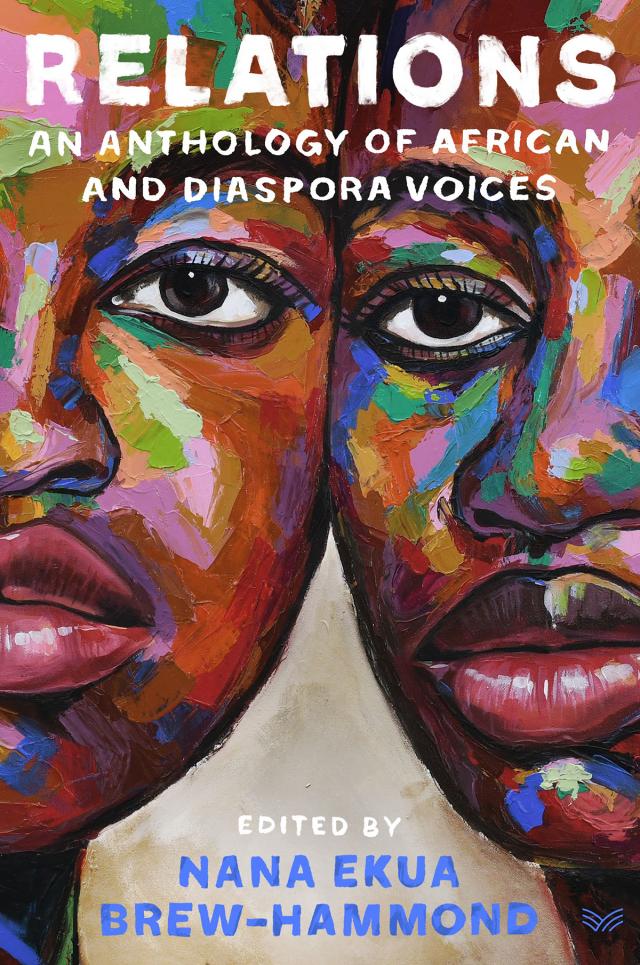
A Note on the Cover
Thank You
About the Editor
Copyright
About the Publisher
Introduction
Years ago, I was at a party in New York. I was single, and I presume the man I stood on an invisible island with was unattached, too. Separate from the clusters of aspiring photographers and models, and friends like me who had tagged along to this photographer’s studio, the two of us huddled together, gripping cups of clever bravado, our heads tilted toward one another at an angle of intrigue and lust. He was witty and worldly, and as we spoke, we discovered we were both from other places: he had moved to the United States from Morocco, and I was the daughter of Ghanaian immigrants who had sent me to live and school in Ghana when I was twelve years old.
“Oh, how cool,” he said, “I’ve never been to Africa.”
I blinked at my cup and then at him, sure I hadn’t heard right. “But, aren’t you Moroccan?”
“Yes,” he said, the blank stare in his eyes not following my point.
“But, Morocco is in Africa.”
He appeared genuinely unconvinced.
There was a whiteboard in the middle of the studio. I left our island to draw a map of Africa on it, and traced out two jagged rectangles.
“Morocco,” I said, pointing to the rectangle in the top left corner. “Ghana,” I said of the other one. “Africa,” I concluded.
After a slight pause, he nodded with the sincere acquiescence of a knowledge transfer. The spell of flirtation broken, we floated away from each other, absorbed by new conversations, our atoll permanently abandoned.
Unsure how—or why—a man born and raised on the African continent truly seemed to believe he had never been to Africa, I wish I had probed him further, but I was still forming my own sense of who I was, and I had not come to the party to interrogate the vastness of African identity. I never forgot the exchange, though, and years later when a Frenchman I was dating noted casually that I was from “Black Africa,” I felt the same befuddlement and irritation at the implication in his racialized delineation of the forty-eight countries known as “sub-Saharan Africa” that cover the northern, southern, eastern, and western regions of the continent. I told him to never describe them in that way again, especially not in public.
As far as I was, and am, concerned, the distinction between “Black Africa” or “sub-Saharan Africa” and Africa’s northernmost nations reflects the continuation of a centuries-old distancing of lighter-skinned peoples from darker-skinned peoples largely due to the stigma projected onto the enslaved African. Chouki el Hamel’s Black Morocco: A History of Slavery, Race, and Islam notes how the legacy of the enslavement of Blacks has complicated contemporary racial relations and Black identity in the country. I would add that it has complicated racial relations in every country where people of African descent live.
In October 2021, while I was on a weeklong stay in Cape Verde, the stunning necklace of ten islands off the northwest coast of Africa, a man on the island of São Vicente explained to me that Cape Verdeans, “whether rightly or wrongly,” don’t really consider themselves African. He pointed to the Portuguese heritage evident in the local complexion as his exhibit, but to me therein lies the rub. The relations between the Portuguese colonizers who controlled the archipelago and the people they kidnapped from their homes and families in “Black Africa,” and the others who came by force or by fare to settle there, have complicated the assignation to a single identity so that what one claims, or doesn’t, is a deliberate statement—a choice of who and what they want to be associated with. “Of course we’re African,” another Cape Verdean man from the island of Santo Antão told me with the Pan-African conviction of Bob Marley. “Look where we are.”
Relations obfuscate the convenient and comfortable narratives we tell ourselves about who we are. They expose our hypocrisies and truths, and they attest to our inextricability from one another. They trounce boundaries erected by religion, class, race, and rhetoric. They force us to admit we’re deeply interested in each other, and because there is so much at stake in this admission, relations are rife with the pain of disappointment, compromise, rejection, and exploitation. They are equally heavy with expectation, hope, and obligation. They are pregnant with possibility.
The relationships in my life were on my mind when I pitched this anthology in August 2020—the fifth month of the global coronavirus pandemic that had abruptly sent the world into quarantine. Businesses and schools were shuttered, public transportation was restricted to essential workers, travel was initially banned, then highly discouraged, and a flurry of edicts from national and global health organizations advised people to maintain a distance of six feet/one meter from each other and wear protective face masks.
When the pandemic was officially announced in March, I was based in Queens, New York; my siblings were two different bridges away in Brooklyn; and the man I love was resident on the West Coast. For the first time in my adult life, I felt acutely alone.
Usually, I flew to visit my parents in Ghana at least once a year—would that still be possible? I had relished attending the Pa Gya! and Aké literary festivals in Accra and Lagos, respectively, the past two years—would I ever again be able to engage with the community of writers and friends whom I had come to look forward to seeing in person?
I thought, too, about the network of family and friendships I had spread across Africa, North America, and Europe that I wasn’t sure when I’d get to see again. And I thought of my relationship with myself, how much I admired that I wasn’t “needy” and had a “full life” of exciting travel and work, and how much my independence was predicated on the assumption that the people and systems that made my nomadic life possible would always be available to me. I was palpably weakened by the shaking of that presumption and the realization that like everyone else, I needed people.
Intuiting my cries for help, my big sister and her husband risked their health in those early days of the pandemic when the official guidance encouraged minimal contact. They dropped by my apartment with groceries and stayed for dinner. A few weeks in, we moved the dinners to our brother’s place, as his roommates had left New York, planning to ride out the COVID-19 lockdown in their respective hometowns. Before “pods” of trusted friends and family became a way people who weren’t immunocompromised could safely connect with each other, my siblings and I were each other’s safe spaces. On the recommendation of a friend, I also joined a virtual women’s prayer group that met twice daily. I didn’t know any of the women, except my friend, but they quickly became my extended community, a consistent network of support thirty minutes every morning, thirty minutes every night.
Two months into this fog of isolation, on May 25, 2020, in the American midwestern city of Minneapolis, Minnesota, a Black man named George Floyd was murdered by a white police officer who knelt on his neck for nine minutes and twenty-nine seconds. The asphyxiation, filmed by a brave teenager, Darnella Frazier, looped online and lassoed the global conscience, underscoring the heartbreaking point the #BlackLivesMatter movement had been trying to make since its 2013 founding in America by Alicia Garza, Patrisse Cullors, and Opal Tometti. Protests erupted in response to the killing in the United States and around the globe, from Australia to Antarctica—the whole world in agreement not only that the kill-first-ask-questions-later murders of Black men and women at the hands of police officers would no longer be accepted, but that the explicit and tacit assignment of inferior and nefarious status to blackness had reached its expiration date.
Corporations vowed to hire and elevate more Black people—and many actually did! Brands built on avatars of antebellum slavery changed their names and logos. White people were pressured to “check on your Black friends.” Two weeks after Floyd was killed, members of the US Congress donned Ghanaian kente cloth, given to them by members of the Congressional Black Caucus, and knelt for a moment of silence to honor Floyd. Karen Bass, the chairwoman of the caucus, told reporters that the kente cloth represented “our African heritage” and those who wore it were “acting in solidarity” with the same. She added, “That is the significance of the kente cloth—our origins and respecting our past.”
As whiplash-inducing as this change felt, it reflected a culmination of decades of committed and consistent labor of activists in every sphere who had built or rebuilt systems to support a new generation of Black voices.
I have seen this steady build in the African literary space up close.
When my first book, Powder Necklace, a young adult novel inspired by my boarding school experience in Ghana, was published on April 6, 2010, few outlets were dedicated to covering, engaging, or supporting contemporary African literature and writers, and the modern era of social media was in its infancy. Today, there is an infrastructure specifically set up to bolster African voices.
There are African literature news platforms like James Murua’s African Literature Blog and Ainehi Edoro’s Brittle Paper. There are literary festivals like Aké in Nigeria, founded by Lola Shoneyin; Writivism in Uganda, cofounded by the writer and lawyer Bwesigye bwa Mwesigire; Africa Writes in the United Kingdom, launched by the Royal African Society; and Pa Gya!, produced by the Writers Project of Ghana, which was founded by the Ghanaian writer Martin Egblewogbe and the US writer Laban Carrick Hill. There are literary magazines like Kwani? in Kenya, which was founded by the late, great writer and champion of African voices Binyavanga Wainaina; Kwee in Liberia, led by Managing Editor D. Othniel Forte; and Doek! in Namibia by Rémy Ngamije, a contributor to the anthology you’re reading now; as well as an army of bloggers, bookstagrammers, and podcasters who review books by African authors and catalyze conversation.
There are publishers like Bibi Bakare-Yusuf’s Cassava Republic Press, Valerie Brandes’s Jacaranda Books, and Dzèkáshu MacViban’s Bakwa Books. There are literary advocates like veteran publisher Ako Mutota; the author, publisher, and editor Zukiswa Wanner; and the founder of the Library of Africa and the African Diaspora, Sylvia Arthur. There are awards like the Miles Morland Foundation Writing Scholarship and the Etisalat Prize for Literature, which have joined the AKO Caine Prize for African Writing in earmarking funds for winning African writers. There are allies like the Goethe-Institut, the Alliance Française, and the British Council, which partner with many of the abovementioned to sponsor readings and events. And there are critically acclaimed and commercially successful writers who have created opportunities for new, emerging, and overlooked talent. The author Chimamanda Ngozi Adichie, one of this generation’s most powerful and laureled voices, established the Purple Hibiscus Trust Creative Workshop to spur unpublished and published wordsmiths in their craft. Bernardine Evaristo, whose works have been translated into close to forty languages, founded the Evaristo African Poetry Prize (formerly the Brunel International African Poetry Prize) to honor and encourage African poets.
Contributors to this anthology are also investing time and resources to foster African literary creativity and community. Edwige-Renée Dro founded 1949, a library of women’s writing from Africa and the Black world, in Yopougon, Abidjan. Ayesha Harruna Attah started the Pomegranate Book Club in Popenguine, Senegal. Richard Ali A Mutu K, as head of the Wallonia-Brussels Library at Kinshasa in the Democratic Republic of the Congo, organizes activities that bring the Congolese literary scene together.
All of these join publishing pioneers like Margaret Busby, Jessica and Eric Huntley, and Verna Wilkins, as well as resources like the African Books Collective, which began in the late 1980s, and the African American Literature Book Club, founded in 1997 by Troy Johnson, and many others. This list is by no means exhaustive—the company of individuals and organizations who have built this sprawling contemporary African literary complex is long enough to merit its own book.
Literary anointers outside this community have been increasingly recognizing the art of African writers, too. Celebrity-powered book clubs by the actresses Reese Witherspoon, Sarah Jessica Parker, and Emma Roberts, respectively, have selected books by African authors for their millions of followers to read, just as their groundbreaking forerunner Oprah Winfrey was doing ten and twenty years prior. The Booker Prize has laureled three Black writers since 2010, including the aforementioned Nigerian-British author Bernardine Evaristo, who shared the prize with Margaret Atwood in 2019. In October 2021, the Tanzanian writer Abdulrazak Gurnah earned the Nobel Prize in Literature.
Just like in the 1960s through the 1980s, when the Heinemann and Longman African Writers Series respectively published the works of African and Caribbean writers like Chinua Achebe, Ama Ata Aidoo, Buchi Emecheta, Tayeb Salih, Wole Soyinka, and Ngũgĩ wa Thiong’o to the wider English-reading world—and in the 1980s and 1990s, when publishers and imprints like Amistad Press, Dafina Books, and One World published African American and Caribbean authors like E. Lynn Harris, Terry McMillan, Bebe Moore Campbell, Eric Jerome Dickey, and Jamaica Kincaid—this most recent incarnation of interest in and infrastructure surrounding Black stories has begun to offer readers a deeper diversity of thought, experiences, and forms to connect with.
Authors like Chinelo Okparanta, Diriye Osman, Akwaeke Emezi, and Chiké Frankie Edozien, a contributor to this anthology, center queer stories. Writers like Nana-Ama Danquah, Tope Folarin, K. Sello Duiker, Songeziwe Mahlangu, and Yejide Kilanko (also a contributor to this anthology) engage mental health issues. Some like Kiru Taye and Empi Baryeh write romance, while others like Nnedi Okorafor, Tomi Adeyemi, Namwali Serpell, A. Igoni Barrett, and Nana Nkweti offer a new wave of science fiction and speculative fiction. Some write for young readers, and many of the writers here named and unnamed do all of the above—and more—showing just how membranous the borders we erect around topic and genre can be and should be.
Add all of this to the fact that we are living in a post–Black Panther world. The 2018 global blockbuster film based on the Marvel comic book hero brought Afrofuturism—the future-focused exploration of African Diaspora culture that fuses history, science, and technology—into the zeitgeist and ignited a multitude of conversations around “authentic” African identity in the process.
Free(r) from the burden of explaining our existence to “mainstream” audiences, and from the expectation that we document or comment on the African continent’s every historic landmark, cultural contribution, or contention, a new generation of Black writers is introducing ourselves to each other, like our forebears Maryse Condé and Maya Angelou did. We are crossing the lines of land and language erected by colonialism and the slave trades, and trying to get to know ourselves. We are engaging in the awkward and painful conversations about the stereotypes and prejudices we hold about each other. We are defying notions of extra- and intra-cultural respectability and confronting what has long been considered taboo.
It isn’t pretty literature—it’s beautiful.
With this anthology, my goal was to create a meeting place for those of us connected by shared color or continent, but often separated by country, language, history, experience, or outlook. I wanted this collection of works to reflect the intimacy of honest exchange, with all of its irony, humor, vulnerability, and relief. In it you will find the work of writers hailing from, based in, or moving between Botswana, Canada, Chad, Côte D’Ivoire, Democratic Republic of the Congo, Egypt, Equatorial Guinea, Gambia, Ghana, Jamaica, Kenya, Libya, Mauritius, Namibia, Nigeria, São Tomé and Principe, Rwanda, Senegal, South Africa, Sudan, Togo, Uganda, the UK, the US, Western Sahara, Zambia, and Zimbabwe. Here, you will encounter a fictional Congolese journalist, noted for his rigorous commitment to exposing corruption, who considers compromising his country and his morals to please an out-of-his-league girlfriend. In an essay, you will meet an African American woman who compares being cheated out of money in Ghana to the sale of her ancestors into slavery. The co-writer of Black Panther also addresses the complicated relationship between Africans and African Americans, a topic that is explored in the film.


