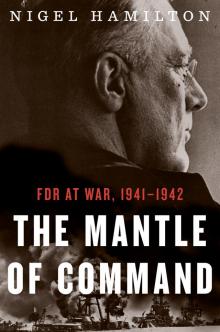
The mantle of command, p.64
The Mantle of Command, page 64


], [>], [>], [>], [>]–[>], [>], [>]
Romulo, Carlos, [>]
Roosevelt, Anna, [>], [>]
Roosevelt, Eleanor, [>], [>], [>]
and Churchill, [>], [>], [>], [>]
domestic life, [>], [>]–[>], [>]
as FDR’s eyes and ears, [>]
as White House hostess, [>]–[>]
Roosevelt, Elliott: at Placentia Bay summit meeting (1941), [>], [>]–[>], [>], [>], [>], [>], [>], [>]–[>], [>]–[>]
Roosevelt, Franklin D.: addresses International Student Assembly, [>]–[>]
announces war production goals, [>], [>]
as assistant secretary of the Navy, [>], [>], [>], [>]–[>], [>], [>]
attempts to avoid war with Germany, [>], [>]–[>]
attitude toward British Empire, [>], [>]–[>], [>], [>]–[>]
and British decolonization, [>]
on British global decline, [>]–[>]
broad war strategy, [>]–[>], [>]–[>], [>]–[>], [>]–[>], [>], [>], [>], [>]–[>], [>]–[>], [>]–[>], [>], [>], [>]–[>], [>]–[>], [>]–[>], [>], [>], [>]–[>], [>]–[>], [>], [>]–[>], [>], [>]
character and personality, [>], [>]–[>], [>]–[>], [>]–[>], [>], [>], [>], [>], [>], [>], [>]–[>], [>], [>], [>], [>], [>]–[>], [>]–[>], [>]–[>], [>]–[>], [>], [>], [>]–[>]
on Churchill, [>], [>]
Churchill threatens resignation, [>]–[>]
Ciano on, [>]–[>]
and cocktail hour, [>], [>]
conference with Churchill (1942), [>], [>]–[>], [>], [>]–[>], [>]–[>]
controls Allied war planning and prosecution, [>], [>], [>], [>]–[>], [>], [>], [>], [>], [>]–[>], [>], [>]–[>], [>], [>]
creates Combined Chiefs of Staff, [>]–[>]
and declaration of war, [>]–[>], [>], [>]–[>]
and Doolittle Raid (1942), [>]–[>]
and Dutch royal family, [>]–[>]
and El Alamein, [>], [>]
Elsey on, [>]–[>]
explains the war to the public, [>], [>]–[>], [>]
Fireside Chats, [>]–[>], [>]–[>], [>], [>], [>]
and first Anglo-American staff conference, [>]–[>]
first war strategy discussion with Churchill, [>]–[>], [>]
on Germany, [>]–[>]
and “Germany First” strategy, [>], [>], [>], [>], [>], [>], [>]
Goebbels on, [>]–[>], [>]
Halifax on, [>]–[>], [>]
Hitler’s personal attack on, [>]–[>], [>]
Hopkins on, [>]
at Hyde Park, [>]–[>], [>], [>]–[>], [>], [>]–[>], [>]–[>], [>]
insists on unity of command, [>]–[>], [>]–[>], [>]
and internment of Japanese Americans, [>], [>], [>], [>]–[>], [>]–[>]
interviews Hart, [>]–[>]
Jacob on, [>]–[>]
Leahy as chief of staff to, [>], [>], [>], [>]
and Lindbergh, [>]–[>]
love of maps, [>]
on MacArthur, [>], [>], [>]
Mackenzie King and, [>], [>], [>]–[>], [>]–[>], [>]–[>], [>]–[>], [>], [>]–[>]
management style, [>], [>], [>]–[>], [>], [>]–[>], [>], [>]–[>], [>]–[>], [>], [>], [>], [>]–[>], [>], [>]
McCrea on, [>]–[>]
McIntire as physician to, [>], [>]–[>], [>], [>], [>]
and modern warfare, [>]
and North Africa landings (1942), [>]–[>], [>]–[>], [>]–[>], [>]–[>], [>]–[>], [>]–[>], [>]–[>], [>]–[>], [>]–[>], [>]–[>], [>]–[>], [>]
and official secrets, [>]
orders continued resistance in Philippines, [>]–[>], [>]
Pacific war strategy, [>], [>], [>]–[>]
Pan-American Union address, [>]
on Patton, [>]
personal preference for Navy, [>]–[>], [>]
physical disability, [>], [>], [>], [>], [>], [>], [>], [>], [>]
at Placentia Bay summit meeting, [>], [>], [>]–[>], [>]–[>]
plans war crimes trials, [>]–[>]
policy toward Japan, [>], [>]–[>], [>]–[>], [>], [>]
political longevity, [>]–[>]
postpones meeting with Churchill, [>]–[>]
postwar goals, [>], [>]
and preparation of “Victory Plan,” [>], [>]–[>], [>], [>]–[>]
prepares for war, [>]–[>], [>]
press hostility to, [>]
presses for Indian self-government, [>]–[>], [>]–[>], [>]–[>], [>], [>]–[>], [>]–[>], [>]–[>], [>], [>], [>]–[>]
“Progress of the War” Fireside Chat (1942), [>]–[>], [>]
and proposed landing in France (1942), [>]–[>], [>], [>], [>], [>]–[>], [>], [>], [>], [>], [>], [>]–[>], [>]
and proposed North Africa landings (1942), [>]–[>], [>], [>], [>], [>]–[>], [>]–[>], [>]–[>], [>]–[>], [>]–[>], [>], [>]–[>], [>], [>], [>]
as public speaker, [>]–[>]
and Quezon, [>], [>]–[>], [>]–[>], [>]–[>], [>], [>]
Quezon attacks, [>]–[>]
reaction to Pearl Harbor attack, [>]–[>], [>]–[>], [>]–[>], [>]–[>]
reaction to surrender of Tobruk, [>]
reaction to War Department mutiny, [>]–[>]
refuses neutralization of Philippines, [>]
refuses to preemptively attack Japan, [>]–[>]
refuses to rescue Royal Navy, [>], [>], [>]–[>], [>]–[>]
rejects isolationism, [>]–[>]
rejects Supreme Allied War Council, [>]
relationship with Churchill, [>], [>], [>]–[>], [>]–[>], [>], [>], [>]–[>], [>], [>], [>], [>], [>]–[>], [>]–[>], [>]–[>], [>]
relationship with MacArthur, [>], [>]–[>], [>]–[>]
relationship with Marshall, [>], [>], [>], [>]–[>], [>], [>], [>]
relationship with Stimson, [>], [>]–[>], [>]–[>], [>]
responds to “Japan First” strategy, [>], [>]–[>], [>]–[>], [>]
and revision of Atlantic Charter, [>], [>], [>]–[>]
in role as commander in chief, [>], [>], [>]–[>], [>]–[>], [>], [>], [>], [>], [>], [>]–[>], [>], [>], [>]–[>], [>], [>], [>], [>], [>], [>], [>], [>], [>], [>], [>], [>], [>], [>]–[>], [>]–[>], [>]–[>], [>]
Rosenman on, [>]–[>]
Rosenman as speechwriter for, [>]
and Second Front strategy, [>], [>], [>], [>], [>], [>], [>], [>], [>], [>], [>]–[>], [>], [>]–[>]
seeks moral superiority in war, [>]–[>], [>], [>]–[>], [>]–[>]
seeks to broaden Allied coalition, [>]–[>], [>]–[>]
sends plea for peace to Japan, [>]–[>]
Sherwood as speechwriter for, [>], [>], [>], [>]
“special sources” of information, [>]–[>]
State of the Union address (1942), [>], [>], [>]–[>], [>]
Stilwell on, [>], [>]
Stimson’s resistance to, [>], [>], [>], [>], [>]–[>], [>]–[>], [>]–[>]
strategy for managing Placentia Bay summit meeting, [>], [>]–[>], [>]–[>], [>]–[>], [>], [>], [>]–[>], [>], [>]
tours U.S. war production, [>]–[>], [>], [>]
use of “Magic,” [>], [>], [>], [>]
use of propaganda, [>]–[>], [>]
use of “Ultra,” [>]
view of American postwar destiny, [>], [>]–[>], [>]
visits Pearl Harbor, [>]
War Department mutinies against, [>]–[>]
War Department’s resistance to, [>], [>]
warns of rumor and misinformation, [>]
and wartime security, [>], [>], [>]–[>], [>], [>]
and Washington press conference (1941), [>]–[>]
and White House bunker, [>]–[>]
Wilson on, [>], [>]–[>], [>]
Roosevelt, Franklin D., Jr.: at Placentia Bay summit meeting, [>], [>], [>], [>]
Roosevelt, James (captain), [>], [>]
Roosevelt, Sara: death of, [>], [>]
Rosenman, Samuel: on FDR, [>]–[>]
as FDR’s speechwriter, [>]
Roxas, Manuel, [>]
Royal Air Force: in Dieppe raid (1942), [>]
lack of cooperation by, [>]
“terror bombing” of Germany, [>]–[>], [>]
Royal Navy: abandons Indian Ocean, [>], [>], [>]
FDR refuses to rescue, [>], [>], [>]–[>], [>]–[>]
German Navy escapes from, [>]–[>], [>], [>]
ignorance of modern warfare, [>]
Japanese Navy decimates, [>], [>]–[>], [>], [>], [>]
and North Africa landings (1942), [>]
Stark and, [>]–[>]
Russia. See Soviet Union
Safford, Laurance (commander): and Pearl Harbor attack, [>]
Sayre, Francis, [>], [>]
Schwien, Edwin (colonel), [>]
Second Front strategy
Churchill opposes, [>], [>], [>]–[>], [>], [>], [>]–[>], [>]–[>]
FDR and, [>], [>], [>], [>], [>], [>], [>], [>], [>], [>], [>]–[>], [>], [>]–[>]
Goebbels and, [>]–[>], [>]–[>], [>], [>]–[>], [>]–[>]
Hitler and, [>], [>]
Mackenzie King opposes, [>]–[>], [>], [>]–[>]
Marshall and, [>], [>], [>], [>]–[>]
public pressure for, [>]–[>], [>]
Soviet Union and, [>], [>], [>]–[>], [>], [>], [>], [>], [>], [>], [>], [>]–[>], [>]
Stimson and, [>]–[>]
Willkie and, [>]
The Second World War (Churchill), [>], [>], [>]
sedition: Marshall and, [>], [>]
Stimson and, [>]
Seeley, Sir John, [>]
Selective Service Act (1940), [>], [>]
Stimson and, [>]
Shangri-la (camp), [>]–[>], [>], [>], [>], [>]
McCrea and, [>]–[>]
Sherwood, Robert, [>]–[>], [>], [>]
as FDR’s speechwriter, [>], [>], [>]
on North Africa landings (1942), [>]
and Pearl Harbor attack, [>]
Short, Walter (general), [>]
Singapore: Australia and, [>]–[>]
Brooke and, [>]–[>]
Churchill demands fight to the death at, [>], [>]–[>]
fall of, [>], [>]–[>], [>]–[>], [>]–[>], [>], [>]–[>], [>], [>], [>], [>], [>], [>], [>]
India and, [>]–[>], [>]
Japan attacks, [>], [>], [>], [>], [>], [>], [>]–[>]
Japanese atrocities in, [>], [>]
Percival and, [>], [>], [>]
symbolic and strategic importance of, [>]
Wavell and, [>], [>]–[>]
Smith, A. Merriman: on Churchill, [>]
Smith, Walter Bedell (general), [>], [>]
Smuts, Jan (field marshal), [>]
Soldiers and Statesmen (Robertson), [>]
Soong, T. V., [>]
Soviet Union: breaches Atlantic Charter, [>], [>]
Churchill attempts independent negotiations with, [>], [>], [>]
defense of Stalingrad, [>]–[>], [>]–[>], [>], [>], [>], [>]
Harriman reports on, [>]–[>]
Japan avoids war with, [>], [>], [>], [>], [>]
nonaggression pact with Germany, [>], [>]
postwar territorial ambitions, [>], [>], [>]
relationship with U.S., [>]
rise to world power, [>]
and Second Front strategy, [>], [>], [>]–[>], [>], [>], [>], [>], [>], [>], [>], [>]–[>], [>], [>]
U.S. military aid to, [>]
war with Germany, [>]–[>], [>], [>], [>], [>], [>], [>], [>], [>], [>], [>]–[>], [>], [>], [>], [>], [>], [>], [>], [>], [>], [>], [>], [>], [>], [>]–[>], [>], [>], [>], [>]–[>], [>], [>], [>]–[>], [>], [>], [>], [>], [>], [>]
Spain: Germany as threat to, [>], [>]–[>]
and North Africa landings (1942), [>], [>]
Speer, Albert, [>]
Spruance, Raymond (admiral): and Battle of Midway (1942), [>], [>]
Stalin, Joseph, [>], [>], [>]
character and personality, [>]
on Dieppe raid, [>]–[>], [>]
Harriman meets with, [>], [>]–[>]
Hitler on, [>]
Hopkins meets with, [>], [>]–[>], [>]
and North Africa landings (1942), [>]–[>], [>], [>]–[>], [>]
postwar goals, [>]
wants U.S. in the war, [>]
war strategy, [>]–[>]
Stalingrad: Soviet defense of, [>]–[>], [>]–[>], [>], [>], [>], [>]
Stark, Harold R. (admiral), [>], [>], [>], [>]
on Combined Chiefs of Staff, [>]
and Pearl Harbor attack, [>], [>], [>], [>], [>], [>]–[>], [>], [>], [>], [>]
at Placentia Bay summit meeting (1941), [>]–[>], [>]–[>], [>]–[>], [>], [>], [>]
and Royal Navy, [>]–[>]
and war planning, [>], [>], [>]
Stilwell, Joseph (general): and Chiang Kai-shek, [>]
distrusts Churchill, [>]–[>]
on FDR, [>], [>]
and proposed North Africa landings, [>], [>]
Stimson, Henry, [>], [>], [>], [>], [>], [>]
attempts to limit North Africa landings, [>], [>], [>]–[>]
character and personality, [>], [>], [>]–[>], [>]
and declaration of war, [>]
defeatist attitude, [>], [>], [>], [>], [>], [>]–[>], [>]–[>], [>]–[>], [>], [>], [>]–[>], [>]–[>], [>]–[>], [>]
and development of atomic bomb, [>], [>]
and Dieppe raid (1942), [>]
distrusts Churchill, [>], [>]–[>], [>]
and Doolittle Raid (1942), [>]–[>], [>]
and fall of Philippines, [>]–[>], [>]–[>]
on first Anglo-American staff conference, [>]–[>]
as governor-general of Philippines, [>]–[>]
inability to admit personal error, [>]–[>]
and internment of Japanese Americans, [>]
and “Japan First” strategy, [>], [>]–[>], [>], [>], [>], [>]
Leahy and, [>]–[>], [>]–[>]
and MacArthur, [>]–[>], [>]
and North Africa landings (1942), [>], [>]–[>], [>], [>]–[>], [>], [>]–[>], [>]
opposes proposed North Africa landings, [>], [>]–[>], [>]–[>], [>], [>], [>], [>], [>], [>], [>], [>]–[>], [>]–[>], [>], [>]
and Pearl Harbor attack, [>], [>], [>]
on president as commander in chief, [>]–[>]
and proposed landing in France (1942), [>], [>]–[>], [>]–[>], [>], [>], [>], [>], [>]–[>], [>]–[>], [>], [>], [>]–[>], [>], [>], [>], [>], [>], [>], [>], [>]
public criticism of, [>]
reaction to Pearl Harbor attack, [>], [>]
relationship with FDR, [>], [>]–[>], [>]–[>], [>]
resistance to Allied coalition, [>]–[>]
resistance to FDR, [>], [>], [>], [>], [>]–[>], [>], [>]–[>], [>]–[>]
and Second Front strategy, [>]–[>]
and sedition, [>]
and Selective Service Act (1940), [>]
threatens resignation, [>]–[>], [>]
and War Department mutiny, [>]–[>]
and war planning, [>], [>], [>]–[>], [>], [>], [>], [>]–[>]
and White House Map Room, [>], [>]
Stumme, Georg (general), [>]
Suckley, Margaret (“Daisy”), [>], [>], [>], [>], [>], [>], [>]–[>], [>], [>], [>], [>], [>]
and North Africa landings, [>]–[>]
on U.S. war production, [>]–[>], [>]
Supreme Allied War Council: FDR rejects, [>]
Hull presses for, [>], [>]
supreme theater commanders. See unity of command
Sutherland, Richard K. (general), [>]
Sweden, [>]
Romulo, Carlos, [>]
Roosevelt, Anna, [>], [>]
Roosevelt, Eleanor, [>], [>], [>]
and Churchill, [>], [>], [>], [>]
domestic life, [>], [>]–[>], [>]
as FDR’s eyes and ears, [>]
as White House hostess, [>]–[>]
Roosevelt, Elliott: at Placentia Bay summit meeting (1941), [>], [>]–[>], [>], [>], [>], [>], [>], [>]–[>], [>]–[>]
Roosevelt, Franklin D.: addresses International Student Assembly, [>]–[>]
announces war production goals, [>], [>]
as assistant secretary of the Navy, [>], [>], [>], [>]–[>], [>], [>]
attempts to avoid war with Germany, [>], [>]–[>]
attitude toward British Empire, [>], [>]–[>], [>], [>]–[>]
and British decolonization, [>]
on British global decline, [>]–[>]
broad war strategy, [>]–[>], [>]–[>], [>]–[>], [>]–[>], [>], [>], [>], [>]–[>], [>]–[>], [>]–[>], [>], [>], [>]–[>], [>]–[>], [>]–[>], [>], [>], [>]–[>], [>]–[>], [>], [>]–[>], [>], [>]
character and personality, [>], [>]–[>], [>]–[>], [>]–[>], [>], [>], [>], [>], [>], [>], [>]–[>], [>], [>], [>], [>], [>]–[>], [>]–[>], [>]–[>], [>]–[>], [>], [>], [>]–[>]
on Churchill, [>], [>]
Churchill threatens resignation, [>]–[>]
Ciano on, [>]–[>]
and cocktail hour, [>], [>]
conference with Churchill (1942), [>], [>]–[>], [>], [>]–[>], [>]–[>]
controls Allied war planning and prosecution, [>], [>], [>], [>]–[>], [>], [>], [>], [>], [>]–[>], [>], [>]–[>], [>], [>]
creates Combined Chiefs of Staff, [>]–[>]
and declaration of war, [>]–[>], [>], [>]–[>]
and Doolittle Raid (1942), [>]–[>]
and Dutch royal family, [>]–[>]
and El Alamein, [>], [>]
Elsey on, [>]–[>]
explains the war to the public, [>], [>]–[>], [>]
Fireside Chats, [>]–[>], [>]–[>], [>], [>], [>]
and first Anglo-American staff conference, [>]–[>]
first war strategy discussion with Churchill, [>]–[>], [>]
on Germany, [>]–[>]
and “Germany First” strategy, [>], [>], [>], [>], [>], [>], [>]
Goebbels on, [>]–[>], [>]
Halifax on, [>]–[>], [>]
Hitler’s personal attack on, [>]–[>], [>]
Hopkins on, [>]
at Hyde Park, [>]–[>], [>], [>]–[>], [>], [>]–[>], [>]–[>], [>]
insists on unity of command, [>]–[>], [>]–[>], [>]
and internment of Japanese Americans, [>], [>], [>], [>]–[>], [>]–[>]
interviews Hart, [>]–[>]
Jacob on, [>]–[>]
Leahy as chief of staff to, [>], [>], [>], [>]
and Lindbergh, [>]–[>]
love of maps, [>]
on MacArthur, [>], [>], [>]
Mackenzie King and, [>], [>], [>]–[>], [>]–[>], [>]–[>], [>]–[>], [>], [>]–[>]
management style, [>], [>], [>]–[>], [>], [>]–[>], [>], [>]–[>], [>]–[>], [>], [>], [>], [>]–[>], [>], [>]
McCrea on, [>]–[>]
McIntire as physician to, [>], [>]–[>], [>], [>], [>]
and modern warfare, [>]
and North Africa landings (1942), [>]–[>], [>]–[>], [>]–[>], [>]–[>], [>]–[>], [>]–[>], [>]–[>], [>]–[>], [>]–[>], [>]–[>], [>]–[>], [>]
and official secrets, [>]
orders continued resistance in Philippines, [>]–[>], [>]
Pacific war strategy, [>], [>], [>]–[>]
Pan-American Union address, [>]
on Patton, [>]
personal preference for Navy, [>]–[>], [>]
physical disability, [>], [>], [>], [>], [>], [>], [>], [>], [>]
at Placentia Bay summit meeting, [>], [>], [>]–[>], [>]–[>]
plans war crimes trials, [>]–[>]
policy toward Japan, [>], [>]–[>], [>]–[>], [>], [>]
political longevity, [>]–[>]
postpones meeting with Churchill, [>]–[>]
postwar goals, [>], [>]
and preparation of “Victory Plan,” [>], [>]–[>], [>], [>]–[>]
prepares for war, [>]–[>], [>]
press hostility to, [>]
presses for Indian self-government, [>]–[>], [>]–[>], [>]–[>], [>], [>]–[>], [>]–[>], [>]–[>], [>], [>], [>]–[>]
“Progress of the War” Fireside Chat (1942), [>]–[>], [>]
and proposed landing in France (1942), [>]–[>], [>], [>], [>], [>]–[>], [>], [>], [>], [>], [>], [>]–[>], [>]
and proposed North Africa landings (1942), [>]–[>], [>], [>], [>], [>]–[>], [>]–[>], [>]–[>], [>]–[>], [>]–[>], [>], [>]–[>], [>], [>], [>]
as public speaker, [>]–[>]
and Quezon, [>], [>]–[>], [>]–[>], [>]–[>], [>], [>]
Quezon attacks, [>]–[>]
reaction to Pearl Harbor attack, [>]–[>], [>]–[>], [>]–[>], [>]–[>]
reaction to surrender of Tobruk, [>]
reaction to War Department mutiny, [>]–[>]
refuses neutralization of Philippines, [>]
refuses to preemptively attack Japan, [>]–[>]
refuses to rescue Royal Navy, [>], [>], [>]–[>], [>]–[>]
rejects isolationism, [>]–[>]
rejects Supreme Allied War Council, [>]
relationship with Churchill, [>], [>], [>]–[>], [>]–[>], [>], [>], [>]–[>], [>], [>], [>], [>], [>]–[>], [>]–[>], [>]–[>], [>]
relationship with MacArthur, [>], [>]–[>], [>]–[>]
relationship with Marshall, [>], [>], [>], [>]–[>], [>], [>], [>]
relationship with Stimson, [>], [>]–[>], [>]–[>], [>]
responds to “Japan First” strategy, [>], [>]–[>], [>]–[>], [>]
and revision of Atlantic Charter, [>], [>], [>]–[>]
in role as commander in chief, [>], [>], [>]–[>], [>]–[>], [>], [>], [>], [>], [>], [>]–[>], [>], [>], [>]–[>], [>], [>], [>], [>], [>], [>], [>], [>], [>], [>], [>], [>], [>], [>]–[>], [>]–[>], [>]–[>], [>]
Rosenman on, [>]–[>]
Rosenman as speechwriter for, [>]
and Second Front strategy, [>], [>], [>], [>], [>], [>], [>], [>], [>], [>], [>]–[>], [>], [>]–[>]
seeks moral superiority in war, [>]–[>], [>], [>]–[>], [>]–[>]
seeks to broaden Allied coalition, [>]–[>], [>]–[>]
sends plea for peace to Japan, [>]–[>]
Sherwood as speechwriter for, [>], [>], [>], [>]
“special sources” of information, [>]–[>]
State of the Union address (1942), [>], [>], [>]–[>], [>]
Stilwell on, [>], [>]
Stimson’s resistance to, [>], [>], [>], [>], [>]–[>], [>]–[>], [>]–[>]
strategy for managing Placentia Bay summit meeting, [>], [>]–[>], [>]–[>], [>]–[>], [>], [>], [>]–[>], [>], [>]
tours U.S. war production, [>]–[>], [>], [>]
use of “Magic,” [>], [>], [>], [>]
use of propaganda, [>]–[>], [>]
use of “Ultra,” [>]
view of American postwar destiny, [>], [>]–[>], [>]
visits Pearl Harbor, [>]
War Department mutinies against, [>]–[>]
War Department’s resistance to, [>], [>]
warns of rumor and misinformation, [>]
and wartime security, [>], [>], [>]–[>], [>], [>]
and Washington press conference (1941), [>]–[>]
and White House bunker, [>]–[>]
Wilson on, [>], [>]–[>], [>]
Roosevelt, Franklin D., Jr.: at Placentia Bay summit meeting, [>], [>], [>], [>]
Roosevelt, James (captain), [>], [>]
Roosevelt, Sara: death of, [>], [>]
Rosenman, Samuel: on FDR, [>]–[>]
as FDR’s speechwriter, [>]
Roxas, Manuel, [>]
Royal Air Force: in Dieppe raid (1942), [>]
lack of cooperation by, [>]
“terror bombing” of Germany, [>]–[>], [>]
Royal Navy: abandons Indian Ocean, [>], [>], [>]
FDR refuses to rescue, [>], [>], [>]–[>], [>]–[>]
German Navy escapes from, [>]–[>], [>], [>]
ignorance of modern warfare, [>]
Japanese Navy decimates, [>], [>]–[>], [>], [>], [>]
and North Africa landings (1942), [>]
Stark and, [>]–[>]
Russia. See Soviet Union
Safford, Laurance (commander): and Pearl Harbor attack, [>]
Sayre, Francis, [>], [>]
Schwien, Edwin (colonel), [>]
Second Front strategy
Churchill opposes, [>], [>], [>]–[>], [>], [>], [>]–[>], [>]–[>]
FDR and, [>], [>], [>], [>], [>], [>], [>], [>], [>], [>], [>]–[>], [>], [>]–[>]
Goebbels and, [>]–[>], [>]–[>], [>], [>]–[>], [>]–[>]
Hitler and, [>], [>]
Mackenzie King opposes, [>]–[>], [>], [>]–[>]
Marshall and, [>], [>], [>], [>]–[>]
public pressure for, [>]–[>], [>]
Soviet Union and, [>], [>], [>]–[>], [>], [>], [>], [>], [>], [>], [>], [>]–[>], [>]
Stimson and, [>]–[>]
Willkie and, [>]
The Second World War (Churchill), [>], [>], [>]
sedition: Marshall and, [>], [>]
Stimson and, [>]
Seeley, Sir John, [>]
Selective Service Act (1940), [>], [>]
Stimson and, [>]
Shangri-la (camp), [>]–[>], [>], [>], [>], [>]
McCrea and, [>]–[>]
Sherwood, Robert, [>]–[>], [>], [>]
as FDR’s speechwriter, [>], [>], [>]
on North Africa landings (1942), [>]
and Pearl Harbor attack, [>]
Short, Walter (general), [>]
Singapore: Australia and, [>]–[>]
Brooke and, [>]–[>]
Churchill demands fight to the death at, [>], [>]–[>]
fall of, [>], [>]–[>], [>]–[>], [>]–[>], [>], [>]–[>], [>], [>], [>], [>], [>], [>], [>]
India and, [>]–[>], [>]
Japan attacks, [>], [>], [>], [>], [>], [>], [>]–[>]
Japanese atrocities in, [>], [>]
Percival and, [>], [>], [>]
symbolic and strategic importance of, [>]
Wavell and, [>], [>]–[>]
Smith, A. Merriman: on Churchill, [>]
Smith, Walter Bedell (general), [>], [>]
Smuts, Jan (field marshal), [>]
Soldiers and Statesmen (Robertson), [>]
Soong, T. V., [>]
Soviet Union: breaches Atlantic Charter, [>], [>]
Churchill attempts independent negotiations with, [>], [>], [>]
defense of Stalingrad, [>]–[>], [>]–[>], [>], [>], [>], [>]
Harriman reports on, [>]–[>]
Japan avoids war with, [>], [>], [>], [>], [>]
nonaggression pact with Germany, [>], [>]
postwar territorial ambitions, [>], [>], [>]
relationship with U.S., [>]
rise to world power, [>]
and Second Front strategy, [>], [>], [>]–[>], [>], [>], [>], [>], [>], [>], [>], [>]–[>], [>], [>]
U.S. military aid to, [>]
war with Germany, [>]–[>], [>], [>], [>], [>], [>], [>], [>], [>], [>], [>]–[>], [>], [>], [>], [>], [>], [>], [>], [>], [>], [>], [>], [>], [>], [>]–[>], [>], [>], [>], [>]–[>], [>], [>], [>]–[>], [>], [>], [>], [>], [>], [>]
Spain: Germany as threat to, [>], [>]–[>]
and North Africa landings (1942), [>], [>]
Speer, Albert, [>]
Spruance, Raymond (admiral): and Battle of Midway (1942), [>], [>]
Stalin, Joseph, [>], [>], [>]
character and personality, [>]
on Dieppe raid, [>]–[>], [>]
Harriman meets with, [>], [>]–[>]
Hitler on, [>]
Hopkins meets with, [>], [>]–[>], [>]
and North Africa landings (1942), [>]–[>], [>], [>]–[>], [>]
postwar goals, [>]
wants U.S. in the war, [>]
war strategy, [>]–[>]
Stalingrad: Soviet defense of, [>]–[>], [>]–[>], [>], [>], [>], [>]
Stark, Harold R. (admiral), [>], [>], [>], [>]
on Combined Chiefs of Staff, [>]
and Pearl Harbor attack, [>], [>], [>], [>], [>], [>]–[>], [>], [>], [>], [>]
at Placentia Bay summit meeting (1941), [>]–[>], [>]–[>], [>]–[>], [>], [>], [>]
and Royal Navy, [>]–[>]
and war planning, [>], [>], [>]
Stilwell, Joseph (general): and Chiang Kai-shek, [>]
distrusts Churchill, [>]–[>]
on FDR, [>], [>]
and proposed North Africa landings, [>], [>]
Stimson, Henry, [>], [>], [>], [>], [>], [>]
attempts to limit North Africa landings, [>], [>], [>]–[>]
character and personality, [>], [>], [>]–[>], [>]
and declaration of war, [>]
defeatist attitude, [>], [>], [>], [>], [>], [>]–[>], [>]–[>], [>]–[>], [>], [>], [>]–[>], [>]–[>], [>]–[>], [>]
and development of atomic bomb, [>], [>]
and Dieppe raid (1942), [>]
distrusts Churchill, [>], [>]–[>], [>]
and Doolittle Raid (1942), [>]–[>], [>]
and fall of Philippines, [>]–[>], [>]–[>]
on first Anglo-American staff conference, [>]–[>]
as governor-general of Philippines, [>]–[>]
inability to admit personal error, [>]–[>]
and internment of Japanese Americans, [>]
and “Japan First” strategy, [>], [>]–[>], [>], [>], [>], [>]
Leahy and, [>]–[>], [>]–[>]
and MacArthur, [>]–[>], [>]
and North Africa landings (1942), [>], [>]–[>], [>], [>]–[>], [>], [>]–[>], [>]
opposes proposed North Africa landings, [>], [>]–[>], [>]–[>], [>], [>], [>], [>], [>], [>], [>], [>]–[>], [>]–[>], [>], [>]
and Pearl Harbor attack, [>], [>], [>]
on president as commander in chief, [>]–[>]
and proposed landing in France (1942), [>], [>]–[>], [>]–[>], [>], [>], [>], [>], [>]–[>], [>]–[>], [>], [>], [>]–[>], [>], [>], [>], [>], [>], [>], [>], [>]
public criticism of, [>]
reaction to Pearl Harbor attack, [>], [>]
relationship with FDR, [>], [>]–[>], [>]–[>], [>]
resistance to Allied coalition, [>]–[>]
resistance to FDR, [>], [>], [>], [>], [>]–[>], [>], [>]–[>], [>]–[>]
and Second Front strategy, [>]–[>]
and sedition, [>]
and Selective Service Act (1940), [>]
threatens resignation, [>]–[>], [>]
and War Department mutiny, [>]–[>]
and war planning, [>], [>], [>]–[>], [>], [>], [>], [>]–[>]
and White House Map Room, [>], [>]
Stumme, Georg (general), [>]
Suckley, Margaret (“Daisy”), [>], [>], [>], [>], [>], [>], [>]–[>], [>], [>], [>], [>], [>]
and North Africa landings, [>]–[>]
on U.S. war production, [>]–[>], [>]
Supreme Allied War Council: FDR rejects, [>]
Hull presses for, [>], [>]
supreme theater commanders. See unity of command
Sutherland, Richard K. (general), [>]
Sweden, [>]