Letters, p.49
Letters, page 49
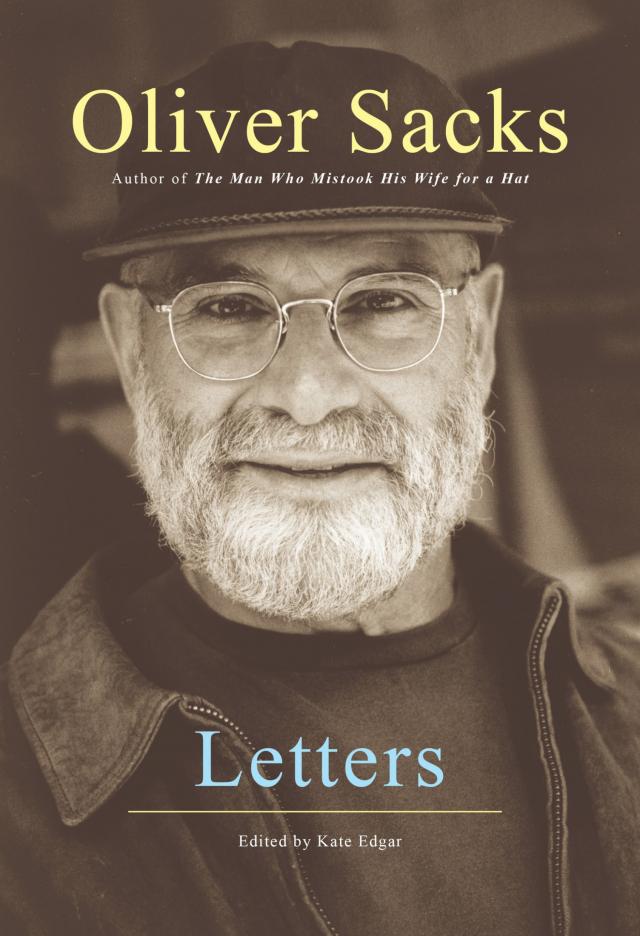


To Kate Edgar
Editor
February 17, 1985
Chancellor Hotel, San Francisco
Dear Kate (if I may),
I hope you […] have not been overwhelmed by the tidal wave of my manuscripts—it is far more than any of us (including myself!) anticipated.
I have been enjoying SF immensely. Such a joy, as a start, to be out of wintry New York—This has not stopped me, I’m afraid, from adding a bit—just a bit!—to my writing. […] Last night, insomniac, I wrote two more (quite short) pieces—“Murder” and “The Dog Beneath the Skin,” as well as 2 or 3 odds-and-ends, 2 more additions to the Preface (not having the original I feel confused where they might go, and will have to see the originals, and now these (in all) three addenda, typed out, to see how they fit). Also a footnote to (the title of) the “Hat” piece—quite forgetting whether or not I had already said this. These nocturnal additions, then, should reach Jim[*1] on Tuesday, and I hope may be messengered to you then.
THIS IS IT!! And to make sure I stop adding and fiddling and obsessing, and because it seems a time to rest and take off, I am flying to Australia tonight—and will be there, or in the South Seas, until March 4 or so. By then, hopefully, all will be typed, and Jim and I will be able to set all in order, and have ready for Press, by the 15th (“deadline”!).
I enclose another list which indicates the new pieces.
Thanks, more than I can say, for the Marathon task you’ve embarked on.
Yrs,
Again, thanks, thanks, thanks, thanks!!
O.
To Kate Edgar
March 15, 1985
119 Horton St., City Island, NY
Dear Kate,
I was meaning to write to you—I had the impulse as soon as I received and read your spectacularly beautiful and intelligent typescript, and the way in which you pulled everything together, so that it has the feel of a book. I cannot imagine anyone doing this as well as you—and as animatedly and devotedly. And it is very sweet of you to say (after burning so much midnight oil!) that you actually enjoyed it.
I always enjoy writing myself—at least if I am in the right mood and mode, and genuinely carried along, and not forcing it.
I value your taste, your judgement, as much as your typing—and greatly appreciate your suggestion of an extra pair of hands (in your case, with your versatility, several pairs of hands) for the editing. I am not quite sure, at this point, what will be involved.
Jim is reading the ms. this weekend, brooding on it, and will be meeting me on Wednesday afternoon (the 20th).
I have some impulses, and see some necessities, myself. The impulses are to do with a few more footnotes—where I think I can enrich the pieces, and/or their connections with one another. The necessities: some redrafting here and there. […] Like you, Jim likes, or at least prefers, Preface A, and has told me to stop “proliferating” Prefaces. […]
ONCE THIS BOOK IS OVER I want to launch into another one—on Tourette’s.[*2] I would almost prefer to write it (for various reasons) if you could type it. I would hope to start immediately the “Tales” is out of our hands and off to the printers, and to proceed as fast as physically possible (for this is a book which is at least 10 years overdue.) […]
I herewith enclose my check […] with more than gratitude. I know you did far more than appears in your itemization!
To Orlan Fox
March 23, 1985
119 Horton St., City Island, NY
Dear Orlan,
I went, impulsively, to Australia—an amazing experience (Darwin called it “a second creation”)—practically had my last day in a remote rainforest (a partial reprise of Norway)—but am now back and in one piece…with a mountain of mail (a quite extraordinary amount from my piece in the NYRB “The Twins”). I have another, “Portrait of the Autist” (illustrated by the Autist) in the coming issue; and yes, of course, I know “The Possessed” is by Dostoyevsky (perhaps I should call my idiot-autist piece “The Idiot”). And, for that matter, I have called another piece “A Passage to India” [about] a girl dying of a brain tumor, with visions, hallucinations—cerebral? spiritual?—of her birthland. So I am grabbing at titles anywhere and everywhere. Which reminds me, I used an Auden title for a piece I wrote in San Francisco, en route to Australia: “The Dog Beneath the Skin.” Which reminds me that Thom Gunn, who has tender and affectionate feelings for you, sends his special love.
I’m afraid I don’t feel like a perpetual student. Indeed, alas!, my dear, rather geriatric. (But this may be because I reinjured myself in Australia, am 100 lb overweight, and puffing and perhaps looking, like G. K. Chesterton. GKC, that is, with a Bakunin-like beard. And I can’t get back, yet, to my own velocipede (tho’ I am very glad you have acquired one—it can be a great delight, and it is certainly a health). And as for Romance? It can always come if one is open to it (you, my dear, are; I’m an old celibate). Except when, as this morning, I wake up yearning from a dream, and realize my libido is still there, hungering, waiting, making up little romances, in the wings.
I have now collected and ordered my “Tales”—there are about 25 of them, very different lengths, moods, themes, but I think with some sort of unity (if only one of sensibility) holding them together—and will go back to my original title, The Man Who Mistook His Wife for a Hat…and Other Clinical Tales. Final editing is this week, and I hope the book will come out in September/October. […] And now, I have my book on Tourette’s, which I shall call The Possessed (this was also Tourette’s own title for one of his studies in 1885, so I want to honor the centenary).
Let us, at least, write—keep up a “correspondence,” even if we don’t see each other too often. Friends become more important…
Love,
Oliver
To Evelyn Fox Keller
Physicist and Biographer of Geneticist Barbara McClintock[*3]
April 12, 1985
119 Horton St., City Island, NY
Dear Dr. Keller,
I was again away (in London), and again found a mass of mail on my return. But I think I have to write to you before anyone else, and express my deep appreciation of your letter and your book. I have just finished reading A Feeling for the Organism—I stayed up most of the night—and I find it almost as remarkable as its subject: Chapter 9 goes so deep, and the last chapter is just beautiful, beautiful.
I have always loved biographies of scientists and naturalists—when I was a child my mother used to read me the biography of Marie Curie (by her daughter)—my mother herself had met Marie Curie twice, and was one of the founder members of the Marie Curie Hospital—but I have very rarely seen the kind of biography you here create, in which the character of the thought itself, the feeling which underlies it, its language, and its poignant incomprehensibility and isolation, are so powerfully brought out. It is a magnificent portrait of an extraordinary thinker and person.
I found it especially reassuring, after being chilled, even scared, by Joshua Lederberg[*4] three weeks ago, when he spoke to a group of us about “Discontinuities” and “prematurities” in Science. I thought he spoke of McClintock in slighting (but ambivalent) terms—in an odd sense he could not get away from her—and of Science itself in frighteningly dogmatic terms. I am not surprised she found him “arrogant”; I came back with a sort of horror, feeling “And is this—Lederberg’s ‘programme’—all there is to science? Is this the beginning and end of the scientific life?” It precipitated a sort of crisis in me—in particular, if you will, a crisis of love. For (even though what I do can hardly be called “science”) yet it is—I think, at least hope—nearly always informed by love, and a product of love; and if I also have had a life with few intense personal relationships, yet it has been warmed, since childhood, by “a love affair with the world.” I found Lederberg’s “philosophy” profoundly disquieting—but not as disquieting as the lovelessness underlying it. And yet (although I know too little of it, and I wished he had talked of his own work, instead of sniping at Barbara McClintock), he may himself, perhaps must himself, in the days of his own creativeness, have had some intense, quite passionate, feeling for the organism—for the sexuality, (as it were) the ardour, of bacteria. Or perhaps not: perhaps he felt himself “mastering” or “torturing” Nature. (I get an unpleasant feeling from The Double Helix,[*5] and though the achievement was/is so great, so productive, yet the attitude to Nature seems to me wrong: perhaps not “wrong,” but one in which sympathy or reverence or love plays no part. I sometimes wonder whether one should distinguish “engineering” from “visionary” science.)
* * *
—
I wish I had more personal recollection of the matters you describe—I should have, I would have, were it not for “the tunnel” (a sort of dark period I had for almost twenty years, between the opening love-affair with the world, the pubescent romance with science, mostly physics and chemistry, when I was twelvish—and a sort of “awakening,” from a long greyness, when I was thirty two or three). In that dark period I completed school, got scholarships, went to University, Medical School, came to America, trained in neurology—but none of it was too real: reality only came back when I really turned to patients (in ’66).
So all my memories, my feelings, are very attenuated for this time. By the time I came to do genetics at school, I had already lost most of my feeling for science—and the genetics of the mid-late forties did not, in any case, seem too interesting. I did hear (though not directly) of Barbara McClintock in ’51—it was my first year in Physiology and Biochemistry School at Oxford—and had a sort of feeling of a hydrogen bomb, far off, in the world of intellect. But then, it seems to me, the feeling was forgotten: or, perhaps, more accurately, replaced by the molecular enthusiasm of those days. It was especially Beadle’s[*6] one gene: one enzyme [hypothesis], then. Then, of course, there was the hydrogen bomb of Crick and Watson. I have a faint memory of meeting Crick—some meeting in ’57—and asking him about Barbara McClintock; and of his answer—a shrug of the shoulders.
* * *
—
The coldness of Joshua Lederberg (which especially scares me when I think of the power he wields) reminded me of a man I met years ago—extremely clever, cold, and precise—and of his saying to me: “ ‘Dear’? What do you mean ‘dear’? What do you mean saying your patients are ‘dear’ to you? What is ‘dear’? What is ‘dearness’? It doesn’t exist in the world!” This produced a radical shivering, an algor, of the spirit until the next morning, when I had a letter from Luria, which started “My dear Dr. Sacks.” And then, I was reminded, I remembered, I again felt, that “dearness” existed: I knew I was “dear” to Luria, and, like him, found my patients “dear” (and, perhaps, was sometimes “dear” to them).
Although (as with my mother, indeed both my parents) the world of “being” is chiefly given to me by patients, there remains a love for other forms of life, especially plants. When I was in Australia, a few weeks ago, I had to go to the rain forest—I have an especial love of ferns, tree-ferns, I don’t know why—and got an overwhelming sense of why the young Darwin, seeing it briefly, was overcome with wonder, and spoke of “a second Creation.” I was especially moved by your descriptions of Barbara McClintock when she spoke about plants (pp. 199–200), and reminded of what Darwin often said about plants: how enormously they were underestimated, especially by biologists (and my favourite Darwin books, and the ones which to my mind show most intensely his own “love-affair,” are the botanical ones, above all The Fertilization of Orchids, which is sometimes like lyric poetry).
Nor does it seem to me that this love, this “feeling for the organism” is necessarily confined to the “organic” (unless, of course, the whole world is seen as “organic”). I had an extreme love—in those far-off days of scientific pubescence—for the elements: I thought constantly of their properties, carried them with me when I could (my friends still remember how my pockets were full of bismuth and manganese, how I raved about lithium, had a spoon made of indium). I had the sense of a personal relationship—they became familiar to me, “friends.” It seemed to me, sometimes, that I could enter their world (I love your description of how the chromosomes enlarged for McClintock, how she felt she was entering their world)—that I could actually feel their “feelings.” And as Goethe took the phrase “elective affinities” from chemical to human relationships, I found myself taking it back to chemical relationships. Specifically, I could not believe the inert gases were wholly inert: they had to have possibilities of some relationships, I felt; and this conviction allowed me to “predict” the fluorides and oxyfluorides of xenon. Many years later, in the early sixties, when Neil Bartlett produced some of these, some of my friends said “But you were talking of these right back in ’45.” Similarly, without having heard of Mendeleev, I predicted, as he did, the various “eka” and “dwi” elements: “predicted” is too pallid a word—they had to exist (if only ideally)—because the nature of the chemical family, chemical relationships, demanded it.
About a year ago, moved by some nostalgia, I bought a copy of Mendeleev—the wonderful seventh edition he published, as an old man, in 1902, so rich in footnotes, and personal annotations (and welcoming the new wonder of radioactivity). I found this enchanting—it became my bed-reading for weeks. And there is absolutely no doubt of his “love-affair” with the elements, with all the chemicals, the “plants” (and the “genomes”) of chemistry. This recurred to me when I came to write about “The Twins.”
(And, here again, there was something personal—a sort of nostalgia—involved: for before the elements, when I was a child, I too had a strange love for numbers. They were, for me, the first precursors of some sort of “cosmic” feeling, but also personal friends. But I don’t think I’m “projecting” in seeing this in The Twins: rather, my own sense of such feelings “sensitized” me to their sense.)
* * *
—
I meant to say something, perhaps to “analogize,” about being a physician, but I have exhausted myself (and doubtless you!) by going on about other things: but your book was so exciting, I had to respond.
Certainly, for a physician, “a Feeling for the Organism” has to be central. And yet so often, frighteningly, these days, it is not. A majority of my colleagues, I sometimes fear, have come to think like molecular biologists. Not that I in any way “disapprove” of molecular biology (how could I? I am as excited as anyone else); what frightens me is not the acquisition of new viewpoints, but the loss of that ancient and fundamental “feeling for the organism.” This feeling imbues the best XIXth century Medicine, all “naturalistic” Medicine, but has become, or can become, a total casualty with “Science” or, at least a certain, narrow sort of scientific method and approach which, as McClintock says (p. 201) cannot give us “real understanding.” What I found marvellous in the last chapter of your book, is her holding to this fundamental, naturalistic “feeling” or “vision,” but renewing it, deepening it, with a unique and new insight so that Nature and Science are totally fused. It is this which seems to make her so extraordinary a figure—at once “old-fashioned,” Victorian, and at the same time a “prophet,” at least precursor, of a scarcely-imaginable future: at once XIXth and XXIth century. This is the kind of neuro-science which I dream of—and which I think was also dreamed of by William James (the epigraph to my epilogue comes from his marvellous essay on Agassiz).[*7]
I have said much too much—sorry—but I was affected deeply. […]
With my best regards,
Oliver Sacks
To Humphry Osmond
Psychiatrist[*8]
May 11, 1985
119 Horton St., City Island, NY
Dear Humphry (if I may),
Many many thanks for your card about The Autist Artist,[*9] and the fascinating Sergeant’s Story, with your comments, and the paper on “Mood Pain.” I will type, because I lack your calligraphy; and reply too briefly, because I’m a bit “down.” But if nothing else I want to say how much I appreciate everything you say or send me. […]
I was very interested by your observations on mood pain: I have long known what Johnson[*10] said, and always felt it myself when I got melancholic (not infrequent!). Whether one would actually feel happier to find one’s spirits restored, but a limb amputated, is another matter: but this is certainly how one feels, and it is certainly a feeling which can impel one towards suicide.
In my own case, I should or should not add, it is not suicide but (do they call it?) “parasuicide” which is the danger, (unconsciously) provoking accidents and dangers. I was in a very violent mood at the time of my accident: I had had two or three potentially serious “accidents” earlier the same week—swimming to exhaustion in the icy fjord; managing to lose an oar while rowing, foolishly, in a storm; and then the mountain. As soon as the accident happened, and its seriousness came upon me, I heard an inner voice (? my super-ego) say: “O dear, Ollie, I didn’t want you to go this far. You’re exonerated from everything—just try and get out of here!” There was an instant lifting of a terrible “mood pain” in the instant of the actual injury. (Auden, in his review of my Migraine, quoted something of Coleridge’s about physical pain being more tolerable than mental.)